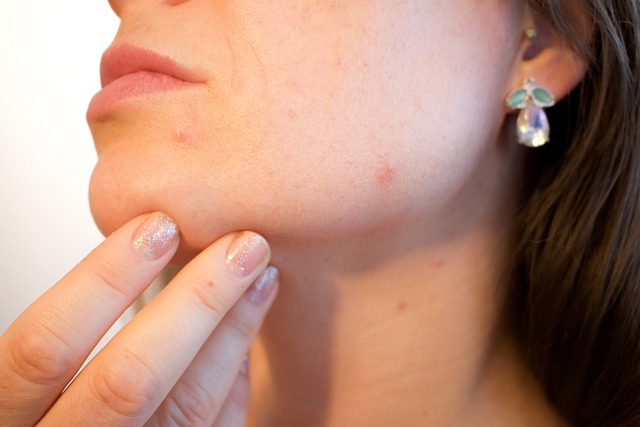
You take care of your face, wear sunscreen religiously, and follow a skincare routine, but somewhere along the way your lips started feeling different. They’re dry, maybe a bit shriveled-looking, and nothing seems to keep them soft for more than an hour or two. You’re in your mid-30s or beyond, and your lips just don’t have that plump, hydrated feeling they used to have. It’s frustrating because you’re doing everything right for the rest of your face, yet your lips seem to be aging faster than everything else.
The truth is that lip skin ages differently than facial skin, and most people completely neglect their lips in their skincare routines. Your lips have thinner skin, no oil glands, and are constantly exposed to the elements without protection. Add in years of sun exposure without SPF, and it’s no wonder they’re showing signs of aging earlier than you expected.
Why do lips age faster than other facial skin?
Lip skin is fundamentally different from the skin on the rest of your face. It’s much thinner, only about three to five cellular layers compared to sixteen layers on your face. This means lips have less natural protection and are more vulnerable to environmental damage, dehydration, and the visible effects of aging.
Your lips have no sebaceous glands, which means they can’t produce their own natural oils to stay moisturized. The rest of your face makes sebum that provides some natural protection and hydration, but your lips are completely dependent on external moisture. Without oil production, lips dry out much faster and show the effects of dehydration more obviously.
The repetitive movements your lips make throughout the day create fine lines and wrinkles earlier than other areas. Talking, eating, drinking, smiling, and pursing your lips all create creases in the delicate skin. Over decades, these repeated movements etch lines that become permanent, similar to how crow’s feet form around eyes.
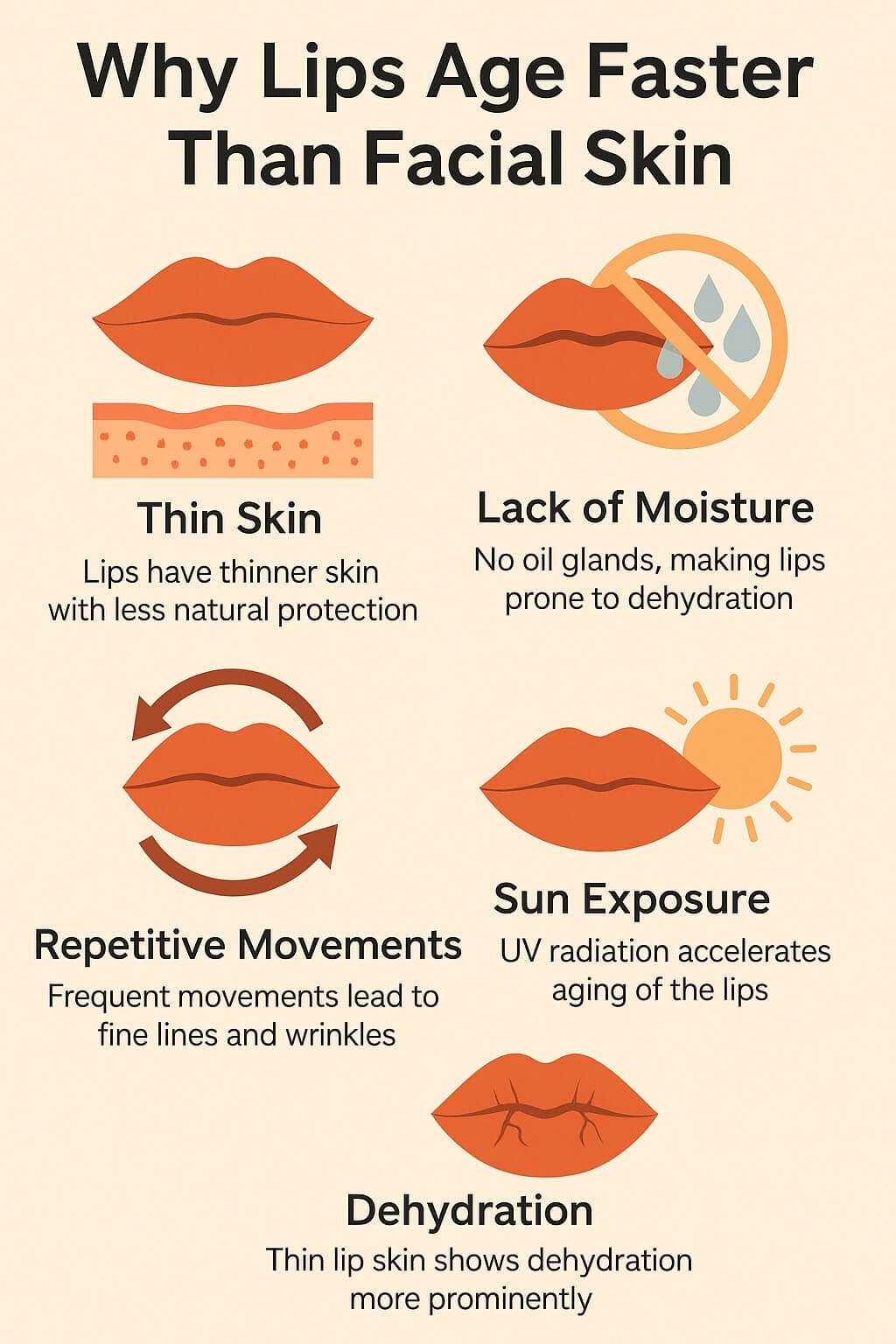
Sun exposure damages lips just like it damages facial skin, but most people never think to put sunscreen on their lips. UV radiation breaks down collagen and elastin, causes pigmentation changes, and accelerates aging. If you’ve been wearing facial sunscreen since age sixteen but never protected your lips, you’ve essentially left them to age in fast-forward mode for decades.
Dehydration affects lips more visibly than other areas because the skin is so thin. When you’re not drinking enough water or when environmental conditions are dry, your lips show it immediately. Chronic low-level dehydration over years contributes to that shriveled, aged appearance that creams can only temporarily fix.
Nutritional deficiencies sometimes show up first in your lips because the tissue turns over quickly and requires constant nourishment. Deficiencies in B vitamins, iron, or essential fatty acids can manifest as chronically dry, cracked, or aged-looking lips even when you’re generally healthy.
Should I be using SPF on my lips?
Yes, absolutely, and starting now is better than never starting at all. Lips are particularly vulnerable to sun damage, and lip cancer is a real concern, especially on the lower lip which gets more direct sun exposure. Beyond cancer risk, UV damage breaks down the collagen in your lips, leading to thinning, wrinkling, and loss of that youthful plumpness.
Look for lip balms with at least SPF 15, though SPF 30 is better for extended outdoor exposure. Mineral sunscreens with zinc oxide or titanium dioxide work well on lips and don’t taste as unpleasant as some chemical sunscreen formulas. Apply lip SPF every morning as part of your routine, and reapply every two hours when you’re outdoors or after eating and drinking.
Many tinted lip products now include SPF, which makes daily protection easier since you’re adding color anyway. However, check that the SPF level is adequate and that you’re applying enough product to get the stated protection. A sheer wash of color might not provide sufficient coverage.
Winter sun protection is just as important as summer protection, especially if you’re skiing, hiking, or spending time in bright, reflective environments. Cold, dry air combined with UV exposure is particularly harsh on lips, causing both immediate chapping and long-term aging damage.
The habit of applying lip SPF takes time to develop, but it’s worth making the effort. Keep a lip balm with SPF in your bag, at your desk, in your car, and anywhere else you might need it. The more accessible it is, the more likely you’ll use it consistently.
What’s the best way to hydrate aging lips?
Hydrating aging lips requires a layering approach rather than just slathering on thick balm and hoping for the best. Start with a hydrating product that actually draws moisture into the lip tissue, then seal it in with something occlusive that prevents water loss.
Hyaluronic acid serums work beautifully on lips when applied before your balm. Hyaluronic acid is a humectant that pulls moisture from the environment and deeper skin layers into the surface tissue. Apply a thin layer of hyaluronic acid serum to clean lips, let it absorb for about thirty seconds, then immediately seal it in with an occlusive lip balm or ointment.
Some people find success using their regular facial moisturizer or eye cream on their lips at night. Choose fragrance-free, hydrating products and apply them to your lips after cleansing your face. Let the moisturizer absorb, then top it with an occlusive like petroleum jelly or a thick lip balm to lock everything in overnight.
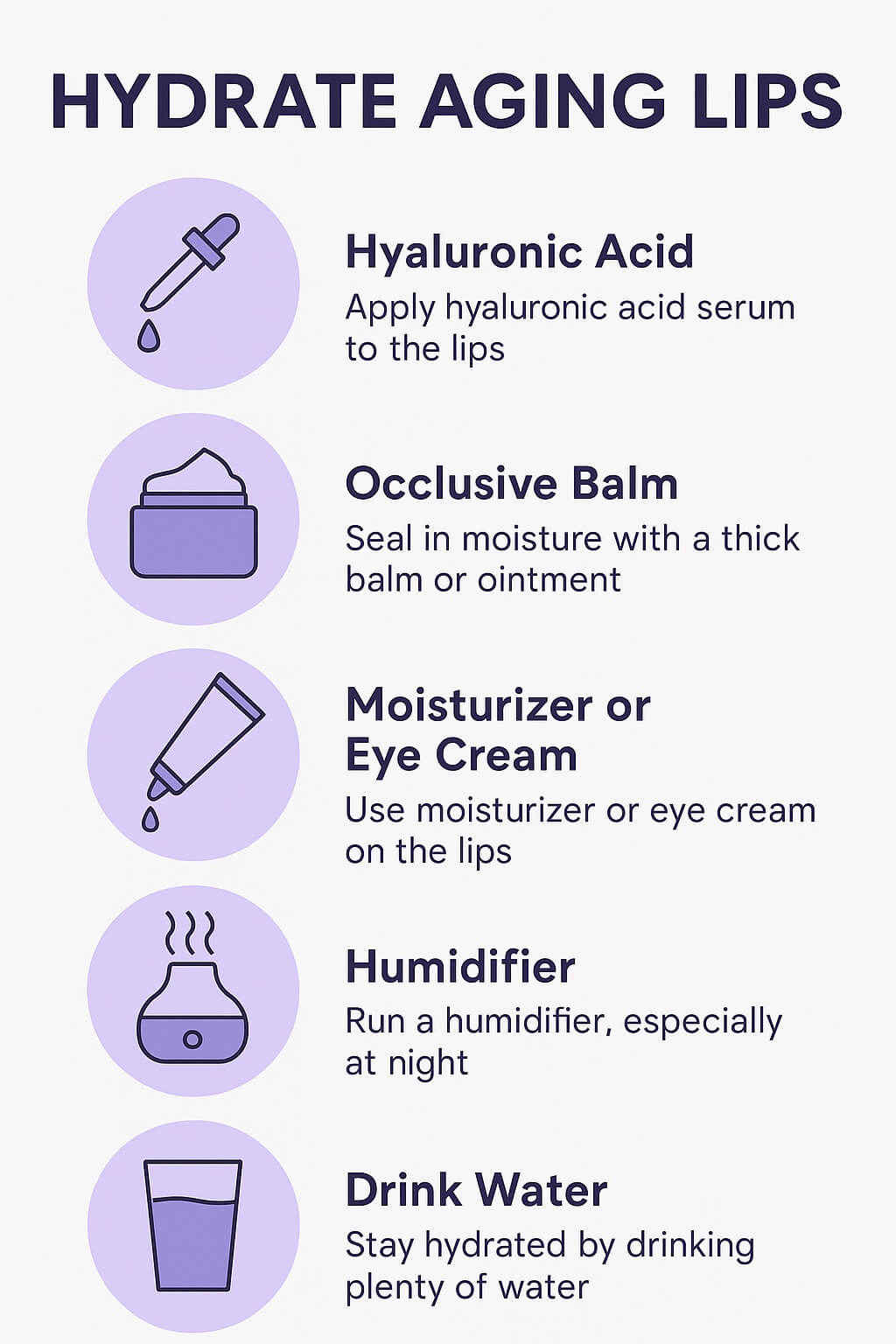
Drinking adequate water throughout the day supports lip hydration from the inside. No topical product can compensate for chronic dehydration. Aim for at least eight glasses of water daily, and more if you’re active, in a dry climate, or consuming dehydrating beverages like coffee and alcohol.
Consider using a humidifier in your bedroom at night, especially during dry winter months. Sleeping with your mouth open or breathing dry air all night dehydrates your lips significantly. A humidifier maintains moisture in the air, helping your lips retain hydration while you sleep.
Avoid licking your lips, which seems to help temporarily but actually makes dryness worse. Saliva evaporates quickly and takes moisture with it, leaving lips drier than before. If you have a lip-licking habit, keeping well-hydrated balm constantly available helps break the cycle.
Do I need to exfoliate my lips?
Gentle exfoliation can improve the appearance and texture of aging lips by removing dead skin cells and allowing hydrating products to penetrate better. However, lips are delicate, and aggressive scrubbing does more harm than good. The goal is to remove flaky buildup, not to scrub until your lips are raw.
Sugar scrubs work well for manual exfoliation, used once or twice weekly. Apply a small amount of lip scrub, gently massage in circular motions for about thirty seconds, then rinse and immediately apply a hydrating balm. Don’t scrub daily or press hard, as this can damage the thin skin and cause irritation.
Chemical exfoliation with gentle acids can work well for lips that need more intensive treatment. Some lip products now contain low concentrations of PHAs or lactic acid that gently dissolve dead skin cells without physical scrubbing. These products are typically applied like a treatment balm and work gradually over time.
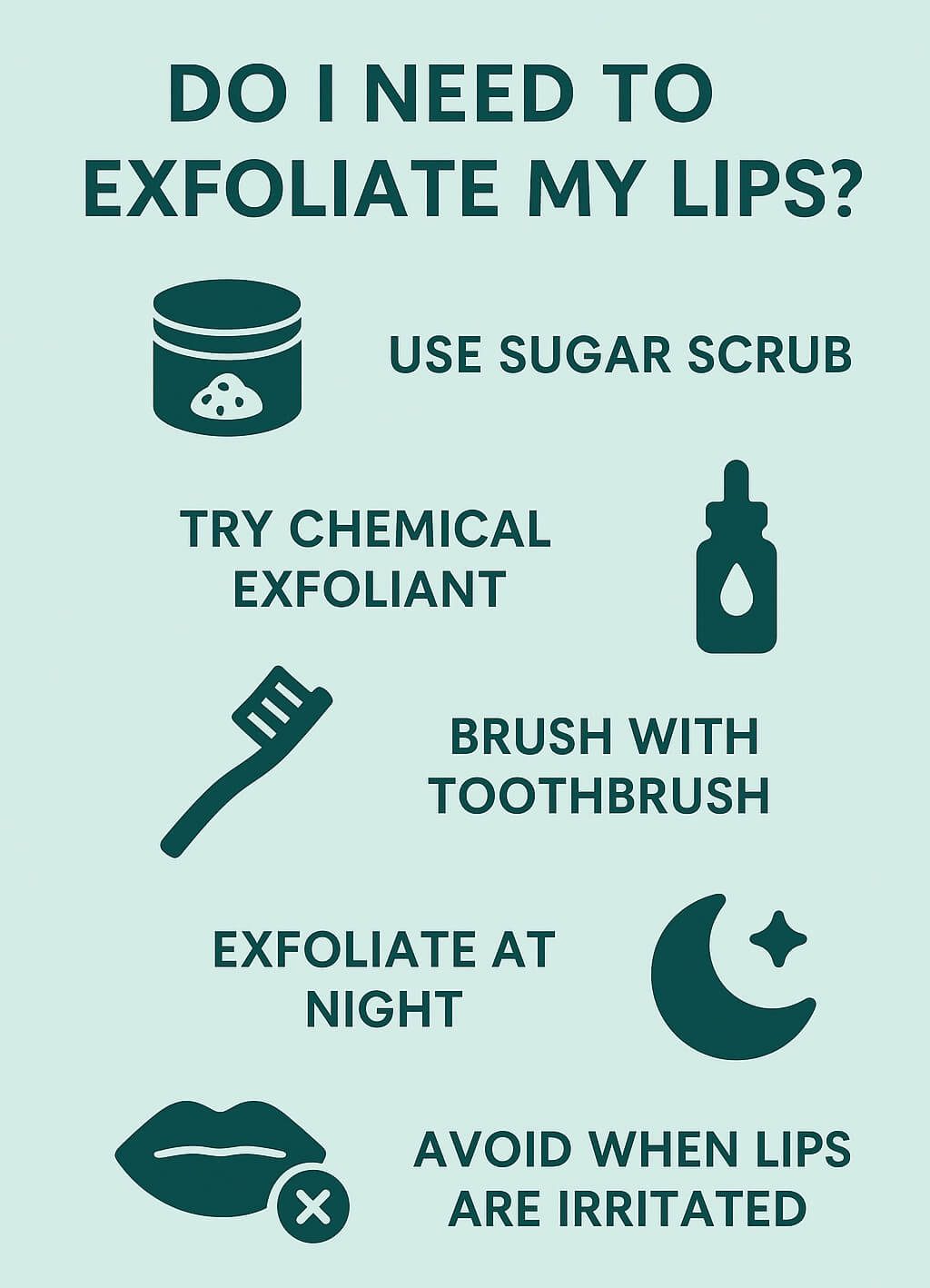
A soft, damp toothbrush can serve as a gentle exfoliator for lips. After brushing your teeth, spend a few seconds gently brushing your lips in circular motions. This removes flaky skin and stimulates circulation, which can temporarily plump lips and improve their appearance.
Exfoliation timing matters. Do it at night before your intensive hydration routine so your lips can recover while you sleep. Exfoliating in the morning and then heading outside can leave lips vulnerable to wind, sun, and environmental irritants before they’ve had time to heal.
Never exfoliate lips that are cracked, bleeding, or irritated. Exfoliation is for removing dead skin buildup, not for treating damaged lips. If your lips are in bad shape, focus on gentle hydration and healing before introducing any exfoliating products.
What ingredients should I look for in lip products?
The most effective lip products for aging lips combine humectants that draw in moisture, emollients that soften and smooth, and occlusives that prevent water loss. Understanding these categories helps you build a routine that actually works rather than just temporarily masking dryness.
Humectants like hyaluronic acid, glycerin, and honey pull moisture into lip tissue. These ingredients work best when applied to slightly damp lips and sealed with an occlusive layer. Hyaluronic acid is particularly effective because it can hold up to one thousand times its weight in water.
Emollients like shea butter, cocoa butter, and various plant oils soften and smooth lip texture. These ingredients fill in the spaces between skin cells, making lips feel softer and look smoother. Natural oils like jojoba, argan, and rosehip oil provide emollient benefits along with vitamins and antioxidants.
Occlusives like petroleum jelly, lanolin, and beeswax create a physical barrier on the lip surface that prevents moisture from evaporating. These are the “sealing” layer in your routine. Products heavy in occlusives work best as the final step after you’ve applied hydrating ingredients.
Peptides in lip products can support collagen production and potentially improve the appearance of aging lips over time. While the evidence for topical peptides isn’t as strong as for some other ingredients, they may provide anti-aging benefits with consistent use.
Avoid products with potentially irritating ingredients like menthol, camphor, or strong fragrances, especially if your lips are already dry and sensitive. These ingredients might create a tingly sensation that feels like it’s “working,” but they can actually increase dryness and irritation.
Ceramides help repair and strengthen the skin barrier, which is beneficial for chronically dry lips. These lipid molecules naturally occur in skin and help retain moisture while protecting against environmental damage.
Can nutrition affect how my lips look and feel?
Your diet significantly impacts lip health, and deficiencies in certain nutrients often show up in your lips before affecting other areas. If your lips are chronically dry despite good topical care, nutritional factors might be contributing to the problem.
B vitamins, particularly B2 (riboflavin) and B12, are crucial for lip health. Deficiencies can cause cracked corners of the mouth, overall dryness, and a swollen appearance. If you’re vegetarian or vegan, B12 supplementation is particularly important since this vitamin primarily comes from animal products.
Iron deficiency sometimes manifests as pale, dry lips and cracks at the corners of the mouth. Women, vegetarians, and people with certain health conditions are at higher risk for iron deficiency. If you’re experiencing persistent lip problems along with fatigue, getting your iron levels checked makes sense.
Essential fatty acids from foods like fatty fish, nuts, seeds, and avocados support skin health throughout your body, including your lips. These fats help maintain cell membranes and support moisture retention. Diets very low in fat can contribute to dry, aged-looking skin including lips.
Vitamin C supports collagen production, which helps maintain lip structure and fullness. Include plenty of vitamin C-rich foods like citrus fruits, berries, peppers, and leafy greens in your diet. While topical vitamin C products can help, internal nutrition matters too.
Dehydration from insufficient water intake or excessive consumption of dehydrating beverages shows up quickly in your lips. If you drink a lot of coffee, tea, or alcohol, you need to consciously increase your water intake to compensate. Your lips are an early warning system for dehydration.
Zinc deficiency can cause dry, cracked lips and slow wound healing. Seeds, nuts, legumes, and whole grains provide zinc for plant-based diets, while meat and shellfish are rich sources for omnivores. Adequate zinc supports skin health and repair throughout your body.
What’s the best nighttime routine for aging lips?
Nighttime is when you can do the most intensive lip treatment because you’re not eating, drinking, or talking for several hours. Building an effective nighttime lip routine can dramatically improve how your lips look and feel within a few weeks.
Start by gently cleansing your lips when you wash your face at night. Remove all lip color, balm buildup, and daily debris with a gentle oil-based cleanser or micellar water. Clean lips absorb treatments better than lips coated with old product.
If you’re exfoliating, this is the time to do it. Use your chosen method once or twice weekly, being gentle and following immediately with hydration. Don’t exfoliate every night, as this can damage the delicate lip skin.
Apply a hydrating treatment to your clean lips. This could be hyaluronic acid serum, a hydrating facial moisturizer, or a specialized lip treatment product. The key is choosing something that actually hydrates rather than just sitting on the surface. Let this layer absorb for at least thirty seconds.
Seal everything in with a thick, occlusive product. Petroleum jelly is classic and effective, though some people prefer lanolin-based ointments or thick lip masks designed for overnight use. Apply a generous layer that looks almost comical—this isn’t the time for subtle application.
Some people benefit from using overnight lip masks in tub form that you apply thickly before bed. These products are specifically formulated to stay in place and provide intensive hydration overnight. They typically combine hydrating ingredients with heavy occlusives in one product.
Consider applying your lip treatment earlier in your evening routine rather than right before bed. This gives the products more time to work before you potentially press your face into a pillow or sleep with your mouth open, which can wipe off product.
Should I consider lip treatments or fillers?
Topical treatments can only do so much for aging lips, and sometimes more intensive interventions provide results that skincare alone can’t achieve. Understanding your options helps you decide whether professional treatments might be worthwhile for your goals.
Hyaluronic acid fillers in lips aren’t just about making lips bigger—they can restore volume lost with aging and improve hydration from within. Hyaluronic acid is a humectant that draws water, so filler in your lips provides internal hydration that makes the skin on top look and feel better. Even a small amount of filler can improve lip texture and hydration without creating an obviously “done” appearance.
Laser treatments and chemical peels can address sun damage, pigmentation, and fine lines around the lips. These treatments resurface the skin and stimulate collagen production, improving texture and reducing visible signs of aging. They’re more intensive than topical care but provide more dramatic results.
Microneedling around the lip area can stimulate collagen production and improve the appearance of fine lines and wrinkles. This treatment creates tiny controlled injuries that trigger your body’s healing response, ultimately improving skin quality over time with repeated sessions.
Prescription retinoids used carefully around (but not directly on) the lips can reduce fine lines and improve skin texture. Some dermatologists recommend very cautious use of retinoids on the lips themselves, but this requires professional guidance since lips are delicate and can become irritated easily.
Professional chemical exfoliation designed specifically for lips can improve texture more dramatically than at-home scrubs. These treatments remove damaged surface layers and encourage cell turnover, revealing smoother, healthier-looking lips.
Before pursuing any professional treatment, consult with a qualified dermatologist or cosmetic provider who can assess your specific situation and recommend appropriate options. Not every treatment is right for everyone, and professional guidance helps you avoid wasting money on things that won’t address your particular concerns.
How long does it take to see improvement in lip texture and hydration?
With consistent proper care, you should notice some improvement in lip texture and hydration within one to two weeks. Your lips will feel softer and more comfortable relatively quickly once you start a good routine. However, more significant improvements in the appearance of aging, lines, and overall lip quality take longer.
Surface dryness and flakiness respond quickly to proper hydration and care. If your main issue is dry, uncomfortable lips, a solid routine of hydrating serums plus occlusive balms should make a noticeable difference within a few days. You’ll stop feeling the constant need to reapply lip balm throughout the day.
Deeper improvements in lip plumpness, fine lines, and overall appearance require at least four to six weeks of consistent care. Skin cell turnover takes time, and rebuilding hydration in deeper tissue layers happens gradually. Stick with your routine even if you don’t see dramatic changes immediately.
Sun damage reversal and collagen rebuilding take months of consistent protection and treatment. If you start wearing lip SPF daily and using hydrating, anti-aging lip products, you might notice gradual improvements over three to six months. The changes are subtle and progressive rather than sudden.
Some improvements require ongoing maintenance rather than reaching a point where you can stop treatment. Your lips need continuous protection and hydration to maintain improvements, just like the rest of your facial skin requires ongoing care. This isn’t a problem you fix once and forget about.
Age-related volume loss and structural changes in lips can’t be fully reversed with topical products alone. Skincare can optimize the health and appearance of your lip tissue, but it can’t replace lost collagen or restore the plumpness of younger lips. Setting realistic expectations helps you appreciate the improvements skincare can provide while understanding its limitations.
What mistakes am I probably making with my lip care?
Most people make several common mistakes that prevent their lips from looking and feeling their best. Identifying and correcting these issues can dramatically improve your results without buying any new products.
Applying lip balm constantly throughout the day often indicates you’re using products that don’t actually hydrate your lips. If you need to reapply every hour, your balm is likely just an occlusive sitting on the surface without addressing the underlying dryness. You need hydrating ingredients under the occlusive layer.
Using lip products with irritating ingredients like menthol, camphor, or artificial fragrances can create a cycle of dryness. These ingredients might feel refreshing initially, but they often cause irritation that leads to more dryness, requiring more product application in an endless loop.
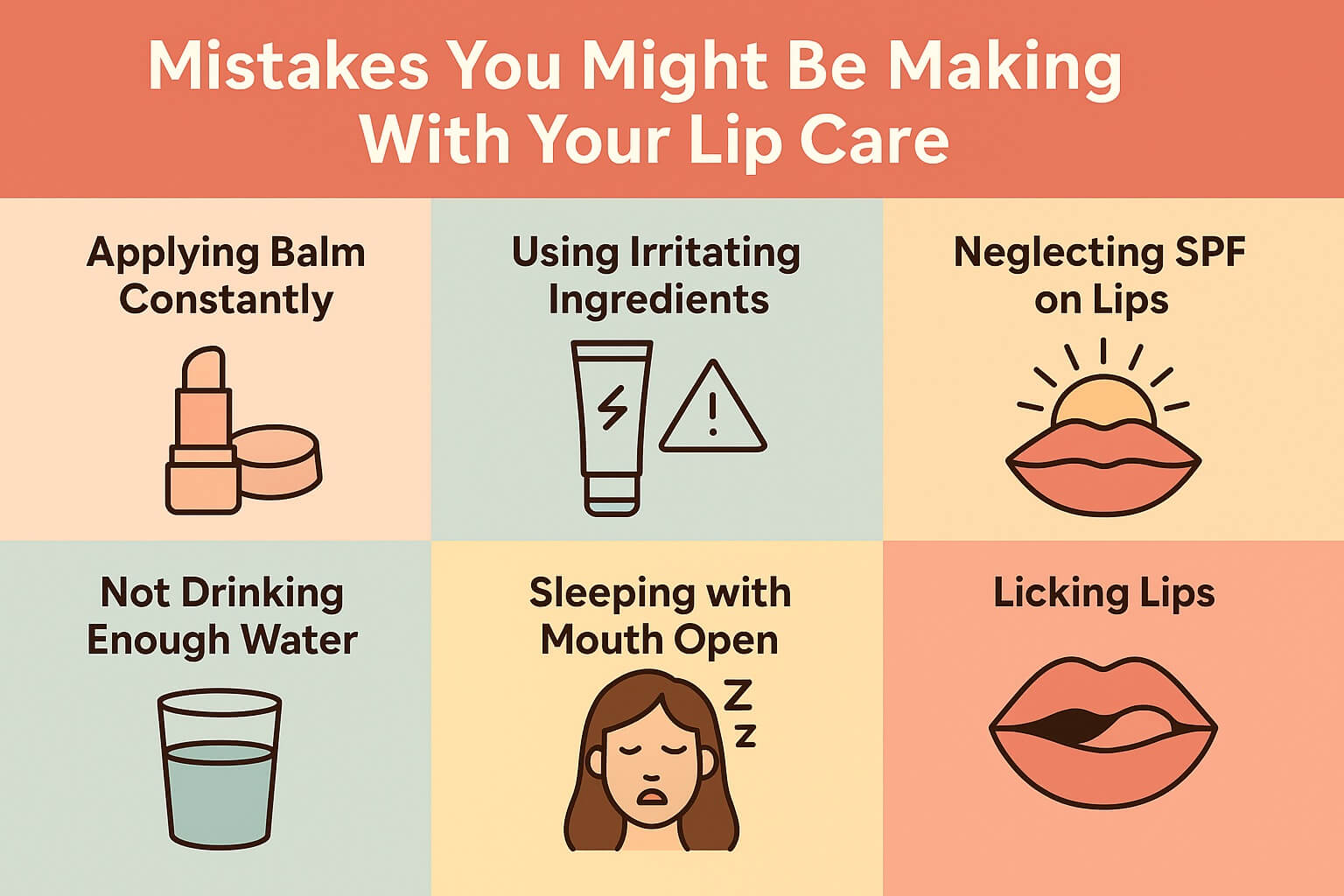
Neglecting SPF on your lips allows ongoing UV damage even while you’re diligently protecting the rest of your face. Years of unprotected sun exposure accelerate lip aging significantly, and no amount of nighttime treatment can fully compensate for daily damage.
Not drinking enough water means you’re trying to solve internal dehydration with external products, which doesn’t work well. Your lips need hydration from within as well as protection from without. No topical product can fully compensate for chronic dehydration.
Sleeping with your mouth open, especially in dry environments, dehydrates your lips overnight. If you wake up with extremely dry lips despite applying product before bed, mouth breathing might be the culprit. A humidifier in your bedroom helps, and addressing any breathing issues that cause mouth breathing can improve lip health significantly.
Licking your lips habitually makes dryness worse by repeatedly removing any protective oils or balm and exposing lips to evaporative moisture loss. Breaking this habit by keeping well-moisturized lips that don’t feel dry and uncomfortable helps reduce the urge to lick them.
Using expired or contaminated lip products can introduce bacteria or fungi that cause irritation and chronic inflammation. Replace lip products regularly, especially those in pots where you dip your finger, and never share lip products with others.
What’s the most important thing to know about caring for aging lips?
The single most important thing to understand is that your lips need just as much attention and care as the rest of your face, and the routine that works for your skin won’t automatically work for your lips. Lips have different needs because of their unique structure, lack of oil glands, and constant exposure to elements and movement.
Consistency matters more than expensive products. A simple routine of SPF during the day, hydrating serum plus occlusive balm at night, and adequate water intake will dramatically improve lip appearance over time. You don’t need a dozen different lip products; you need the right products used consistently.
Starting lip protection and care in your 30s prevents more dramatic aging in your 40s and beyond. While it’s never too late to start taking better care of your lips, earlier intervention prevents more damage than later correction can fix. If you’re reading this and you’re in your 30s, you’re ahead of most people who don’t think about lip care until visible aging is already significant.
Understanding that lips age differently than facial skin helps set realistic expectations. The thin skin, constant movement, and lack of oil glands mean lips will show aging signs earlier than other areas. Accepting this reality and providing appropriate care helps you maintain the best possible lip health and appearance for your age.
Your lips reflect your overall health and hydration status. Chronically dry, aged-looking lips sometimes indicate nutritional deficiencies, dehydration, or health issues beyond just surface dryness. If you’re doing everything right topically and still struggling with persistent lip problems, looking at your nutrition, hydration, and overall health makes sense.
Finally, remember that some amount of lip aging is normal and natural. The goal isn’t to have the lips of a twenty-year-old forever, but to have healthy, comfortable, well-cared-for lips that look good for your age. Proper care can minimize unnecessary aging from preventable causes while helping you feel confident about your appearance.