TL;DR:
Morning commute stomach troubles are common and usually caused by stress, rushing, diet, and anxiety. Wake up earlier, eat carefully (or wait until you arrive), know where bathrooms are located, practice breathing exercises, and give your body 2-4 weeks to adjust. Address both physical habits and anxiety for best results. See a doctor if symptoms persist after a month.
Starting a new job with an early morning commute is stressful enough without worrying about your stomach acting up on public transportation. If you’ve dealt with urgent bathroom needs during previous commutes, the anxiety about it happening again can actually make the problem worse. The good news is that with some strategic planning and lifestyle adjustments, you can get your digestive system on a more predictable schedule and reduce those panic-inducing moments on the train or bus.
Understanding why your stomach seems to go haywire during morning commutes is the first step toward fixing the problem. Once you know what’s triggering your system, you can make targeted changes that actually work.
Why does my stomach act up specifically during morning commutes?
Your digestive system has its own internal clock that’s linked to your overall circadian rhythm. When you suddenly change your wake-up time or morning routine for a new job, your gut needs time to adjust. The stress of a new commute, combined with the physical jostling of public transportation, creates a perfect storm for digestive upset.
Morning is naturally when your colon is most active. This is called the gastrocolic reflex, and it’s your body’s way of clearing out your system after the overnight fast. Drinking coffee or eating breakfast triggers this reflex even more strongly, which is why so many people need a bathroom right after their morning meal.
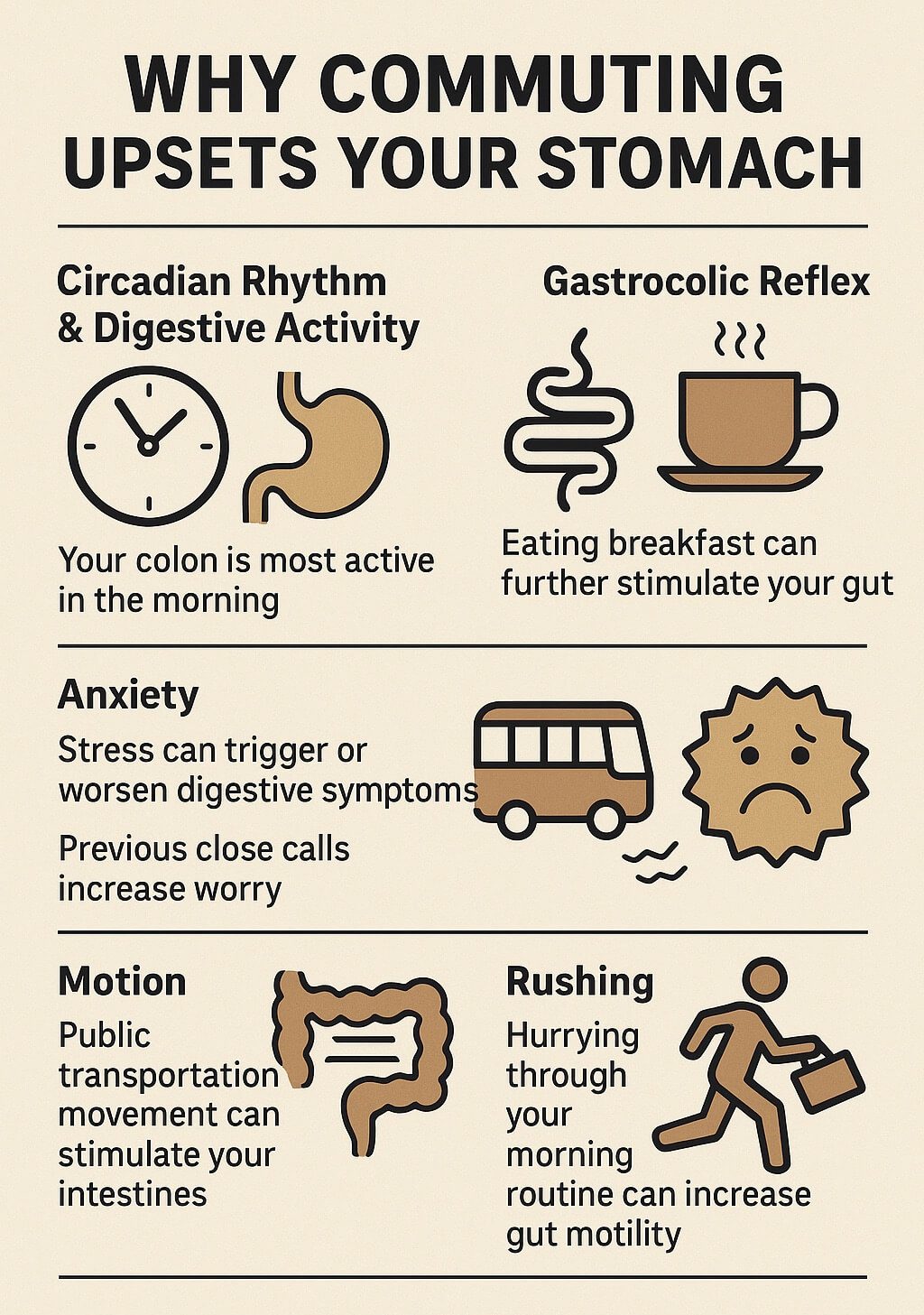
Anxiety plays a huge role too. If you’ve had embarrassing close calls before, the fear of it happening again creates a stress response that actually stimulates your digestive system. It’s a vicious cycle where anxiety causes the very problem you’re anxious about. Your gut and brain are directly connected through the vagus nerve, so emotional stress translates almost immediately into physical digestive symptoms.
The motion of trains and buses can also stimulate your intestines. The vibration and movement, especially on bumpy routes or during sudden stops, can trigger peristalsis, which is the wave-like muscle contractions that move things through your digestive tract. For people with sensitive stomachs, this constant motion can be enough to cause urgency.
Rushing through your morning routine doesn’t help either. When you’re racing to get ready and catch your train, your body stays in stress mode. This activates your sympathetic nervous system, which can speed up gut motility and create that urgent feeling.
What should I eat for breakfast before a long commute?
Your breakfast choices can make or break your commute experience. The goal is to eat something that settles your stomach without triggering excessive digestive activity. This means avoiding common gut irritants while choosing foods that provide steady energy.
Start with plain, easily digestible carbohydrates. White rice, plain toast, or simple crackers might seem boring, but they’re gentle on your system and less likely to cause problems. Save the whole grain bread and high-fiber cereals for weekends when you’re not facing a long commute without bathroom access.
Bananas are excellent commuter food. They’re binding rather than loosening, they provide quick energy, and they’re easy on sensitive stomachs. A banana with a small amount of peanut butter gives you protein and fat to sustain energy without overwhelming your digestive system.
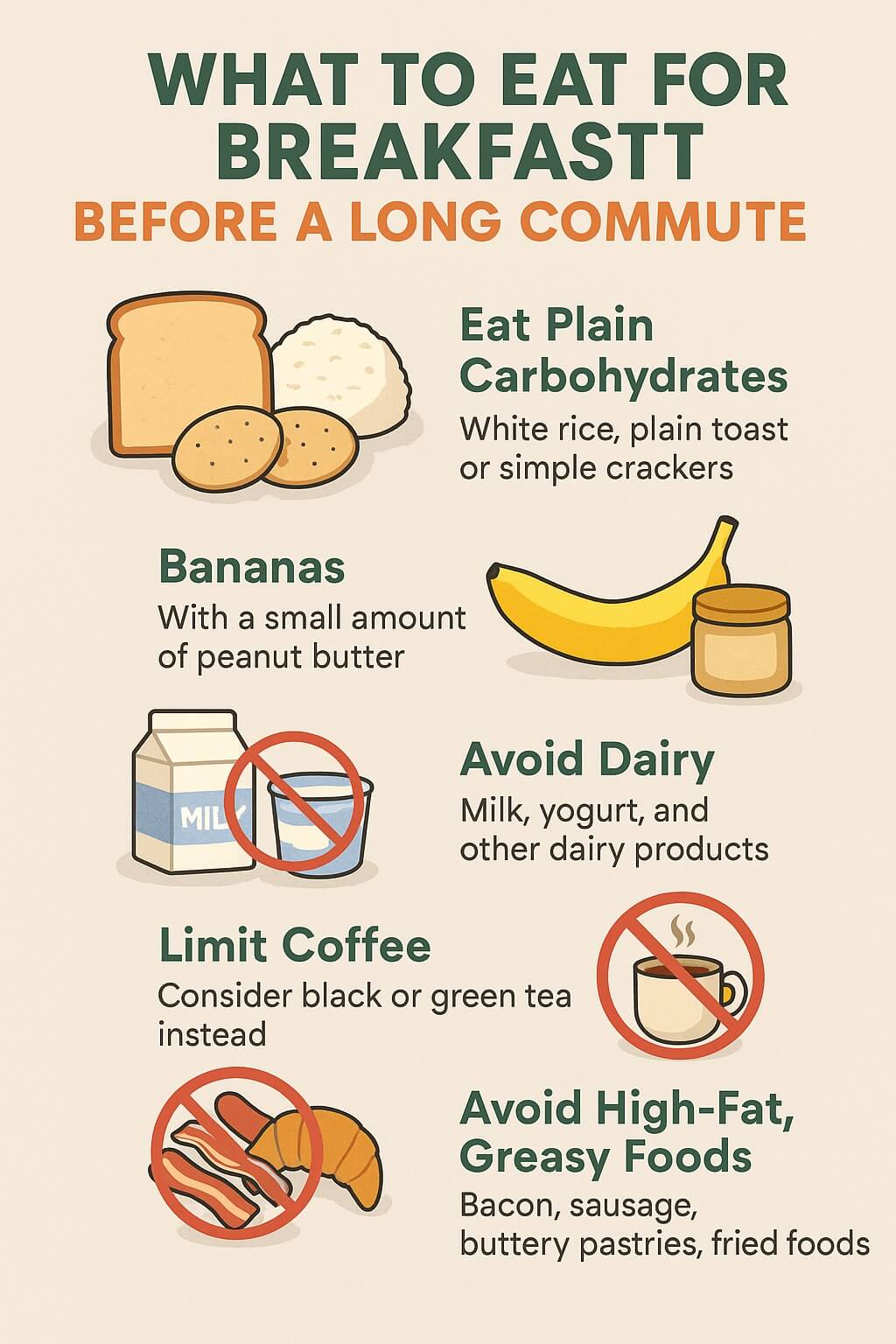
Avoid dairy if you suspect any level of lactose sensitivity. Even mild intolerance can cause urgent bathroom needs, and the stress of commuting can amplify symptoms. If you normally have milk in your coffee or eat yogurt for breakfast, try switching to alternatives and see if your symptoms improve.
Skip the coffee or at least reduce your intake significantly. Coffee is a powerful gut stimulant that triggers bowel movements in many people within minutes of drinking it. If you can’t function without caffeine, try having a small amount of black or green tea instead, which provides gentler stimulation.
High-fat and greasy foods should be off the breakfast menu on commute days. Bacon, sausage, buttery pastries, and fried foods all slow down digestion and can cause cramping and urgency. These foods also trigger a strong gastrocolic reflex that you definitely don’t want kicking in while you’re stuck on a train.
Should I eat breakfast at home or wait until I get to work?
This depends on your individual system, but for many people with commute-related stomach issues, waiting to eat until after you arrive at work is the smarter choice. Eating triggers your digestive system to start working, and giving it that head start before you’re trapped on public transportation can backfire.
If you wake up very hungry and feel shaky or lightheaded without food, have something extremely small and bland at home. A few crackers or half a piece of plain toast can take the edge off hunger without fully activating your digestive system. Then save your real breakfast for after your commute when bathrooms are readily available.
Many people find success with the strategy of waking up earlier and eating a very light early breakfast, then using the bathroom before leaving home. This gives your system time to process and respond before you’re out the door. The key is allowing at least thirty to forty-five minutes between eating and leaving your house.
Bringing breakfast with you to eat at your desk means you’re not running on empty all morning, but you’re also not dealing with active digestion during your commute. Pack something simple that doesn’t need refrigeration if your office doesn’t have a kitchen. Crackers, a granola bar, or pre-made oatmeal cups work well.
Some commuters do better with intermittent fasting, where they skip breakfast entirely and have an early lunch. If you’re not diabetic or dealing with blood sugar issues, this approach might work for you. Your body adjusts to the pattern after a week or two, and you eliminate the breakfast-triggered bathroom urgency altogether.
How early should I wake up to avoid rushing?
Rushing is a major trigger for stress-related digestive issues. The more time you give yourself in the morning, the less anxious you’ll feel, and the better your stomach will behave. Waking up at least two hours before you need to leave gives your body time to wake up naturally and complete its morning bathroom routine before you’re out the door.
This extra time allows for a calm morning where you can sit with your coffee or tea, give your body a chance to respond, and use the bathroom at home rather than desperately searching for one during your commute. The peace of mind that comes from knowing you have plenty of time reduces the anxiety that often triggers stomach problems.
Use that morning time productively but not frantically. Take a warm shower, which can help stimulate a bowel movement. Do some gentle stretching or a short walk around your home. The physical movement combined with upright posture helps your digestive system complete its morning activities.
Consider setting multiple alarms with a gentle wake-up pattern rather than one jarring alarm that startles you awake. Waking up gradually is easier on your nervous system, which means it’s easier on your gut. Some people find that waking up with natural light or a sunrise alarm clock helps their body wake up in a less stressed state.
If waking up two hours early sounds impossible, start with adding just twenty or thirty extra minutes to your routine. Even that small buffer can make a significant difference in your stress levels and give your system more time to settle before you leave.
What can I do the night before to help my morning go smoothly?
Your evening routine directly impacts your morning digestive situation. Getting your gut prepared the night before sets you up for a calmer commute. This means thinking strategically about dinner timing, food choices, and your overall evening schedule.
Eat dinner at least three hours before bed. Going to bed on a full stomach means your body is still digesting while you sleep, which can lead to morning bloating, gas, and urgent bathroom needs. Earlier dinners give your system time to mostly complete digestion before you lie down.
Keep dinner relatively simple and easy to digest. Avoid heavy, spicy, or greasy foods that might cause overnight digestive distress. Large portions also work against you. A moderate dinner of lean protein, well-cooked vegetables, and a simple carbohydrate is your best bet for peaceful digestion.
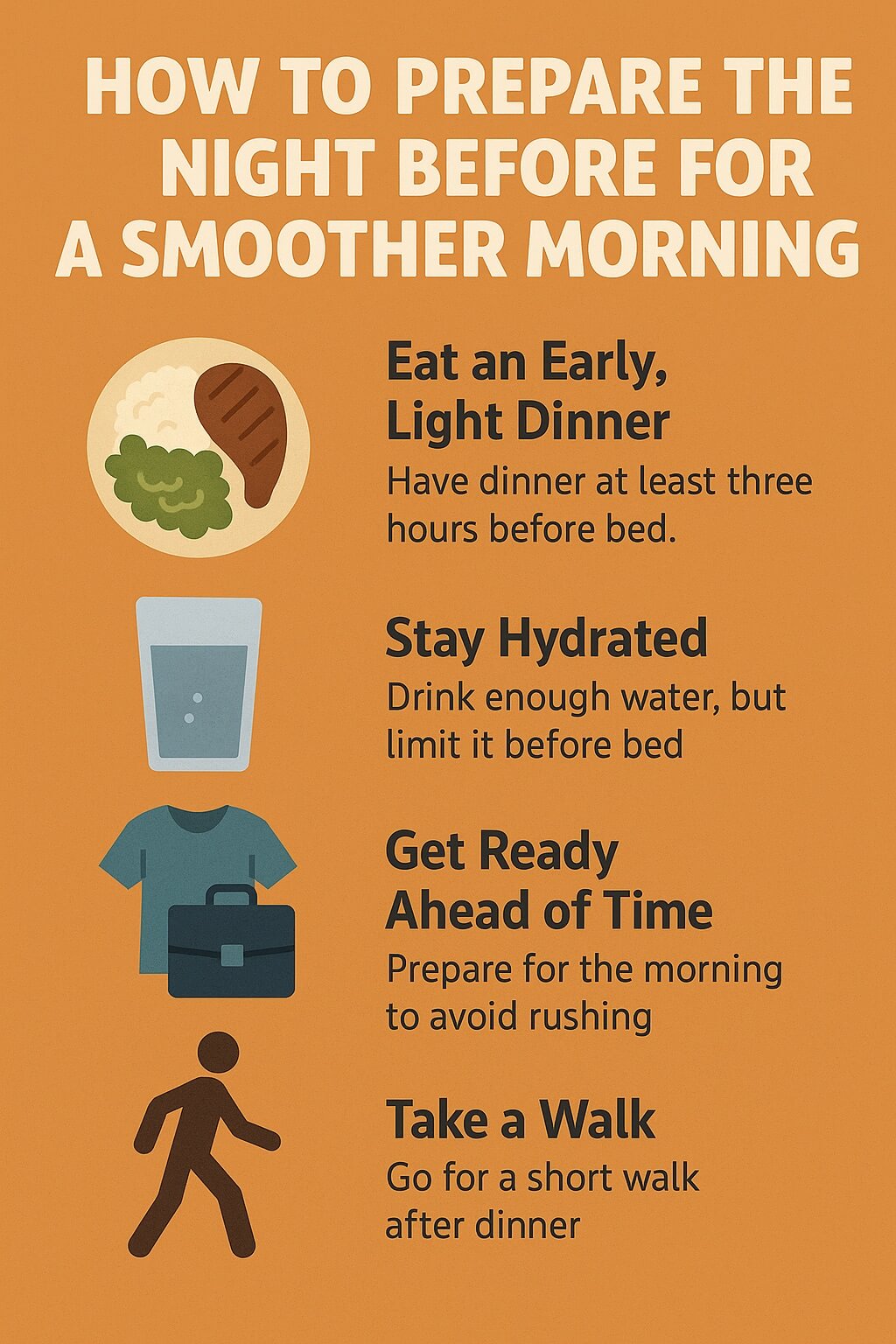
Stay hydrated throughout the evening, but taper off liquid intake an hour or two before bed. You want to be well-hydrated, which helps digestion and prevents constipation, but you don’t want to be waking up multiple times to urinate, which disrupts your sleep quality.
Prepare everything you can the night before. Lay out your clothes, pack your bag, prepare your lunch, and plan your breakfast. The less you have to think about and rush through in the morning, the calmer you’ll feel, and calm equals better digestive function.
Consider taking a short walk after dinner. Gentle movement aids digestion and helps move things through your system. A fifteen or twenty-minute evening walk can make your morning bathroom routine more predictable and complete before you need to leave the house.
Are there any supplements or remedies that actually help?
Several over-the-counter options can help regulate your digestive system and reduce morning urgency, though it’s smart to talk with a doctor before starting any new supplement, especially if you have underlying health conditions.
Fiber supplements like psyllium can actually help with both diarrhea and constipation by regulating your system. The key is starting slowly and taking them consistently at the same time each day, preferably in the evening. Fiber helps bulk up and normalize your stool, making bathroom trips more predictable and less urgent.
Probiotics might help balance your gut bacteria, which can improve overall digestive function. Look for supplements with multiple strains of beneficial bacteria and take them consistently for at least a few weeks before expecting results. Probiotic foods like plain yogurt, kefir, or fermented vegetables can provide similar benefits if supplements aren’t your thing.
Peppermint oil capsules can soothe digestive spasms and reduce cramping that might contribute to urgency. The enteric-coated versions are designed to release in your intestines rather than your stomach, which makes them more effective for lower digestive issues. However, these can worsen heartburn in some people, so use caution.
Anti-gas medications containing simethicone can reduce bloating and discomfort, though they won’t necessarily prevent urgent bathroom needs. Still, feeling less bloated and crampy can reduce anxiety, which indirectly helps the urgency problem.
Some people find success with taking a calcium supplement, which can have a mild binding effect. However, this needs to be balanced carefully, as too much can cause constipation. Never take anti-diarrheal medications daily without medical supervision, as they’re meant for occasional use and can cause problems with long-term use.
How do I manage the anxiety that makes my stomach worse?
The anxiety-stomach connection is powerful, and breaking the cycle requires addressing both your thoughts and your physical stress response. When you’re anxious about your commute, your body releases stress hormones that directly affect your gut, creating the very symptoms you’re worried about.
Practice deep breathing exercises during your commute. Box breathing is particularly effective: breathe in for four counts, hold for four counts, breathe out for four counts, and hold empty for four counts. Repeat this pattern whenever you feel anxious. It activates your parasympathetic nervous system, which calms your digestive system.
Create a mental safety plan before you leave home. Know where bathrooms are located along your route. Many train stations have public restrooms, and knowing exactly where they are provides psychological relief even if you never need to use them. Some commuters find it helpful to map out every bathroom option along their route, which reduces the panic of “what if” thinking.
Distraction is a powerful tool. Download podcasts, audiobooks, or playlists that fully engage your attention. When your mind is occupied with something interesting, you’re less likely to fixate on your stomach sensations. Many people find that their symptoms actually disappear when they’re genuinely distracted.
Progressive muscle relaxation can help during your commute. Start at your toes and work up your body, tensing each muscle group for five seconds and then releasing. This physical relaxation often translates to digestive relief because you’re reducing overall tension in your body.
Challenge catastrophic thinking when it starts. If you notice yourself thinking “What if I have an accident on the train?” counter it with realistic thoughts like “I’ve never actually had an accident, and even if I needed a bathroom urgently, I know where they are along my route.” Cognitive reframing takes practice but becomes easier over time.
What should I wear to feel more secure during my commute?
Your clothing choices can significantly impact your comfort and confidence during your commute. Dressing strategically reduces anxiety by making you feel prepared for any situation, which ironically often prevents the situations you’re worried about.
Wear dark-colored pants or skirts on commute days. This isn’t about expecting the worst, but about reducing anxiety by knowing that you feel secure in what you’re wearing. Less worry means less stress, which means better digestive function.
Choose loose-fitting clothing around your waist and stomach. Tight waistbands can increase digestive discomfort and create pressure that makes urgency feel worse. Elastic waists, drawstring pants, or dresses without constricting waistbands are more comfortable and give your digestive system room to function without added pressure.
Layers are your friend. Temperature fluctuations on public transportation can affect how your stomach feels. Being too hot can increase nausea and discomfort, while being cold can cause cramping. Wearing layers lets you adjust to maintain a comfortable body temperature throughout your commute.
Comfortable shoes matter more than you might think. If your feet hurt, your whole body is stressed, and stress affects your gut. Wear supportive, comfortable shoes for your commute and keep dressier shoes at work if needed. The reduced physical discomfort helps keep your overall stress levels lower.
Keep a change of clothes at work if possible. Even if you never need them, knowing they’re there provides significant peace of mind. This backup plan reduces anxiety, which helps prevent the very situation you’re preparing for.
Should I talk to a doctor about this problem?
If you’ve tried lifestyle modifications for several weeks without improvement, or if your symptoms are severe enough to significantly impact your quality of life, seeing a doctor is definitely worthwhile. Persistent digestive issues during stress might indicate an underlying condition that needs proper diagnosis and treatment.
Irritable bowel syndrome is common and often triggered or worsened by stress and anxiety. A doctor can diagnose IBS and work with you on management strategies that might include dietary changes, medications, or mental health support. Having a diagnosis and treatment plan often reduces anxiety, which helps symptoms improve.
Anxiety disorders sometimes manifest primarily through physical symptoms, including digestive issues. If you have severe anxiety about your commute that’s affecting your life, talking with a mental health professional could be incredibly helpful. Treating the underlying anxiety often resolves the physical symptoms.
Your doctor can also check for food intolerances, celiac disease, inflammatory bowel diseases, or other conditions that might explain your symptoms. Getting appropriate testing rules out serious problems and gives you a clear direction for managing your symptoms.
Some people benefit from prescription medications that regulate gut motility or reduce intestinal spasms. While these aren’t necessary for everyone, they can be life-changing for people with severe symptoms that don’t respond to lifestyle changes alone.
Don’t feel embarrassed about bringing this up with your doctor. Digestive issues are incredibly common, and doctors discuss bowel habits all day long. They’re not judging you, and they want to help you find solutions that improve your quality of life.
How long will it take for my body to adjust to the new routine?
Most people find that their digestive system starts adjusting to a new commute routine within two to four weeks if they’re consistent with their strategies. Your body learns new patterns, and what initially triggered urgency becomes routine and less stress-inducing.
The first week is usually the hardest because anxiety is highest and your body hasn’t adapted to the new schedule yet. Give yourself extra time and grace during this adjustment period. Pack snacks, know your bathroom options, and remind yourself that it gets easier.
By the second week, you’ll likely notice some improvement as your wake-up time becomes more natural and your morning routine establishes a rhythm. Your digestive system starts anticipating the pattern and hopefully completes its business before you leave home.
Around week three or four, most people report that the morning commute stops being a source of anxiety. The route becomes familiar, the timing becomes predictable, and your body has adapted to the new normal. You’ll probably still have occasional rough mornings, but they become the exception rather than the rule.
Consistency is key to this adjustment. Try to wake up at the same time every day, even on weekends, at least during the first month. Your body adapts more quickly when it has a regular schedule. Eating at consistent times also helps regulate your digestive patterns.
If you’re still struggling significantly after a month of consistent effort with all the strategies mentioned here, that’s a good indication that you should talk with a healthcare provider. Some people need additional support to manage commute-related digestive issues, and there’s no shame in getting help.
What are some emergency strategies if I feel urgent during my commute?
Even with the best preparation, you might occasionally feel urgent during your commute. Having a mental toolkit of strategies can help you cope with these moments and often prevent them from escalating into actual emergencies.
First, practice the deep breathing technique mentioned earlier. Slow, controlled breathing can actually reduce the urgency sensation by calming your nervous system. Focus entirely on your breath and try to relax your abdominal muscles rather than tensing them, which is the instinctive response.
Sit down if you’re standing. Being seated helps many people feel more in control and can reduce the urgency sensation. If there are no seats available, position yourself near a pole or wall where you can lean and feel more stable and secure.
Try pressing firmly on your perineum, which is the area between your genitals and anus. Applying pressure here can reduce the urgency sensation and give you time to get to a bathroom. This is discreet enough to do through your clothing without anyone noticing.
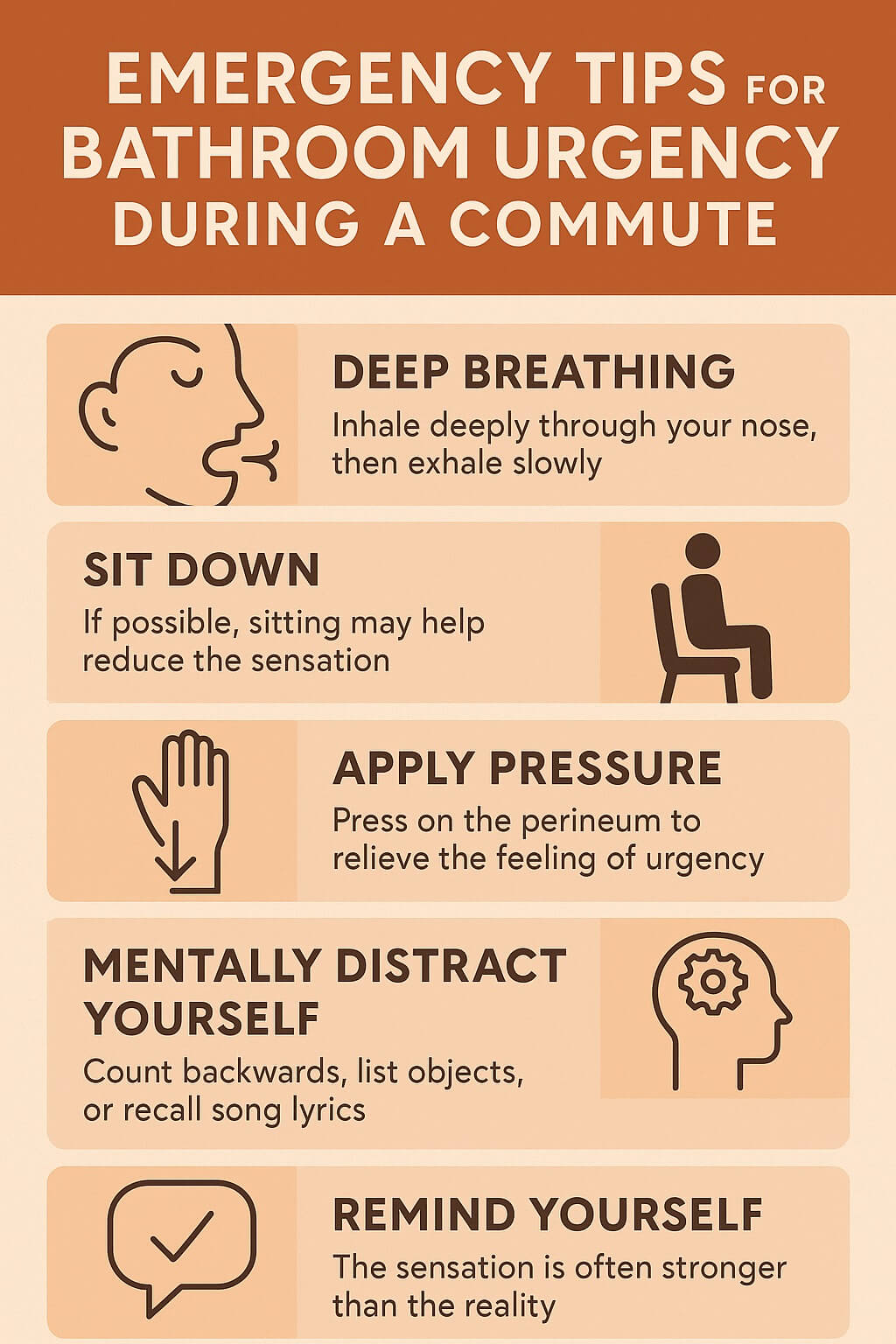
Mental distraction becomes crucial in these moments. Count backwards from one hundred by sevens. Name items of a specific color that you can see. Recall the lyrics to a song in detail. Engage your brain in something that requires concentration, which helps interrupt the panic response.
Remember that most feelings of urgency are worse than the actual situation. Your brain is often sounding false alarms because of anxiety rather than because you’re actually in immediate danger of an accident. Reminding yourself of this can help you stay calmer and reduce the sensation.
What’s the bottom line for managing morning commute stomach issues?
The key to conquering morning commute digestive troubles is addressing both the physical and psychological aspects simultaneously. Your gut and brain work together, so you need strategies that target both to see real improvement.
Start with the basics: adjust your eating schedule and food choices, wake up earlier to reduce rushing, and prepare as much as possible the night before. These foundational changes alone help many people significantly reduce their symptoms.
Address the anxiety component directly through breathing exercises, distraction techniques, and developing a bathroom safety map. The more secure you feel, the less your stomach will bother you. Anxiety creates symptoms, and reducing anxiety directly improves digestive function.
Give yourself time to adjust to the new routine. Your body needs a few weeks to adapt to a different schedule and commute. Be patient with yourself during this transition period and celebrate small improvements rather than expecting instant perfection.
Know when to seek professional help. If lifestyle changes aren’t enough, medical intervention might be necessary and can make a huge difference. There’s no need to suffer through this alone when effective treatments exist.
Most importantly, remember that you’re not alone in dealing with this. Morning commute digestive anxiety affects countless people, and most of them successfully manage it with the right strategies. You can absolutely find a routine that works for you and allows you to commute confidently without constant stomach worries.