When it comes to colon cancer, your plate can be just as important as your prescription. Whether you’re working to lower your risk, navigating treatment, or recovering after surgery or chemotherapy, diet plays a crucial role in supporting your health and influencing outcomes.
Colorectal cancer is the third most common cancer in the world, and it’s highly influenced by lifestyle—especially what you eat. In fact, the World Cancer Research Fund estimates that nearly 50% of colorectal cancer cases are preventablethrough diet, exercise, and healthy weight management.
But what does a colon cancer–supportive diet really look like?
It’s not just about avoiding fast food or eating more vegetables—although those are great starts. The goal is to understand which foods fuel your body during treatment, which ones may worsen inflammation or cancer risk, and how to use nutrition as a tool for prevention and long-term recovery.
In this comprehensive guide, we’ll explore:
-
What foods to avoid for colon cancer
-
The best overall diet for colorectal cancer
-
Dietary tips for patients in stages 3 and 4
-
Nutrition guidance for survivors
-
What to eat during chemotherapy
-
The best fruits for colon cancer patients
What Foods Should You Avoid for Colon Cancer?
While no single food causes colon cancer, decades of research suggest that certain dietary patterns can increase your risk—especially when consumed frequently or in large amounts. Understanding which foods to limit or avoid can empower you to make better choices, whether you’re looking to prevent colorectal cancer or reduce the risk of recurrence after treatment.
Here are the top offenders:

Processed Meats
Processed meats like bacon, sausages, hot dogs, and deli slices are classified as Group 1 carcinogens by the World Health Organization, meaning there’s strong evidence they can cause colorectal cancer. These meats are preserved using methods like curing, smoking, or chemical additives, which can lead to the formation of cancer-causing compounds. Regular consumption—just 50 grams a day—has been linked to an 18% increase in colon cancer risk. Whenever possible, choose fresh, unprocessed alternatives like poultry, fish, or plant-based proteins.
Red Meat in Excess
While red meat such as beef, pork, or lamb can be part of a balanced diet in small amounts, overconsumption is associated with increased colorectal cancer risk. Cooking red meat at high temperatures, especially on the grill or in a frying pan, can form harmful compounds like heterocyclic amines (HCAs) and polycyclic aromatic hydrocarbons (PAHs). Experts recommend limiting red meat intake to no more than 18 ounces per week and replacing some servings with fish, legumes, or tofu.
Refined Carbohydrates and Sugary Foods
Highly processed carbs and sugary foods—like white bread, pastries, soda, and snack foods—offer little nutritional value and may promote inflammation and insulin resistance, both of which are linked to cancer growth. These foods also lack fiber, which plays a protective role in colon health. Diets high in glycemic load have been associated with greater colorectal cancer risk, particularly in people with prediabetes or metabolic issues. Swap refined carbs for whole grains, fruits, and fiber-rich snacks.
Alcohol
Alcohol consumption, especially in excess, is a known risk factor for colorectal cancer. When the body processes alcohol, it creates acetaldehyde, a toxic compound that can damage DNA and hinder its repair. The American Cancer Society advises no more than one drink per day for women and two for men, though the less alcohol, the better. Healthier alternatives include sparkling water, herbal teas, or kombucha in moderation.
Fried or Charred Foods
Grilling, frying, or charring meats and starchy foods can produce harmful compounds like HCAs, PAHs, and acrylamide—all of which have been linked to cancer in animal studies and may increase human cancer risk. These compounds form when food is exposed to very high heat, especially when meat is burned or fat drips and smokes on a grill. To reduce exposure, consider gentler cooking methods like baking, steaming, or slow roasting, and avoid eating heavily blackened portions.
What Diet Is Best for Colorectal Cancer?
There’s no universal diet that works for everyone with colorectal cancer, but research strongly supports plant-forward, anti-inflammatory eating patterns—particularly the Mediterranean diet. This approach emphasizes a variety of nutrient-dense foods that help reduce inflammation, support gut health, and provide antioxidants that may protect against cancer progression.
At the core of the Mediterranean diet are abundant fruits and vegetables, with a goal of 5 to 9 servings each day. These foods are rich in fiber, vitamins, and phytochemicals that play a role in reducing cancer risk. Whole grains like brown rice, quinoa, oats, and whole wheat bread offer complex carbohydrates and additional fiber to support digestion and blood sugar stability.
Legumes such as lentils, chickpeas, and black beans are excellent plant-based protein sources that also support gut microbiota. Healthy fats, including those from olive oil, avocados, and nuts, provide anti-inflammatory benefits and are a cornerstone of this eating style. For protein, the diet favors fish, tofu, eggs, and moderate amounts of poultry—avoiding processed meats altogether.
Herbs and spices like turmeric, ginger, garlic, and rosemary not only add flavor but also deliver anti-inflammatory compounds. In fact, a 2021 study published in JAMA Oncology found that colorectal cancer patients adhering to a Mediterranean-style diet experienced better treatment outcomes and a reduced risk of recurrence compared to those on standard diets.
Overall, the Mediterranean diet isn’t just about individual food choices—it’s a long-term, sustainable way of eating that nourishes the body and supports healing.
Diet for Colon Cancer Stage 3 Patients
At stage 3, colorectal cancer has typically spread to nearby lymph nodes, and most patients are undergoing active treatment such as surgery, chemotherapy, or radiation. During this phase, the body needs extra nutritional support to heal, maintain strength, and tolerate the side effects of treatment. A well-balanced diet can help manage symptoms like fatigue, bowel irregularities, and poor appetite, while also supporting immune function and recovery.
One of the most important focuses is high-fiber, plant-based foods—including fruits, vegetables, whole grains, and legumes—which help maintain gut health and promote regular bowel movements. However, fiber intake should be adjusted depending on individual tolerance, especially if a patient is experiencing diarrhea or intestinal discomfort.
Protein is also essential at this stage, as it aids in tissue repair, immune support, and muscle maintenance. Opt for gentle, easily digestible protein sources like eggs, tofu, Greek yogurt, and soft legumes such as lentils or mashed black beans. These options provide the body with the building blocks it needs for healing without overwhelming the digestive system.
Hydration becomes critical during treatment, especially if side effects like diarrhea or vomiting occur. Aim to sip on fluids throughout the day, including water, herbal teas, and clear broths. Staying well-hydrated helps reduce fatigue, supports kidney function (which is important when filtering chemo byproducts), and prevents constipation.
During particularly sensitive times—such as after chemotherapy infusions—patients may benefit from bland or low-residue foods that are gentle on the digestive tract. Options like white rice, bananas, applesauce, toast, or well-cooked vegetables may be easier to tolerate. If raw vegetables or high-fiber meals are causing discomfort, try steaming or blending them into soups or smoothies to maintain nutrient density while reducing fiber load.
The key is to listen to your body, eat smaller meals more frequently if needed, and work closely with your care team or a registered dietitian to tailor your diet to how you’re feeling throughout treatment.
Diet for Colon Cancer Stage 4 Patients
Stage 4 means the cancer has spread to distant organs. Nutritional needs can vary, but key goals include maintaining weight and reducing treatment side effects.
What to Emphasize:
-
Easy-to-digest proteins: Scrambled eggs, protein shakes, Greek yogurt
-
Calorie-dense, nutrient-rich foods: Nut butters, avocados, smoothies
-
Small, frequent meals: To help reduce nausea or appetite loss
-
Anti-inflammatory additions: Omega-3s from fish or flaxseeds may support immune health
Individualized plans from a dietitian are highly recommended at this stage.
Diet for Colon Cancer Survivors
After treatment, your body needs to heal—and your diet can support long-term health and reduce the chance of recurrence.
Focus on:
-
Plant-based meals: Rich in fiber, antioxidants, and phytochemicals
-
Low-inflammatory foods: Like berries, leafy greens, and healthy fats
-
Regular meals: To stabilize blood sugar and energy
-
Moderation with red meat and alcohol
A 2020 meta-analysis showed that survivors who followed a high-fiber, plant-rich diet had a 28% lower risk of recurrence.
Colon Cancer Diet During Chemotherapy
Chemo can cause side effects that impact what you can eat. Here’s how to adapt:
| Symptom | Dietary Tip |
|---|---|
| Nausea | Try dry crackers, ginger tea, bland carbs |
| Mouth sores | Avoid acidic foods; try smoothies or soft meals |
| Diarrhea | Stick to low-fiber, low-fat options |
| Constipation | Increase fluid and fiber slowly |
| Fatigue | Choose iron-rich foods like spinach, lentils, and fortified cereals |
Adjust your diet based on how your body responds each day.
Best Fruits for Colon Cancer Patients
Fruits are packed with antioxidants, fiber, and anti-inflammatory compounds. Some stand out:
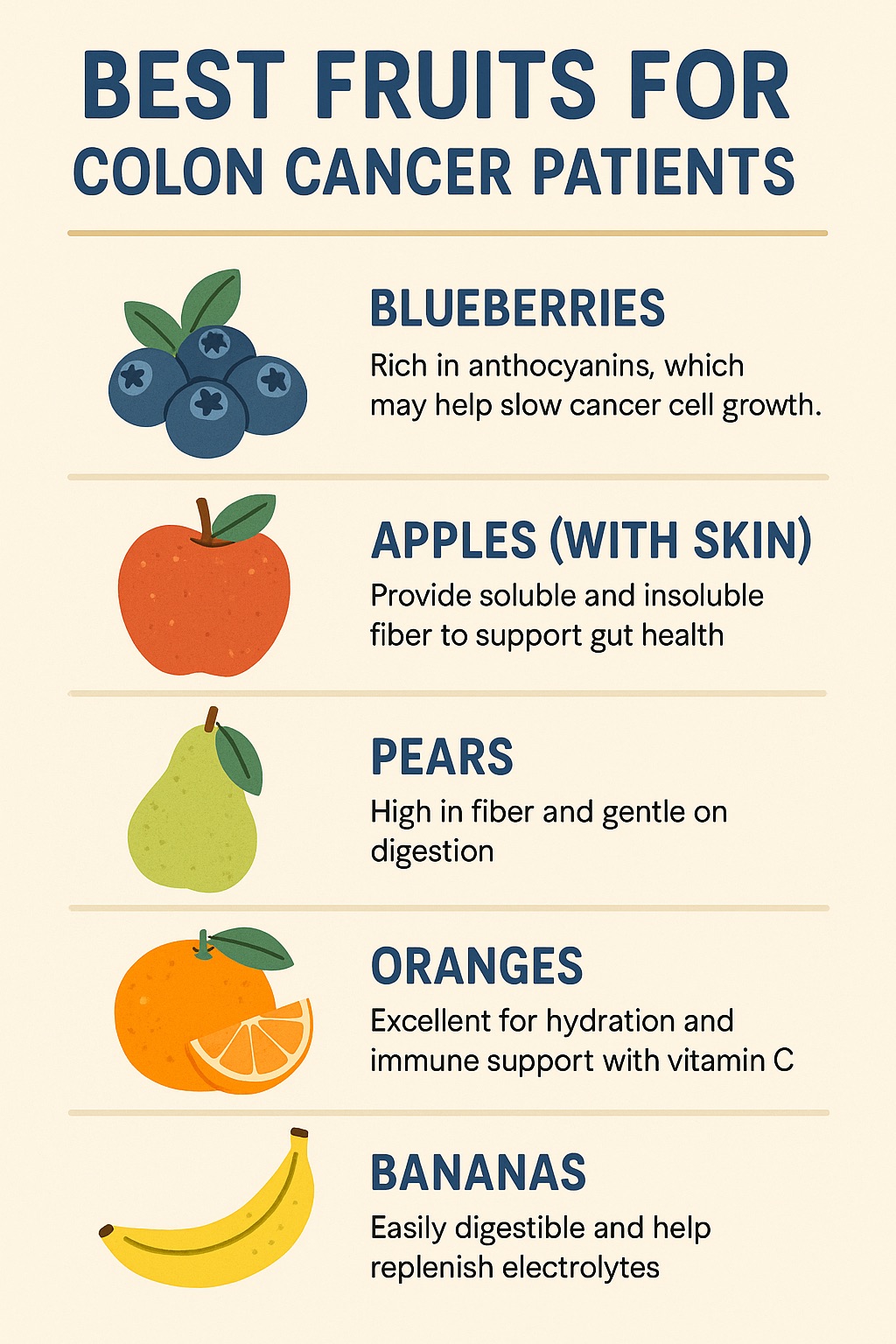
Blueberries
Rich in anthocyanins, which may help slow cancer cell growth.
Apples (with skin)
Provide soluble and insoluble fiber to support gut health.
Pears
High in fiber and gentle on digestion.
Oranges
Excellent for hydration and immune support with vitamin C.
Bananas
Easily digestible and help replenish electrolytes.
Go for whole fruits over juices for the fiber benefit.
Your diet isn’t just fuel—it’s a frontline defense against colorectal cancer. Whether you’re trying to prevent cancer, navigating treatment, or recovering post-treatment, making smart food choices matters.
Staying hydrated, eating more plants, limiting processed foods, and choosing anti-inflammatory ingredients can go a long way in improving both quality of life and outcomes.