Feeling nervous before your first pelvic exam and Pap smear is completely normal. Almost everyone feels some anxiety before this appointment, and that’s okay. The unknown can feel scary, but knowing what to expect can help calm those nerves. This is a routine procedure that healthcare providers do many times every single day, and they understand how vulnerable and anxious you might feel.
The good news is that while the exam might feel uncomfortable or awkward, it’s usually quick and shouldn’t be painful. Most people walk out thinking it wasn’t nearly as bad as they’d built it up to be in their minds. Taking a few minutes to prepare yourself mentally and physically can make the experience much smoother.
What actually happens during a Pap smear?
Understanding the process helps reduce anxiety because you’ll know what’s coming next at each step. When you arrive, you’ll check in like any doctor’s appointment. A nurse or medical assistant will take you back, check your vital signs, and ask some health questions. They’ll want to know about your menstrual cycle, sexual activity, birth control use, and any symptoms you’re experiencing.
You’ll be given a gown or drape and asked to undress from the waist down. Most offices give you privacy to change, though some have the provider step out while you get situated. You’ll sit on an exam table that has foot rests called stirrups. These help position your legs comfortably during the exam.
The provider will come in and talk with you before starting the physical exam. This is a good time to mention that you’re nervous or if you have any questions. They’ll explain what they’re about to do at each step, which helps you stay informed rather than surprised.
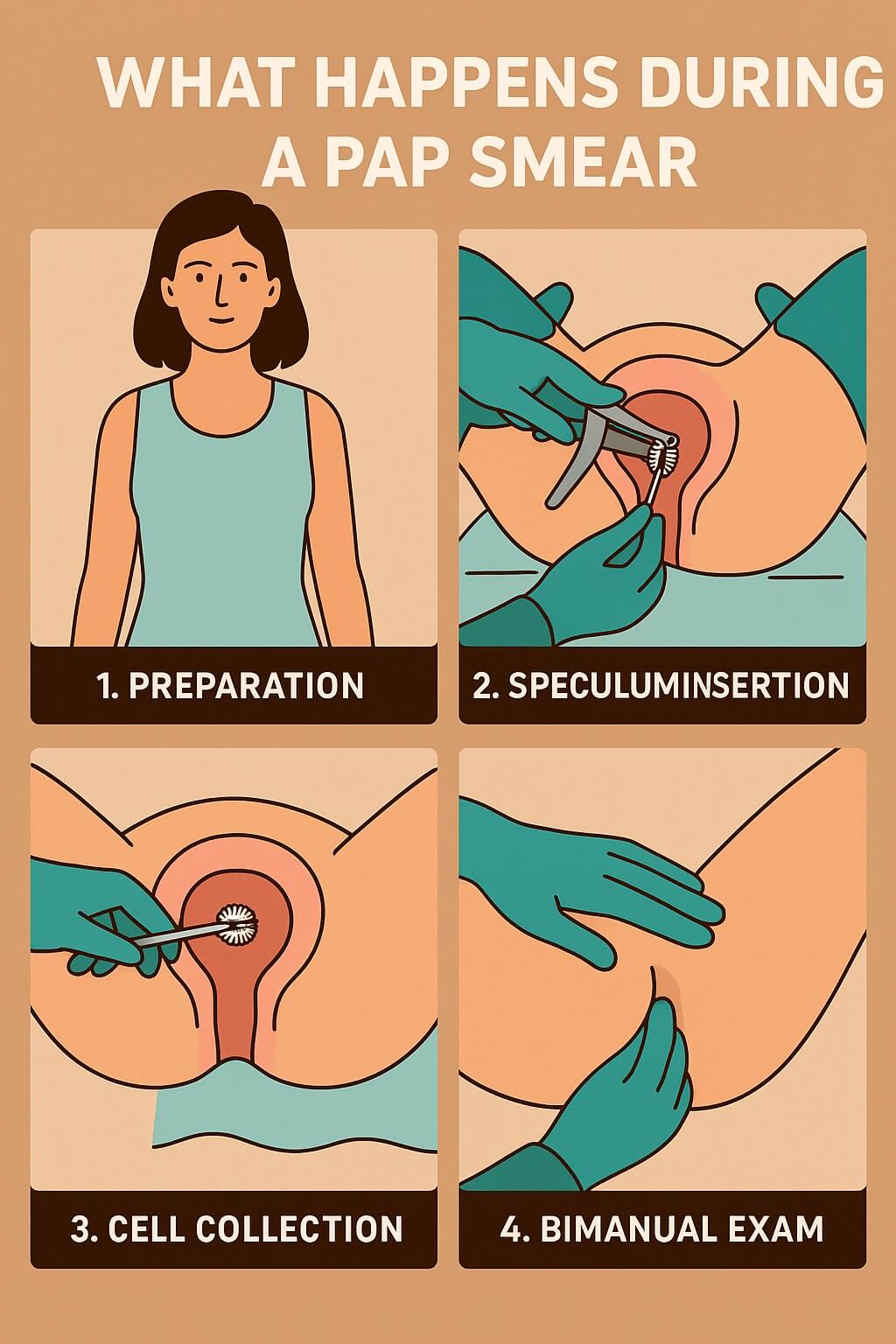
The actual pelvic exam has two main parts. First, the provider does an external check, looking at the outside to make sure everything appears healthy. Then comes the internal exam, which is what most people worry about. The provider uses a speculum, which is a plastic or metal instrument that gently opens the vaginal canal so they can see the cervix.
The speculum feels like pressure and can be uncomfortable, but it shouldn’t hurt. If it does hurt, tell your provider immediately. They can adjust the size or position. Once the speculum is in place, the provider uses a small brush or spatula to collect cells from your cervix. This takes just a few seconds and feels like a little scratch or weird sensation, but again, it shouldn’t be painful.
After collecting the sample, the speculum comes out. The provider then does a bimanual exam, using their fingers internally and their other hand on your abdomen to check your uterus and ovaries. This involves some pressure but should be brief. The entire examination usually takes less than five minutes, though it might feel longer when you’re nervous.
How should I prepare physically before my appointment?
The most important physical preparation is scheduling your appointment at the right time in your cycle. Try to avoid scheduling during your period, as menstrual blood can interfere with the test results. The best time is usually about two weeks after your period starts, though any time you’re not bleeding heavily works fine.
For the day or two before your appointment, avoid putting anything inside your vagina. This means no intercourse, no douching, no tampons, and no vaginal medications or creams unless your doctor specifically told you to use them. These can wash away or obscure the cells that need to be collected, potentially affecting your results.
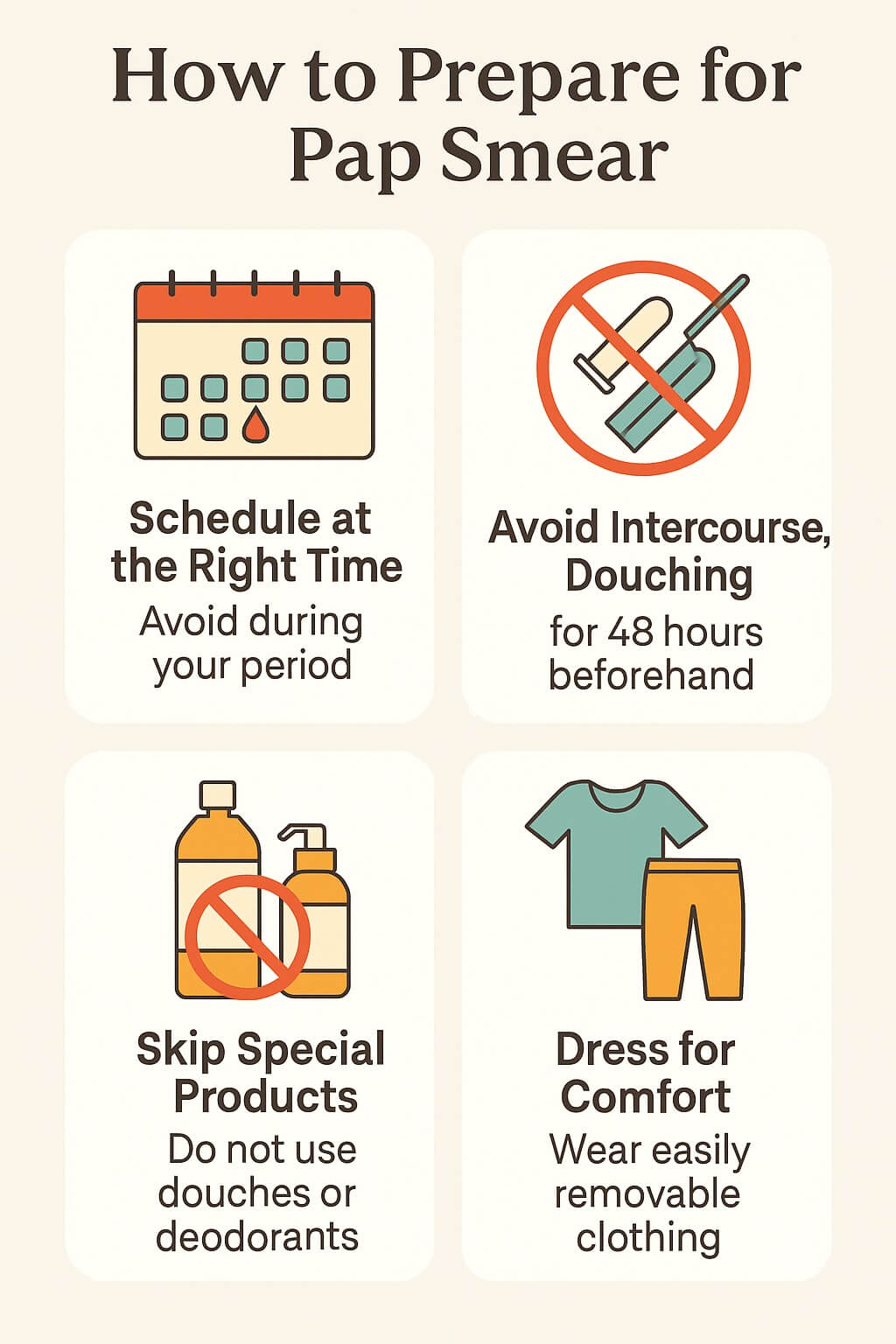
Some people wonder about grooming and hygiene. Here’s the truth: your provider doesn’t care about your grooming choices. They’ve seen every variation imaginable, and their focus is on your health, not your appearance. A regular shower is perfectly fine. There’s no need for special cleaning or scented products. In fact, avoid using douches or vaginal deodorants, as these can irritate sensitive tissue and aren’t healthy for your vaginal environment anyway.
Wear comfortable clothing that’s easy to take off and put back on. A dress or skirt with a loose top can be more convenient than tight jeans, though wear whatever makes you feel most comfortable. Some people bring socks because the exam room can be cold and it feels nice to have warm feet.
If you take any regular medications, continue taking them as prescribed unless your doctor has given you different instructions. If you’re on your period and the appointment can’t be rescheduled, call the office to ask if you should still come in. Sometimes they’ll reschedule, but for some situations, they might still want to see you.
What can I do to feel less anxious about the exam?
Mental preparation matters just as much as physical preparation. Start by reminding yourself why this exam is important. Pap smears detect abnormal cervical cells early, when they’re most treatable. This screening has dramatically reduced cervical cancer rates. You’re doing something proactive and responsible for your health.
Consider bringing someone with you if that would make you feel more supported. Most clinics allow a friend or family member to sit with you during the exam if you want. Having someone hold your hand or chat with you during the procedure can provide welcome distraction and comfort.
Practice some deep breathing exercises before your appointment and during the exam itself. When we’re nervous, we tend to tense up, which actually makes the exam more uncomfortable. Taking slow, deep breaths helps your muscles relax. Try breathing in through your nose for four counts, holding for four counts, then exhaling through your mouth for four counts.
Many people find it helpful to bring headphones and listen to music or a podcast during the exam. Ask your provider if this is okay. Having something else to focus on can help you stay calmer and make the time pass more quickly.
Remember that you have control during this exam. You can ask the provider to stop at any point. You can ask questions. You can request a different size speculum if the first one is uncomfortable. You can ask for a nurse to be present if that makes you feel more secure. This is your body and your appointment, and good providers will respect your needs.
If you’ve experienced trauma or have particular concerns about this type of exam, mention this to your provider before the exam begins. They can take extra care to explain everything, go slowly, and help you feel as safe as possible. There’s no shame in having these concerns, and providers are trained to work with patients who need extra support.
Does a Pap smear hurt?
For most people, a Pap smear doesn’t hurt, but it does feel uncomfortable and strange. The sensations are unfamiliar, which can make them feel worse than they actually are. The speculum creates a feeling of pressure and stretching, which is uncomfortable but typically not painful.
The cell collection itself might feel like a scratch, pinch, or tickle. Some people describe it as feeling like a fingernail scraping, but very briefly. It’s an odd sensation more than a painful one. The discomfort lasts only seconds while the sample is being collected.
Pain during a Pap smear can happen if your muscles are very tense, if the speculum size isn’t right for your body, or if you have certain medical conditions that make the exam more sensitive. If you feel actual pain rather than just discomfort, speak up immediately. Your provider can make adjustments to reduce the pain.
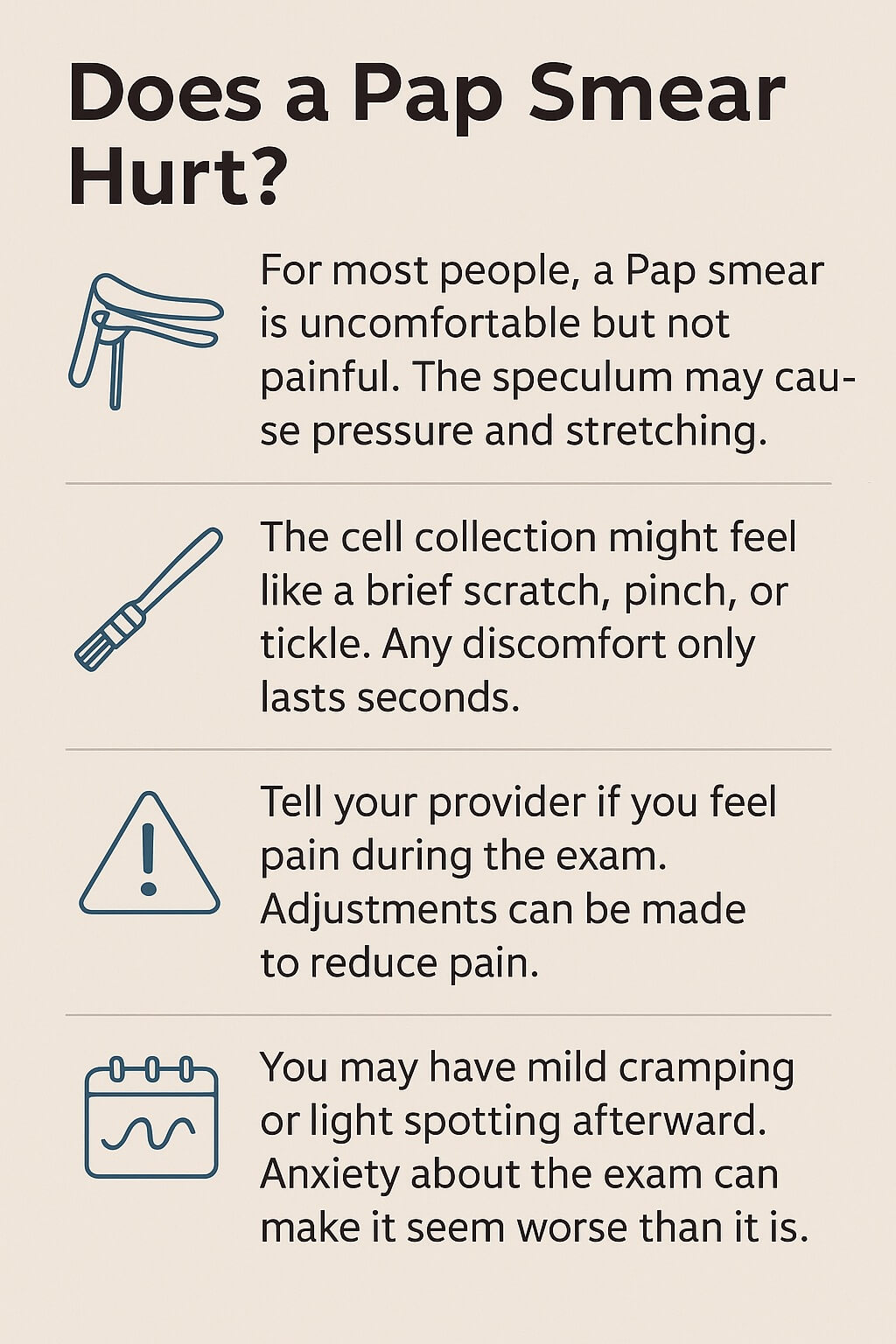
Some people experience mild cramping during or after the exam, similar to menstrual cramps but usually much milder. This is normal and typically goes away within a few minutes to a few hours. You might also notice some light spotting or discharge afterward, which is completely normal and happens because the cervix was touched during the exam.
The anticipation and anxiety often feel worse than the actual exam. Many people report being relieved that it wasn’t as bad as they expected. The buildup in your mind can create more suffering than the brief physical discomfort of the procedure itself.
What questions should I ask my healthcare provider?
Don’t hesitate to ask questions before, during, or after your exam. Providers expect questions, especially from first-time patients. Before the exam starts, you might ask when you’ll get your results and how you’ll be notified. Most offices call only if there’s an abnormal result, but practices vary.
Ask what happens if your results come back abnormal. Understanding that abnormal results are fairly common and usually don’t mean cancer can ease your anxiety. Most abnormal Pap smears require monitoring or minor follow-up procedures rather than serious intervention.
If you’re sexually active or planning to become sexually active, this is a good time to discuss birth control options, STI testing, and any questions about sexual health. Your provider is there to give you information without judgment. These conversations are confidential and important for your overall wellness.
You can ask about what size speculum will be used and whether a smaller size is available if you’re concerned about discomfort. You can ask the provider to narrate what they’re doing during the exam so you’re not surprised by any sensations.
If you have specific health concerns like irregular periods, painful periods, unusual discharge, or pain during sex, bring these up. The pelvic exam is an opportunity for your provider to check for issues that might explain these symptoms.
Don’t forget to ask when you need to come back for your next Pap smear. Screening intervals have changed in recent years, and the recommendation depends on your age and health history. Understanding your personal screening schedule helps you stay on top of preventive care.
What should I do if I feel too overwhelmed to go through with it?
If you arrive at your appointment and feel completely overwhelmed, it’s okay to say so. You can ask to just talk with the provider first without doing the exam. Sometimes having a conversation and getting your questions answered makes the exam feel less scary.
You can also request that the provider explain every single step before they do it during the exam. Knowing exactly what’s about to happen gives you a sense of control and prevents surprises. Some people find this constant narration comforting.
If you truly can’t go through with the exam that day, you can reschedule. While it’s better for your health to have the screening done, one rescheduled appointment isn’t the end of the world. However, try not to let fear keep you from rescheduling and following through. Avoidance tends to make anxiety worse over time.
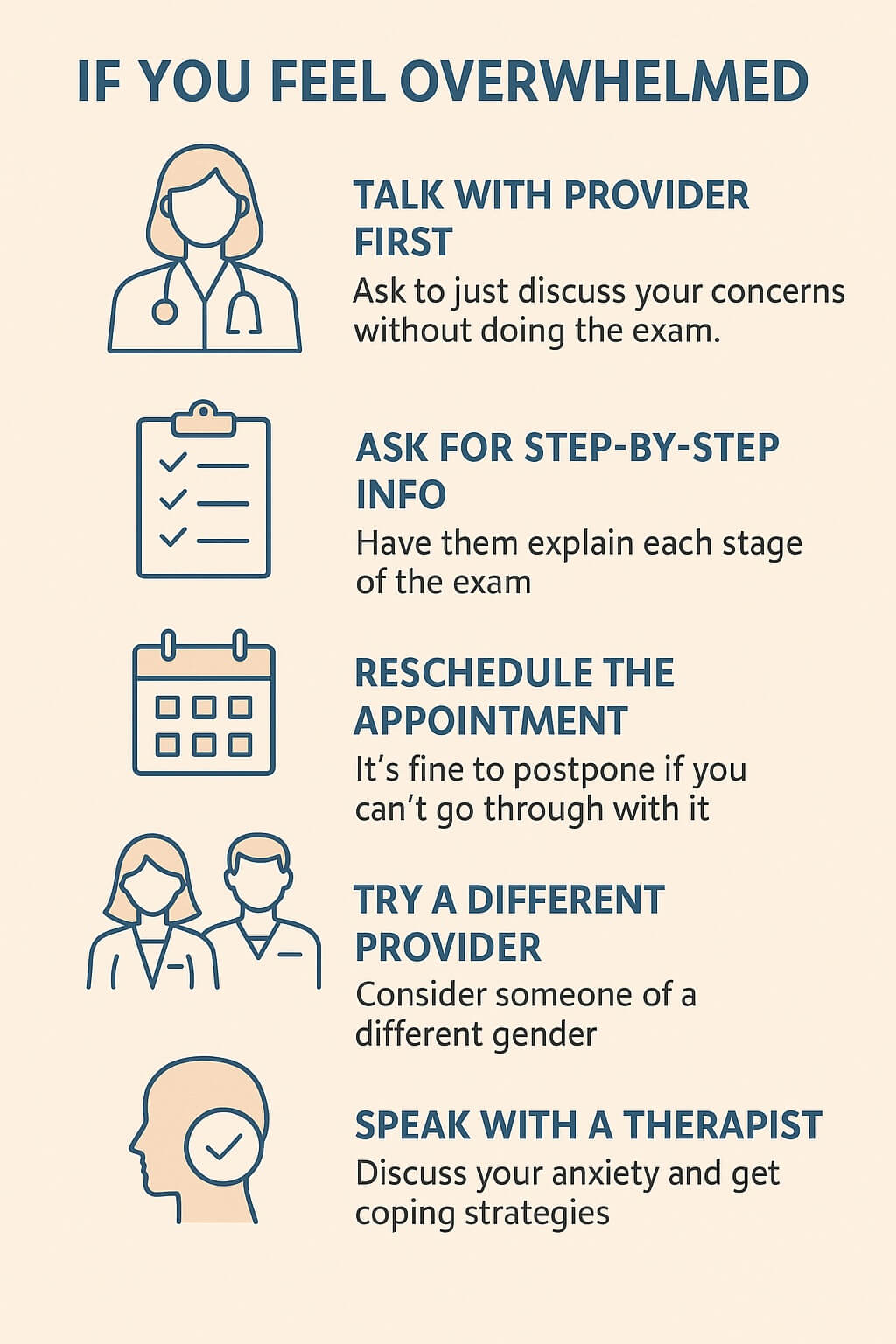
Consider whether having a different type of provider would help. Some people feel more comfortable with a female provider, while others have a strong preference for a male provider. Some prefer a doctor, while others find nurse practitioners or physician assistants less intimidating. It’s okay to have preferences, and most clinics try to accommodate them when possible.
If your anxiety about this exam is severe or related to past trauma, speaking with a therapist before your appointment might help. A mental health professional can give you specific coping strategies and work through the underlying fears or experiences that make this feel so threatening.
Remember that millions of people go through this exam every year, including people who were just as nervous as you are. The anticipation is often the hardest part. Once you get through your first exam, subsequent ones become much easier because you know what to expect.
Can I bring someone with me for support?
Yes, most healthcare offices allow you to bring a support person if that makes you feel more comfortable. This could be a parent, friend, partner, or anyone else you trust. Having someone familiar nearby can make the experience less isolating and scary.
Your support person can usually stay in the room during the exam if you want them there. They can hold your hand, help you with breathing exercises, or just provide a friendly face to focus on. Let the office know when you check in that you’d like someone to accompany you.
Some people prefer privacy during the exam and would rather have their support person wait in the waiting room. That’s completely fine too. There’s no right or wrong choice here. Do whatever makes you feel most comfortable and secure.
If you’re bringing someone along, choose someone who will be calming rather than adding to your stress. The person should be respectful of the medical staff and understand that this is your appointment and your body. They’re there to support you, not to interfere with the exam or make demands.
Talk with your support person beforehand about what you need from them. Maybe you want them to distract you with conversation, or maybe you need quiet presence. Maybe you want them to ask questions on your behalf, or maybe you want to handle all communication yourself. Being clear about expectations helps everyone involved.
What happens after the Pap smear is done?
Once the exam is finished, you’ll be given privacy to get dressed. Take your time and don’t rush. If you feel dizzy or lightheaded, sit for a few minutes before standing up. This can happen from nervousness or from lying in an unusual position.
You might notice some light spotting or discharge afterward. This is completely normal and happens because the cervix was touched during cell collection. Wearing a thin pad or panty liner for the rest of the day is a good idea. The spotting should be very light and stop within a day or two.
Some mild cramping is also normal after the exam. It usually passes quickly, but you can take over-the-counter pain medication if needed. Most people feel completely fine within an hour or two and can return to normal activities right away.
Your provider will let you know when to expect results, which is usually within one to three weeks. Many offices use online patient portals where you can check your results. Don’t panic if you see your results online before anyone calls you. Abnormal results are surprisingly common and usually indicate minor changes that just need monitoring.
If your results are normal, that’s great news. Make sure you understand when you need your next Pap smear. Guidelines vary based on age and health history, but many people with normal results don’t need another one for three to five years, depending on the type of test performed.
If your results show any abnormalities, your provider will contact you to explain what was found and what the next steps are. Try not to panic. Abnormal Pap smears rarely mean cancer. They usually show minor cell changes that either resolve on their own or need simple follow-up procedures.
How often do I need to get Pap smears after this first one?
Screening recommendations have changed over the years based on better understanding of cervical cancer development. Current guidelines suggest that people with cervixes start cervical cancer screening at age 21, regardless of when they became sexually active.
From ages 21 to 29, the recommendation is typically a Pap smear every three years if results are normal. You don’t need annual Pap smears in this age group unless you have specific risk factors or previous abnormal results.
Starting at age 30, you have options. You can continue with Pap smears alone every three years, or you can have a Pap smear combined with HPV testing every five years. The combination test is becoming more common because HPV (human papillomavirus) causes most cervical cancers, so testing for both provides more comprehensive screening.
These are general guidelines, and your specific situation might call for different timing. If you have a history of abnormal Pap smears, a weakened immune system, HIV, or certain other risk factors, you might need more frequent screening. Your healthcare provider will create a screening schedule that’s right for your individual health needs.
Many people are surprised to learn they don’t need annual Pap smears. The guidelines changed because research showed that cervical cancer develops slowly, and screening too frequently can lead to unnecessary procedures for changes that would have resolved on their own. However, you should still see your healthcare provider annually for other preventive care, even in years when you don’t need a Pap smear.
What if I have my period on the day of my appointment?
If you start your period right before your appointment, call the office to ask whether you should reschedule. Light bleeding typically isn’t a problem, but heavy menstrual flow can interfere with getting a good cell sample and might affect the accuracy of results.
Many offices will reschedule Pap smears if you’re on your period, especially during the heavier days. However, if you’re there for other concerns beyond just the screening, the provider might want to see you anyway and can decide whether to attempt the Pap or schedule it for another time.
If you’re using tampons and have an appointment scheduled, remove your tampon before you arrive or when you’re changing into the gown. Don’t worry about the provider seeing menstrual blood. They’re medical professionals who deal with all types of bodily fluids every day and won’t be bothered by it.
Some people worry about having their period because they think it’s messy or embarrassing. Remember that gynecological providers see patients on their periods regularly. It’s not something that fazes them or makes them uncomfortable. They’re focused on your health, not on being squeamish.
If your appointment involves discussing period problems, having your period during the visit might actually help the provider assess what you’re experiencing. They can see firsthand what your flow is like or examine any concerns you have about your menstrual cycle.
Is it normal to feel emotional after my first exam?
Many people experience a range of emotions after their first pelvic exam and Pap smear. You might feel relief that it’s over, pride that you did something intimidating, vulnerability from the intimate nature of the exam, or even embarrassment about the experience. All of these reactions are completely normal.
Some people feel emotional because the exam marks a transition into adult healthcare responsibilities. It’s a milestone that recognizes your growing autonomy over your body and health. That can bring up complicated feelings about getting older and taking on new responsibilities.
If you felt particularly vulnerable or uncomfortable during the exam, you might need some time to process those feelings. Be gentle with yourself and do something comforting afterward. Meet a friend for lunch, watch a favorite show, or do whatever helps you feel cared for and grounded.
For people who have experienced trauma, especially sexual trauma, pelvic exams can trigger difficult emotions even when the exam itself goes smoothly. If you find yourself struggling with unexpected emotional reactions, consider reaching out to a therapist who can help you process these feelings.
On the flip side, many people feel empowered after their first exam. They faced something scary and got through it. They took charge of their health in an important way. That’s definitely worth celebrating, even if the celebration is just patting yourself on the back for being brave.
What’s the most important thing to remember?
The single most important thing to remember is that this exam is routine preventive care, just like getting your teeth cleaned or your blood pressure checked. It’s not a judgment of you or your body. It’s not a punishment or something to dread. It’s a tool that helps keep you healthy.
Your healthcare provider has done hundreds or thousands of these exams. What feels intensely personal and vulnerable to you is, for them, a standard medical procedure. They’re not judging your body, your grooming choices, or anything else about you. They’re simply checking to make sure you’re healthy.
You survived every scary “first” you’ve ever faced. You got through your first day of school, your first job interview, your first time driving on the highway. This is just another first, and like all the others, it becomes easier with experience. Next time won’t feel nearly as intimidating.
Taking care of your health is one of the most important things you can do for yourself. By showing up for this appointment, even though you’re nervous, you’re demonstrating maturity and self-care. That’s something to feel good about.
Be kind to yourself through this experience. Acknowledge that it’s okay to feel nervous. Allow yourself to ask for what you need. Give yourself credit for doing something that feels difficult. And remember that millions of people before you have been exactly where you are right now, feeling exactly what you’re feeling, and they got through it just fine. You will too.