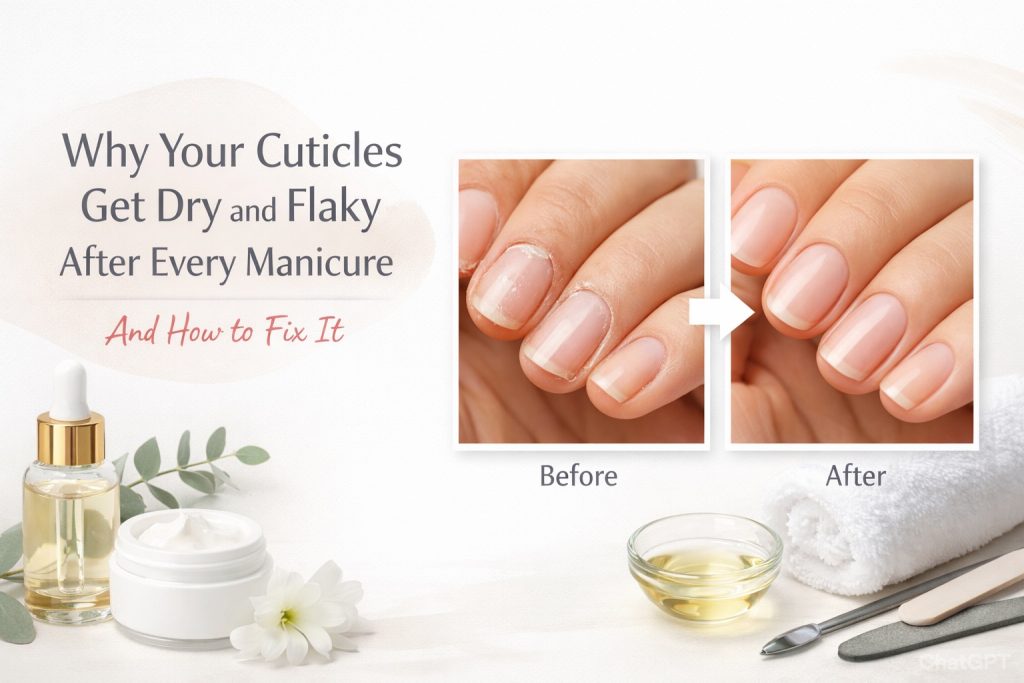
There is a frustrating pattern that many people experience but rarely talk about: you leave the nail salon with a fresh, polished manicure that looks flawless — and then, within a few days, the skin around your nails starts to dry out, crack, peel, and sometimes even hurt. You know it is connected to the manicure because it does not happen when you skip the salon. But figuring out exactly what is causing it, and more importantly, how to stop it, can feel like solving a mystery without any clues.
The truth is, this problem is extremely common. It is not something you are imagining, and it is not necessarily a sign that your nail technician is doing something wrong. Often, it is a combination of the products being used, the techniques being applied, and how your skin responds to the process. The good news is that once you understand what is happening during your manicure and why your cuticles are reacting this way, you can take specific steps to prevent the dryness and keep your hands looking and feeling healthy between appointments.
This guide will walk you through the science of why cuticles get dry after manicures, what specific salon practices contribute to the problem, whether you should be asking your manicurist to skip certain steps, and most importantly, how to care for your cuticles at home so this cycle stops repeating itself.
What Are Cuticles and Why Do They Matter?
Before diving into what goes wrong during a manicure, it helps to understand what cuticles actually do and why they are so sensitive in the first place.
The cuticle is a layer of clear skin located along the bottom edge of your finger or toe, which is called the nail bed. The cuticle protects new nails from bacteria when they grow out from the nail root. Think of your cuticles as a protective seal — similar to the weatherstripping around a door that keeps moisture and debris from getting in where it does not belong.
The cuticles provide a tight seal between the skin and the nail plate, preventing the entry of bacteria, viruses and fungi. When the cuticles become dry, they lift and the nail can become infected. This is why keeping your cuticles healthy is not just about aesthetics — it is also about protecting the nail matrix, which is the part of your nail responsible for producing new nail cells. Damage to that area can lead to ridges, discoloration, and even permanent changes in how your nails grow.
The skin around your cuticles is naturally thin and delicate. It does not produce as much natural oil as other parts of your body, which means it dries out faster. Cuticles are more prone to peeling in dry environments. When you add in the exposure to water, chemicals, and physical manipulation that happens during a manicure, that delicate skin can quickly become compromised.
Why Do Cuticles Get Dry and Flaky After Manicures?
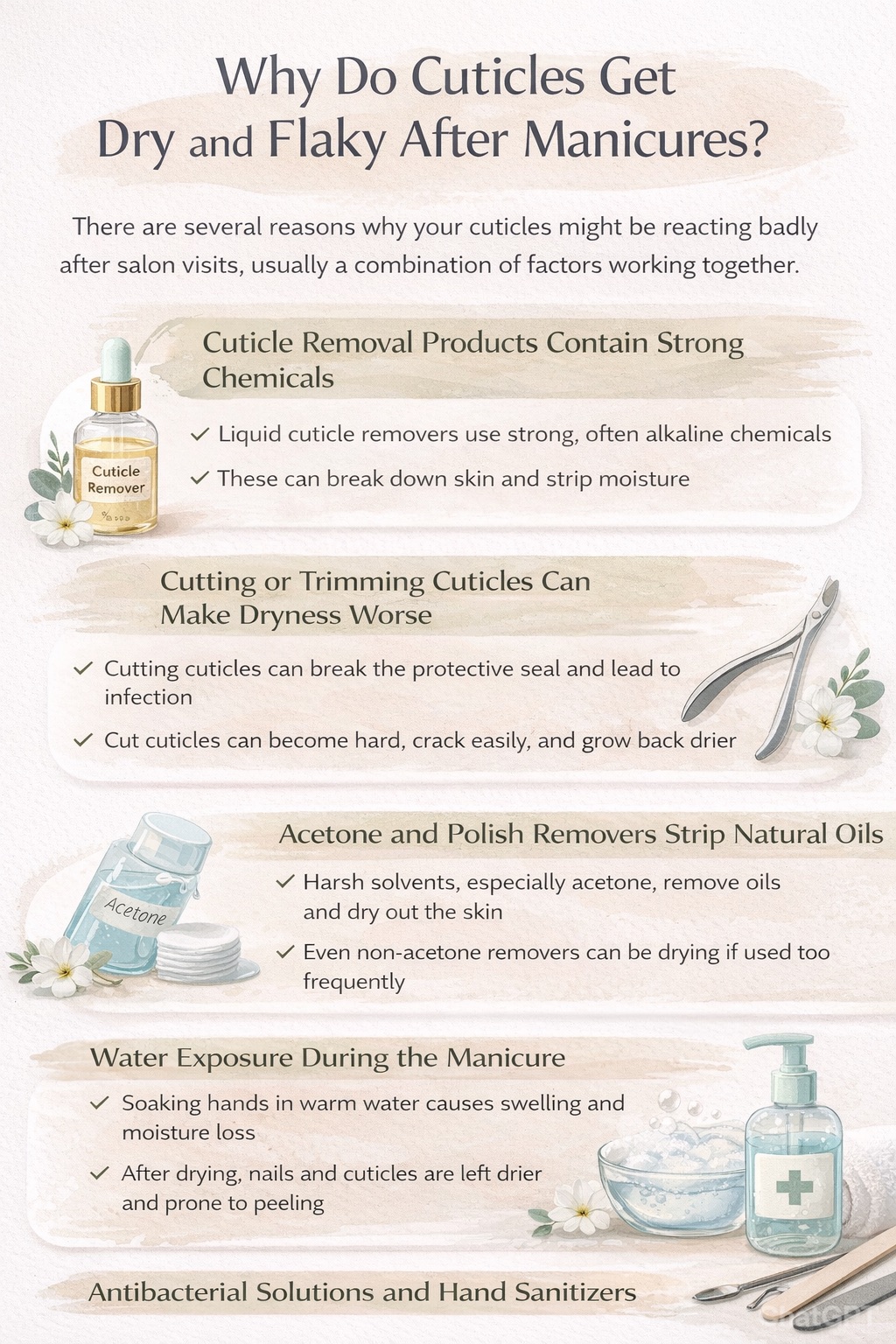
There are several specific reasons why your cuticles might be reacting badly after salon visits, and it is rarely just one thing — it is usually a combination of factors working together.
Cuticle Removal Products Contain Strong Chemicals
Often during a manicure, your cuticles are removed with a cuticle nipper or liquid cuticle remover that fully dissolves the skin. Liquid cuticle removers are designed to chemically break down the protein bonds in dead skin, which makes it easier to push back or wipe away excess cuticle. The active ingredients in these products — often alkaline compounds like potassium hydroxide or sodium hydroxide — are effective, but they are also quite harsh.
While the cuticle remover is doing its job on the dead skin, it is also drying out the living skin around the nail bed. If the product is left on too long, or if it is used too frequently, the skin around your nails can become severely dehydrated. Manicurists also soak instruments in antibacterial solutions, which can be irritating to skin. Even brief contact with these solutions — which often contain alcohol or other drying agents — can strip moisture from your cuticles.
Cutting or Trimming Cuticles Can Make Dryness Worse
One of the most debated practices in nail care is whether cuticles should be cut at all. Trimming the cuticles can break the seal that protects the surrounding skin from infection. Not only can biting or cutting the cuticles introduce infection, but without the cuticle barrier to protect that surrounding skin and developing nail, an infection is more likely to develop.
Cutting the cuticles can make them hard, causing them to crack, too. When living tissue is cut, the body responds by producing tougher, thicker skin in that area as it heals — similar to how a callus forms on your hands or feet. This means that cutting your cuticles can actually make them grow back drier, harder, and more prone to cracking and peeling than they were before.
A few clients have recently returned a few weeks after their manicure for another one and advised that the skin has started to tear, split and fray and become sore descending from the cuticle area down the finger not long after their treatment. This is a common pattern: the manicure looks clean and polished immediately afterward, but the cuticles grow back irritated and damaged within days.
Acetone and Polish Removers Strip Natural Oils
Acetone is a very powerful solvent that also happens to be the most effective method of removing polish. But, it can strip the natural oils from your skin. If you are getting gel polish removed, that process typically involves soaking your nails in acetone for several minutes — which is more than enough time for the solvent to pull moisture out of not just your nails, but also the skin surrounding them.
Even non-acetone removers, while gentler, can still contribute to dryness if used frequently. Avoid any products with harsh chemicals that can dry out your cuticles, such as: nail polish removers.
Water Exposure During the Manicure
Excess water exposure, particularly if the water is hot, can further dry out your skin and exacerbate cuticles peeling. Many traditional manicures begin with soaking your hands in warm, soapy water to soften the cuticles. While this feels relaxing and does make the cuticles easier to work with, it also causes your nails and the surrounding skin to absorb water and swell temporarily.
Nails are porous and will absorb water, causing them to swell. If nails expand from water and then shrink back as they dry, your fresh polish can loosen and start to peel off. As your hands dry after the manicure, that water evaporates — and when it does, it often takes your skin’s natural moisture with it, leaving your cuticles even drier than they were before you walked into the salon.
Antibacterial Solutions and Hand Sanitizers
It’s usually because the skin is too dry, but you could also be allergic to glues or acetone removers. Manicurists also soak instruments in antibacterial solutions, which can be irritating to skin. If your nail technician is handling tools that have been soaking in these solutions and then touching your cuticles without thoroughly rinsing them first, trace amounts of these products can transfer to your skin and cause irritation or dryness.
Additionally, many salons have hand sanitizer available at every station, and you likely use it before and after your appointment. Use alcohol-free, no-drying hand sanitizer. Regular hand sanitizers are alcohol-based and, while excellent for killing germs, are also extremely drying to the skin.
Should You Ask Your Manicurist Not to Remove Your Cuticles?
This is one of the most frequently asked questions when it comes to preventing dry, damaged cuticles after a manicure — and the answer depends on your personal skin sensitivity and what you prioritize.
Most nail salons continue to cut cuticles, despite these guidelines. They argue that it helps polish go on better and stay on longer. Instead of having them cut at your next manicure, ask your technician to just push back the cuticle and trim loose skin and hangnails.
Before getting your nails done, tell your manicurist that you only want your cuticles pushed back very gently with an orange stick, nothing more. If they push the cuticles too vigorously, ask them to stop right away. Most professional nail technicians are happy to accommodate requests like this — they want you to be comfortable and happy with the service. If you feel awkward speaking up, remember that it is your appointment, your hands, and your comfort.
Yes, you can tell the nail technician not to cut your cuticles. When I sit down with the nail technician, I tell her what I want prior to her starting the manicure on my nails. Setting expectations at the beginning of the appointment makes the entire process smoother for both you and the technician.
What Should Happen Instead of Cutting?
When the cuticle tissue is soft, you can gently push it back with a washcloth. It’s just as effective at keeping that tissue kind of kempt and clean. A good cuticle remover gel or cream can soften the dead skin enough that it can simply be pushed back or gently wiped away with a soft tool — no cutting required.
Why would you cut cuticle? Normally it just will lift off with the proper tools and a good cuticle remover. The only skin I can push back is the eponychium which is living and of course this should never be cut. The eponychium is the thin layer of living skin that adheres to your nail plate. Cutting this tissue causes pain, opens you up to infection, and leads to the chronic dryness and peeling that so many people experience.
If you have loose, hanging bits of skin or hangnails, those can be carefully trimmed at the base with a clean, sharp cuticle nipper. But removing the entire cuticle is unnecessary and counterproductive for most people.
How to Care for Your Cuticles at Home Between Manicures
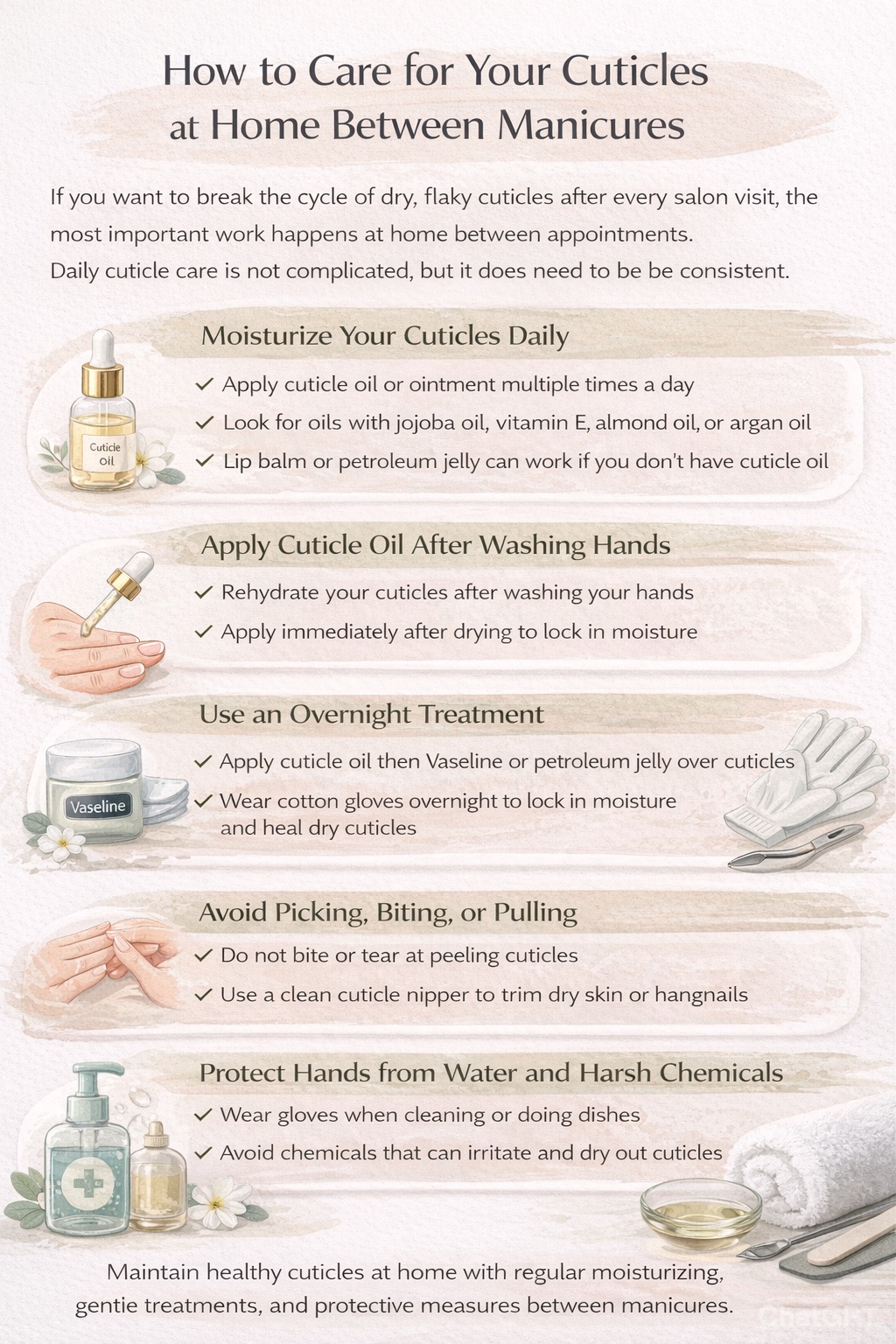
If you want to break the cycle of dry, flaky cuticles after every salon visit, the most important work happens at home between appointments. Daily cuticle care is not complicated, but it does need to be consistent.
Moisturize Your Cuticles Daily (or Multiple Times a Day)
Cuticle oils or ointments should be applied daily or more if needed just like you apply moisturizer to your face every day. Cuticle oil is specifically formulated to penetrate the nail and surrounding skin quickly. This lightweight oil is designed to penetrate and condition both the dry skin around your nails and the nails themselves. Applying it regularly can make a massive difference in the health and appearance of your manicure.
Oils are preferred to creams, as creams often attract lint and dirt and are not absorbed as effectively by cuticle tissue. Look for oils that contain natural ingredients like jojoba oil, vitamin E, almond oil, or argan oil. These absorb quickly, do not leave a greasy residue, and provide deep hydration.
If you do not want to invest in a dedicated cuticle oil, Lip balm might not be your first thought to treat dry cuticles, but here’s the truth: dry lips and dry skin are cured the same way. So, while you could buy an expensive cuticle oil, you could instead realize that the same active ingredients in your cuticle cream are in your lip balm. A good quality lip balm or petroleum jelly applied to your cuticles works just as well and costs far less.
Apply Cuticle Oil Right After Washing Your Hands
The same way you likely apply lotion to your body after a shower or moisturize while your face is damp, applying cuticle oil after you wash your hands or expose them to water can help restore moisture to the area. Your cuticles are most vulnerable right after they get wet — that is when the water evaporation pulls natural oils away from the skin. Applying oil immediately after drying your hands creates a protective barrier that locks in hydration.
Use an Overnight Treatment
I also suggest applying Vaseline over the area (and wearing gloves) before bedtime for a deep, overnight treatment. This can be done a few days before a manicure, but is better for your skin when it’s done a few times per week on a regular basis.
Put a small amount of cuticle oil or hand cream around your fingers each night, and apply petroleum jelly like Vaseline over the top. This will lock in moisture and protect your cuticles from damage or dryness. This will help heal and strengthen your cuticles and nails overnight. If you can get into the habit of doing this even just twice a week, you will notice a significant difference in how soft and resilient your cuticles become.
Avoid Picking, Biting, or Pulling at Your Cuticles
If a cuticle is peeling or a hangnail is developing, never bite or tear, which can lead to infection. Instead, use a clean cuticle nipper to cut the peeling cuticle or hangnail at its base. Only cut the part of skin that is peeling — avoid removing the entire cuticle.
Maybe you’re a nervous nail biter and cuticle biter, or maybe your cuticles are just chronically dry and you can’t resist picking off that frayed cuticle. Either way, dryness causes those hangnails that are just screaming to be ripped off. So, cure the dryness and the temptation goes away.
Protect Your Hands From Water and Harsh Chemicals
Whether you’re wiping down your kitchen countertop or washing dishes after a big dinner, if you’re exposing your hands to a lot of water, they should always be covered in dish gloves. This applies to cleaning with household chemicals, doing yardwork, or any activity where your hands will be submerged in water or exposed to irritants for an extended period.
Washing dishes, cleaning without gloves on, exposure to chemicals and not moisturizing your hands can dry out skin, leading to frayed cuticles and ragged skin. Even though this advice sounds simple, it is one of the most effective ways to prevent cuticle damage in the first place.
Consider Taking a Break From Regular Manicures
Taking a break from your regular manicures for one to two weeks may help stop the peeling for a while. If your cuticles are severely damaged, cracked, or infected, giving them a rest from chemical exposure and physical manipulation can allow them to heal fully before you go back to the salon.
During this break, focus on deep hydration and gentle care. Once your cuticles have recovered, you can resume manicures with a better understanding of what to ask for and how to protect your skin.
What Products to Avoid (And What to Look For Instead)
If you are prone to dry cuticles after manicures, being selective about the products used during your appointment can make a real difference.
Avoid Acetone-Based Polish Removers
If holding off from the nail salon is not a possibility, then I would say to use acetone-free nail polish removers because they are less harsh on your skin. Many salons now offer non-acetone options for regular polish removal. If you are getting gel polish, acetone is unfortunately necessary — but you can ask your technician to apply cuticle oil or a protective barrier around your cuticles before soaking to minimize direct exposure.
Choose Gentle, Non-Toxic Nail Polishes
To limit exposure to chemicals altogether, try a gentle, nontoxic nail polish that is free of potentially harmful ingredients like camphor, ethyl, formaldehyde resin, tosylamide, toluene and xylene. These chemicals are found in many traditional nail polishes and can contribute to skin sensitivity and dryness. Many modern nail polish lines now advertise themselves as “5-free,” “7-free,” or even “10-free,” meaning they exclude the most harmful chemicals commonly found in polish.
Use Alcohol-Free Hand Sanitizer
Use alcohol-free, no-drying hand sanitizer. Also, use acetone-free polish remover. This applies both at the salon and at home. Alcohol-based sanitizers are convenient and effective, but they are also one of the leading causes of chronic hand and cuticle dryness — especially if you are using them multiple times a day.
Look for Cuticle Oils With Natural Ingredients
Use a cuticle oil with natural oils like jojoba oil, almond oil, aloe vera gel, or coconut oil to hydrate and soothe your fingers. These ingredients are gentle, deeply moisturizing, and do not contain synthetic fragrances or additives that can irritate sensitive skin.
When Dry Cuticles Might Indicate a Bigger Problem
In most cases, dry and flaky cuticles after a manicure are simply a result of product exposure and physical manipulation. However, if your cuticles are consistently painful, inflamed, or not responding to home care, it might be worth looking at other potential causes.
Vitamin and Mineral Deficiencies
A lack of certain vitamins and minerals, such as vitamin B, vitamin E, and zinc, can affect skin and nail health. A zinc deficiency can cause cuticles to become dry and inflamed. If your cuticles are chronically dry no matter how much you moisturize, it might be worth talking to your doctor about whether a nutritional deficiency could be contributing.
Dry skin can be a sign that you need to increase your intake of essential fatty acids and/or vitamins A and E. A daily multivitamin, biotin, and even fish oil, can help promote healthy skin around your nails.
Underlying Skin Conditions
Other reasons your cuticles are peeling or lifting may include certain medical conditions, like eczema or psoriasis, or your diet. If you have a known skin condition, your cuticles may be more prone to dryness and irritation than someone without these issues.
Allergic Reactions
It’s usually because the skin is too dry, but you could also be allergic to glues or acetone removers. If you notice redness, swelling, itching, or a rash around your cuticles after a manicure — rather than just dryness — you may be having an allergic reaction to one of the products used. This is particularly common with gel polish systems, acrylic nails, or certain nail glues.
If you suspect an allergy, If you suspect your cuticle is infected, you should see your doctor. You may need an antibiotic to treat infection.
How Long Does It Take for Damaged Cuticles to Heal?
If your cuticles are already dry, cracked, and peeling, how long will it take before they recover?
The timeline depends on how severe the damage is and how consistently you care for them. For mild dryness, you should see noticeable improvement within a few days of applying cuticle oil multiple times daily. For more severe cracking or peeling, it can take one to two weeks of dedicated care before the skin fully heals.
Are your clients eponychiums splitting very soon after treatment or weeks after? Aftercare should include regular daily moisturizing and use of treatment oil to help keep cuticle at bay and the eponychium soft. The eponychium will split when it is either dry or is stuck to cuticle which in turn is attached to the growing out nail. Hence the eponychium stretches and tears.
The key is consistency. Applying cuticle oil once and expecting immediate results will not work — you need to hydrate the area multiple times a day, every day, until the skin repairs itself.
What Trusted Health and Beauty Authorities Say
Several globally recognized health and dermatology organizations have published guidelines on safe nail care and cuticle health.
The American Academy of Dermatology (aad.org) provides evidence-based recommendations on manicure and pedicure safety, including guidance on cuticle care and infection prevention.
Mayo Clinic (mayoclinic.org) advises against cutting cuticles and recommends moisturizing regularly to prevent dryness and cracking.
Healthline (healthline.com) follows strict sourcing guidelines and publishes medically reviewed articles on nail health, cuticle care, and the risks associated with improper manicure techniques.
WebMD (webmd.com) has published expert dermatologist advice on cuticle care, emphasizing the protective role of cuticles and the risks of cutting them.
NPR Life Kit (npr.org) recently released a comprehensive episode on nail health featuring board-certified dermatologists and professional nail technicians, reinforcing the importance of protecting cuticles and avoiding aggressive removal techniques.
A Practical Approach for Your Next Manicure
If you want to prevent the dry, flaky cuticle cycle from continuing, here is a simple game plan you can follow starting with your very next salon appointment.
Before your manicure: Apply cuticle oil or a thick hand cream the night before your appointment. Well-hydrated cuticles are more resilient and less likely to tear or dry out during the manicure process.
At the salon: Let your nail technician know at the beginning of the appointment that you prefer your cuticles to be gently pushed back rather than cut. Ask them to use a cuticle remover gel or cream to soften the skin, and request that they avoid soaking your nails in water for more than a few minutes. If they are removing gel polish with acetone, ask if they can apply a protective barrier of oil or cream around your cuticles first.
After your manicure: As soon as you get home, apply cuticle oil generously to all your nails. Do this again before bed. For the first few days after your manicure, reapply cuticle oil at least twice a day — morning and night at minimum.
Between manicures: Make cuticle oil part of your daily routine, just like brushing your teeth or washing your face. Keep a small bottle or pen on your desk, in your bag, or on your nightstand so you remember to use it regularly.
At WellnessReadersDigest.com, we hear from readers constantly who have struggled with this exact issue — dry, painful cuticles that seem to get worse with every salon visit. The pattern is always the same: once they start communicating with their nail technician about what they want, switch to gentler products, and commit to daily hydration at home, the problem resolves within a few weeks.
Final Thoughts
Dry, flaky cuticles after a manicure are not something you have to accept as normal or unavoidable. In most cases, this issue is caused by a combination of harsh chemical exposure, physical removal of protective skin, and lack of consistent hydration at home. The solution is not to stop getting manicures altogether — it is to be more intentional about what happens during your appointment and how you care for your cuticles between visits.
Your cuticles exist for a reason. They protect your nails from infection, support healthy nail growth, and keep your hands looking polished and well-cared-for. Treating them gently, keeping them hydrated, and speaking up about your preferences at the salon will make a real, noticeable difference.
The next time you sit down for a manicure, you will know exactly what to ask for — and exactly how to keep your hands looking great long after the polish dries.