
Why Ultra-Processed Foods Matter?
When you think of ultra-processed foods, you might imagine chips, soda, or candy. But not all ultra-processed foods are junk. Some are fortified, shelf-stable, and convenient without necessarily being harmful. In today’s busy world, ultra-processed foods account for over 60% of the average American diet—a number that’s even higher among younger populations and lower-income households.
But what exactly qualifies as ultra-processed? Is it possible for ultra-processed foods to be healthy—or at least not harmful? And how do we build a balanced diet if most convenient foods fall into this category?
This article explores what an ultra-processed diet is, which ultra-processed foods can be part of a healthy eating pattern, and how to make better food choices even when whole foods aren’t always an option.
What Is an Ultra-Processed Diet?
An ultra-processed diet refers to a dietary pattern that relies heavily on foods made with refined ingredients, additives, and industrial formulations. These are foods that are often far removed from their original state—altered through chemical or mechanical processes—and are usually designed for maximum convenience, taste, shelf-life, and profitability, rather than nutrition.
Unlike traditional cooking methods that involve peeling, boiling, or fermenting whole foods, ultra-processed foods are typically manufactured in large factories, using ingredients that don’t resemble real food and aren’t found in the home kitchen.
The NOVA classification system, developed by Brazilian researchers, categorizes foods into four groups:
-
Unprocessed or Minimally Processed – Fresh fruits, vegetables, meats, grains.
-
Processed Culinary Ingredients – Oils, sugar, butter.
-
Processed Foods – Canned veggies, smoked meats, cheeses.
-
Ultra-Processed Foods (UPFs) – Ready-to-eat or -heat items made with industrial additives like colorings, emulsifiers, artificial sweeteners, and preservatives.
Ultra-Processed Foods (UPFs) include:
-
Breakfast cereals
-
Sweetened yogurts
-
Energy bars
-
Flavored plant-based milks
-
Packaged bread
-
Frozen meals
-
Snack cakes
-
Soft drinks and sugary juices
These foods often contain ingredients you wouldn’t use at home—like hydrolyzed proteins, high-fructose corn syrup, or maltodextrin.
Is All Processing Bad?
The word “processed” often carries a negative connotation, especially in conversations about healthy eating. But the reality is—not all processing is bad. In fact, many essential and widely consumed foods are processed in some way to ensure they are safe, nutritious, and accessible.
What Is Food Processing?
Food processing refers to any deliberate change made to a food between the time it’s harvested and the time it’s consumed. This includes physical, chemical, or biological alterations such as washing, chopping, cooking, freezing, fermenting, drying, pasteurizing, canning, or packaging.
Some processing techniques are simple and centuries-old—like salting meat, milling flour, or fermenting yogurt. Others involve sophisticated technologies to enhance taste, texture, shelf life, or convenience.
Healthy Forms of Food Processing
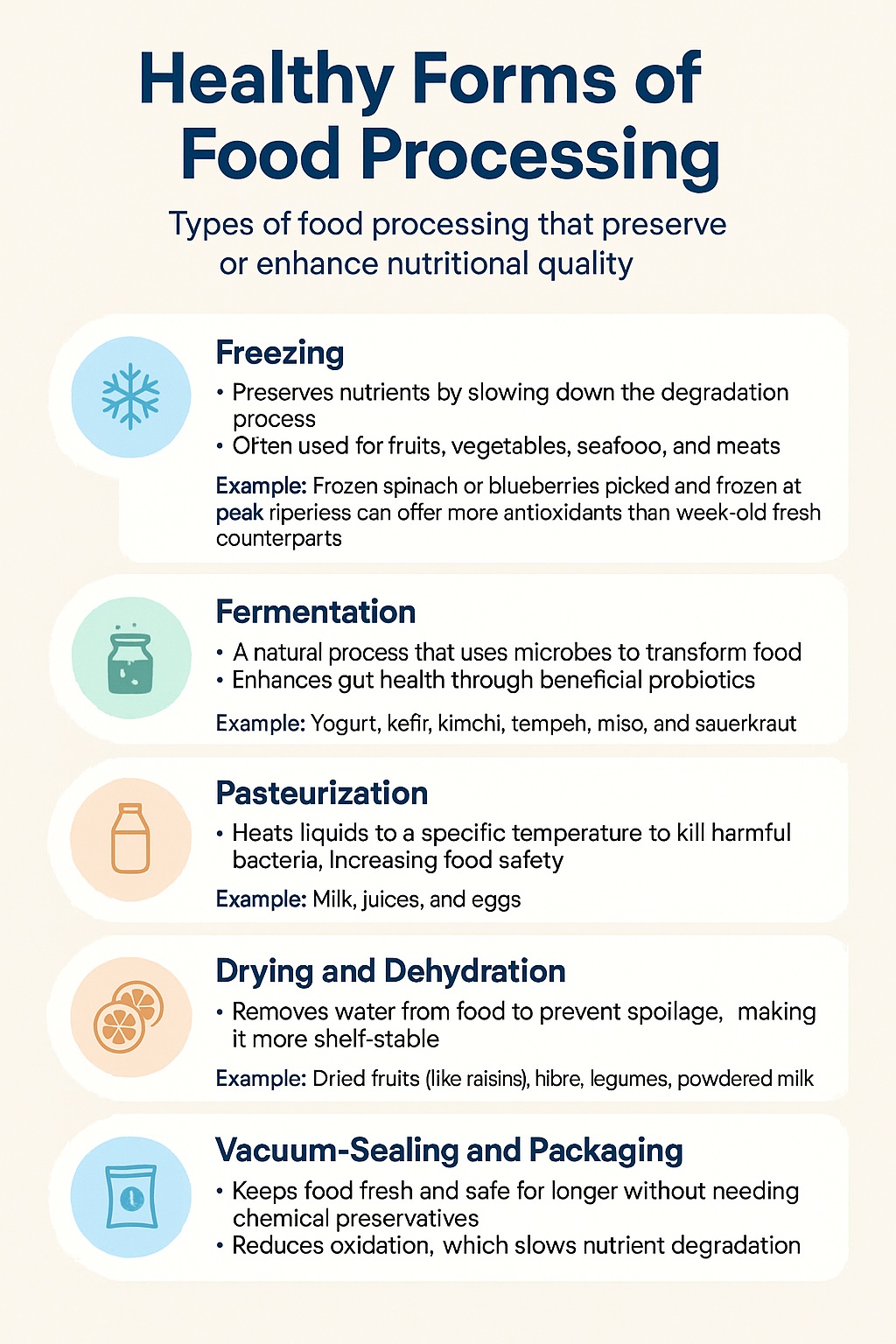
Here are some types of food processing that preserve or even enhance nutritional quality:
1. Freezing
-
Preserves nutrients by slowing down the degradation process.
-
Often used for fruits, vegetables, seafood, and meats.
-
In many cases, frozen produce retains more nutrients than fresh produce that’s been transported long distances and stored for days.
Example: Frozen spinach or blueberries picked and frozen at peak ripeness can offer more antioxidants than week-old fresh counterparts.
2. Fermentation
-
A natural process that uses microbes (yeast or bacteria) to transform food.
-
Enhances gut health through beneficial probiotics.
-
Improves nutrient absorption and reduces anti-nutrients like phytates in grains and legumes.
Example: Yogurt, kefir, kimchi, tempeh, miso, and sauerkraut.
3. Pasteurization
-
Heats liquids to a specific temperature to kill harmful bacteria, increasing food safety.
-
Does not significantly reduce nutrient content when done properly.
Example: Milk, juices, and eggs.
4. Drying and Dehydration
-
Removes water from food to prevent spoilage, making it more shelf-stable.
-
Concentrates nutrients and flavors (although some vitamin loss, like Vitamin C, may occur).
Example: Dried fruits (like raisins), herbs, legumes, powdered milk.
5. Vacuum-Sealing and Packaging
-
Keeps food fresh and safe for longer without needing chemical preservatives.
-
Reduces oxidation, which slows nutrient degradation.
Where Processing Goes Too Far: Ultra-Processed Foods
The concern begins when food undergoes excessive industrial processing—what we refer to as ultra-processing.
This is when:
-
Natural ingredients are stripped out, such as removing bran from grains or hydrogenating oils.
-
Nutritional balance is lost—low fiber, high sugar, excessive sodium, and unhealthy fats.
-
Artificial additives are used to mimic taste, texture, or appearance instead of using real ingredients.
Ultra-processing often prioritizes flavor, cost, and convenience over nutrition and health.
Real Examples of the Difference:
| Food | Type of Processing | Health Implications |
|---|---|---|
| Frozen broccoli | Minimal (freezing) | Preserves nutrients, no health concerns |
| Greek yogurt | Fermentation | Boosts gut health, high protein |
| White bread | Ultra-processed | Stripped of fiber, may spike blood sugar |
| Potato chips | Ultra-processed (frying, flavoring) | High fat, salt, and acrylamides |
| Rolled oats | Mild processing (steaming and flattening) | Maintains fiber and nutrients |
| Flavored instant oatmeal packet | Ultra-processed (added sugars, flavorings) | Often high in sugar, less fiber |
Ultra-processed foods are often designed to be hyper-palatable—meaning they combine sugar, salt, and fat in ways that trigger the brain’s reward system, making it easy to overeat.
Research shows that people consume more calories when eating ultra-processed meals, even if they’re not more filling or satisfying. In one NIH-funded study, participants ate 500+ more calories per day on an ultra-processed diet compared to an unprocessed one—despite having the same calorie availability and macronutrient profiles.
How to Tell the Difference: Processed vs. Ultra-Processed
Here’s a simple test:
Would your grandmother recognize the ingredients? If not, it’s likely ultra-processed.
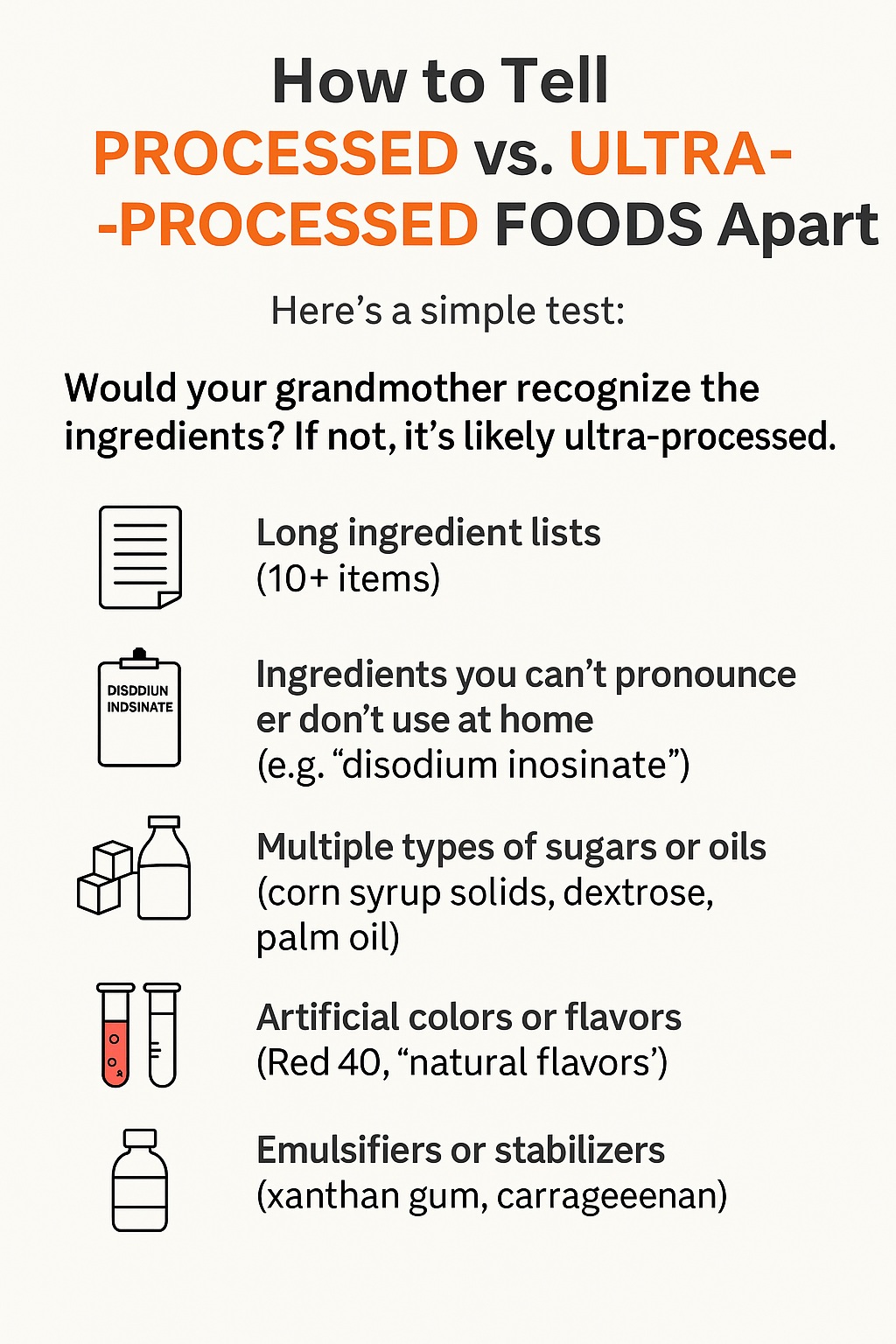
Examples of clues it’s ultra-processed:
-
Long ingredient lists (10+ items)
-
Ingredients you can’t pronounce or don’t use at home (e.g., “disodium inosinate”)
-
Multiple types of sugars or oils (corn syrup solids, dextrose, palm oil)
-
Artificial colors or flavors (Red 40, “natural flavors”)
-
Emulsifiers or stabilizers (xanthan gum, carrageenan)
Are Any Ultra-Processed Foods Healthy?
Yes—and this is where understanding context is crucial. While most health professionals advocate for minimally processed, whole foods, the reality is that not all ultra-processed foods (UPFs) are created equal. Some can be safely included in a balanced diet—especially when chosen carefully and consumed in moderation.
In fact, for many individuals—especially those living in food deserts, managing chronic conditions, or with limited cooking time—some ultra-processed foods may support, rather than harm, dietary quality.
What Makes an Ultra-Processed Food “Healthier”?
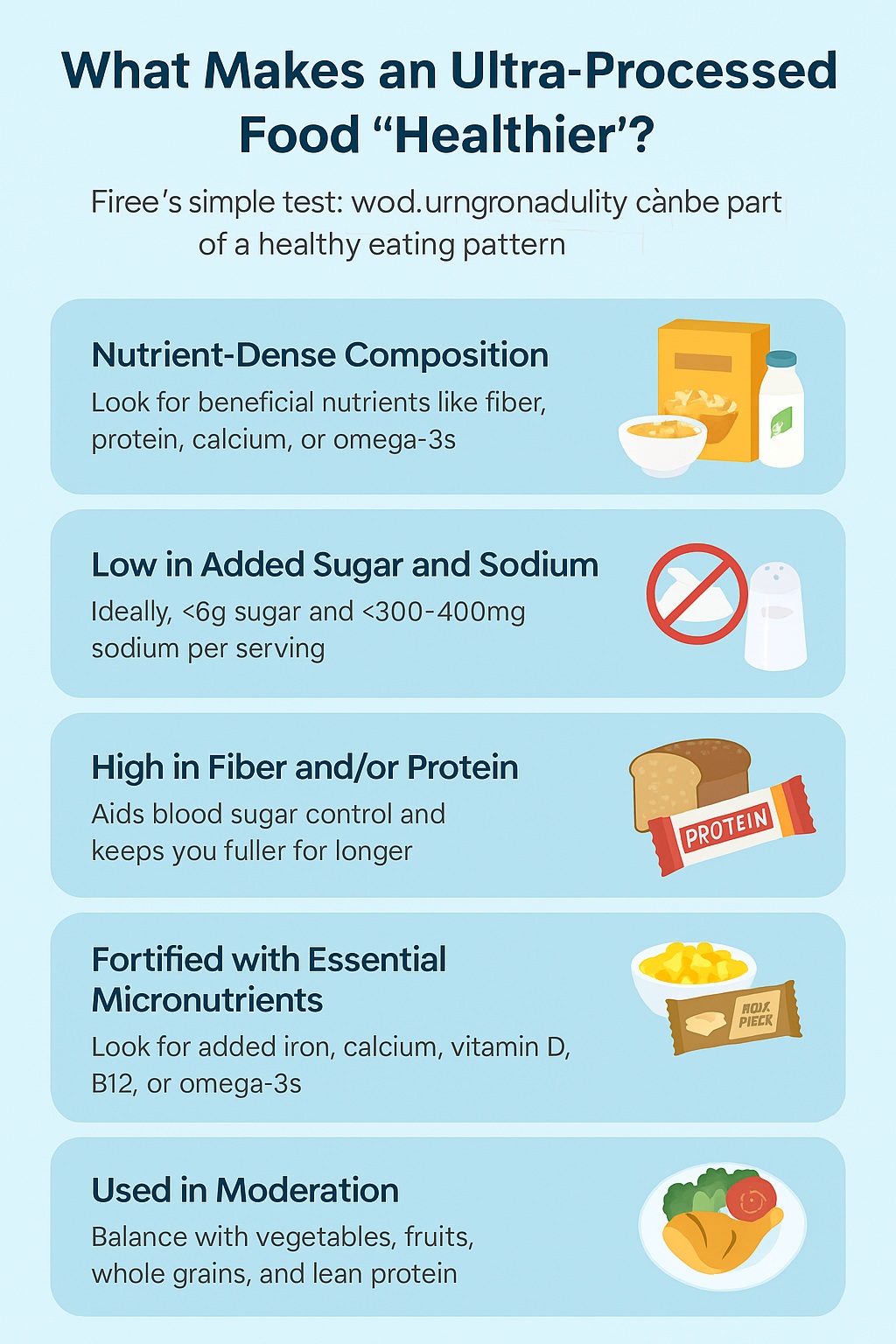
To determine whether an ultra-processed food can be part of a healthy eating pattern, look for the following criteria:
1. Nutrient-Dense Composition
Healthy UPFs should contain meaningful amounts of beneficial nutrients—such as fiber, protein, calcium, iron, magnesium, omega-3s, or essential vitamins—while keeping empty calories in check.
Examples of Nutrient-Dense UPFs:
-
High-fiber breakfast cereals made with whole grains
-
Fortified plant-based milks with calcium, vitamin D, and B12
-
Whole grain breads with added seeds or legumes
-
Protein bars with real nuts, oats, and minimal sweeteners
-
Packaged legumes or soups with no added sugar or fat
Watch out: Some foods may seem nutrient-dense due to fortification, but they also come packed with sugar, sodium, and fat. Read the full label.
2. Low in Added Sugar and Sodium
The biggest issue with many UPFs is added sugar and excessive salt, which are strongly linked to cardiovascular disease, hypertension, and metabolic syndrome when consumed in high amounts.
A healthy ultra-processed food should ideally have:
-
<6g of added sugar per serving
-
<300–400mg of sodium per serving
Examples:
-
Unsweetened oat milk fortified with calcium and B12
-
Plain Greek yogurt (high protein, low sugar)
-
Canned beans labeled “no salt added”
-
Nut butters with just nuts (and maybe a pinch of salt)
Avoid UPFs that list sugar (or its many forms—corn syrup, dextrose, cane juice) in the first few ingredients.
3. High in Fiber and/or Protein
UPFs that contain naturally occurring or added dietary fiber and protein are better for blood sugar control, digestion, and satiety.
Why this matters:
High-fiber foods slow digestion, reduce glycemic load, and support gut microbiota. Protein, on the other hand, helps with muscle maintenance and reduces cravings.
Examples:
-
Whole grain wraps or breads (with ≥3g fiber per slice)
-
High-protein meal replacement shakes with no added sugar
-
Tempeh and tofu (processed, but whole food-based and high in protein/fiber)
-
Chickpea or lentil pasta (processed, but with better macronutrient profiles)
4. Fortified with Essential Micronutrients
Certain populations (e.g., vegans, pregnant women, older adults) rely on fortified foods to meet their nutritional needs. These fortified UPFs can prevent nutrient deficiencies without the need for supplements.
Common Fortified Nutrients in UPFs:
-
Iron & folic acid (in cereals, important for pregnancy and menstruating individuals)
-
Calcium & vitamin D (in plant milks and breakfast cereals)
-
Vitamin B12 (critical for vegans, often added to soy products or nutritional yeast)
-
Iodine (iodized salt and some processed bread)
-
Omega-3s (found in enriched eggs, some plant-based milks, and nutrition bars)
Examples:
-
Fortified cereal with whole grains and <5g sugar per serving
-
Soy milk with calcium, vitamin D, and B12
-
High-fiber protein bars with added omega-3 or iron
5. Used in Moderation and as Part of a Balanced Diet
Even the healthiest UPFs should be seen as complements, not substitutes, for a whole food-based diet. Think of them as tools of convenience and nutritional insurance, not primary sources of sustenance.
Best Practice:
Use nutrient-dense UPFs to fill gaps (e.g., fiber, protein, or iron) and support busy lifestyles—but don’t let them dominate your plate. Pair them with:
-
Fresh or frozen vegetables and fruits
-
Lean meats or legumes
-
Whole grains and healthy fats
My Pro Tip:
For clients who struggle with time, I often recommend building meals like this:
“80% whole foods + 20% well-selected UPFs = practical AND healthy.”
Summary Table: What to Look for in a Healthier UPF
| Criteria | Good Target |
|---|---|
| Added sugar | ≤ 6g per serving |
| Sodium | ≤ 300–400mg per serving |
| Fiber | ≥ 3g per serving |
| Protein | ≥ 6–10g per serving |
| Ingredients | Simple, recognizable, short list |
| Fortified nutrients | B12, iron, calcium, vitamin D, folate, omega-3s |
| Avoid | Artificial sweeteners, colorings, hydrogenated oils |
Examples of Healthier Ultra-Processed Foods:
1. Fortified Breakfast Cereals (Low Sugar)
Many breakfast cereals are ultra-processed, but not all are bad. Choose options that are:
-
High in fiber (≥ 3g per serving)
-
Low in added sugar (≤ 5g per serving)
-
Fortified with B vitamins, iron, and folate
Look for cereals made from whole grains like bran flakes or shredded wheat.
2. Whole Grain Bread
Packaged bread is ultra-processed, but whole grain varieties with minimal additives and high fiber content can support digestive health and help control blood sugar.
3. Plant-Based Milks
Flavored varieties often have added sugar, but unsweetened soy, oat, and almond milks fortified with calcium and vitamin D are great dairy alternatives.
4. Canned Legumes
Canned beans like chickpeas or lentils are technically processed, but they are nutrient-rich, high in protein, fiber, and minerals. Just choose low-sodium versions and rinse before eating.
5. Frozen Vegetables and Fruits
Freezing is a form of processing, but frozen produce retains most nutrients and can be even fresher than grocery shelf produce. Avoid packages with sauces or added sugars.
6. Tofu and Tempeh
These are processed soybean products but are excellent sources of protein, iron, and calcium—great for vegetarians and vegans.
7. Protein and Energy Bars
These vary wildly. Choose bars with:
-
Minimal ingredients
-
No artificial sweeteners
-
Real nuts, seeds, and whole grains
-
Low added sugars (≤ 6g)
8. Yogurt and Kefir
Flavored yogurts are often ultra-processed, but unsweetened Greek yogurt and plain kefir with live cultures are rich in protein and probiotics.
The Health Risks of an Ultra-Processed Diet
Studies from BMJ, The Lancet, and JAMA link ultra-processed food consumption to:
-
Increased risk of obesity
-
Type 2 diabetes
-
Cardiovascular disease
-
Depression
-
Early mortality
One notable study published in the BMJ in 2019 found that every 10% increase in UPF consumption led to a 14% higher risk of all-cause mortality.
Why the risks?
-
Low fiber = gut health issues
-
High glycemic index = blood sugar spikes
-
Artificial additives = potential inflammation
-
Energy density = easy to overeat
Tips to Minimize Harm from Ultra-Processed Foods
Even if you rely on UPFs for convenience, you can still make better choices:
Read Ingredient Labels:
If the ingredient list reads like a chemistry textbook, reconsider. The fewer the additives, the better.
Choose Foods High in:
-
Protein
-
Fiber
-
Micronutrients (calcium, B12, iron, etc.)
Watch Out For:
-
High sodium (> 400mg per serving)
-
Added sugars (> 6g per serving)
-
Trans fats and hydrogenated oils
Balance With Whole Foods:
Combine ultra-processed foods with fresh produce or whole grains to offset nutritional gaps.
Real-World Examples: How to Build a Better Plate Using UPFs
| Meal | Less Healthy UPFs | Healthier Alternative UPFs |
|---|---|---|
| Breakfast | Sugary cereal with chocolate milk | Bran flakes with unsweetened soy milk |
| Lunch | Packaged ramen with processed cheese | Canned lentils, frozen spinach, brown rice |
| Snack | Candy bar | Nut-based energy bar with oats |
| Dinner | Frozen pizza | Grilled tofu with frozen stir-fry veggies |
What is the difference between processed and ultra-processed food?
Processed foods include canned veggies, cheese, or fresh bread. Ultra-processed foods are industrially manufactured with additives, emulsifiers, and little resemblance to the original ingredient.
Can I lose weight while eating ultra-processed foods?
Technically yes, if you maintain a caloric deficit. But it’s harder to manage hunger and satiety on ultra-processed foods due to low fiber and high energy density.
Is protein powder considered ultra-processed?
Yes. Most protein powders are ultra-processed but can still be part of a healthy diet if used to supplement—not replace—whole food protein sources.
Is peanut butter ultra-processed?
It depends. Natural peanut butter made only with peanuts and salt is minimally processed. But brands with added sugar, hydrogenated oils, and emulsifiers are ultra-processed.
What Does the Research Say?
| Study | Finding | Source |
|---|---|---|
| BMJ 2019 | 10% increase in UPF = 14% higher death risk | BMJ Study |
| JAMA 2022 | UPFs linked to early cardiovascular events | JAMA Cardiology |
| NOVA Review 2020 | Higher UPF diets reduce overall nutrient density | Public Health Nutrition |
Q1: Are all ultra-processed foods bad?
No. Some are nutrient-rich and convenient, like fortified cereals or unsweetened plant-based milks. It depends on the ingredient quality and how they fit into your overall diet.
Q2: How can I identify an ultra-processed food?
Look for long ingredient lists, unfamiliar additives, artificial flavors, and multiple processing agents. If it contains things you wouldn’t cook with, it’s likely ultra-processed.
Q3: Can I follow a healthy diet with ultra-processed foods?
Yes, but it takes effort. You need to prioritize nutrient-dense UPFs and pair them with whole foods like fruits, vegetables, and whole grains.
Q4: Are frozen meals healthy?
Some are. Look for those that include lean proteins, vegetables, whole grains, and low sodium. Avoid meals with creamy sauces or lots of preservatives.
Q5: Why do people rely on ultra-processed foods?
They’re affordable, convenient, long-lasting, and marketed aggressively. Many people have limited access to fresh, whole foods.
Q6: Should I eliminate all ultra-processed foods?
Not necessarily. Aim to limit the harmful ones—sugary snacks, sodas, fried junk—and include better-quality options that offer real nutritional value.
An ultra-processed diet doesn’t have to mean an unhealthy one. The key lies in understanding which ultra-processed foods support your health goals and how to incorporate them wisely. Use them as supplements to your diet, not its foundation.
Smart food choices, even within the world of convenience, can keep you nourished, energized, and protected from disease. With mindful eating and tools like ingredient awareness, even ultra-processed foods can have a place at the table.




Pingback: Preventative Care and Healthy Living: Your Guide to a Vibrant Life - Wellness Readers Digest