Walking down the grocery aisle these days can feel overwhelming. Organic labels are everywhere, and it’s easy to feel guilty tossing regular items into your cart. But here’s the thing: not everything needs to be organic. Your wallet will thank you for knowing which foods are perfectly safe to buy conventional, and you’ll shop with a lot less stress.
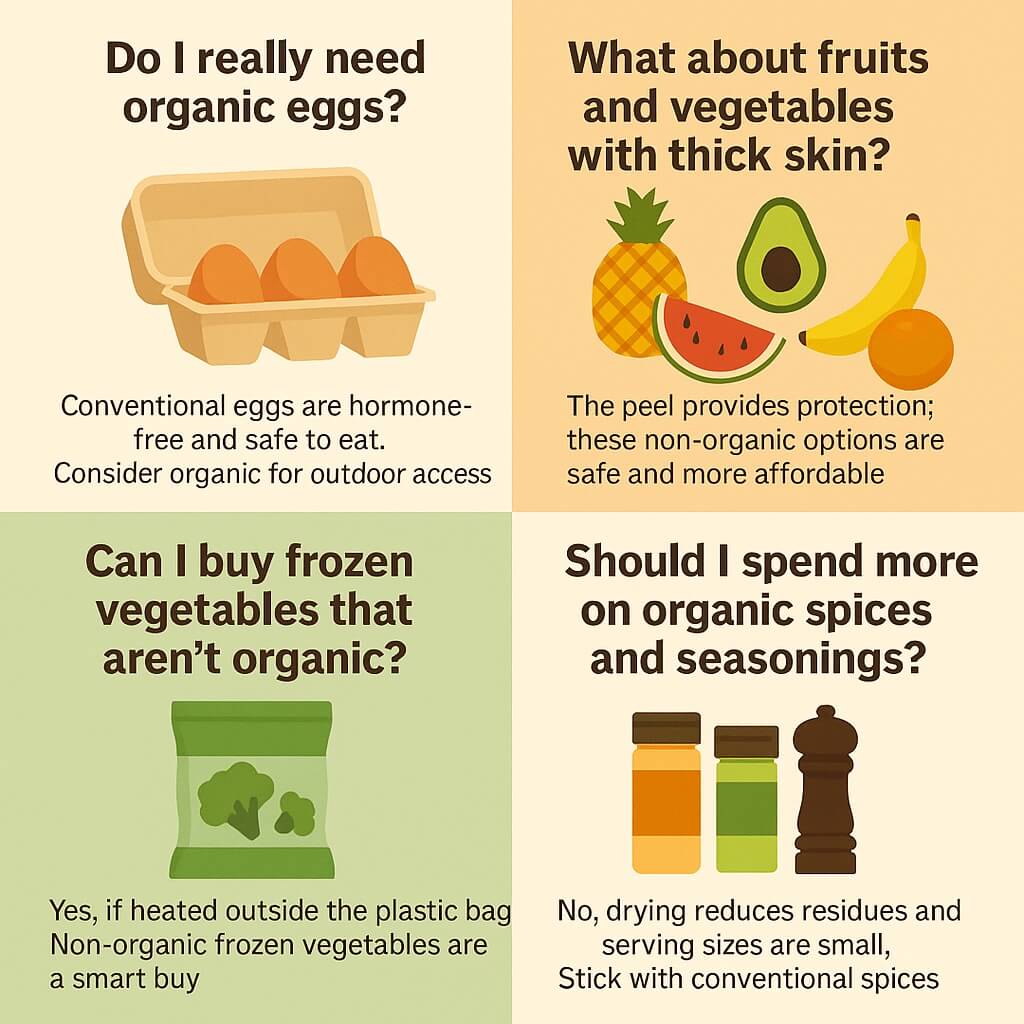
Do I really need organic eggs?
This is probably one of the biggest questions people have, especially since organic eggs can cost twice as much as regular ones. The good news is that most egg producers don’t use growth hormones anyway. In fact, hormone use in poultry has been banned for decades, so whether you buy organic or conventional, you’re getting hormone-free eggs.
Studies comparing factory-farmed eggs to organic eggs haven’t shown significant differences in contamination levels. What matters more is how fresh the eggs are and how you store them at home. Check the date on the carton and give the label a quick read. If it mentions the chickens are hormone-free (which most will), you’re good to go with the regular carton. Save that extra money for something else.
The main difference with organic eggs usually comes down to what the chickens eat and whether they have outdoor access. If those factors matter to you personally, go organic. But from a safety standpoint, conventional eggs are just fine for your morning omelet.
What about fruits and vegetables with thick skin?
Here’s where you can save some serious money. When you’re dealing with produce that has a thick peel you’re going to remove anyway, organic doesn’t make much of a difference. Think about pineapples, watermelons, cantaloupes, honeydew melons, avocados, bananas, oranges, grapefruits, and mangoes.
The thick skin acts like natural protection. Any pesticides that might be on the outside don’t really penetrate through to the part you actually eat. You’re literally throwing away the outer layer, so you’re tossing any potential residue right along with it.
That said, you should still give these fruits a good wash before cutting into them. When your knife goes through the skin, it can drag surface stuff into the flesh. A quick rinse under cool water does the trick. No fancy produce wash needed, just regular tap water and a little scrub.
Can I buy frozen vegetables that aren’t organic?
Absolutely. Frozen vegetables get a bad reputation they don’t deserve. The main concern people have with frozen foods is the plastic packaging, but the risk is really minimal if you handle it correctly.
The issue with plastic only becomes a problem when you heat food directly in the bag. High temperatures can cause chemicals from plastic to leach into your food. But frozen vegetables sitting in your freezer aren’t being heated, so there’s nothing to worry about there.
When you’re ready to cook your frozen broccoli or mixed veggies, just dump them into a regular pan on the stove or put them in a microwave-safe bowl or plate. Don’t microwave them in the plastic bag they came in. This simple step keeps everything safe, and you can feel good about buying the budget-friendly frozen vegetables.
Plus, frozen vegetables are often picked and frozen at peak freshness, which means they can actually have more nutrients than fresh produce that’s been sitting around for days. Going non-organic on frozen vegetables is a smart move for both your budget and your health.
Should I spend more on organic spices and seasonings?
Nope, and here’s why. Spices are dried, which means most of their organic compounds change or disappear during the drying process anyway. By the time that oregano or cumin makes it to your spice rack, it’s been through quite a transformation.
Another thing to consider is portion size. When you use spices, you’re talking about a teaspoon here, a pinch there. The actual amount you consume is so tiny that even if there were pesticide residues (which are minimal after drying), the exposure would be almost nothing.
Your body can easily handle whatever trace amounts might exist in conventional spices. Put your money toward buying fresh spices more frequently instead of splurging on organic versions. A fresh conventional spice will taste way better than an organic one that’s been sitting in your cabinet for two years.
What other packaged foods are fine to buy non-organic?
When you start looking at processed or packaged foods, organic becomes even less important. Items like pasta, rice, flour tortillas, bread, crackers, and cereals go through so much processing that any potential pesticide residues are greatly reduced.
Canned goods are another category where organic doesn’t offer much benefit. The canning process itself involves high heat, which breaks down many compounds. Whether you’re buying canned tomatoes, beans, corn, or soup, the conventional versions are perfectly safe.
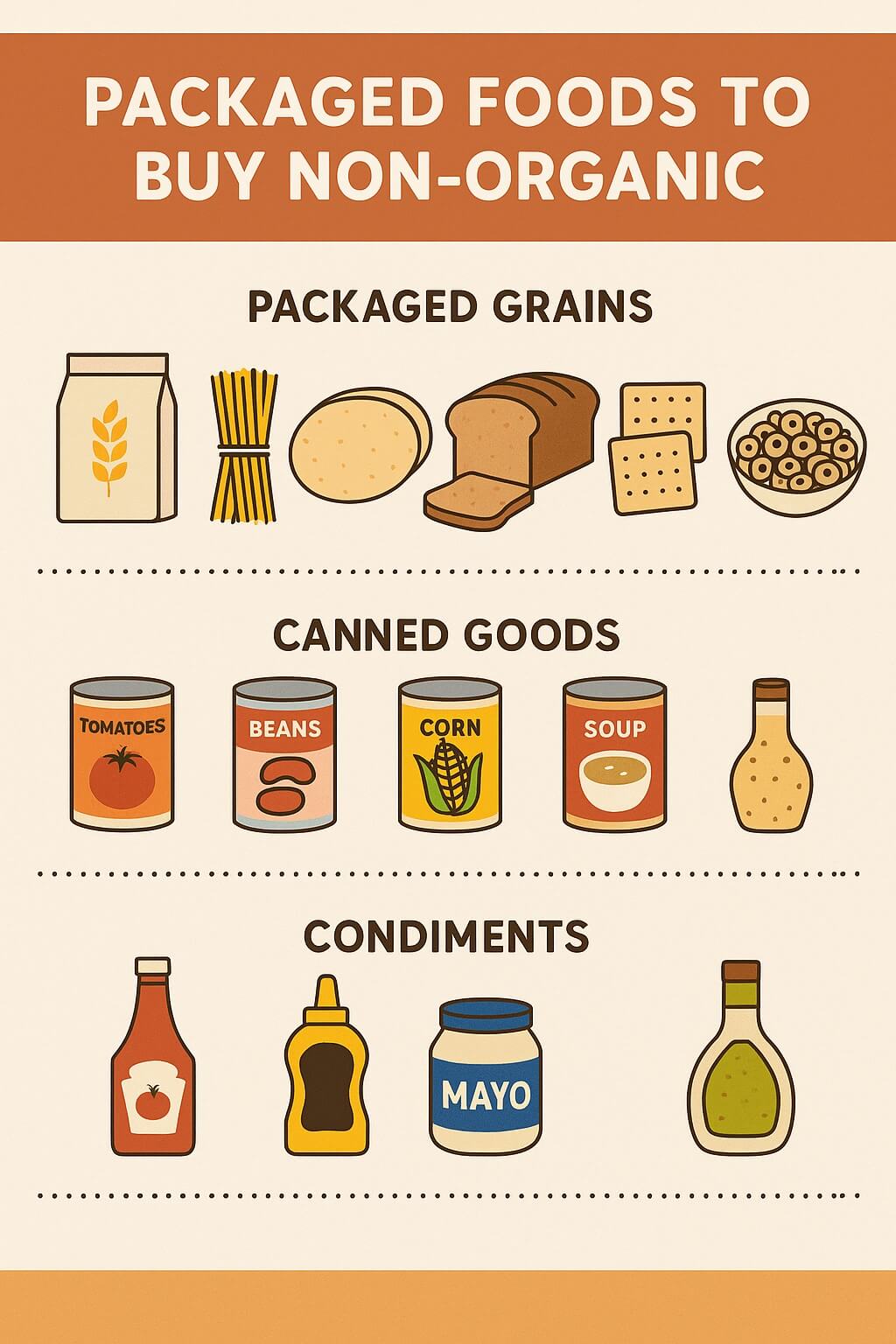
For condiments like ketchup, mustard, mayonnaise, and salad dressings, the ingredients have been so processed and combined that going organic doesn’t change much from a safety perspective. If you prefer organic for environmental or philosophical reasons, that’s your choice. But if budget is a concern, these are easy items to cross off your organic list.
How do I decide what should be organic?
Generally speaking, save your organic dollars for produce you eat skin and all, especially soft-skinned fruits and berries that can’t be peeled. Things like strawberries, grapes, apples, peaches, and leafy greens make more sense to buy organic because you’re consuming the whole thing, skin included.
For meat and dairy, the decision often comes down to antibiotic use and animal living conditions rather than pesticides. If those issues matter to you, organic might be worth it. But from a pure safety standpoint, conventional meat and dairy products are heavily regulated and inspected.
The bottom line is that conventional doesn’t mean unsafe. Food safety standards in most countries are pretty strict across the board. Organic is a choice, not a necessity for most foods.
Will buying non-organic foods affect my health?
Here’s the honest answer: probably not in any way you’d notice. Your body is designed to handle small amounts of various substances. The pesticide residues on conventional foods are typically well below safety limits set by health authorities.
What affects your health much more is eating a variety of fruits and vegetables in the first place. If buying organic means you eat less produce because of the cost, you’re actually worse off. It’s better to fill your plate with conventional vegetables than to skip vegetables because you can’t afford organic.
Focus on washing your produce well, eating a balanced diet with lots of different foods, and not stressing too much about every single purchase. The stress of worrying about every label probably does more harm than eating a conventional banana.
Where can I save the most money by skipping organic?
If you’re really trying to trim your grocery bill, start with the categories we’ve talked about: thick-skinned fruits, eggs, frozen vegetables, and spices. These items tend to have the biggest price differences between organic and conventional.
Dried goods like rice, beans, lentils, and pasta are also good places to save. Baking supplies like flour and sugar don’t need to be organic either. Canned and jarred foods give you another opportunity to keep more cash in your pocket.
When you add it all up, you could easily cut your grocery bill by thirty to forty percent just by being smart about when organic actually matters. That’s real money that could go toward other healthy choices, like a gym membership or cooking classes.
Are there any non-organic foods I should still wash carefully?
Yes, definitely. Even with thick-skinned produce, you want to give everything a good rinse. Conventional leafy greens and herbs should be washed thoroughly since they can harbor dirt and bacteria regardless of whether they’re organic.
Root vegetables like potatoes and carrots should be scrubbed under running water, especially if you plan to eat the skin. Regular mushrooms should be wiped down or quickly rinsed (don’t soak them, they’ll get soggy).
For anything you’re going to eat raw, washing is extra important. Conventional bell peppers, cucumbers, and tomatoes should all get rinsed before you slice them up for a salad. It takes an extra thirty seconds and gives you peace of mind.
What’s the bottom line on non-organic shopping?
Shopping doesn’t have to be complicated or guilt-inducing. Conventional foods are safe, affordable, and perfectly fine for feeding yourself and your family. Save your organic budget for the items where it makes the most difference, and relax about everything else.
Your health comes from eating well overall, not from obsessing over every label. Buy what fits your budget, wash your produce, cook at home when you can, and enjoy your meals. That’s the real recipe for wellness, and it doesn’t require spending a fortune on groceries.