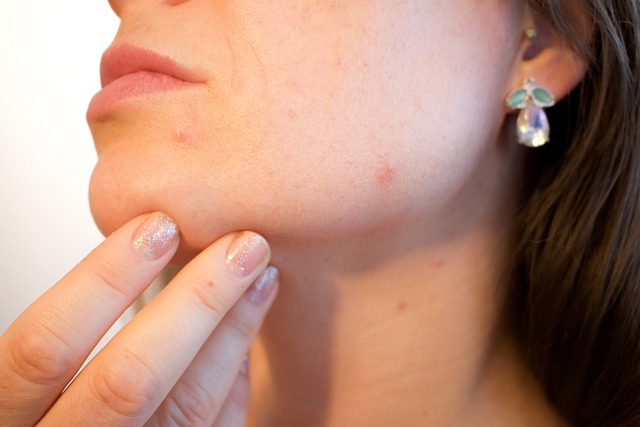
Losing weight is an achievement worth celebrating. You’ve put in the work, changed your habits, and your body has transformed. But then you notice something frustrating in the mirror—your neck skin doesn’t look as tight as it used to. Maybe there’s a crease or wrinkle that wasn’t there before, or the skin under your chin seems looser than you’d like.
This is one of those things nobody warns you about when you’re working toward weight loss. Your face and neck can show signs of skin laxity that make you feel self-conscious, even though you’re healthier overall. The good news is that you have options, ranging from simple at-home methods to professional treatments. Let’s talk about what actually works and what’s worth your time and money.
Why does weight loss cause loose skin on the neck?
Your skin is elastic, but only to a point. When you carry extra weight for months or years, your skin stretches to accommodate it. Think of it like a balloon that’s been inflated for a long time—even after you let the air out, it doesn’t snap back to its original tightness immediately, if at all.
The neck is particularly vulnerable because the skin there is thinner and more delicate than skin on other parts of your body. It also doesn’t have as much underlying muscle support. When fat deposits under your chin and along your neck shrink during weight loss, the skin that was stretched over them is left behind.
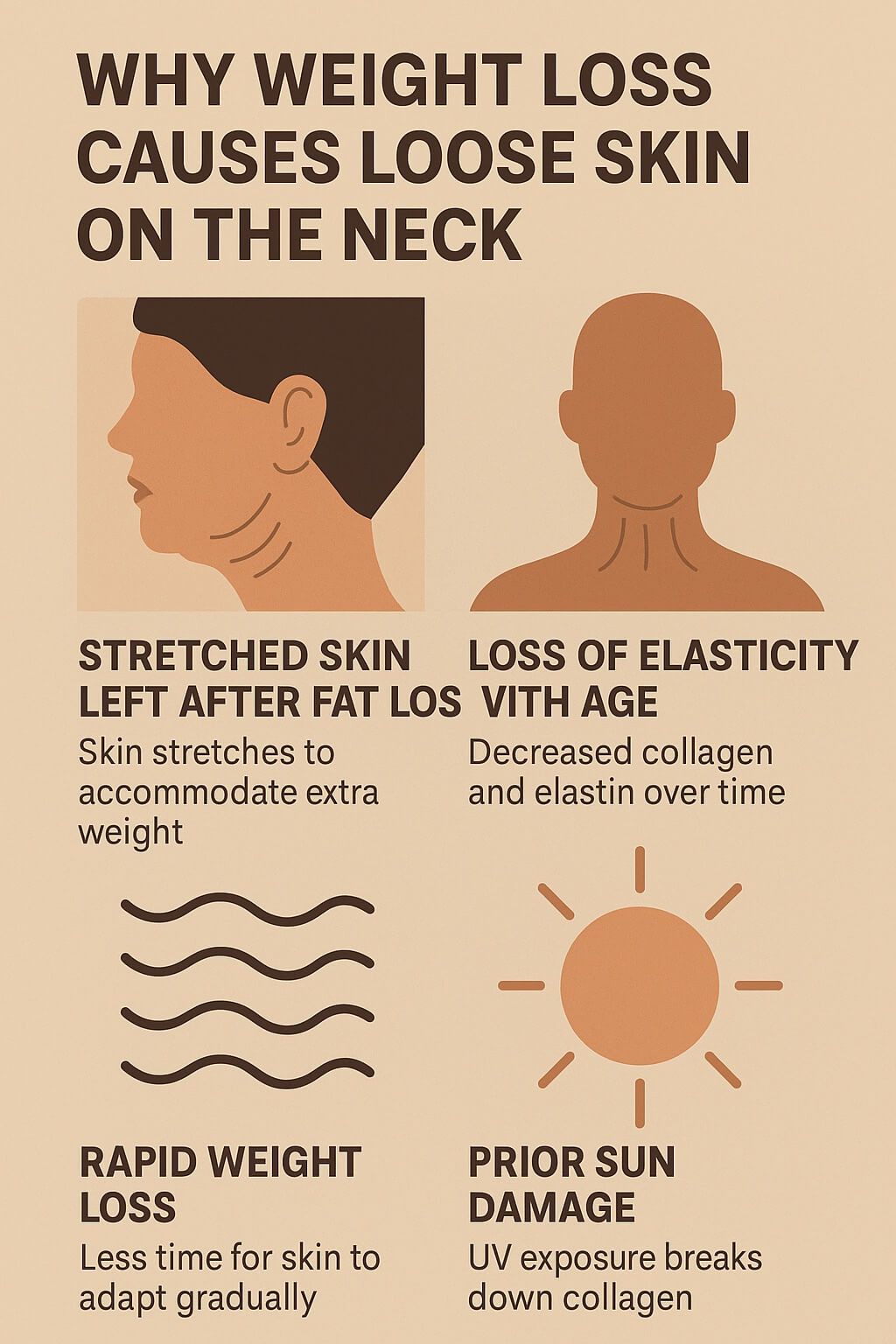
Age plays a huge role in how much your skin bounces back. Younger skin has more collagen and elastin, the proteins that give skin its springiness. As you get older, your body produces less of these proteins, which means your skin becomes less able to snap back after being stretched.
How quickly you lost weight matters too. Rapid weight loss gives your skin less time to adjust gradually. If you lost a significant amount of weight in just a few months, your skin didn’t have the slow, steady stimulus it needs to tighten up along the way.
Sun damage affects how well your skin recovers. If you’ve spent years without protecting your neck from sun exposure, the UV damage has already broken down collagen and elastin. This makes it harder for your skin to tighten after weight loss.
Will loose neck skin tighten on its own over time?
Sometimes, but don’t count on it completely. Your skin does continue to adjust for up to two years after major weight loss. During this time, some natural tightening can occur as your skin gradually contracts and your body produces new collagen.
Younger people with good skin quality have the best chance of natural tightening. If you’re in your twenties or early thirties and only lost a moderate amount of weight, you might see significant improvement just from waiting and supporting your skin health.
The reality for most people, especially those over forty or who lost a large amount of weight, is that some degree of loose skin will remain without intervention. Genetics also factor in—some people naturally have more elastic skin that recovers better than others.
During the waiting period, you can do things to encourage whatever natural tightening is possible. But if you’ve already been at your current weight for over a year and the loose skin hasn’t improved, it’s probably not going to change much more on its own.
What are the best non-invasive treatments for neck wrinkles and loose skin?
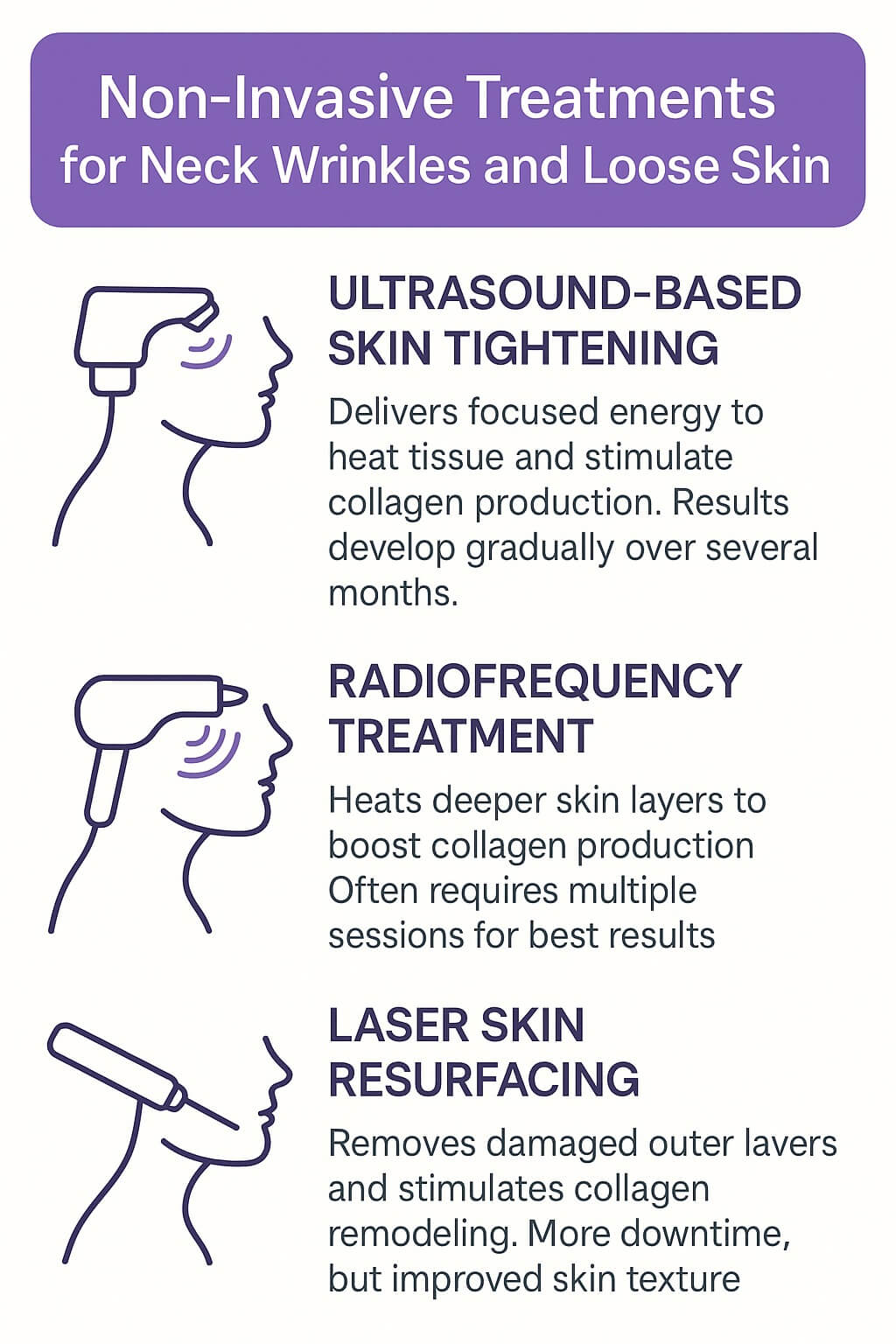
Ultrasound-based skin tightening treatments work by delivering focused energy deep into the skin layers. This energy heats the tissue, which triggers your body’s natural healing response and stimulates new collagen production. Results develop gradually over two to three months as new collagen forms.
These treatments can improve mild to moderate skin laxity. They work best for people who have some skin looseness but not excessive hanging skin. The results aren’t as dramatic as surgery, but there’s no downtime, and the improvements look natural since they happen slowly.
Most people need one treatment, though some might benefit from a second session several months later. Results typically last a year or more, but your skin continues aging, so maintenance treatments might be needed eventually.
Radiofrequency treatments use a different type of energy to heat the deeper skin layers. Like ultrasound treatments, this stimulates collagen production. Some devices combine radiofrequency with microneedling, which creates tiny channels in the skin to enhance the tightening effect.
The advantage of radiofrequency is that it can be adjusted for different skin types and concerns. Multiple sessions are usually recommended, spaced a few weeks apart. Results appear gradually and can continue improving for up to six months after treatment.
Laser skin resurfacing removes the top damaged layers of skin and stimulates collagen production in the deeper layers. Fractional lasers work on small sections of skin, leaving surrounding tissue intact to speed healing. This approach can improve both skin texture and mild looseness.
Laser treatments require more downtime than ultrasound or radiofrequency options. Your skin will be red and sensitive for several days to a week. But the results can be more noticeable, especially for improving skin quality and smoothness alongside mild tightening.
Do topical creams and serums actually help with neck wrinkles?
Topical products have real but limited effects. They can’t fix significant loose skin, but they can improve skin quality, which makes wrinkles and creases less noticeable.
Retinol and prescription retinoids are the gold standard for anti-aging skincare. They increase cell turnover and boost collagen production over time. Used consistently for months, they can reduce fine lines and improve skin texture on the neck. The neck skin is sensitive though, so you’ll need to start slowly and build up tolerance.
Peptide serums help support collagen production and can improve skin firmness to a modest degree. Look for products specifically formulated for the neck since this skin is more delicate than facial skin.
Vitamin C serums protect against further damage and support collagen health. They won’t reverse existing loose skin, but they help prevent additional breakdown and can brighten skin tone.
Hyaluronic acid doesn’t tighten skin, but it plumps and hydrates, which can temporarily reduce the appearance of fine wrinkles. It works best in combination with other active ingredients rather than alone.
Neck creams with caffeine and firming peptides can provide subtle, temporary tightening effects. Don’t expect dramatic changes, but consistent use might make a small visible difference over time.
The key word with all topical products is patience. You need to use them consistently for at least three months to see any real results. And even then, they’re addressing skin quality and fine lines rather than true loose skin.
What about neck exercises and facial yoga?
This is controversial. Some people swear by neck exercises and facial yoga, while others say they’re useless or even harmful.
The theory is that strengthening the muscles under your skin provides better support and creates a lifting effect. Specific exercises target the platysma muscle in your neck and the muscles around your jaw.
Some research suggests that consistent facial exercises might create small improvements in facial fullness and contour, but the studies are limited. There’s even less evidence specifically for the neck area.
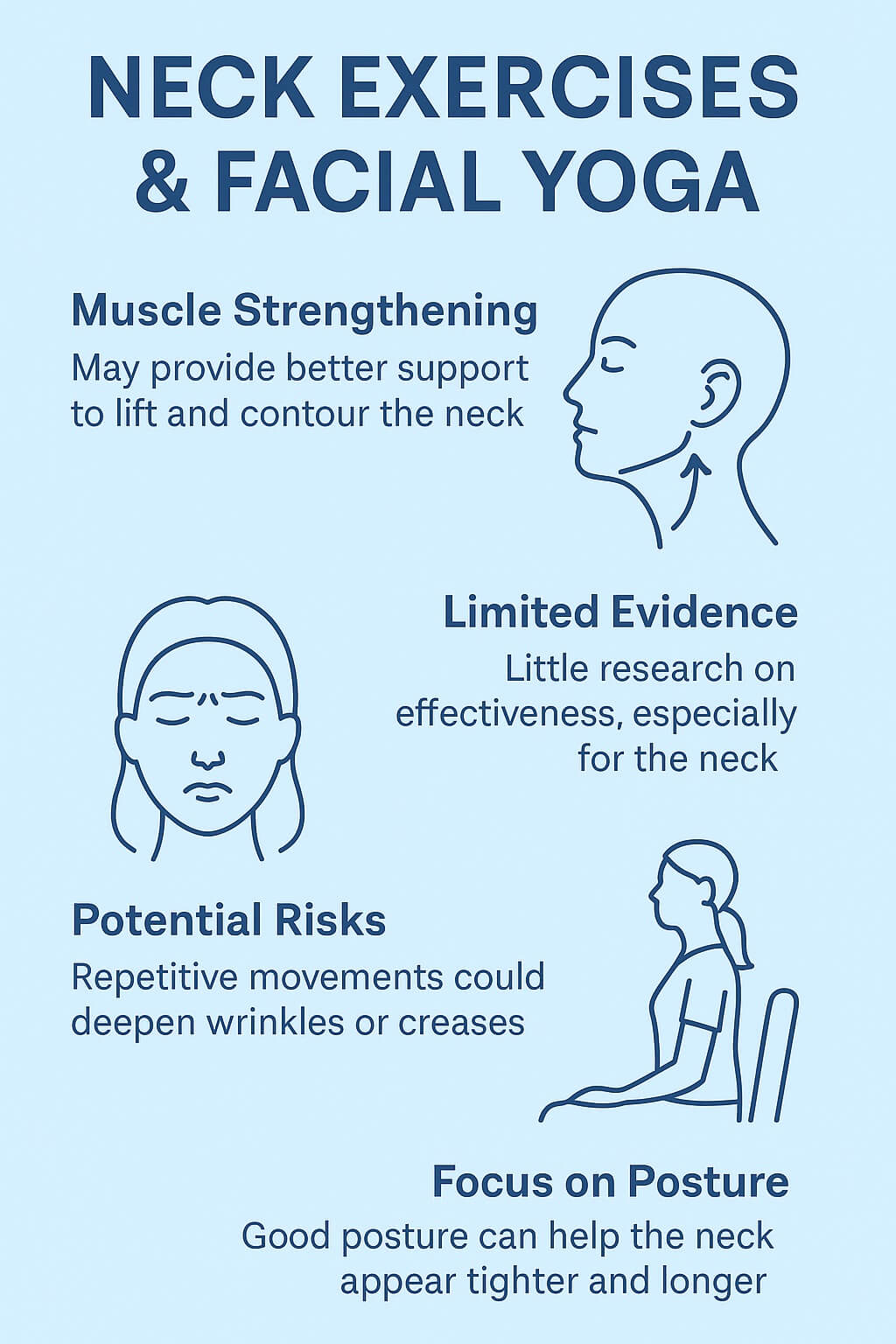
The potential downside is that repetitive facial movements might actually deepen existing wrinkles over time, similar to how expression lines form. Doing these exercises incorrectly could create new problems.
If you want to try neck exercises, look for guidance from a reputable source and be consistent for at least a few months before deciding if they help. Don’t expect major changes, and stop if you notice any worsening of wrinkles or skin creasing.
Improving your overall posture can make a surprising difference in how your neck looks. When you hold your head forward and down, it accentuates loose skin and creates wrinkles. Keeping your head aligned properly over your shoulders makes the neck look longer and tighter.
Is surgery the only solution for significant loose neck skin?
For substantial loose skin, surgical options provide the most dramatic and permanent results. A neck lift removes excess skin and tightens underlying muscles to create a smoother, more defined neck contour.
Lower face and neck lift surgery addresses loose skin from your jawline down to your collarbone. The surgeon makes incisions around and behind your ears, removes excess skin, tightens the platysma muscle, and repositions everything for a more youthful appearance.
Recovery from neck lift surgery takes a couple of weeks for the initial swelling and bruising to subside, though you won’t see final results for several months. There are risks with any surgery, including scarring, infection, and nerve damage, though these are uncommon with experienced surgeons.
The results from neck lift surgery typically last ten years or more. You’ll continue aging, but you’ll look better than if you hadn’t had the surgery.
Liposuction can help if you have some residual fat under your chin along with loose skin. Removing the fat might allow the skin to contract better, though this only works if your skin still has decent elasticity.
For people who aren’t ready for surgery or who have mild to moderate concerns, combining non-invasive treatments often works better than any single approach. For example, ultrasound skin tightening plus laser resurfacing plus consistent use of retinol might collectively create meaningful improvement.
How do I choose between different treatment options?
Start by honestly assessing how much loose skin you’re dealing with. If you can pinch more than an inch of loose skin on your neck, non-invasive treatments probably won’t give you the results you want. If you have mild looseness or a few wrinkles, less invasive options are worth trying first.
Consider your budget. Non-invasive treatments typically cost hundreds to a few thousand dollars per session, while surgery costs significantly more. However, non-invasive treatments often require maintenance over time, so the costs can add up.

Think about downtime. If you can’t take time off work or don’t want visible signs of treatment, options like ultrasound-based tightening make sense. If you can manage a week or two of recovery, you have more aggressive options available.
Your age and skin quality matter. Younger skin responds better to collagen-stimulating treatments. If you’re in your twenties or thirties, non-invasive options have a better chance of working well. If you’re older with significant sun damage and low skin elasticity, you might need to go straight to surgical options for meaningful results.
Consult with professionals who offer different treatment types. Be wary of anyone who only offers one solution and insists it’s perfect for everyone. A good practitioner will honestly tell you what’s realistic for your specific situation.
Can I prevent neck skin from getting worse?
Once you’ve addressed your current concerns, preventing further deterioration becomes important. Sun protection is absolutely critical. The neck is often forgotten when people apply sunscreen, but UV damage here accelerates aging and skin looseness. Wear sunscreen daily and reapply if you’re outside for extended periods.
Maintain a stable weight. Yo-yo dieting stretches and contracts your skin repeatedly, which reduces elasticity over time. Keeping your weight steady gives your skin the best chance to maintain whatever firmness it has.
Stay hydrated and eat a diet rich in vitamins and antioxidants. Your skin needs proper nutrition to maintain collagen and elastin production. Foods high in vitamin C, vitamin E, and omega-3 fatty acids support skin health.
Don’t smoke or quit if you do. Smoking destroys collagen and elastin faster than almost anything else. It severely compromises your skin’s ability to maintain firmness and heal from any treatments you might have.
Use a good moisturizer on your neck daily. While moisturizer won’t tighten loose skin, it keeps the skin healthy and may help it function better. Extend your skincare routine down to your collarbone, not just your face.
Sleep on your back if possible. Sleeping on your side or stomach creates compression and creasing in your neck skin night after night. Back sleeping prevents this mechanical stress.
How long before I see results from different treatments?
Patience is essential with most neck rejuvenation treatments. Ultrasound and radiofrequency treatments stimulate your body to produce new collagen, which takes time. You might see very subtle changes within a month, but the main results appear two to three months after treatment and can continue improving for up to six months.
Laser treatments show faster initial results since they remove damaged surface skin. You’ll see improvement once the redness and peeling subside, usually within a week or two, with continued enhancement over the following months as collagen remodeling occurs.
Topical treatments require the longest commitment. Don’t expect visible changes for at least six to eight weeks with retinol products, and optimal results take four to six months of consistent use.
Surgical results are visible once swelling goes down, though you’ll see continued refinement over several months as everything settles and heals. You’ll look dramatically different within a month, but final results take three to six months.
Injectable treatments like fillers can add volume under the chin and jawline to help support loose skin. Results are immediate but temporary, lasting six months to two years depending on the product used.
The bottom line is that loose neck skin after weight loss is frustrating, but you’re not stuck with it forever. Understanding your options helps you make informed decisions about what’s right for your situation, your budget, and your expectations. Most importantly, remember that achieving a healthier weight was a huge accomplishment, and addressing cosmetic concerns is just fine-tuning the results of your hard work.