
The average knowledge worker checks email every 12 minutes and spends over 11 hours daily interacting with digital devices. This constant connectivity, while enabling unprecedented productivity and collaboration, has created a new workplace challenge: maintaining employee wellbeing in an increasingly digital environment. Digital wellness in the workplace has emerged as a critical business priority, representing the balance between leveraging technology’s benefits while protecting employee mental health, productivity, and overall quality of life.
Digital wellness encompasses the purposeful and deliberate use of technology to maintain and improve physical, mental, and emotional wellbeing. Unlike complete digital detoxes that advocate for technology avoidance, workplace digital wellness focuses on creating healthy boundaries and sustainable habits that allow employees to thrive alongside technology rather than despite it. As organizations navigate remote work, hybrid models, and increasing digitization, implementing comprehensive digital wellness programs has become essential for maintaining competitive advantage and employee satisfaction.
Understanding Digital Wellness: Beyond Simple Screen Time Management
Digital wellness in the workplace extends far beyond limiting screen time or blocking social media during work hours. It represents a holistic approach to technology integration that considers how digital tools affect employee cognitive load, stress levels, work-life balance, and overall job satisfaction. This concept recognizes that technology itself isn’t inherently harmful—rather, it’s the unconscious, compulsive, or poorly managed use of technology that creates problems.
Modern digital wellness frameworks address multiple dimensions of technology interaction. Physical wellness considers ergonomics, eye strain, and movement patterns throughout the workday. Mental wellness focuses on attention management, information overload prevention, and cognitive rest periods. Emotional wellness examines how digital communication affects relationships, empathy, and psychological safety within teams. Social wellness evaluates how technology facilitates or hinders meaningful workplace connections and collaboration.
The distinction between digital wellness and digital detox is crucial for workplace implementation. While detoxes promote temporary technology abstinence, digital wellness programs teach sustainable, long-term habits that integrate seamlessly into daily work routines. This approach acknowledges that complete technology avoidance is neither practical nor beneficial in modern work environments where digital tools are essential for productivity and communication.
The Compelling Business Case for Employee Digital Wellness
Organizations investing in digital wellness programs report significant returns across multiple business metrics. Employee productivity increases by an average of 23% when workers maintain healthy technology boundaries, according to recent workplace wellness studies. This improvement stems from enhanced focus, reduced decision fatigue, and better task prioritization when digital distractions are managed effectively.
Mental health benefits translate directly into tangible business outcomes. Companies with robust digital wellness initiatives experience 40% lower rates of employee burnout and 35% reduced absenteeism. The financial impact is substantial—burnout-related turnover costs organizations an average of $125,000 per executive-level departure and $40,000 per mid-level employee replacement. Digital wellness programs significantly reduce these costs by addressing root causes of workplace stress and overwhelm.
The Business Case for Employee Digital Wellness
| Business Metric | Impact of Digital Wellness Programs |
|---|---|
| Employee Productivity | 23% increase through better focus and task management |
| Mental Health & Burnout | 40% lower burnout, 35% less absenteeism |
| Turnover Costs | $125,000 saved per executive, $40,000 per mid-level employee |
| Talent Retention | 28% higher satisfaction, 45% better retention of high performers |
| Team Performance | Improved communication, fewer meetings, stronger innovation |
Talent acquisition and retention represent additional competitive advantages. Millennials and Gen Z workers increasingly prioritize employers who demonstrate genuine concern for employee wellbeing, including digital wellness support. Organizations with comprehensive digital wellness programs report 28% higher employee satisfaction scores and 45% improved retention rates among high-performing team members.
The productivity gains extend beyond individual performance to team dynamics and organizational efficiency. Teams practicing digital wellness principles demonstrate improved communication quality, reduced meeting fatigue, and more innovative problem-solving capabilities. When employees aren’t constantly battling information overload or digital overwhelm, they contribute more meaningfully to strategic initiatives and creative projects.
Recognizing When Your Workplace Needs Digital Wellness Programs
Several warning signs indicate that an organization would benefit from implementing digital wellness initiatives. Constant connectivity culture, where employees feel pressured to respond to emails and messages outside business hours, creates unsustainable stress patterns that ultimately decrease rather than increase productivity. This always-on mentality leads to decision fatigue, reduced creative thinking, and increased error rates.
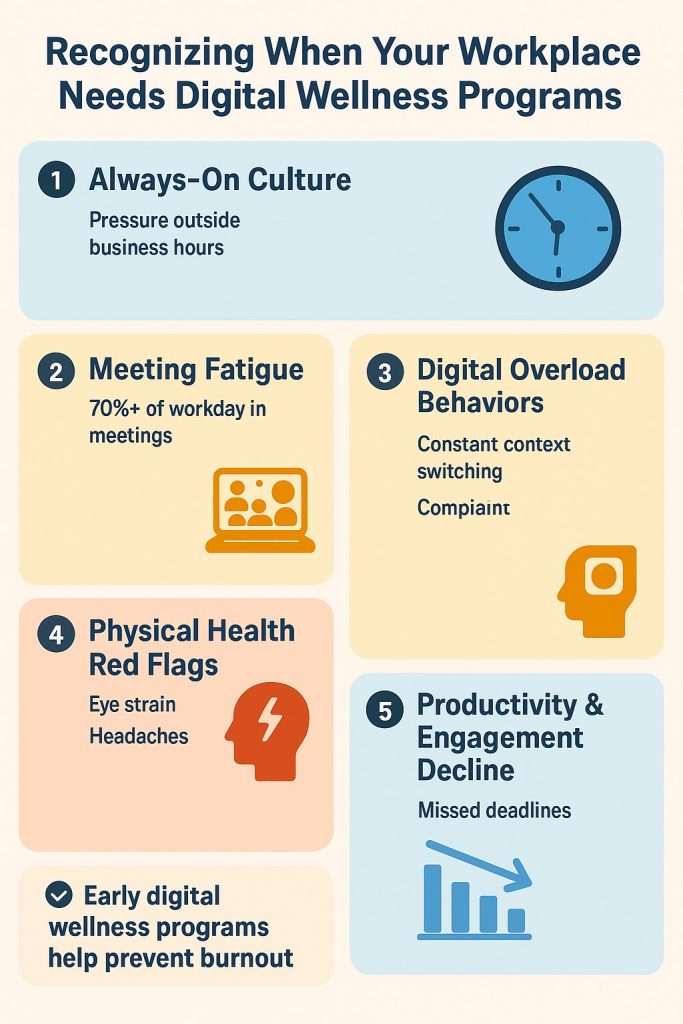
Meeting fatigue represents another clear indicator of digital wellness challenges. When employees spend 70% or more of their workday in video conferences or digital meetings, they experience cognitive overload that impacts performance quality. Symptoms include difficulty concentrating during meetings, multitasking during important discussions, and general exhaustion from screen-based interactions.
Employee behavior patterns provide additional insight into digital wellness needs. Frequent context switching between applications, inability to focus on single tasks for extended periods, and complaints about feeling overwhelmed by digital communication all suggest that current technology use patterns aren’t sustainable. Physical symptoms like eye strain, headaches, neck pain, and disrupted sleep patterns also indicate the need for digital wellness interventions.
Productivity metrics often reveal underlying digital wellness issues before employees explicitly complain. Declining work quality, missed deadlines despite long working hours, increased sick leave usage, and reduced engagement in team activities all correlate with poor digital wellness practices. Early intervention through structured programs prevents these issues from escalating into more serious performance or retention problems.
Six Proven Digital Wellness Strategies for Modern Teams
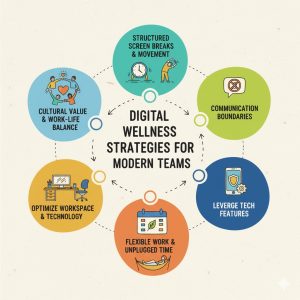
Strategy 1: Implementing Structured Screen Breaks and Movement
Regular breaks from digital devices form the foundation of workplace digital wellness. The 20-20-20 rule—looking at something 20 feet away for 20 seconds every 20 minutes—helps prevent eye strain and maintains visual health. However, effective programs extend beyond this basic guideline to include movement breaks, stretching routines, and brief mindfulness exercises.

Organizations can implement break reminders through productivity applications or simple calendar blocking. Encouraging employees to take 5-10 minute breaks every hour not only reduces physical strain but also improves cognitive performance and creative thinking. These breaks should involve stepping away from all screens, engaging in light physical activity, or practicing brief relaxation techniques.
Strategy 2: Establishing Communication Boundaries and Response Expectations
Clear communication protocols eliminate the stress of constant connectivity while maintaining necessary collaboration. Establishing specific hours for email responses, creating guidelines for urgent versus non-urgent communications, and implementing “communication-free” time blocks allows employees to focus deeply on important work without interruption anxiety.

Successful programs include training on communication etiquette, such as using subject lines that clearly indicate urgency levels, avoiding “reply all” overuse, and choosing the most appropriate communication channel for different message types. These boundaries protect employee mental resources while actually improving communication quality and efficiency.
Strategy 3: Leveraging Technology Features for Digital Wellness
Modern devices and applications include numerous features designed to support healthy usage patterns. Organizations should actively promote and train employees on using “Do Not Disturb” modes, focus modes, screen time tracking, and notification management tools. These features, when used strategically, can significantly reduce digital overwhelm without impacting necessary work communications.
Training programs should cover platform-specific wellness features across commonly used applications. This includes email scheduling, calendar time-blocking, app usage monitoring, and automated response systems that set appropriate expectations for communication timing. The goal is transforming technology from a source of stress into a tool that actively supports employee wellbeing.
Strategy 4: Creating Flexible Work Arrangements and Unplugged Time
Flexible work arrangements support digital wellness by allowing employees to structure their technology use around natural energy patterns and personal responsibilities. This includes offering core collaboration hours with flexible individual work time, providing options for asynchronous work when possible, and creating policies that protect personal time from work-related digital intrusions.
Unplugged whitespace time—periods deliberately free from digital communication—enables deep work, creative thinking, and mental restoration. Organizations can implement this through meeting-free time blocks, email-free hours, or designated quiet work periods where interruptions are minimized. These practices improve both work quality and employee satisfaction.
Strategy 5: Optimizing Digital Workspace Technology
Strategic technology choices can significantly impact employee digital wellness. This involves selecting tools that integrate well together, reducing the cognitive load of switching between multiple applications, and choosing platforms that support rather than hinder natural work patterns. Minimizing notification overload through thoughtful configuration and integration reduces distraction and improves focus quality.
Workspace optimization also includes physical environment considerations such as proper monitor positioning, appropriate lighting to reduce eye strain, and ergonomic setups that support healthy posture during extended computer use. The goal is creating an environment where technology enhances rather than detracts from employee comfort and productivity.
Strategy 6: Building a Culture That Values Digital Wellness and Work-Life Balance
Cultural transformation represents the most critical element of successful digital wellness programs. Leadership must model healthy technology habits, respect communication boundaries, and actively support employee efforts to maintain digital wellness. This includes recognizing and rewarding employees who demonstrate good digital wellness practices rather than those who simply work the longest hours.
Creating psychological safety around digital wellness means employees feel comfortable setting boundaries, taking breaks, and prioritizing their wellbeing without fear of negative career consequences. Regular check-ins, wellness surveys, and open dialogue about technology challenges help maintain program effectiveness and employee engagement.
Implementing Your Digital Wellness Program: A Strategic Approach
Successful digital wellness program implementation requires careful planning, stakeholder buy-in, and gradual rollout strategies. Begin with leadership alignment, ensuring that executives understand both the business case and their role in modeling healthy digital habits. Without visible leadership support, even well-designed programs struggle to achieve meaningful adoption.
Conduct baseline assessments to understand current digital wellness challenges within your organization. Employee surveys, technology usage audits, and productivity metrics provide valuable insights into specific areas needing attention. This data helps prioritize interventions and establish measurable goals for program success.
Pilot programs with volunteer departments or teams allow for testing and refinement before organization-wide rollout. These pilots provide valuable feedback, identify implementation challenges, and create internal champions who can support broader adoption. Successful pilot participants often become peer advocates who help drive cultural change throughout the organization.
Training and education form critical program components, but they should focus on practical skills rather than theoretical concepts. Employees need specific techniques for managing notifications, structuring their digital workday, and using technology tools more effectively. Hands-on workshops, lunch-and-learn sessions, and peer mentoring programs typically achieve better results than passive educational materials.
Regular program evaluation and adjustment ensure continued effectiveness as technology landscapes and workplace needs evolve. Monthly check-ins, quarterly surveys, and annual program reviews help identify areas for improvement and demonstrate ongoing organizational commitment to employee digital wellness.
Measuring Digital Wellness Program Success
Effective measurement requires both quantitative and qualitative metrics that capture the full impact of digital wellness initiatives. Productivity metrics might include task completion rates, project quality scores, and time-to-completion for various work activities. These measurements should be compared against baseline data collected before program implementation.
Employee wellbeing indicators provide crucial insight into program effectiveness. Stress level surveys, sleep quality reports, job satisfaction scores, and work-life balance assessments help evaluate whether digital wellness initiatives are achieving their intended outcomes. Regular pulse surveys can track changes in employee perception of technology’s impact on their work experience.
Technology usage analytics offer objective data about changing digital habits. Email frequency, after-hours communication patterns, meeting duration and frequency, and application usage statistics provide concrete evidence of behavioral changes. However, these metrics should be used to support employees rather than monitor or punish specific behaviors.
Business impact measurements demonstrate ROI and justify continued investment in digital wellness programs. Key performance indicators might include employee retention rates, sick leave usage, customer satisfaction scores, and overall team productivity metrics. Tracking these measurements over time reveals the long-term benefits of sustained digital wellness initiatives.
Overcoming Common Implementation Challenges
Resistance to change represents the most common obstacle in digital wellness program implementation. Employees may worry that digital wellness initiatives will slow their work pace or make them appear less committed. Address these concerns through transparent communication about program goals, success stories from pilot programs, and clear messaging that digital wellness enhances rather than restricts performance.
Technology infrastructure limitations can hinder program effectiveness if existing tools don’t support healthy usage patterns. Evaluate current technology stack for wellness-supporting features and consider upgrades or alternatives where necessary. Sometimes simple configuration changes to existing tools can dramatically improve their impact on employee digital wellness.
Leadership consistency challenges arise when executives don’t consistently model the digital wellness behaviors they expect from employees. Address this through leadership training, accountability systems, and regular reminders about the importance of visible support for program initiatives. Inconsistent leadership behavior undermines program credibility and reduces employee participation.
Resource allocation concerns may limit program scope or effectiveness. However, many digital wellness initiatives require minimal financial investment while delivering substantial returns. Focus on high-impact, low-cost strategies initially, then expand programs as their value becomes evident through improved employee performance and satisfaction metrics.
The Future of Digital Wellness in Modern Workplaces
Digital wellness will become increasingly sophisticated as artificial intelligence and machine learning technologies enable more personalized approaches to technology management. Future programs may include AI-powered coaching systems that provide real-time feedback on digital usage patterns, predictive analytics that identify wellness risks before they impact performance, and automated systems that optimize individual work environments for maximum wellbeing.
The integration of wearable technology and biometric monitoring will provide deeper insights into how digital interactions affect individual employees. This data can inform personalized wellness recommendations and help organizations create more targeted interventions for specific wellness challenges.
As remote and hybrid work models become permanent features of the business landscape, digital wellness programs will need to address unique challenges of distributed teams. This includes managing isolation, maintaining social connections through digital channels, and creating boundaries between home and work technology use.
Taking Action: Your Next Steps Toward Digital Wellness
Implementing digital wellness in your workplace begins with small, manageable changes that build momentum for larger cultural shifts. Start by conducting honest assessments of current technology use patterns and their impact on employee wellbeing. Engage employees in conversations about their digital wellness challenges and involve them in developing solutions that address their specific needs.
Leadership commitment remains the most critical success factor. When executives demonstrate genuine support for digital wellness through their own behavior and resource allocation decisions, employees feel empowered to prioritize their own wellbeing. This creates positive feedback loops that strengthen program effectiveness over time.
Digital wellness represents more than a workplace trend—it’s a fundamental requirement for sustainable business success in our technology-driven economy. Organizations that proactively address digital wellness position themselves for improved employee satisfaction, enhanced productivity, and stronger competitive positioning in the war for talent. The investment in employee digital wellness pays dividends through reduced turnover, improved performance, and a more resilient, adaptable workforce ready to thrive in an increasingly digital future.
Frequently Asked Questions About Workplace Digital Wellness
What’s the difference between digital wellness and digital detox programs?
Digital wellness focuses on sustainable, long-term habits that integrate healthy technology use into daily work routines. Digital detoxes involve temporary abstinence from technology, which isn’t practical for most workplace environments where digital tools are essential for productivity.
How long does it take to see results from digital wellness programs?
Most organizations notice initial improvements in employee satisfaction and stress levels within 4-6 weeks of program implementation. Significant productivity gains and cultural changes typically become evident after 3-6 months of consistent program execution.
Can digital wellness programs work for remote teams?
Yes, digital wellness principles are particularly valuable for remote workers who may struggle with boundary-setting between personal and professional technology use. Remote-specific strategies include creating dedicated workspaces, establishing clear start and stop times for work-related technology use, and using video call alternatives when appropriate.
What’s the ROI of investing in employee digital wellness?
Studies indicate that comprehensive digital wellness programs generate returns of $3-6 for every dollar invested through reduced turnover, decreased absenteeism, improved productivity, and enhanced employee engagement. The exact ROI varies based on industry, implementation quality, and existing workplace culture.
How do we measure digital wellness success without invading employee privacy?
Focus on aggregate metrics rather than individual monitoring. Track overall team productivity, employee satisfaction surveys, voluntary participation rates in wellness activities, and general usage statistics for communication tools. Avoid monitoring individual device usage or creating surveillance systems that undermine trust.
What role should managers play in digital wellness programs?
Managers serve as crucial role models and program champions. They should demonstrate healthy digital boundaries, respect employee wellness choices, facilitate team discussions about digital wellness challenges, and provide resources and support for employees seeking to improve their technology relationships.
Is digital wellness just another workplace fad?
Digital wellness addresses fundamental human needs for focus, rest, and meaningful connection that become more challenging as technology becomes more pervasive. Rather than a temporary trend, it represents an essential adaptation to permanent changes in how work gets done in the digital age.
References and Further Reading
-
Mental Health America. (2024). 2024 Workplace Wellness Research.
-
Global Wellness Institute. (2025). Workplace Wellbeing Initiative Trends for 2025.
-
Shortlister. (2025). Workplace Wellness Trends Report for 2025.
-
ElectroIQ. (2025). Productivity in the Workplace Statistics.
-
U.S. Bureau of Labor Statistics. (2024). Productivity and Remote Work.


Pingback: Is Bubble Skincare Good for Your Skin? - Wellness Readers Digest