When to Upgrade From Retinol 1%?
After using retinol 1% consistently for one to two years, many people notice their skin has adapted and the initial improvements have plateaued. If you’re approaching your thirties and starting to observe fine lines, loss of firmness, or more pronounced signs of aging, it may be time to consider a stronger retinoid. The key question becomes: should you jump straight to prescription tretinoin, or is there a middle ground that offers more potency without the dramatic leap?
Understanding the Retinoid Strength Hierarchy
Before exploring your upgrade options, it’s essential to understand how different retinoids compare in strength and how they work. All retinoids are derivatives of vitamin A, but they differ significantly in potency based on how many conversion steps they need to become retinoic acid, the active form that your skin can actually use.
The Conversion Process
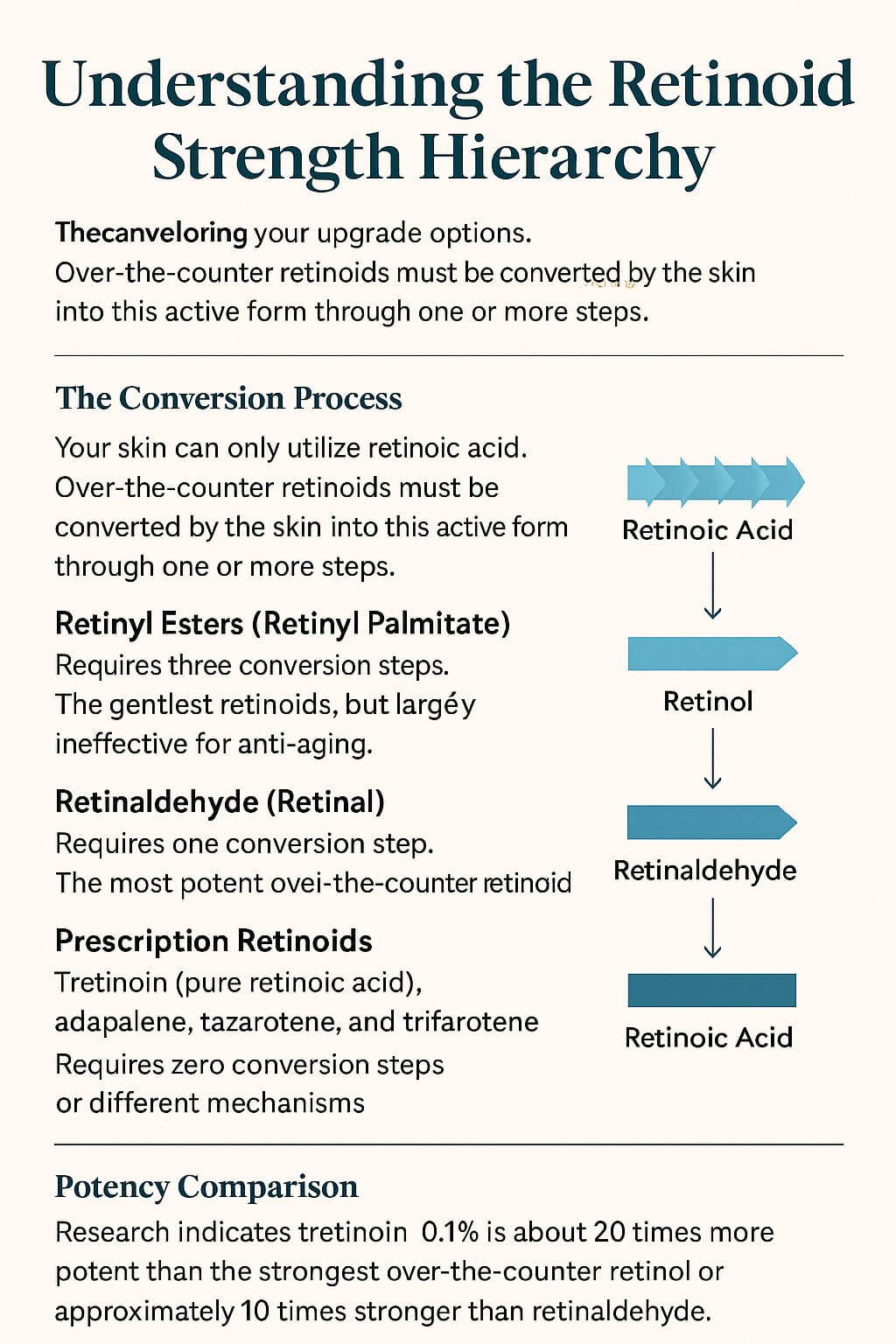
Your skin can only utilize retinoic acid. When you apply over-the-counter retinoids, your skin must convert them through one or more steps before they become active. The fewer conversion steps required, the more potent the retinoid. Here’s how they rank from weakest to strongest:
Retinyl Esters (Retinyl Palmitate): Requires three conversion steps. These are the gentlest retinoids but clinical studies suggest they may be largely ineffective for anti-aging, showing results similar to placebo in some research.
Retinol: Requires two conversion steps (retinol to retinaldehyde to retinoic acid). This is the most commonly used over-the-counter retinoid, effective for anti-aging when used consistently, though it takes time to show results.
Retinaldehyde (Retinal): Requires only one conversion step. This is the most potent over-the-counter retinoid available and is considered the closest alternative to prescription-strength treatments.
Prescription Retinoids: Include tretinoin (pure retinoic acid), adapalene, tazarotene, and trifarotene. These require zero conversion steps or work through different mechanisms, making them significantly more powerful than any over-the-counter option.
Potency Comparison
Research indicates that tretinoin 0.1% is approximately 20 times more potent than the strongest over-the-counter retinol and about 10 times stronger than the highest concentration of retinaldehyde. Even tretinoin at very low concentrations like 0.025% is more effective and provides faster results than retinol 1% or retinaldehyde 0.1%.
The Best Middle-Ground Options
If you’re not ready to jump directly from retinol 1% to prescription tretinoin, there are excellent intermediate options that provide a bridge between over-the-counter and prescription strength.
Retinaldehyde: The Strongest Over-the-Counter Option
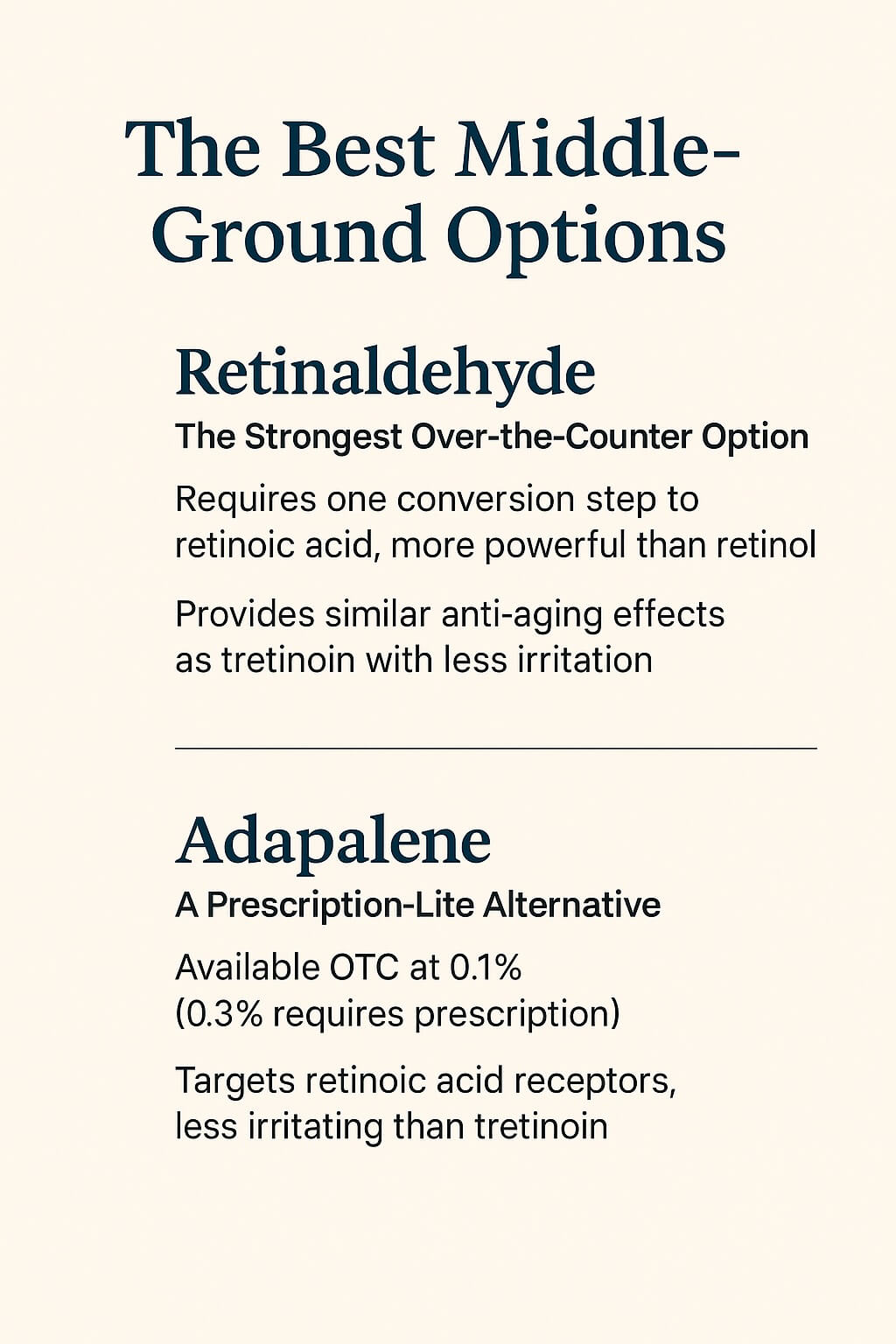
Retinaldehyde (also called retinal) is widely considered the most effective retinoid you can purchase without a prescription. As the direct precursor to retinoic acid, it requires only one enzymatic conversion step, making it substantially more powerful than retinol while remaining better tolerated than prescription options.
Clinical studies comparing retinaldehyde to tretinoin have shown it produces similar anti-aging effects with significantly less irritation. The conversion from retinaldehyde to tretinoin is differentiation-dependent, meaning your skin cells control the process more carefully, preventing the receptor overload that can cause irritation with direct retinoic acid application.
Retinaldehyde effectively addresses multiple signs of aging including fine lines, wrinkles, uneven texture, hyperpigmentation, and loss of firmness. Most formulations range from 0.05% to 0.1% concentration. Starting with 0.05% provides a gentler introduction, while 0.1% offers maximum over-the-counter strength.
Because retinaldehyde is less stable than retinol, look for products in opaque, air-tight packaging and store them properly to maintain efficacy. Many dermatologists consider retinaldehyde the most promising cosmeceutical retinoid due to its favorable activity-to-tolerance ratio.
Adapalene: A Prescription-Lite Alternative
Adapalene is a unique synthetic retinoid that’s available over-the-counter in some countries at 0.1% concentration, while 0.3% requires a prescription. Unlike retinol and retinaldehyde, adapalene doesn’t need to convert to retinoic acid. Instead, it directly binds to specific retinoic acid receptors in the skin, though it targets only two of the three receptor types (beta and gamma, not alpha).
Originally developed for acne treatment, adapalene has demonstrated anti-aging benefits in clinical studies. Research shows it effectively treats photoaging, fine lines, and hyperpigmentation. The significant advantage of adapalene is its superior tolerability compared to tretinoin. Multiple studies confirm that adapalene causes less skin irritation, dryness, redness, and peeling than even low-strength tretinoin 0.025%.
Adapalene 0.1% might be roughly comparable in efficacy to the highest strengths of retinol, while adapalene 0.3% is stronger than any over-the-counter retinol. However, because adapalene works through a different mechanism, direct strength comparisons aren’t entirely straightforward.
Another benefit is stability. Adapalene is more chemically stable than retinol and retinaldehyde, meaning it doesn’t degrade as easily with exposure to light or air. This stability also allows it to be combined with other active ingredients like benzoyl peroxide or niacinamide in the same formulation.
If you have combination or oily skin, struggle with occasional breakouts, or are particularly concerned about tolerability, adapalene may be the ideal stepping stone between retinol 1% and tretinoin.
Making the Jump to Tretinoin
Tretinoin remains the gold standard for anti-aging treatment. As pure retinoic acid, it’s the only retinoid that doesn’t require conversion, making it the most potent and fastest-acting option. Decades of clinical research support its effectiveness for treating wrinkles, hyperpigmentation, rough texture, and other signs of photoaging.
If you’ve successfully used retinol 1% for two years without irritation, you may be a good candidate to start tretinoin directly, particularly if you’re motivated to see faster results and willing to manage a potentially challenging adjustment period.
Starting Tretinoin Safely
The key to successful tretinoin use is starting with the lowest concentration and building tolerance gradually. Tretinoin is available in concentrations ranging from 0.01% to 0.1%, with 0.025% being the most common starting point for anti-aging purposes.
Research indicates that even tretinoin 0.01% provides anti-aging benefits, though 0.02% and higher concentrations typically deliver more noticeable results. Starting with 0.025% or even 0.05% is reasonable if you’ve already developed tolerance to retinol 1%, though be prepared for an adjustment period called retinization.
Managing the Retinization Process
Retinization refers to the adjustment period when starting tretinoin, typically lasting 4 to 12 weeks. During this time, you may experience increased dryness, redness, flaking, and temporary sensitivity. Some people also experience an initial purge where underlying congestion surfaces more quickly. These effects are temporary and indicate your skin is adapting to the treatment.
Strategies to minimize discomfort include applying tretinoin only two to three times per week initially, gradually increasing frequency as tolerance builds. The sandwich method, where you apply moisturizer before and after tretinoin, can significantly reduce irritation while maintaining efficacy. Using a barrier-boosting moisturizer with ingredients like niacinamide, panthenol, and ceramides for two weeks before starting tretinoin helps prepare your skin.
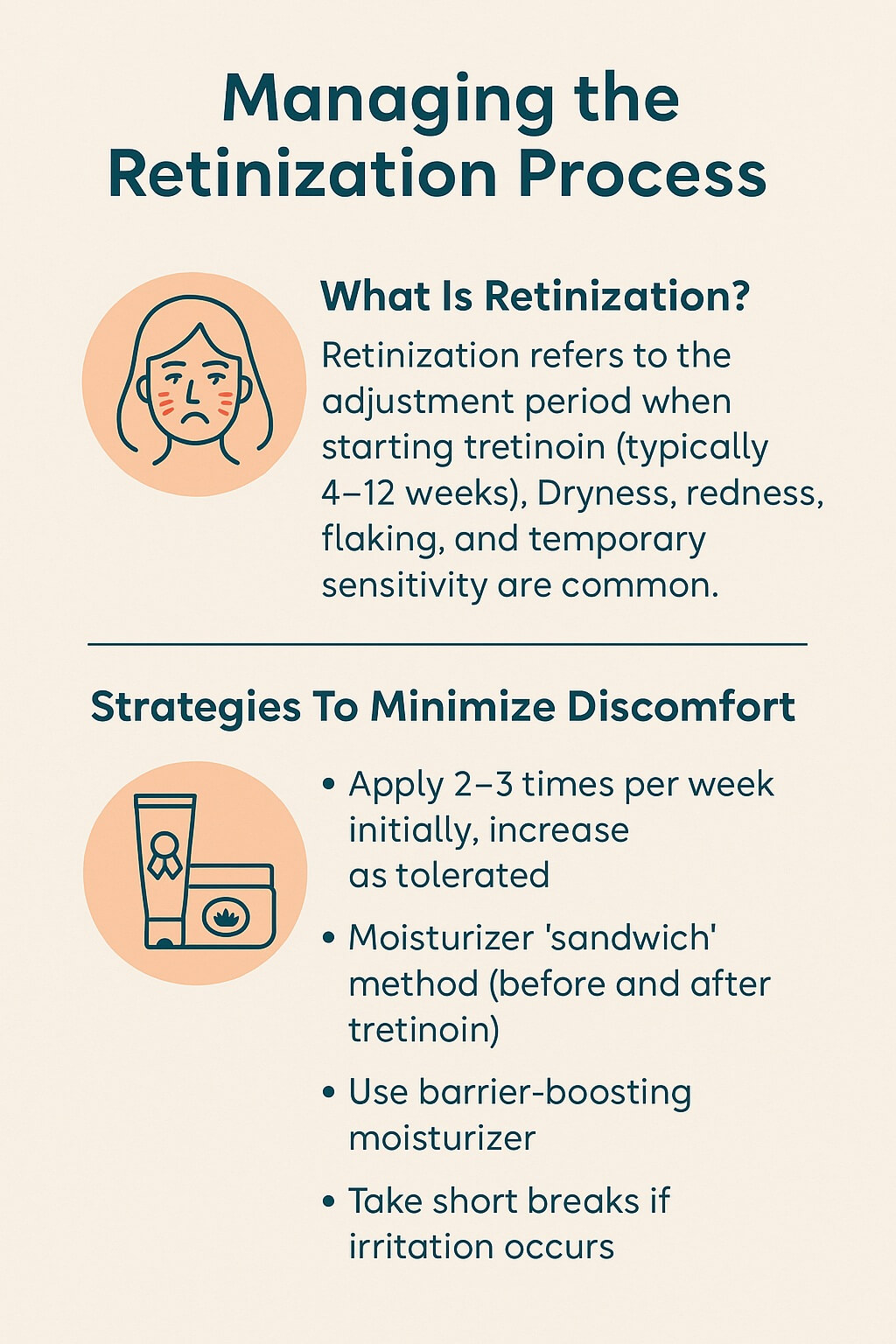
If irritation becomes excessive, taking a one- or two-day break allows your skin to recover before resuming treatment. Remember that some degree of adjustment is normal and doesn’t mean the treatment isn’t working or isn’t right for you.
Recommended Upgrade Pathway
The optimal upgrade path depends on your skin sensitivity, goals, and tolerance for potential irritation.
For Sensitive Skin or Cautious Upgraders: Progress from retinol 1% to retinaldehyde 0.05%, then to retinaldehyde 0.1% after several months. If you want to continue advancing, move to adapalene 0.1%, then adapalene 0.3%, and finally to tretinoin 0.025% if desired.
For Normal to Resilient Skin: Move from retinol 1% directly to retinaldehyde 0.1% or adapalene 0.1%, use for 3 to 6 months, then transition to tretinoin 0.025% or 0.05% if seeking maximum results.
For Experienced Users Seeking Maximum Results: If you’ve used retinol 1% nightly for two years without irritation, consider starting tretinoin 0.025% directly using the gradual introduction method. Build up to nightly use over 8 to 12 weeks.
For Acne-Prone or Oily Skin: Adapalene 0.1% or 0.3% offers the dual benefit of treating both breakouts and aging concerns with better tolerability than tretinoin.
Important Considerations for All Retinoids
Regardless of which retinoid you choose, certain practices are non-negotiable for safe and effective use.
Daily broad-spectrum sunscreen with SPF 30 or higher is essential because all retinoids increase sun sensitivity. Apply sunscreen every morning, even on cloudy days or when staying indoors near windows. Retinoids should be applied to clean, completely dry skin in the evening. Introducing retinoids to damp skin increases penetration and irritation risk.
Start with a small amount—a pea-sized portion is sufficient for the entire face. Avoid the immediate eye area, corners of the nose, and lips unless specifically directed. Wait at least 20 to 30 minutes after cleansing before applying retinoids to ensure skin is fully dry.
Avoid combining retinoids with other potentially irritating ingredients like physical exfoliants, high-strength acids (AHAs, BHAs), or vitamin C in the same routine, especially when starting. Once tolerance is established, some combinations may be appropriate, but introduce them cautiously.
Patience is crucial. Visible improvements typically take 12 to 16 weeks with over-the-counter retinoids and 8 to 12 weeks with prescription options. Some benefits, particularly improvements in deeper wrinkles and significant texture changes, may take 6 to 12 months to become apparent.
When to Consult a Dermatologist
While over-the-counter retinoids like retinaldehyde can be self-managed, consulting a dermatologist is advisable if you’re considering prescription tretinoin, adapalene 0.3%, or other prescription retinoids. A dermatologist can assess your skin type, specific concerns, and medical history to recommend the most appropriate strength and formulation.
Professional guidance is particularly important if you have sensitive skin conditions like rosacea or eczema, are pregnant, planning pregnancy, or breastfeeding (retinoids are contraindicated), have a history of keloid scarring or wound healing issues, or are taking medications that may interact with retinoids.
Many dermatologists now offer telemedicine consultations, making prescription retinoids more accessible than ever. Some online dermatology services provide personalized tretinoin formulations delivered to your door with ongoing professional monitoring.
Upgrading from retinol 1% doesn’t have to be an all-or-nothing decision. Retinaldehyde and adapalene provide excellent intermediate options that offer significantly more potency than retinol 1% while remaining more tolerable than tretinoin. These middle-ground retinoids allow you to continue progressing in your anti-aging journey without the dramatic leap to prescription strength.
For those ready for maximum results, tretinoin remains the proven gold standard with decades of research supporting its effectiveness. Whether you choose the gradual stepping-stone approach or move directly to tretinoin, the key to success is starting slowly, being consistent, protecting your skin with sunscreen, and giving your skin adequate time to adjust and show results.
Your skin has already demonstrated its ability to tolerate retinol 1% consistently, which is an excellent foundation. Whichever upgrade path you choose, you’re well-positioned to continue improving your skin’s health, texture, and appearance for years to come.