Electrolytes are essential minerals—such as potassium, sodium, calcium, and magnesium—that help keep your body hydrated, support proper muscle function, and maintain healthy nerve activity. According to the Cleveland Clinic, “electrolytes are crucial for balancing the amount of water in your body, moving nutrients into your cells, and removing waste products” (Cleveland Clinic). Whether you’re recovering from an intense workout, an illness, or simply a long day in the heat, replenishing lost electrolytes is vital for feeling your best. Instead of reaching for sugary sports drinks with artificial additives, you can naturally restore balance with simple foods and home remedies. This ultimate guide will show you the most electrolyte-rich fruits, quick ways to replace them, and practical tips to maintain healthy levels every day.
What Is an Electrolyte and Why Is It Important?
Electrolytes are minerals in your body fluids—like blood, sweat, and urine—that carry an electric charge. The main electrolytes include sodium, potassium, calcium, magnesium, chloride, bicarbonate, and phosphate.
These minerals are crucial for many vital functions, including:
-
Maintaining fluid balance: They help regulate how much water stays inside or outside your cells.
-
Supporting muscle function: Electrolytes enable muscles to contract and relax properly.
-
Keeping your heart rhythm steady: Potassium, calcium, and magnesium are essential for normal heartbeats.
-
Transmitting nerve signals: Sodium and potassium work together to send messages between nerves and muscles.
When you lose electrolytes—through sweating, illness, or dehydration—your body can’t function as it should. Even mild imbalances can cause fatigue, muscle cramps, dizziness, and headaches. Severe imbalances can be dangerous, leading to irregular heart rhythms or confusion.
That’s why it’s important to replace electrolytes regularly, especially if you’re active, recovering from illness, or spending time in hot weather.
Electrolyte needs in pregnancy
Pregnant women have increased fluid and electrolyte needs because of the extra blood volume and changes in kidney function during pregnancy. Maintaining the right balance is essential for healthy circulation, muscle function, and fetal development. Dehydration can contribute to leg cramps, headaches, constipation, and even preterm contractions. Including electrolyte-rich fluids and foods helps maintain proper blood pressure and reduce swelling. Some of the best sources during pregnancy are bananas, avocados, and sweet potatoes for potassium, almonds and spinach for magnesium, yogurt and fortified plant milks for calcium, and lightly salted foods in moderation for sodium. It’s important to drink plenty of water daily and include small servings of electrolyte-rich foods at meals. If you experience severe vomiting or dehydration, especially due to hyperemesis gravidarum, consult your doctor right away, as you may need medical rehydration.
Electrolyte replacement for seniors
Older adults are more prone to electrolyte imbalances, especially during illness, heat waves, or when taking diuretics and certain heart medications. Low sodium (hyponatremia) is particularly common in seniors and can cause confusion, weakness, and increased risk of falls. Low potassium (hypokalemia) can lead to muscle cramps and potentially dangerous irregular heartbeats. To stay balanced, seniors should sip fluids throughout the day rather than drinking large amounts all at once and include electrolyte-rich foods such as bananas, oranges, and dried fruits for potassium, broths and soups for sodium, and dairy or fortified milk for calcium. It’s also important to monitor symptoms like dizziness, fatigue, or swelling. Before adding electrolyte supplements or making significant dietary changes, seniors should always consult their healthcare provider to avoid overcorrection, which can be harmful.
Tips for kids and teenagers after sports
Children and teenagers lose electrolytes quickly during exercise, especially in hot weather, and they may not always recognize the signs of dehydration. Headaches, dizziness, muscle cramps, nausea, and unusual fatigue can all signal electrolyte loss. To replenish electrolytes after sports, encourage water first—most kids don’t need sports drinks for moderate activity. After longer or more intense sessions lasting over an hour, offer bananas or oranges for potassium, a handful of pretzels for sodium, and low-fat chocolate milk as a recovery drink that combines carbohydrates and electrolytes. Encourage frequent sips of fluid before, during, and after activity. For casual play or short workouts, avoid sugary sports drinks, which often add unnecessary calories without extra benefits.
What Fruit Has the Most Electrolytes?
While many fruits contain electrolytes, some stand out for their higher mineral content.
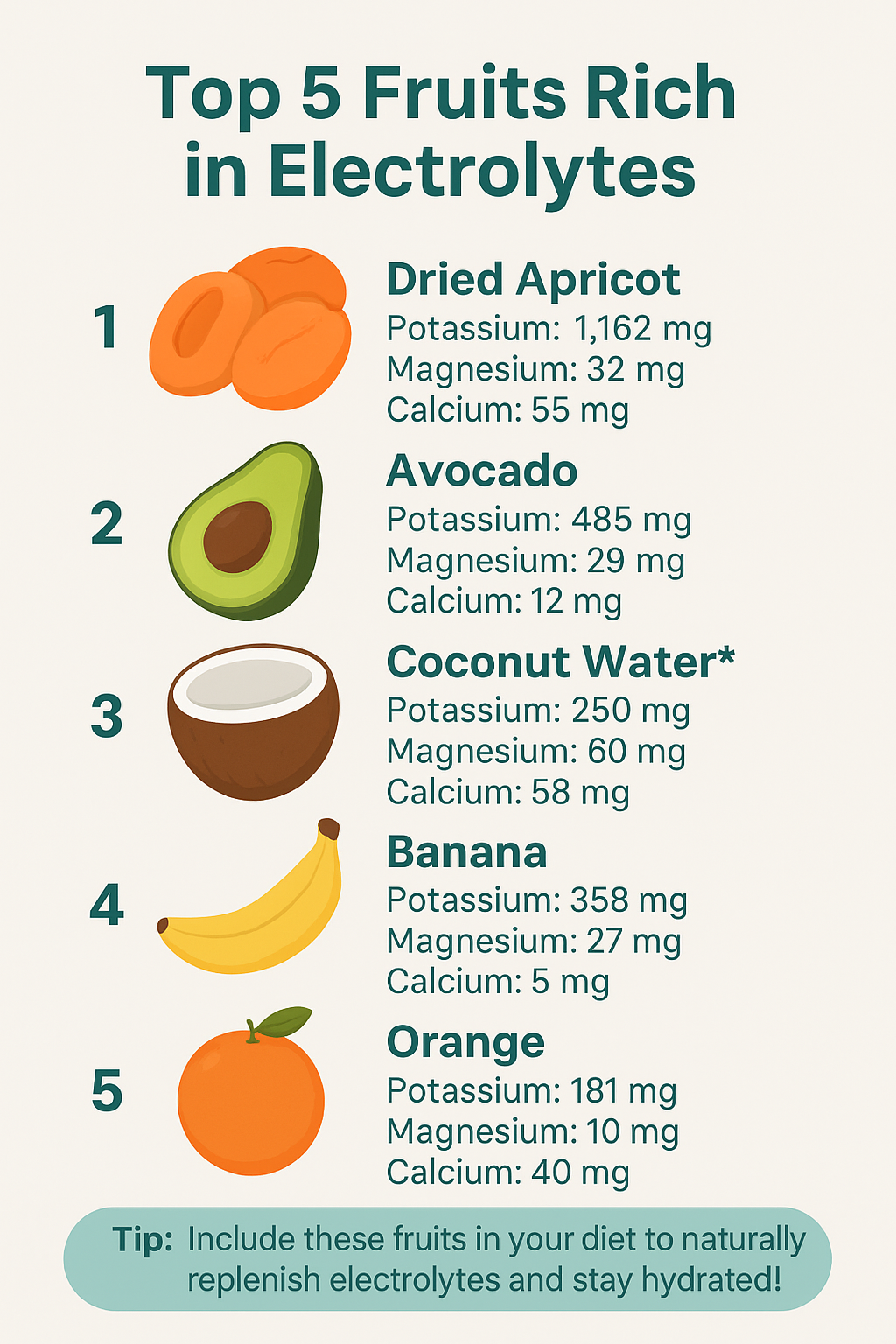
Here’s a table showing the top fruits rich in key electrolytes (per 100g serving):
| Fruit | Potassium (mg) | Magnesium (mg) | Sodium (mg) | Calcium (mg) |
|---|---|---|---|---|
| Banana | 358 | 27 | 1 | 5 |
| Avocado | 485 | 29 | 7 | 12 |
| Coconut Water* | 250 (per cup) | 60 | 252 | 58 |
| Dried Apricot | 1,162 | 32 | 10 | 55 |
| Orange | 181 | 10 | 0 | 40 |
| Watermelon | 112 | 10 | 1 | 7 |
*Note: While technically a liquid, coconut water is one of the most electrolyte-rich plant-based foods.
Dried apricots and avocados are among the fruits with the most electrolytes.
Is Mango an Electrolyte?
Although they are a source of electrolytes, particularly potassium, mangoes are not electrolytes in and of themselves. About 277 mg of potassium, which aids in fluid balance and cramp prevention, can be found in one cup of sliced mango.
They are a nutritious choice for mineral replenishment because they also contain trace amounts of calcium and magnesium.
Therefore, eating a mango helps to restore electrolyte levels even though it is not an electrolyte in and of itself.
Dried Fruit and Electrolytes
Dried fruits are a concentrated source of electrolytes because removing water increases nutrient density.
Here are some examples of dried fruits high in electrolytes per 100g:
-
Dried Apricots: ~1,100 mg potassium
-
Raisins: ~750 mg potassium
-
Dates: ~650 mg potassium
-
Prunes: ~732 mg potassium
Including a small handful of dried fruit can be an effective, natural way to restore potassium and magnesium after exercise.
How to Replace Electrolytes Quickly
If you’re dehydrated or have lost electrolytes due to sweating, vomiting, or diarrhea, you may need to replace them fast. Here’s how:
Drink Coconut Water
One of the quickest natural electrolyte drinks—high in potassium and sodium.
Eat Bananas or Avocados
Rich in potassium to help replenish what’s lost.
Make a Homemade Electrolyte Drink
Mix:
-
2 cups water
-
1/4 tsp sea salt
-
2 tbsp lemon juice
-
1 tsp honey
Use Electrolyte Powders or Tablets
For severe dehydration (especially in athletes or illness), commercial electrolyte replacements may be appropriate.
Snack on Dried Fruit and Nuts
Combining dried apricots or raisins with almonds or cashews provides potassium and magnesium.
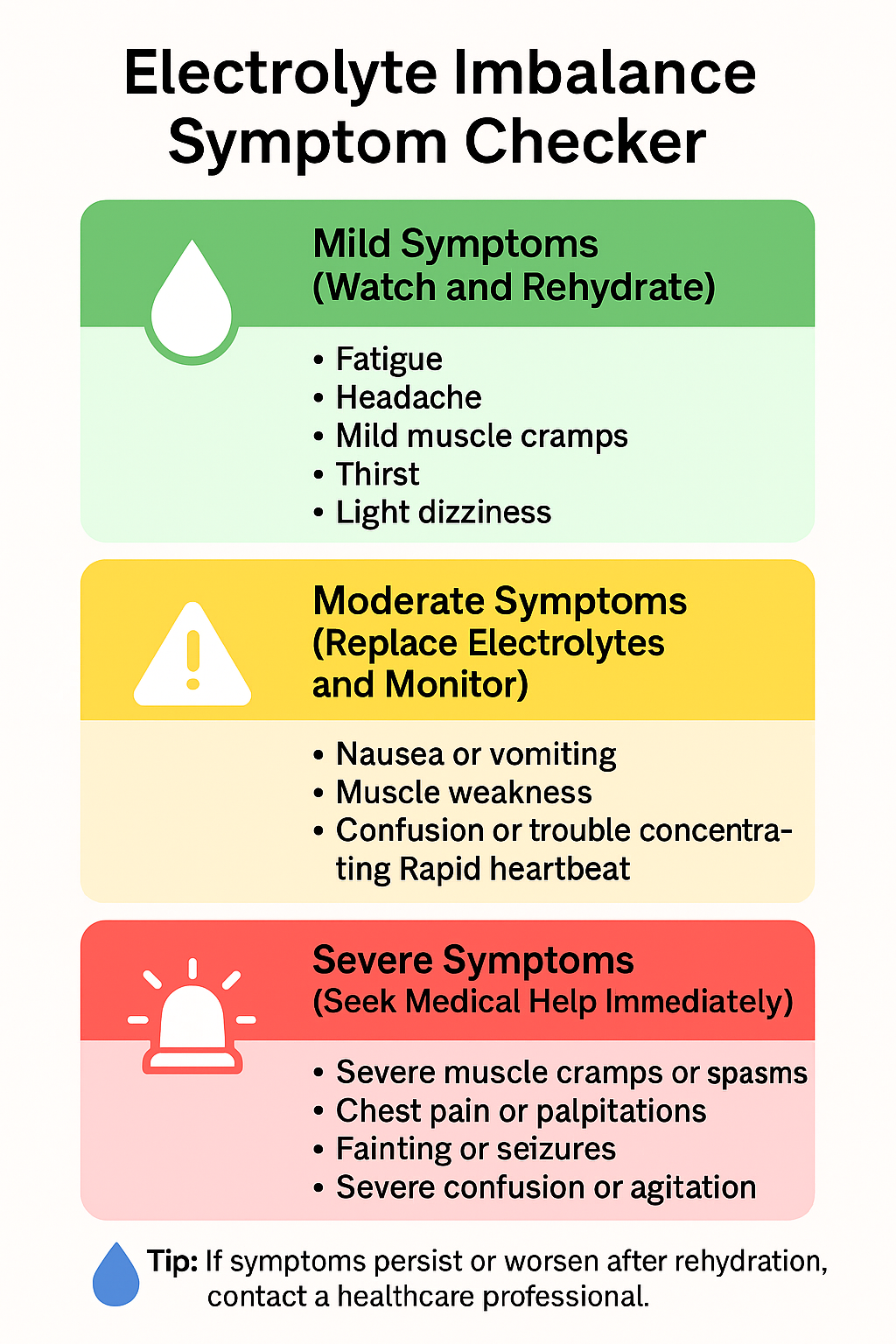
Tip: If symptoms are severe—like confusion, rapid heartbeat, or fainting—seek medical help immediately.
What Happens When Your Body Is Low on Electrolytes?
When you don’t have enough electrolytes, you can experience electrolyte imbalance.
Common symptoms include:
-
Muscle cramps or weakness
-
Dizziness or headaches
-
Rapid heartbeat
-
Nausea or vomiting
-
Fatigue
-
Confusion or irritability
In severe cases, especially with sodium or potassium imbalance, it can lead to dangerous heart rhythms and require emergency care.
How to Replace Electrolytes Naturally
If you prefer to avoid sports drinks, here are natural ways to restore electrolytes:
Eat Whole Fruits and Vegetables
-
Bananas, avocados, oranges, and sweet potatoes are excellent.
Drink Mineral-Rich Fluids
-
Coconut water
-
Bone broth
-
Herbal teas
Include Nuts and Seeds
-
Almonds, pumpkin seeds, and sunflower seeds provide magnesium.
Use Sea Salt or Himalayan Salt
-
Adds sodium and trace minerals to meals.
Combine Carbs and Electrolytes
-
Pair fruits with whole grains or legumes to aid absorption.
How to Fix Electrolyte Imbalance at Home
Electrolyte imbalance occurs when your body has too much or too little of essential minerals such as sodium, potassium, calcium, and magnesium. These minerals are vital for regulating fluids, muscle contractions, and nerve signals. According to the Healthline, “electrolyte imbalances can cause serious problems like heart palpitations, weakness, and confusion”. This imbalance can result from dehydration, illness, certain medications, or intense exercise.
To address an electrolyte imbalance at home, start by identifying the underlying cause. Consider whether you’ve been sweating heavily, experiencing diarrhea or vomiting, drinking too little fluid, or taking medications like diuretics that disrupt electrolyte levels. If your symptoms are severe or connected to chronic health conditions, contact a healthcare professional immediately.
Once you know what’s causing the imbalance, focus on rehydration. Sip fluids slowly over several hours instead of drinking large amounts all at once. Plain water is a good place to start, but it doesn’t replace minerals by itself. Coconut water is a natural source of potassium and magnesium, while broth or soup helps restore sodium. For faster replenishment after illness, you can also use an oral rehydration solution such as Pedialyte.
Adding electrolyte-rich foods to your meals further helps rebalance your system. Bananas, sweet potatoes, avocados, and dried apricots supply potassium. Yogurt, cheese, and fortified plant milks provide calcium, while almonds, pumpkin seeds, and spinach offer magnesium. For sodium, lightly salted foods and broth are beneficial. Combining carbohydrates and electrolytes—like eating a banana with yogurt—can also improve absorption.
Rest is essential during recovery. Avoid strenuous exercise and heat exposure while your body rebalances. Lie down, stay cool, and keep fluids close at hand to sip throughout the day. Most mild electrolyte imbalances improve within 24 to 48 hours with proper hydration and nutrition.
Continue to monitor your symptoms carefully. If you develop severe weakness, muscle paralysis, confusion, rapid or irregular heartbeat, fainting, or seizures, seek medical attention right away—these are signs of a dangerous imbalance that requires urgent care.
To help prevent electrolyte issues in the future, stay well-hydrated every day, particularly during exercise or hot weather. Eat a balanced diet rich in fruits, vegetables, nuts, and dairy or fortified alternatives. If you take medications that can affect electrolyte levels, talk to your doctor about regular monitoring. Always listen to your body—muscle cramps, dizziness, and fatigue are early warning signs that it’s time to replenish electrolytes. If symptoms persist or worsen, consult a healthcare provider to stay safe.
Looking for easy ways to stay hydrated and replenish electrolytes without processed sports drinks? Here are three simple homemade recipes you can whip up in minutes, using fresh ingredients you probably already have at home.

FAQ About Electrolytes
Q: What’s the fastest natural way to restore electrolytes?
Coconut water and bananas are among the quickest options.
Q: Is it safe to rely on dried fruit alone?
Dried fruits are excellent for potassium and magnesium, but be mindful of sugar content and balance them with other sources.
Q: Can I overdo it with electrolytes?
Yes—especially sodium. Overconsumption can lead to hypernatremia or hyperkalemia. Always balance intake.
Q: Are electrolyte powders better than food?
Powders can be convenient but often have additives. Whole foods provide fiber and other nutrients.
Hydration, nerve function, and muscle health all depend on electrolytes. Learning how to naturally replenish them is essential, regardless of whether you’re an athlete, recuperating from illness, or simply feeling exhausted.
To sum up:
-
Bananas, avocados, coconut water, and dried apricots are your best fruit-based sources.
-
Use homemade electrolyte drinks for quick recovery.
-
Recognize symptoms of imbalance early.
-
Eat a balanced diet rich in fruits, vegetables, nuts, and whole grains.
Stay hydrated, stay balanced, and feel your best—naturally.