Are you suddenly starving all the time? If you’ve just entered your second trimester, you’re probably experiencing a level of hunger you never knew existed. Many pregnant women describe this feeling as having a “hollow leg” or being constantly ravenous, even right after eating a full meal.
This sudden increase in appetite is completely normal and actually a good sign that your body is doing exactly what it needs to do. Let’s explore why this happens and, more importantly, how to satisfy that hunger with nutritious snacks that work for busy moms.
Why Am I So Hungry During Pregnancy?
Pregnancy hunger typically reaches its peak during the second trimester, as morning sickness fades and your baby’s growth accelerates. Several factors contribute to this intense hunger:

Hormonal Changes: Progesterone levels increase during pregnancy, which naturally boosts your appetite to ensure adequate nutrient supply for both you and your developing baby.
Your Baby’s Growth: During the second trimester, your baby’s organs are forming, bones are hardening, and development is happening at a rapid pace. All of this requires significant energy and nutrients.
Increased Blood Volume: Your blood volume increases during pregnancy, requiring additional calories to maintain.
Caloric Needs: Most pregnant women need approximately 340 extra calories per day during the second trimester and 450 calories in the third trimester. That’s roughly equivalent to one or two substantial snacks.
What Makes a Good Pregnancy Snack?
When you’re dealing with constant hunger, not just any snack will do. The best pregnancy snacks combine carbohydrates, healthy fats, protein, and fiber. This combination helps you feel satisfied longer and keeps your blood sugar stable.
Here’s what to look for in healthy pregnancy snacks:

Protein: Essential for your baby’s tissue and organ development. Aim for 60-75 grams of protein daily during pregnancy.
Healthy Fats: Support your baby’s brain development and provide lasting energy. Think avocados, nuts, and seeds.
Fiber: Helps prevent constipation, a common pregnancy complaint, and keeps you feeling full longer.
Calcium: Crucial for your baby’s developing bones and teeth, and to protect your own bone health.
Iron: Iron becomes especially important during the second trimester when your blood volume increases, helping produce red blood cells that carry oxygen to your baby.
Quick and Easy Pregnancy Snacks for Busy Moms
If you’re chasing a toddler or constantly on the go, you need snacks that are genuinely quick. Here are practical options you can grab in seconds:
Grab-and-Go Options
String Cheese with Fruit: String cheese is convenient to eat right from the package and provides protein, while pairing it with fruit adds fiber and vitamins.
Hard-Boiled Eggs: Prepare a batch at the beginning of the week. They’re portable, protein-rich, and contain choline for your baby’s brain development.
Trail Mix: Make your own combination of unsalted nuts, seeds, and a small amount of dark chocolate or dried fruit. Keep portions in small containers or bags for easy access.
Greek Yogurt: Individual containers of Greek yogurt are high in protein and calcium. Add some berries or a drizzle of honey for extra flavor.
Nut Butter with Apple Slices: Spread one or two tablespoons of natural nut butter on apple slices for a snack that combines protein, fiber, and healthy fats.
Cheese and Whole-Grain Crackers: This classic combination provides protein, calcium, and complex carbohydrates. Choose whole-grain crackers for added fiber.
Kitchen Counter Snacks
Since you mentioned needing snacks you can eat quickly at the kitchen counter while your toddler isn’t watching, here are some perfect options:
Cottage Cheese: A single-serve container of cottage cheese with some pineapple chunks offers protein and a touch of sweetness. It’s quick to eat standing up.
Protein Bars: Look for bars with whole food ingredients and natural sweeteners. They’re designed to be eaten quickly and provide sustained energy.
Edamame: Keep some steamed edamame in your fridge. A quick sprinkle of salt and you have a protein-rich snack you can eat in minutes.
Avocado Toast: Toast a slice of whole-grain bread and top with mashed avocado. This provides healthy fats and can be eaten quickly.
Smoothies: Blend Greek yogurt, spinach, frozen fruit, and a tablespoon of nut butter. Pour it into a travel cup and sip while you work.
Nutritious Alternatives to Your Favorite Treats
You mentioned chocolate-covered almonds are your go-to. The good news is that this isn’t a terrible choice! Dark chocolate may help lower the risk of preeclampsia and contains beneficial minerals, while almonds provide protein and healthy fats.
However, variety is important. Here are similar options that satisfy cravings while adding nutrition:
Homemade Trail Mix: Combine almonds, walnuts, a small amount of dark chocolate chips, and dried cranberries or apricots. Walnuts are particularly beneficial because they contain omega-3 fatty acids that support your baby’s brain development.
Chocolate Yogurt: Choose Greek yogurt with cocoa for that chocolate fix plus protein and probiotics.
Energy Balls: Mix dates, nut butter, oats, and a touch of cocoa powder. Roll into balls and keep them in the fridge for a sweet treat that’s also nutritious.
Banana with Dark Chocolate: Slice a banana and enjoy it with a small piece of dark chocolate (70% cocoa or higher for maximum benefits).
Second Trimester Snack Ideas by Nutrient Need
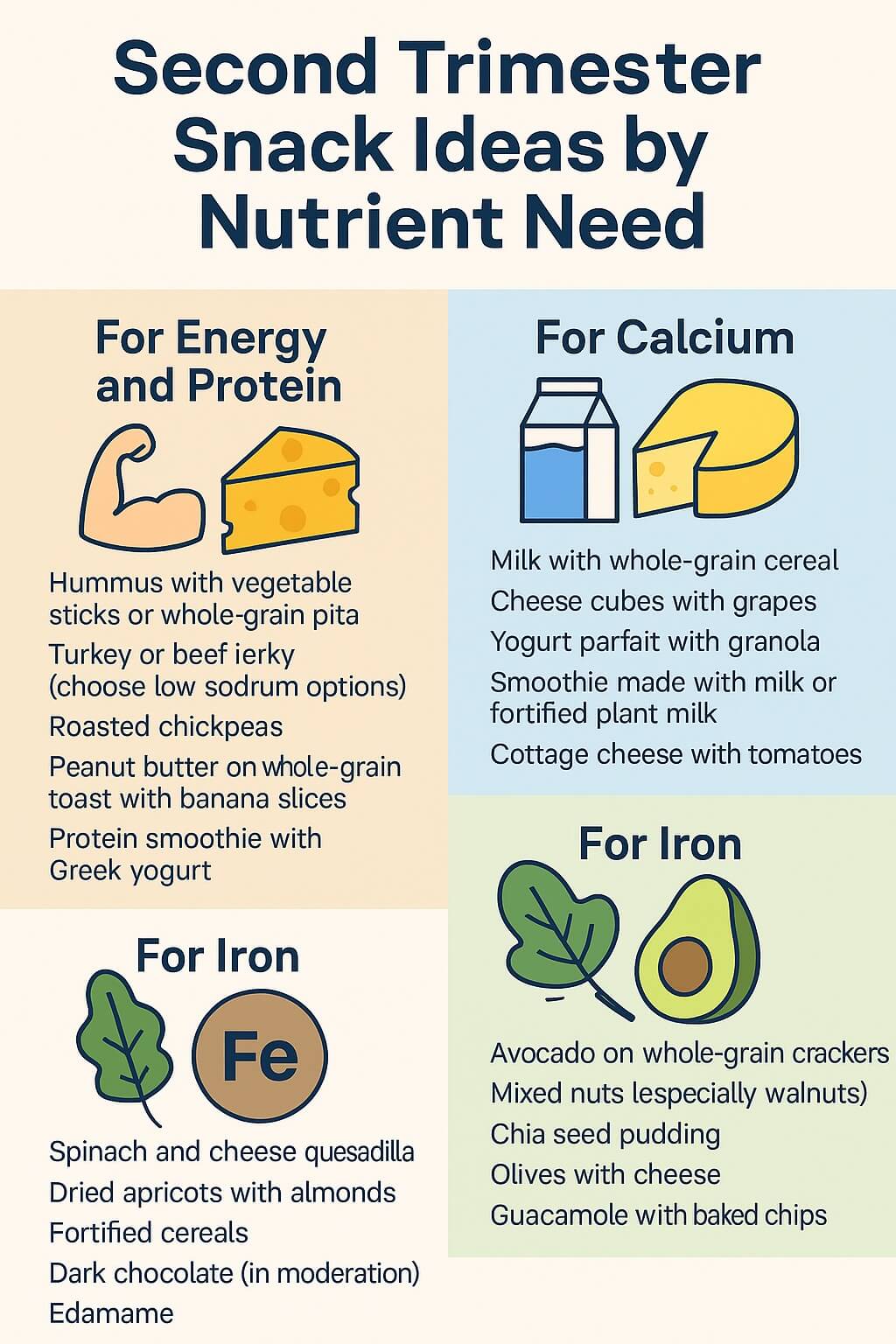
For Energy and Protein
During the second trimester, protein becomes increasingly important. Try these protein-packed options:
- Hummus with vegetable sticks or whole-grain pita
- Turkey or beef jerky (choose low-sodium options)
- Roasted chickpeas
- Peanut butter on whole-grain toast with banana slices
- Protein smoothie with Greek yogurt
For Calcium
You need about three servings of dairy or dairy alternatives daily. Good calcium-rich snacks include:
- Milk with whole-grain cereal
- Cheese cubes with grapes
- Yogurt parfait with granola
- Smoothie made with milk or fortified plant milk
- Cottage cheese with tomatoes
For Iron
Iron-rich snacks help prevent anemia during pregnancy:
- Spinach and cheese quesadilla
- Dried apricots with almonds
- Fortified cereals
- Dark chocolate (in moderation)
- Edamame
For Healthy Fats and Brain Development
- Avocado on whole-grain crackers
- Mixed nuts (especially walnuts)
- Chia seed pudding
- Olives with cheese
- Guacamole with baked chips
Managing Hunger Without Overeating
While your increased appetite is normal, it’s important to manage your overall calorie intake. A 300-calorie increase might look like a fruit and yogurt smoothie or a quarter-cup of hummus with a dozen whole wheat pita chips.
Here are strategies to manage hunger effectively:
Eat Small, Frequent Meals: Rather than three large meals, aim for five to six smaller meals and snacks throughout the day. Keeping your belly from becoming completely empty helps prevent intense hunger pangs.
Stay Hydrated: Dehydration can show up as hunger, so keep your water bottle handy and sip often. Aim for 8-10 glasses of water daily.
Choose Filling Foods: Foods high in protein, complex carbohydrates, and healthy fats keep you feeling full longer, while empty-calorie foods like chips and candy leave you hungry shortly after eating.
Don’t Skip Breakfast: Starting your day with a balanced breakfast sets the tone. Consider upgrading your yogurt and granola by adding nut butter and fresh fruit for extra protein and nutrients.
Plan Ahead: Stock your kitchen with healthy options so you’re not scrambling when hunger strikes. Keep pre-cut vegetables, washed fruit, and portioned snacks ready to grab.
Snacks That Work with Pregnancy Symptoms

For Nausea
If you’re still experiencing some first-trimester nausea:
- Plain crackers or toast
- Cold fruit like watermelon or grapes
- Ginger tea with graham crackers
- Pretzels with string cheese
- Cereal with cold milk
For Heartburn
Heartburn is common during pregnancy, so avoid spicy or acidic foods. Try:
- Bananas
- Oatmeal with honey
- Low-fat milk
- Baked sweet potato
- Cottage cheese
For Constipation
High-fiber snacks can help with constipation that some women experience from prenatal vitamins:
- Fresh fruits, especially berries, pears, and apples
- Vegetables with hummus
- Whole-grain popcorn (skip the butter and excess salt)
- Chia pudding
- Oatmeal or bran muffins
Practical Tips for Snacking with a Toddler
You mentioned your toddler wants whatever you’re eating, which makes snacking challenging. Here are some strategies:
Have Toddler-Friendly Versions Ready: When you make yourself a snack, prepare a small portion for your toddler too. If you’re having cheese and crackers, cut up some cheese and crackers for your little one.
Snack During Nap Time: Use your toddler’s nap as an opportunity to sit down and enjoy a more substantial snack without interruption.
Make It Quick: Keep a stash of individually wrapped or portioned snacks that you can eat in 30 seconds or less.
Strategic Distraction: If you need to snack while your toddler is awake, engage them with an activity or favorite toy first.
Healthy Snacks for Both: Choose snacks you can share, like sliced fruit, cheese cubes, or whole-grain crackers. This way, if your toddler asks for what you’re eating, it’s already appropriate.
Building Your Pregnancy Snack Arsenal
Stock your pantry and fridge with these essentials:
Pantry Staples:
- Natural nut butters (peanut, almond, cashew)
- Whole-grain crackers and bread
- Unsalted nuts and seeds
- Dried fruit (choose options without added sugar)
- Oats and whole-grain cereals
- Dark chocolate chips
- Canned beans for quick hummus
Refrigerator Essentials:
- Greek yogurt
- String cheese and other hard cheeses
- Hummus
- Pre-cut vegetables
- Fresh fruit
- Hard-boiled eggs
- Cottage cheese
- Milk or plant-based milk alternatives
Freezer Options:
- Frozen fruit for smoothies
- Whole-grain waffles
- Homemade muffins or energy balls
- Frozen edamame
- Frozen berries
When to Talk to Your Doctor
While increased hunger during pregnancy is normal, certain symptoms warrant a conversation with your healthcare provider:
- Extreme hunger that seems uncontrollable
- Inability to feel satisfied no matter how much you eat
- Excessive thirst accompanying extreme hunger (this could indicate gestational diabetes)
- Concerns about weight gain
- Difficulty keeping food down
- Persistent nausea affecting your ability to eat
The Bottom Line
Second-trimester hunger is intense, but it’s your body’s way of ensuring you and your baby get the nutrition needed for healthy development. The key is choosing snacks that combine protein, healthy fats, fiber, and complex carbohydrates.
Remember that you don’t need to achieve perfection with every snack. Some days you might reach for convenience foods, and that’s okay. The goal is to make nutritious choices most of the time while being kind to yourself during this demanding period.
Keep your kitchen stocked with easy-to-grab healthy options, stay hydrated, and eat when you’re hungry. Your body is performing the incredible task of growing a human being, and proper nutrition through regular, balanced snacks will support both you and your developing baby.
If you’re feeling overwhelmed by the constant hunger, you’re not alone. Millions of pregnant women experience this same challenge. With planning, preparation, and the right snack choices, you can manage your appetite while nourishing yourself and your baby through this amazing journey.