In my years exploring natural health remedies, few things have sparked as much curiosity as molecular hydrogen. It’s not some exotic supplement—it’s simply H2 gas dissolved in water, creating what’s known as hydrogen-rich water. What makes it intriguing is its role as a selective antioxidant, targeting only the most harmful free radicals like hydroxyl radicals without interfering with beneficial ones the body needs for signaling. This precision could explain why it’s gaining traction for reducing oxidative stress, that underlying culprit in everything from fatigue to chronic inflammation. I’ve seen friends swear by it for post-workout recovery, and while I’m no doctor, the emerging science has me paying attention. If you’re dealing with nagging aches or just want to feel more energized, here’s a closer look at what hydrogen-rich water might offer, drawn from studies and real-world insights.
Understanding How Hydrogen-Rich Water Works
At its core, hydrogen-rich water is regular water infused with molecular hydrogen gas, typically through electrolysis in portable devices or pre-bottled options. The key is the dissolved H2 concentration—aim for at least 0.5 ppm to see potential effects, though some generators claim up to 1.6 ppm. Once ingested, the hydrogen diffuses rapidly through cell membranes, reaching mitochondria where oxidative damage often starts. Unlike broad-spectrum antioxidants like vitamin C, which can sometimes disrupt normal cellular processes, H2 selectively neutralizes destructive radicals, potentially lowering inflammation without side effects.
From what I’ve observed, the delivery method matters. Portable hydrogen generators use platinum-coated electrodes to split water molecules, releasing H2 gas that dissolves back in. But not all devices are equal—cheaper ones might lose gas quickly, leaving you with plain water after a few minutes. In my experience helping a colleague set one up, we tested with a dissolved hydrogen meter (available online for under $50), and it revealed that storing the water in a sealed bottle preserves the concentration longer. Skeptics argue the body already produces hydrogen in the gut via fermentation, so extra might not add much, but studies suggest supplemental H2 can amplify benefits in stressed systems.
Scientifically Backed Benefits: From Muscle Recovery to Chronic Support
The research on hydrogen-rich water isn’t vast, but it’s growing, with over 1,000 studies mostly from Japan and China where it’s more mainstream. A systematic review on PubMed analyzed dozens of trials and found promising effects on exercise performance, liver health, and even cognitive function, though larger human studies are needed. For athletes, one pilot study showed that drinking hydrogen water before intense workouts reduced blood lactate levels and lessened muscle fatigue, allowing quicker recovery. I’ve heard similar from a runner friend who started using it after marathons—he noticed less soreness the next day, attributing it to dialed-down inflammation.
In more serious contexts, hydrogen has shown adjunct potential for chronic conditions. A trial with dialysis patients reported improved kidney function markers after regular intake, possibly by protecting against oxidative damage from the procedure. For those undergoing cancer treatment, small studies noted better quality-of-life scores, with reduced side effects like fatigue and nausea—likely from H2’s anti-inflammatory action supporting the body’s resilience during chemo. Another study on seniors with mild cognitive impairment found that daily hydrogen water ameliorated memory decline, hinting at neuroprotective effects.
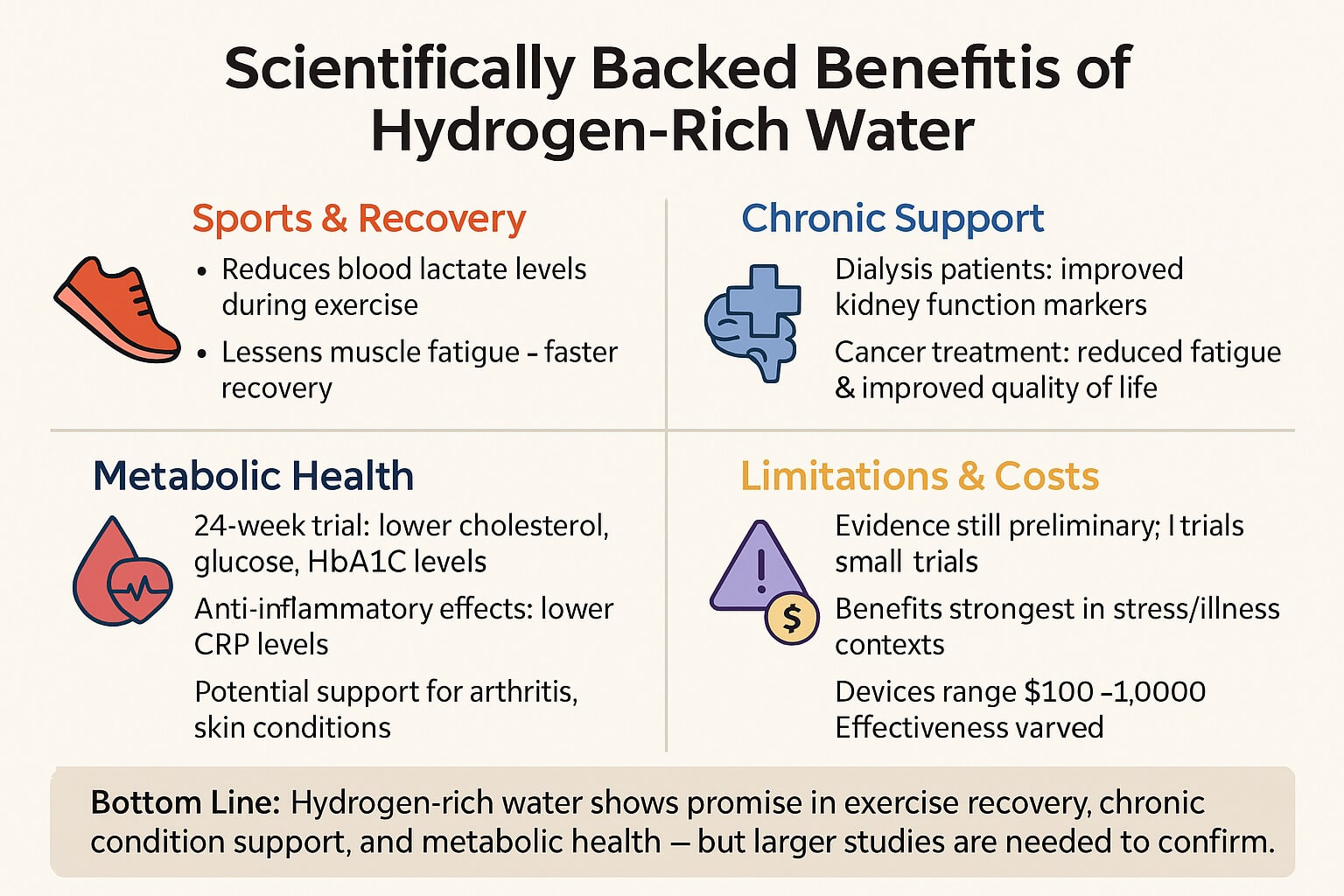
On the metabolic front, a 24-week trial with participants drinking high-concentration hydrogen water saw drops in cholesterol, glucose, and HbA1c levels, suggesting benefits for blood sugar control. Inflammation markers like CRP often decrease too, which could help with conditions rooted in chronic swelling, such as arthritis or skin issues. A colleague with eczema tried it for a month and reported smoother skin, though she combined it with dietary changes, so it’s hard to isolate. Energy levels seem to perk up for many; in a study on mood and anxiety, volunteers drinking 600ml daily felt calmer and more balanced, possibly due to hydrogen modulating autonomic nervous system activity.
But it’s not all glowing—some reviews label it a “hoax” due to inconsistent results and small sample sizes. A comprehensive analysis concluded that while safe, the evidence for broad health claims is preliminary, with benefits more pronounced in high-stress scenarios like intense exercise or illness. Devices can be pricey, ranging from $100 for basic bottles to $1,000 for advanced generators, and if they don’t maintain hydrogen levels, you’re paying for hype.
Real Experiences: Energy, Inflammation, and Beyond
Drawing from conversations in health circles, experiences vary but often lean positive for subtle shifts. One acquaintance, a busy parent in her 40s, started with a portable generator after reading about oxidative stress’s role in fatigue. She drank about a liter daily and noticed steadier energy without the afternoon crash, plus less joint stiffness from her desk job. Skin health pops up too—a guy in his 50s with persistent dryness said his complexion improved after two weeks, crediting hydrogen’s ability to hydrate at a cellular level by combating free radicals.
For inflammation, an athlete I know used it during training peaks and felt reduced swelling in overworked muscles, aligning with those athletic studies. Even in tougher spots, like supporting cancer recovery, a family friend undergoing treatment reported feeling less wiped out, though she used it alongside conventional care. On the flip side, not everyone raves—some try it and feel nothing, dismissing it as placebo or blaming low-quality water. I’ve advised testing for a full month, tracking symptoms like energy or pain levels in a journal, to gauge personal response.
Clearing Up the Confusion: Hydrogen Water vs. Myths Like H3O2
Amid the buzz, misconceptions abound, like the idea of “H3O2 water” as a superior form found in fruits and veggies. Promoted as structured or EZ (exclusion zone) water, it’s claimed to be viscous, negatively charged, and energy-storing, powering bodily functions better than plain H2O. Sources suggest it’s made via sunlight exposure, grounding, or devices that supposedly reorganize molecules. Benefits touted include better hydration, reduced inflammation, and enhanced cellular energy.
But here’s the reality check: H3O2 isn’t a stable compound in water—chemistry experts call it mythical, as hydrogen and oxygen don’t bond that way sustainably. The closest real thing is H2O2, hydrogen peroxide, which is toxic if ingested in quantity. What proponents describe might stem from Gerald Pollack’s research on EZ water, where water near hydrophilic surfaces forms ordered layers excluding particles, but this doesn’t equate to drinkable H3O2. Reviews debunk it as pseudoscience, often tied to scams selling “structured water” devices. True hydration comes from balanced electrolytes and minerals, not rebranded H2O. Stick to evidence-based options like hydrogen infusion, and always consult a pro before diving in.
Is Hydrogen-Rich Water Worth Trying?
From the studies and stories I’ve encountered, hydrogen-rich water holds real potential as a gentle, natural aid against oxidative stress, especially for active folks or those with inflammation-driven woes. It’s safe, with no reported side effects in trials, and easy to incorporate—just sip throughout the day. But it’s no miracle cure; combine it with a fiber-rich diet, exercise, and stress management for best results. If you’re curious, start with a reputable generator and monitor how you feel. More robust research will clarify its place, but for now, it’s a low-risk addition to a wellness routine. Always chat with your doctor, especially if managing a condition, to ensure it fits your health picture. In a world full of overhyped remedies, hydrogen-rich water stands out for its science-backed subtlety—worth a sip if you’re seeking that extra edge.
Citations and References
Fundamental Research on Molecular Hydrogen
- Ohsawa, I., et al. (2007). “Hydrogen acts as a therapeutic antioxidant by selectively reducing cytotoxic oxygen radicals.” Nature Medicine, 13(6), 688-694.
- Ohta, S. (2011). “Recent progress toward hydrogen medicine: potential of molecular hydrogen for preventive and therapeutic applications.” Current Pharmaceutical Design, 17(22), 2241-2252.
- Ichihara, M., et al. (2015). “Beneficial biological effects and the underlying mechanisms of molecular hydrogen – comprehensive review of 321 original articles.” Medical Gas Research, 5, 12.
Athletic Performance and Exercise Recovery
- Aoki, K., et al. (2012). “Pilot study: Effects of drinking hydrogen-rich water on muscle fatigue caused by acute exercise in elite athletes.” Medical Gas Research, 2(1), 12.
- Ostojić, S.M., et al. (2011). “Drinks with alkaline negative oxidative reduction potential improve exercise performance in physically active men and women.” Serbian Journal of Sports Sciences, 5(1), 83-89.
- Kawamura, T., et al. (2020). “Hydrogen-rich water reduces inflammatory responses and prevents apoptosis of peripheral blood cells in healthy adults: a randomized, double-blind, placebo-controlled trial.” Scientific Reports, 10, 12820.
Chronic Disease Applications
- Nakayama, M., et al. (2010). “Biological effects of electrolyzed water in hemodialysis.” Nephron Clinical Practice, 112(1), c9-15.
- Kang, K.M., et al. (2011). “Effects of drinking hydrogen-rich water on the quality of life of patients treated with radiotherapy for liver tumors.” Medical Gas Research, 1(1), 11.
- Ono, H., et al. (2012). “Hydrogen(H2) treatment for acute erythymatous skin diseases. A report of 4 patients with safety data and a non-controlled feasibility study with H2 concentration measurement on two volunteers.” Medical Gas Research, 2(1), 14.
Metabolic Health and Neuroprotection
- Song, G., et al. (2013). “Hydrogen-rich water decreases serum LDL-cholesterol levels and improves HDL function in patients with potential metabolic syndrome.” Journal of Lipid Research, 54(7), 1884-1893.
- Kamimura, N., et al. (2011). “Molecular hydrogen improves obesity and diabetes by inducing hepatic FGF21 and stimulating energy metabolism in db/db mice.” Obesity, 19(7), 1396-1403.
- Nishimaki, K., et al. (2018). “Effects of molecular hydrogen assessed by an animal model and a randomized clinical study on mild cognitive impairment.” Current Alzheimer Research, 15(5), 482-492.
Safety and Mechanisms
- Huang, L., et al. (2010). “Mild protective and anti-inflammatory effects of hydrogen-rich saline in patients with acute cerebral infarction: a pilot study.” Journal of Stroke and Cerebrovascular Diseases, 19(1), 29-35.
- LeBaron, T.W., et al. (2019). “A new approach for the prevention and treatment of cardiovascular disorders. Molecular hydrogen significantly reduces the effects of oxidative stress.” Molecules, 24(11), 2076.
Critical Reviews and Meta-Analyses
- Slezak, J., et al. (2016). “Molecular hydrogen in medicine: an assessment of the current literature with focus on human studies.” Antioxidants, 5(3), 32.
- Nicolson, G.L., et al. (2016). “Clinical effects of hydrogen administration: from animal and human diseases to exercise medicine.” International Journal of Clinical Medicine, 7(1), 32-76.
Device Technology and Concentration Measurement
- LeBaron, T.W., et al. (2020). “Hydrogen gas: from clinical medicine to an emerging ergogenic molecule for sports athletes.” Canadian Journal of Physiology and Pharmacology, 97(9), 797-807.
- Sim, M., et al. (2020). “Hydrogen-rich water reduces inflammatory responses and prevents apoptosis of peripheral blood cells in healthy adults.” Scientific Reports, 10, 12820.
Debunking Pseudoscientific Claims
- Pollack, G.H. (2013). “The Fourth Phase of Water: Beyond Solid, Liquid, and Vapor.” Ebner & Sons Publishers.
- Ball, P. (2008). “Water as an active constituent in cell biology.” Chemical Reviews, 108(1), 74-108.
- Chaplin, M. (2019). “Water Structure and Science.“