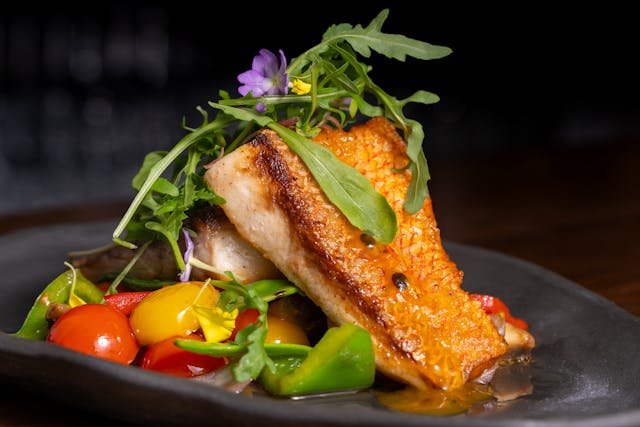
If you’ve been following health trends, you’ve probably heard plenty about the Mediterranean diet. But there’s another eating pattern that’s been quietly delivering impressive health results up in Scandinavia. The Nordic diet takes the same balanced approach as its Mediterranean cousin but swaps in foods that actually grow in colder climates. Think berries instead of citrus, canola oil instead of olive oil, and root vegetables that can survive a harsh winter.
The best part? You don’t need to live in Sweden or Norway to follow this way of eating. Most of the foods are already sitting in your local grocery store, and the principles are surprisingly simple to follow.
What exactly is the Nordic diet?
The Nordic diet focuses on foods traditionally eaten in Denmark, Finland, Iceland, Norway, and Sweden. It’s not about fancy recipes or expensive ingredients. Instead, it emphasizes whole foods that grow naturally in northern climates and have been part of Scandinavian meals for generations.
The foundation includes berries like lingonberries, blueberries, and cloudberries, though regular blueberries and strawberries work just fine. You’ll eat plenty of root vegetables such as potatoes, carrots, beets, and turnips. Whole grains play a big role, especially rye, barley, and oats. Legumes like peas, beans, and lentils show up regularly on the plate.
Fish and seafood are central to the diet, particularly fatty fish like salmon, herring, and mackerel. Low-fat dairy products appear in moderation, and nuts and seeds add healthy fats and crunch. The diet also encourages eating wild foods when possible, like mushrooms, wild berries, and game meats, though these aren’t required.
What makes this different from just eating healthy? The emphasis on local, seasonal foods and traditional preparation methods. It’s about reconnecting with simpler ways of eating that don’t rely on processed foods or ingredients shipped from halfway around the world.
How is this different from the Mediterranean diet?
Both diets share a lot of common ground. They both emphasize whole grains, fish, vegetables, and healthy fats while limiting red meat and processed foods. Both have solid research backing up their health benefits. So why choose one over the other?
The biggest difference comes down to which oils you use. Mediterranean eating relies heavily on olive oil, while the Nordic approach uses canola oil (also called rapeseed oil in Europe). Canola oil has a milder flavor and works better for Nordic-style cooking and baking. It also has a good balance of omega-3 and omega-6 fatty acids, similar to olive oil.
The vegetables differ based on what grows where. Mediterranean meals feature tomatoes, eggplant, zucchini, and peppers. Nordic meals lean toward cabbage, kale, root vegetables, and Brussels sprouts. These cold-weather crops are heartier and store well through long winters.
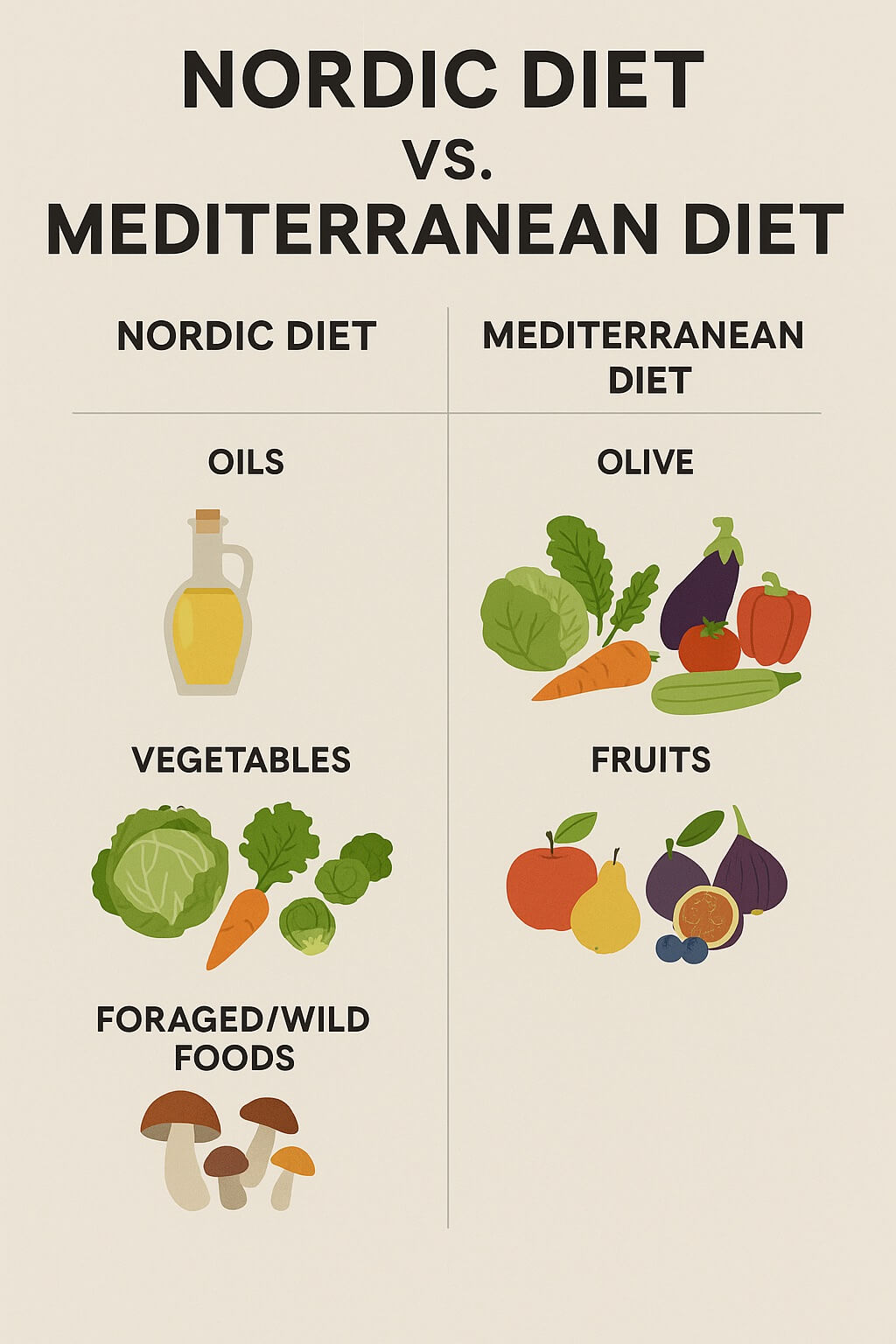
Fruit choices reflect the climate too. While Mediterranean dishes might include figs, oranges, and grapes, Nordic eating focuses on apples, pears, and especially berries that thrive in cooler temperatures. These berries pack serious nutritional punch with antioxidants and vitamins.
The Nordic diet also puts extra emphasis on foraging and wild foods, which connects people to their local environment. This isn’t practical for everyone, but the principle of eating locally and seasonally applies anywhere you live.
Why should I consider eating this way?
Research shows the Nordic diet can lead to real health improvements. Studies have found it helps with weight loss without strict calorie counting. People following this eating pattern often see better cholesterol levels, with increases in good HDL cholesterol and decreases in bad LDL cholesterol.
Blood pressure tends to improve on the Nordic diet, which makes sense given all the potassium from vegetables and the omega-3s from fish. Some research suggests it may help with inflammation in the body, which is linked to numerous chronic diseases.
The diet seems to be particularly good for heart health. The combination of whole grains, fish, berries, and healthy oils provides nutrients your cardiovascular system needs. Plus, by cutting down on processed foods and red meat, you’re avoiding things that can harm your heart.
Beyond physical health, this way of eating is more sustainable for the planet. Emphasizing local, seasonal foods means less transportation and storage energy. Root vegetables and hardy greens don’t need heated greenhouses. Fish from well-managed fisheries can be a sustainable protein source.
Many people find the Nordic diet easier to stick with than more restrictive eating plans. You’re not cutting out entire food groups or counting every calorie. You’re just shifting toward simpler, whole foods and learning to enjoy the natural flavors of seasonal ingredients.
What do I actually eat for breakfast on this diet?
Nordic breakfasts are hearty and filling, designed to fuel you through cold mornings. Whole grain rye bread or crisp bread topped with low-fat cheese or smoked fish is classic. The dense, slightly sour flavor of rye takes some getting used to if you’re accustomed to soft white bread, but it keeps you satisfied for hours.
Porridge made from oats or barley shows up frequently. You can cook it with low-fat milk or water, then top it with fresh or frozen berries, a sprinkle of nuts or seeds, and maybe a tiny drizzle of honey. This isn’t the sugary instant oatmeal from packets. It’s plain whole grains that let you control what goes in.
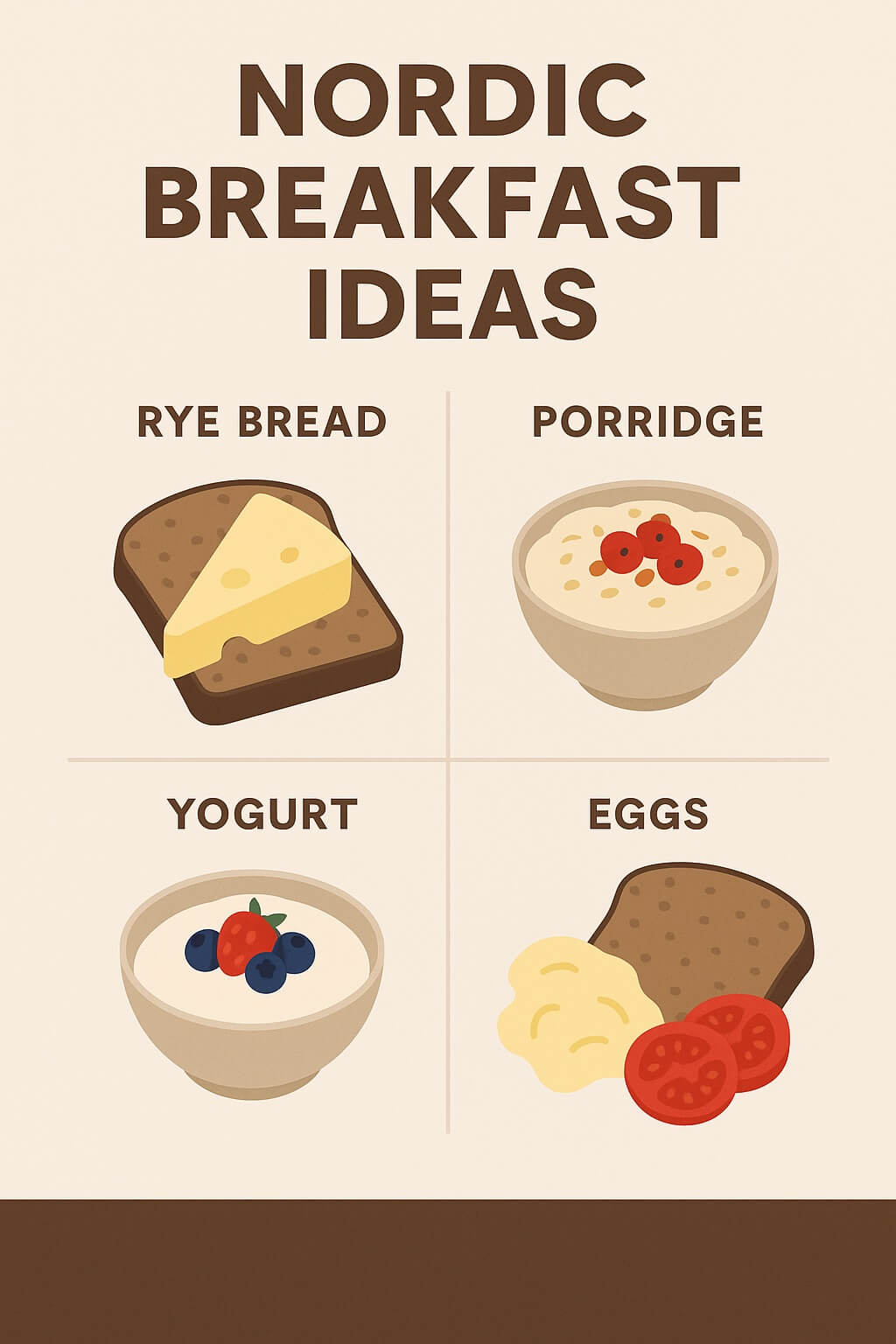
Yogurt or skyr (an Icelandic dairy product similar to Greek yogurt) makes an easy breakfast option. Mix in some berries, chopped nuts, and a handful of whole grain cereal or muesli. The protein from dairy keeps hunger at bay until lunch.
Eggs aren’t off-limits either. Scrambled eggs with rye toast and some sliced cucumber or tomato fits the Nordic approach perfectly. The key is keeping things simple and avoiding processed breakfast meats or sugary pastries.
If you’re in a rush, a smoothie made with berries, a banana, some oats, and milk or yogurt gives you Nordic nutrition in a glass. Throw in some ground flaxseed for extra omega-3s.
How do I plan Nordic-style dinners?
Dinner on the Nordic diet typically centers around fish or seafood, though you can include chicken or lean pork a couple times a week. Aim for fatty fish like salmon or mackerel at least twice a week to get those beneficial omega-3 fatty acids. Bake, poach, or pan-fry the fish rather than deep-frying it.
Fill half your plate with vegetables, focusing on what’s in season. Roasted root vegetables like carrots, parsnips, and beets are delicious and easy. Steamed or sautéed cabbage, kale, or Brussels sprouts work great too. Don’t be afraid to eat potatoes. They’re a staple in Nordic countries and perfectly healthy when not deep-fried.
Add a serving of whole grains to round out the meal. Barley makes a nice side dish similar to rice. Rye bread accompanies most meals. Whole grain pasta works too, especially with fish and vegetables.
Season your food with herbs like dill, parsley, and chives rather than loading up on salt. A little canola oil for cooking, maybe some lemon juice or vinegar for brightness, and you have a complete meal that’s satisfying without being heavy.
Soups and stews fit naturally into Nordic eating. A hearty vegetable and barley soup or a fish stew with potatoes and dill captures the essence of this diet. These dishes taste even better the next day, making meal prep easier.
Can I snack on the Nordic diet?
Snacking isn’t a huge part of traditional Nordic eating since the meals tend to be filling enough to carry you through. But when you need something between meals, there are plenty of good options.
Fresh fruit, especially apples and pears, makes an easy grab-and-go snack. Berries by the handful work too. A small handful of nuts provides healthy fats and protein to tide you over. Sunflower seeds and pumpkin seeds are particularly popular in Nordic countries.
Raw vegetables like carrots, radishes, or bell pepper strips with a small amount of low-fat yogurt dip give you crunch and nutrients. Rye crackers with a thin spread of low-fat cheese or mashed avocado (not traditional but fits the principles) keeps things interesting.
A small bowl of plain yogurt with berries satisfies sweet cravings without added sugar. If you’re still hungry, it probably means your last meal didn’t have enough protein or fiber, so adjust your portions at regular mealtimes.
The Nordic approach encourages listening to actual hunger rather than mindless snacking out of boredom or habit. When you eat whole, unprocessed foods at meals, you naturally feel satisfied longer and crave snacks less.
What about desserts and treats?
Nordic cultures do enjoy sweets, but they’re typically reserved for special occasions rather than daily indulgences. When you do have something sweet, it often features berries as the star ingredient.
Berry crumbles or berry soups (yes, it’s a thing and surprisingly delicious) let you enjoy fruit in a slightly indulgent way. Baked apples or pears with a touch of cinnamon make a warm, comforting dessert. Dark rye cookies or oatmeal cookies with minimal sugar fit the Nordic pattern better than heavily frosted cakes.
The key is keeping treats occasional and focusing on quality over quantity. A small piece of dark chocolate with some nuts satisfies your sweet tooth without derailing your healthy eating. Homemade treats where you control the ingredients are always better than store-bought pastries loaded with refined sugar and unhealthy fats.
Many people following the Nordic diet find their taste preferences shift over time. The natural sweetness of berries becomes more noticeable when you’re not eating candy and cookies regularly. Your body starts craving the foods that make it feel good rather than quick sugar hits.
Is this diet practical if I live far from Scandinavia?
Absolutely. You don’t need access to lingonberries or Arctic char to follow Nordic principles. The point isn’t to eat exactly like someone in Copenhagen. It’s about adapting the approach to your local food supply.
Focus on what grows in your region during cooler months. In many places, that means root vegetables, hardy greens, apples, and cold-weather crops like Brussels sprouts and cabbage. Frozen berries from the store work just as well as fresh ones for most purposes.
Canola oil is widely available and affordable. If you can’t find it or prefer something else, other neutral-flavored oils with good fat profiles work too. Whole grains like oats, barley, and rye are available in most supermarkets, often in the bulk section or international aisle.
Fish doesn’t have to be expensive or exotic. Canned salmon, sardines, or mackerel are budget-friendly and shelf-stable. Frozen fish fillets cost less than fresh and are just as nutritious. Even if you’re landlocked, you can still eat fish regularly without breaking the bank.
The Nordic diet’s emphasis on simple, seasonal eating actually makes it more practical than diets requiring specialty ingredients. You’re working with basic whole foods prepared in straightforward ways. No complicated recipes or hard-to-find items needed.
How do I start eating the Nordic way?
Begin by adding rather than subtracting. Start including more berries in your breakfast, even if they’re frozen ones from the store. Swap white bread for whole grain rye or pumpernickel. Add an extra serving of vegetables to dinner, especially root vegetables or leafy greens.
Try having fish for dinner twice a week if you’re not already. It doesn’t have to be fancy. A simple piece of baked salmon with roasted vegetables and boiled potatoes is a perfect Nordic meal. Season it with dill and lemon, and you’re eating like a Scandinavian.
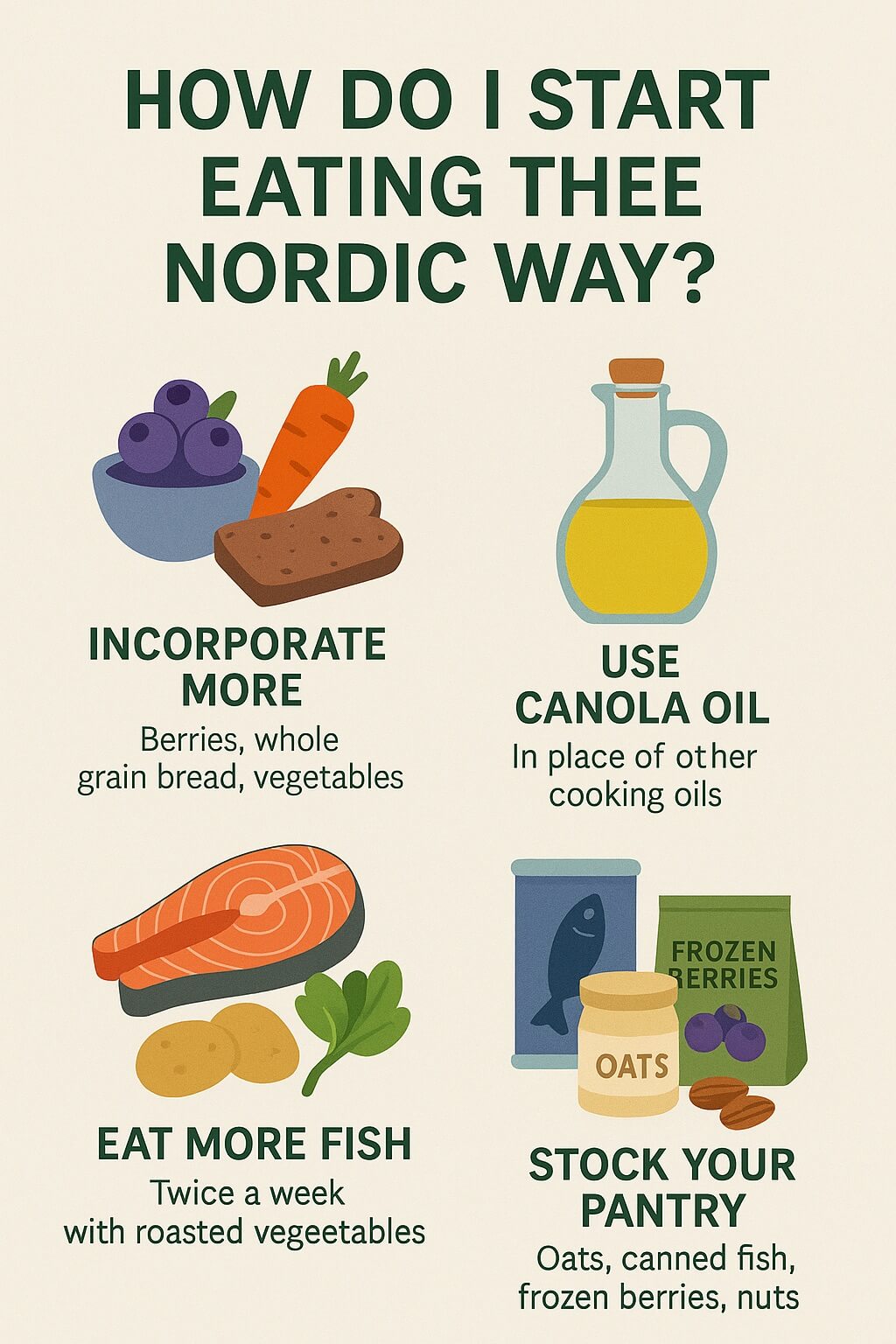
Replace whatever oil you usually cook with for canola oil. The taste is mild enough that you probably won’t notice much difference, but you’ll get a better omega-3 to omega-6 ratio. Use it for everything from sautéing vegetables to making salad dressings.
Stock your pantry with Nordic staples: oats, barley, rye bread or crackers, canned fish, frozen berries, and nuts. Having these items on hand makes it easier to throw together a Nordic-style meal without much planning.
Pay attention to how you feel as you make these changes. Most people notice better energy levels, less afternoon sleepiness, and improved digestion when they switch to whole grains and more vegetables. These small wins encourage you to keep going.
Will this help me lose weight?
Many people do lose weight on the Nordic diet, but it’s not specifically designed as a weight-loss plan. The weight loss happens naturally because you’re eating more filling whole foods and fewer calorie-dense processed foods.
Whole grains and fiber-rich vegetables fill you up without a ton of calories. Fish provides lean protein that satisfies hunger. Berries give you sweetness and nutrition without the calorie bomb of desserts and candy. When you eat this way, you tend to consume fewer calories without feeling deprived.
The diet also helps regulate blood sugar better than eating refined carbohydrates. Whole grains break down more slowly, preventing the energy crashes that lead to overeating. Steady blood sugar means more consistent energy and fewer cravings.
That said, portion sizes still matter. You can overeat on any diet, even a healthy one. The Nordic approach encourages mindful eating and paying attention to hunger cues, but you still need to be reasonable about how much food you pile on your plate.
If weight loss is your main goal, the Nordic diet offers a sustainable way to get there without feeling like you’re on a restrictive diet. You’re eating real food that tastes good and keeps you satisfied. That’s a recipe for long-term success rather than yo-yo dieting.
What’s the biggest challenge with this diet?
For most people, the biggest hurdle is getting used to whole grain rye products. If you’ve grown up eating soft white bread, dense rye bread can seem heavy and sour at first. Give it a few weeks. Your taste buds adapt, and many people end up preferring the hearty flavor and satisfaction that rye provides.
Finding time to cook from scratch can be challenging, though the Nordic diet doesn’t require complicated cooking. A piece of fish takes fifteen minutes to bake. Root vegetables roast themselves in the oven. Porridge cooks while you shower. It’s actually simpler than dealing with complicated recipes or specialty meal plans.
Some people struggle with the reduced emphasis on meat, especially red meat. Nordic eating patterns include meat occasionally, but it’s not the centerpiece of every meal. If you’re used to steak or burgers regularly, this takes adjustment. Focus on how good the fish dishes taste and how much better you feel.
Eating seasonally feels limiting at first, especially if you’re accustomed to having every fruit and vegetable available year-round. But there’s something satisfying about eating foods when they’re naturally abundant and at their best. Plus, you save money buying seasonal produce.
The lack of exciting, bold flavors might bore some people initially. Nordic cooking tends toward subtle, simple seasonings that let the natural food flavors shine. If you’re used to heavy sauces and intense spices, this seems bland. But most people find they start tasting food more clearly and appreciating nuanced flavors.
Can my whole family eat this way?
The Nordic diet works well for families because it’s based on regular food, not weird restrictions. Kids might resist at first if they’re used to chicken nuggets and mac and cheese, but the transition is easier than you’d think.
Start by involving kids in food preparation. Let them help wash berries, stir porridge, or arrange vegetables on a baking sheet. Children are more likely to eat food they helped prepare. Make mealtimes pleasant rather than battles over clean plates.
Serve the same meal to everyone but let picky eaters choose which parts to eat. Offer rye bread alongside regular bread initially. Put out raw carrot sticks with cooked carrots so kids have options. Most children will gradually try new foods when they see others enjoying them without pressure.
Fish can be tricky with kids, but starting with mild-flavored options helps. Salmon tends to be more kid-friendly than strongly flavored fish. Let them squeeze lemon on top or dip it in a small amount of yogurt sauce. Sometimes presentation matters more than the actual food.
The emphasis on berries makes dessert easier with kids. Most children love berries, especially when mixed with a little yogurt or made into a simple fruit crumble. You’re giving them something sweet that’s also genuinely nutritious.
Is the Nordic diet good for specific health conditions?
If you have heart disease or high cholesterol, the Nordic diet is worth considering. The combination of omega-3-rich fish, whole grains, and plant-based foods has been shown to improve cardiovascular markers. Always check with your doctor before making major dietary changes, especially if you’re on medication.
For people with diabetes or prediabetes, the focus on whole grains and fiber helps regulate blood sugar. The diet naturally limits processed foods and added sugars, which is exactly what diabetes management requires. The steady energy from whole grains beats the blood sugar rollercoaster from refined carbohydrates.
The anti-inflammatory properties of the Nordic diet may help people with conditions like arthritis or inflammatory bowel conditions. Omega-3s from fish and antioxidants from berries both have anti-inflammatory effects. Again, this isn’t a cure, but it might help manage symptoms alongside medical treatment.
People trying to lower blood pressure often see improvements on the Nordic diet. The high potassium from vegetables and low sodium from cooking at home with minimal salt both contribute to better blood pressure control.
If you have food allergies or intolerances, the Nordic diet adapts easily. Gluten-free grains like buckwheat work in place of rye and barley. Lactose-free dairy products fit the pattern. The emphasis on simple, whole foods makes it easier to identify and avoid problem ingredients.
What’s the bottom line on Nordic eating?
The Nordic diet offers a practical, sustainable way to eat healthier without feeling deprived. It’s not about strict rules or giving up entire food groups. You’re simply shifting toward whole foods that humans have been eating for thousands of years in northern climates.
The health benefits are real and backed by research. The environmental impact is lower than typical Western diets heavy in meat and processed foods. The food tastes good, especially once you get past the initial adjustment period.
You don’t need to be perfect or follow every detail. Take the principles that work for your life and leave the rest. Maybe you start by eating fish twice a week and adding more berries. That’s progress worth celebrating.
The best diet is one you can actually stick with long-term. For many people, the Nordic approach hits that sweet spot between healthy and enjoyable. It’s real food prepared simply, shared with others, and appreciated for nourishing your body. That’s a way of eating worth embracing, whether you live in Stockholm or anywhere else.