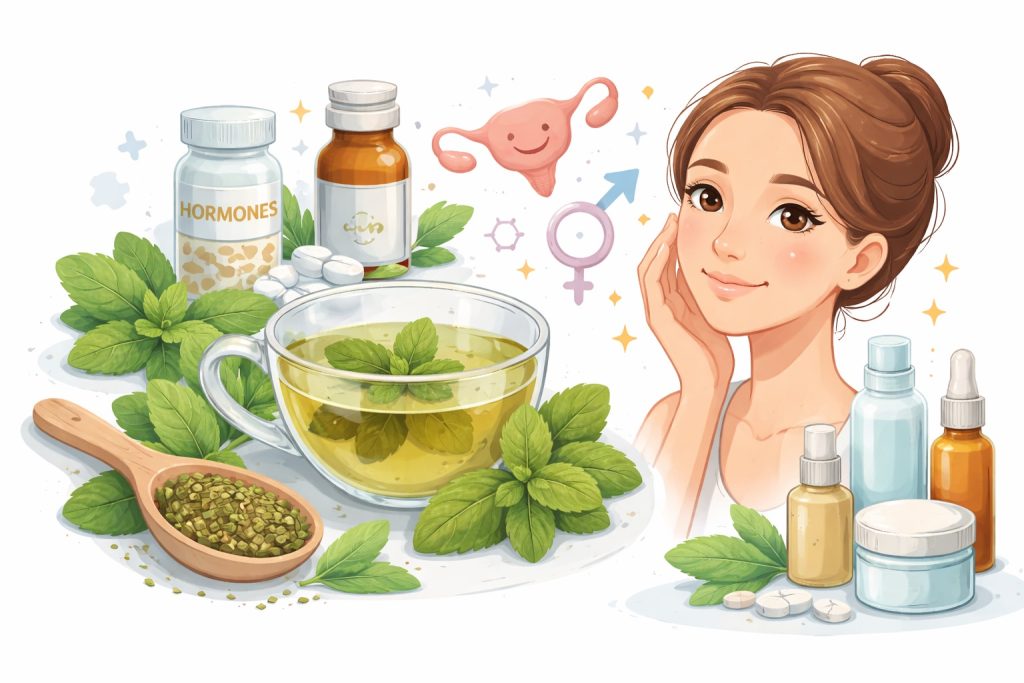
Hormonal acne can feel endless, especially after stopping birth control pills. Many women turn to natural remedies like spearmint tea or capsules hoping for clearer skin without harsh chemicals. Spearmint has gained popularity online for this exact reason. It often delivers smoother skin for some users. Yet others notice their hormones shifting in unexpected ways that leave them feeling worse overall.
At WellnessReadersDigest.com, we look closely at popular natural solutions so you can make informed choices about your health. This guide explains how spearmint works for acne, why it helps some people, and the hidden risks that deserve attention before you start.
Why Spearmint Is Popular for Hormonal Acne
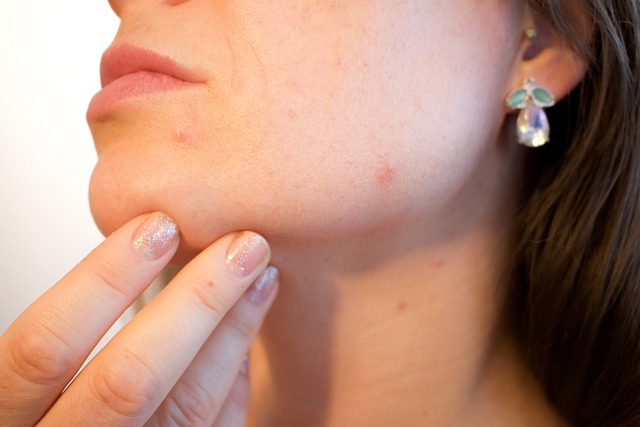
After coming off the pill, many women experience a surge in androgens (male-type hormones like testosterone). This rebound can trigger deep, painful breakouts along the jawline, chin, and cheeks—classic post-pill acne. Spearmint offers an easy, affordable option: just brew a cup of tea or swallow a capsule.
The appeal is simple. It tastes refreshing, costs little, and feels gentler than prescription treatments. Stories of clearer skin spread quickly in online communities, encouraging more people to give it a try for stubborn hormonal pimples.
How Spearmint Affects Your Hormones
Spearmint contains natural compounds that act as mild anti-androgens. They lower levels of free and total testosterone in the body. Cleveland Clinic experts note that drinking spearmint tea twice a day can bring elevated testosterone back toward a normal range in women with conditions like PCOS. A well-known study published in Phytotherapy Research (and summarized by Healthline) found that women with PCOS who drank two cups daily for one month saw significant drops in testosterone along with rises in luteinizing hormone (LH) and follicle-stimulating hormone (FSH).
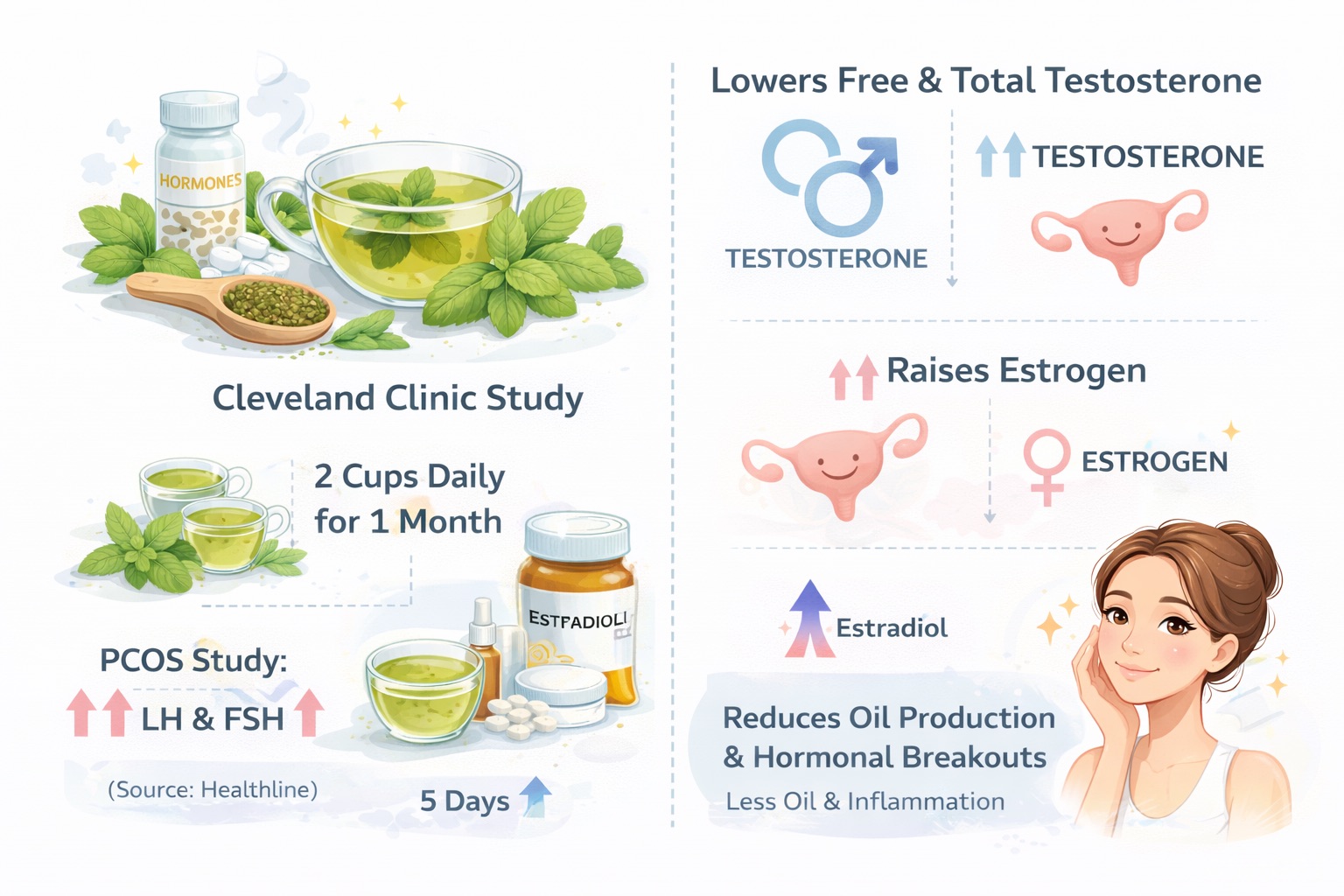
Another smaller study lasting just five days showed similar hormone shifts plus an increase in estradiol, a form of estrogen. These changes can reduce excess oil production in the skin, which often calms hormonal breakouts. Less oil means fewer clogged pores and less inflammation.
Healthline points out that while direct studies on spearmint for acne itself are limited, the anti-androgen effect makes sense for hormonal skin issues because androgens drive sebum overproduction.
The Skin Wins: What Many People Experience
For those with high androgen levels, results can feel like a win. Breakouts often calm down within a few weeks to a couple of months. Skin looks less oily and inflamed. Some notice fewer new pimples and faster healing of existing ones. Because the remedy is natural, people enjoy trying it without worrying about strong medications.
When Things Go Sideways: Hormone Disruption Stories
Not every experience stays positive. Some women see their skin clear beautifully, only to develop new problems that feel linked to their hormones. Common reports include heavier or more painful periods, mid-cycle spotting, low sex drive, sudden mood swings or crying spells, trouble sleeping, brain fog, and an overall rough luteal phase that mimics PMDD symptoms.
These issues often appear gradually, so the connection to spearmint stays hidden at first. Many describe feeling “flat” or emotionally off, similar to how they felt while on the pill. Once they stop the spearmint, skin may stay mostly clear, but some symptoms like low libido or mood changes linger for weeks or months. Facial and body hair can increase again, which matches what often happens after stopping birth control.
WebMD confirms that spearmint affects testosterone levels in the body. When testosterone drops too far—especially if your levels were not high to begin with—the balance between estrogen and androgens can shift. This relative change sometimes feels like estrogen dominance, even though spearmint itself does not directly raise estrogen.
Understanding the Risks: Who Might Feel Worse
Spearmint works best for women whose acne and symptoms come from clearly high androgens. If your hormone levels sit in a normal or low range, lowering testosterone further can create new imbalances. WebMD lists spearmint as possibly safe for short-term use but warns about large amounts during pregnancy because they might affect the uterus. People with kidney or liver concerns should also stay cautious, as high doses could worsen those conditions.
The key takeaway from trusted sources like Cleveland Clinic and Healthline: results depend on your starting hormone levels. What helps one person can disrupt another.
Safe Ways to Try Spearmint—if You Choose To
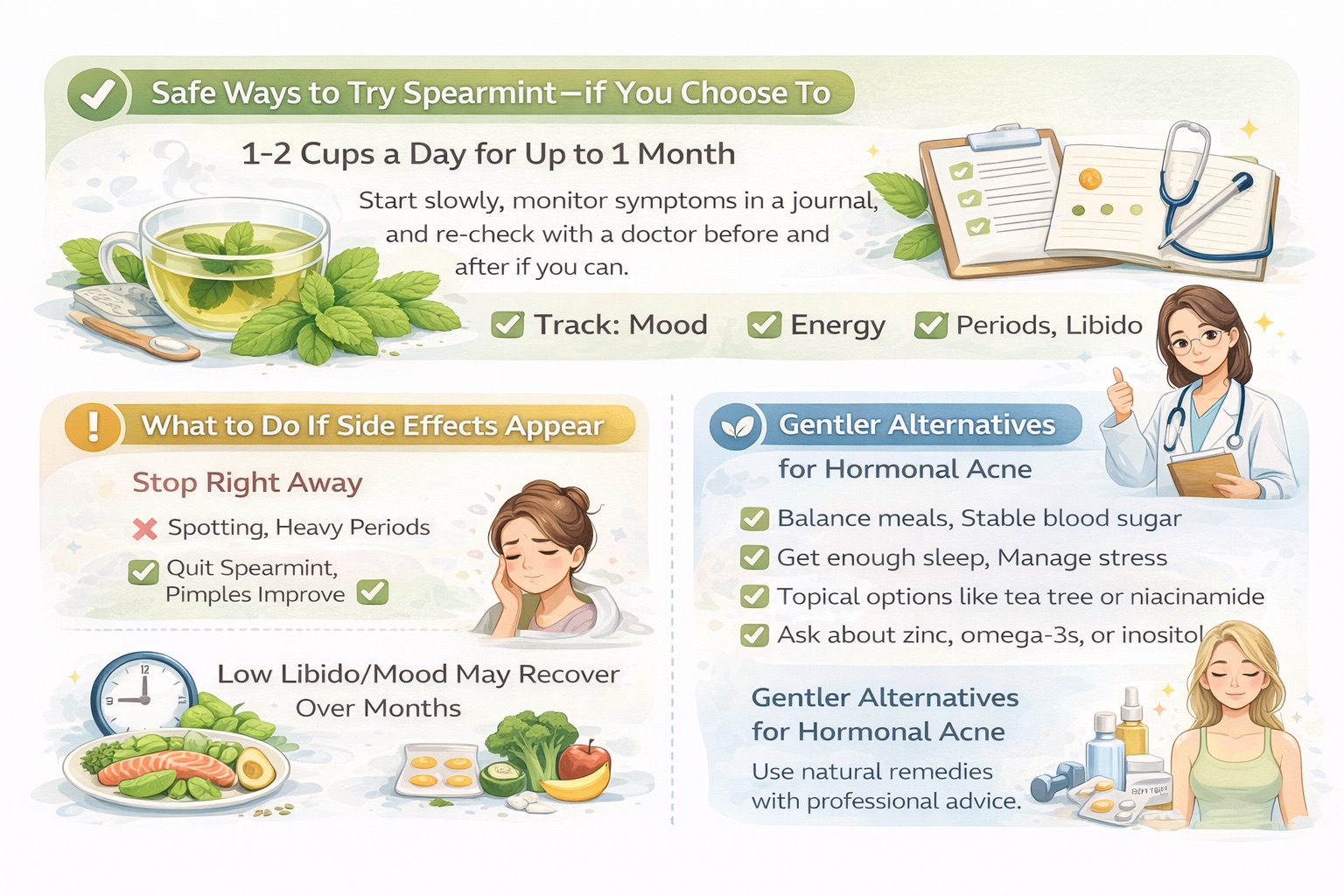
Most studies used about two cups of tea per day (roughly 5 grams of loose leaves) for up to one month. Start low, track how you feel in a simple journal, and stop immediately if anything feels off. Pay attention to mood, energy, periods, and libido. Re-check with a doctor or get hormone bloodwork before and after if possible. Short-term use (4–6 weeks) appears safer than months of daily intake.
What to Do If Side Effects Appear
Stop right away. Many women notice spotting and heavy periods improve within weeks of quitting. Skin often stays clearer than before, which is a silver lining. Low libido and mood changes may take longer—sometimes one to three months or more—to fully settle as your body rebalances. Support recovery with plenty of sleep, stress management, nutrient-rich foods, and gentle movement. If symptoms persist, see a healthcare provider for proper testing rather than guessing.
Gentler Alternatives for Hormonal Acne
If spearmint feels too risky, other natural steps often help without strong hormone effects. Focus on steady blood sugar with balanced meals, get enough sleep, manage stress, and consider topical treatments with ingredients like tea tree oil or niacinamide. Some women benefit from zinc, omega-3s, or inositol under medical guidance. Always pair natural approaches with professional advice for lasting results.
Frequently Asked Questions About Spearmint and Hormonal Acne
Does spearmint tea really help hormonal acne?
It may for people with high testosterone or PCOS-related breakouts because it lowers androgens and oil production. Results vary, and direct acne studies are limited, but many report clearer skin after consistent use.
Can spearmint cause estrogen dominance or hormone problems?
Yes, in some cases. By lowering testosterone, it can create a relative shift that feels like estrogen dominance—leading to heavier periods, spotting, low libido, mood swings, or fatigue. This risk rises if your androgen levels were not high to begin with.
How long does spearmint take to work for acne?
Skin improvements often show in 4–8 weeks with two cups of tea daily. Hormone changes can appear faster in studies (as little as five days), but visible skin results take longer.
What are the main side effects of spearmint for skin?
Most people tolerate it well short-term. Possible issues include digestive upset in high doses, plus hormone-related symptoms like low libido, mood changes, period irregularities, and brain fog in sensitive individuals.
Is spearmint safe after stopping birth control?
It helps some with post-pill acne, but the same hormone-lowering effect that calms breakouts can also trigger new cycle or mood issues. Track symptoms closely and consult a doctor.
How long until hormone balance returns after stopping spearmint?
It differs for everyone. Period issues and spotting often improve in a few weeks. Mood and libido may take 1–3 months or longer. Support your body with healthy habits during recovery.
Choosing Wisely for Your Skin and Hormones
Spearmint offers real promise for hormonal acne when used thoughtfully, especially for those with confirmed high androgens. Yet the stories of unexpected side effects remind us that natural does not always mean risk-free. Listen to your body, start slow, and prioritize professional guidance over trending remedies.
Here at WellnessReadersDigest.com, we believe in sharing both the successes and the cautions so you can protect your health while chasing clearer skin. If you struggle with hormonal acne or post-pill changes, talk with a knowledgeable provider who can test your hormones and build a plan that truly fits you. Your body will thank you for the careful approach.