There is a very real frustration that comes with wanting to get stronger, eat more protein, and support your fitness goals — only to discover that the most popular protein supplement on the market might be making your skin worse. This is not an unusual situation. In fact, it is one of the most commonly discussed topics in fitness and nutrition communities, and for good reason.
The good news is that the world of protein supplementation has expanded enormously. Today, you do not have to choose between building muscle and keeping your skin clear. Plant-based protein powders have evolved from chalky, hard-to-swallow mixes into genuinely delicious, nutritionally complete options that work as hard as any traditional supplement. But navigating all the choices, understanding the science, and actually knowing what to look for on a label is its own challenge.
This guide covers everything — from why certain proteins trigger breakouts, to which plant-based sources work best for muscle building, to what your label should actually say when you pick one up off the shelf.
Why Does Regular Whey Protein Cause Acne?
This question comes up constantly, and the answer matters if you want to make an informed switch.
Whey protein is a byproduct of dairy production. It is highly effective for muscle building — there is no debate about that. But it comes with a biological side effect that many people do not notice until they start breaking out: it stimulates the production of insulin-like growth factor 1, commonly called IGF-1, in the body.
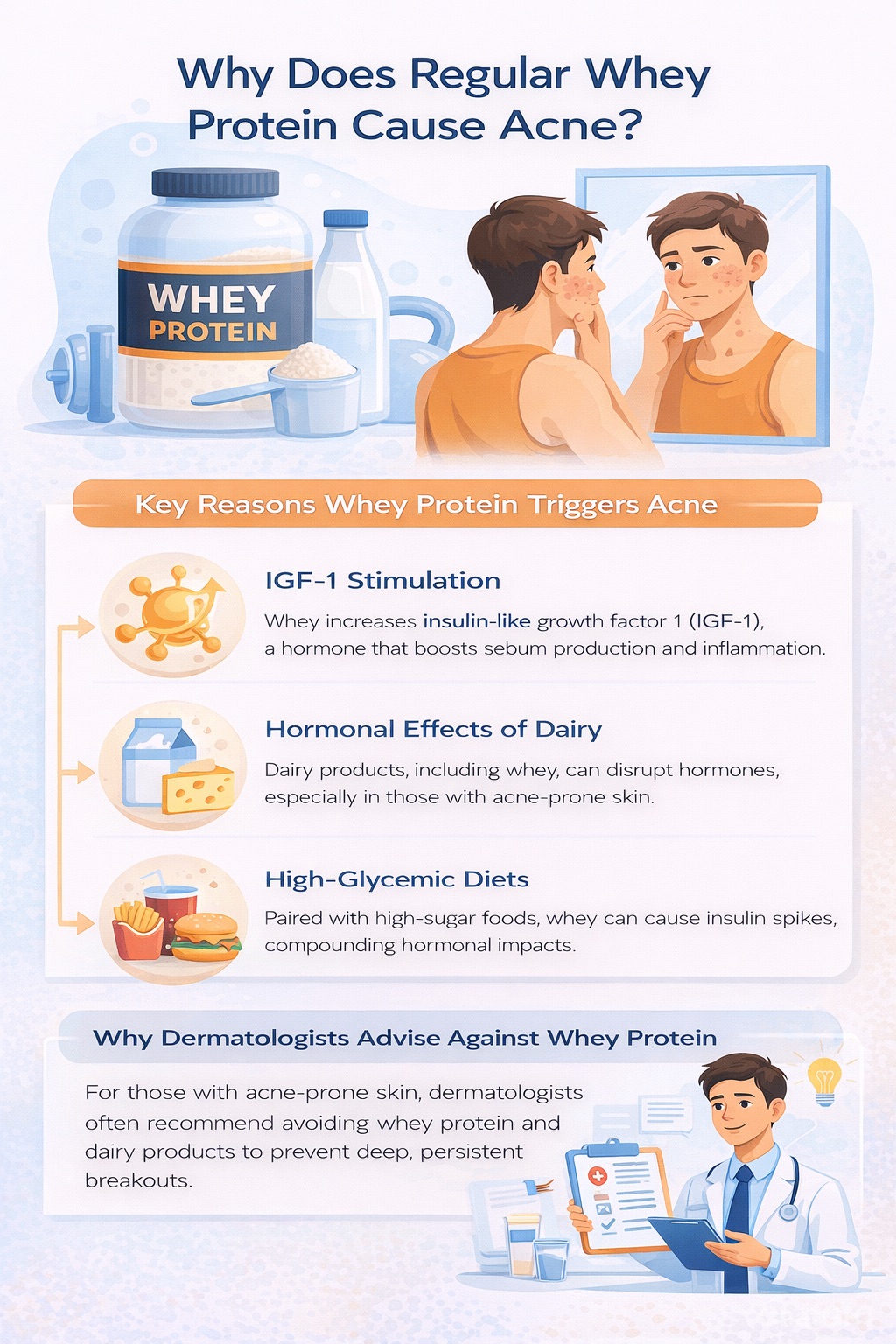
Whey, found in milk and dairy products, can increase insulin and IGF-1 levels, triggering hormonal changes that lead to more sebum production and skin inflammation — making acne more likely to develop or worsen. For people who already have a genetic predisposition to acne or naturally oily skin, this effect can be significant and persistent regardless of their skincare routine.
On top of the IGF-1 issue, high-glycemic foods cause insulin spikes that worsen acne when combined with whey protein. Additionally, dairy products compound the hormonal impact of whey, particularly in acne-prone individuals. The skin pays the price in the form of cystic pimples, deep inflammatory breakouts around the jawline and cheeks, and small clogged pores that do not respond to topical treatments.
Because of this, dermatologists often advise acne-prone individuals to avoid whey-based products entirely.
Does Plant-Based Protein Cause Acne Too?
This is a fair and important question. Just because something is labeled “plant-based” or “vegan” does not automatically make it skin-safe. There is a real difference between a clean, well-formulated plant protein and one loaded with sugar and artificial ingredients — and both exist on the same shelf.
The short answer: plant-based powders generally don’t elevate IGF-1, which can worsen acne in some individuals. This lack of hormonal influence makes them a potentially gentler option for acne-prone individuals.
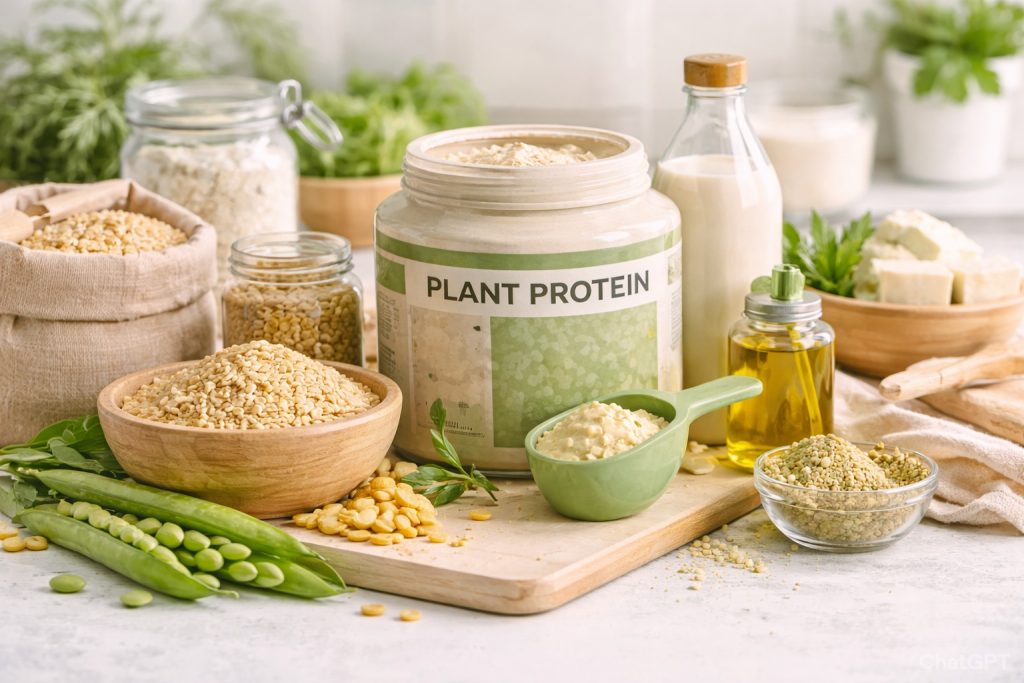
Pea protein is a skin-friendly, plant-based alternative to whey that avoids hormone disruption and glycemic spikes linked to acne. It supports clear skin with anti-inflammatory benefits, a complete amino acid profile, and gut-friendly digestion.
That said, a few nuances are worth knowing. Soy protein contains phytoestrogens — plant compounds that can mimic estrogen activity. Although the effects of soy on acne are ambiguous, some theories suggest that the hormone-like effects of soy may worsen acne in some people. It is not a guarantee of breakouts, but it is something to monitor if you try a soy-heavy formula and notice changes in your skin.
More broadly, some vegan protein powders can still cause issues, especially if they’re highly processed or packed with additives. The protein source matters, but so does everything else on the label.
The Best Plant-Based Protein Sources for Acne-Prone Skin
Not all plant proteins are the same — they come from different sources, have different amino acid profiles, and digest differently. Here is what the research says about each main type.
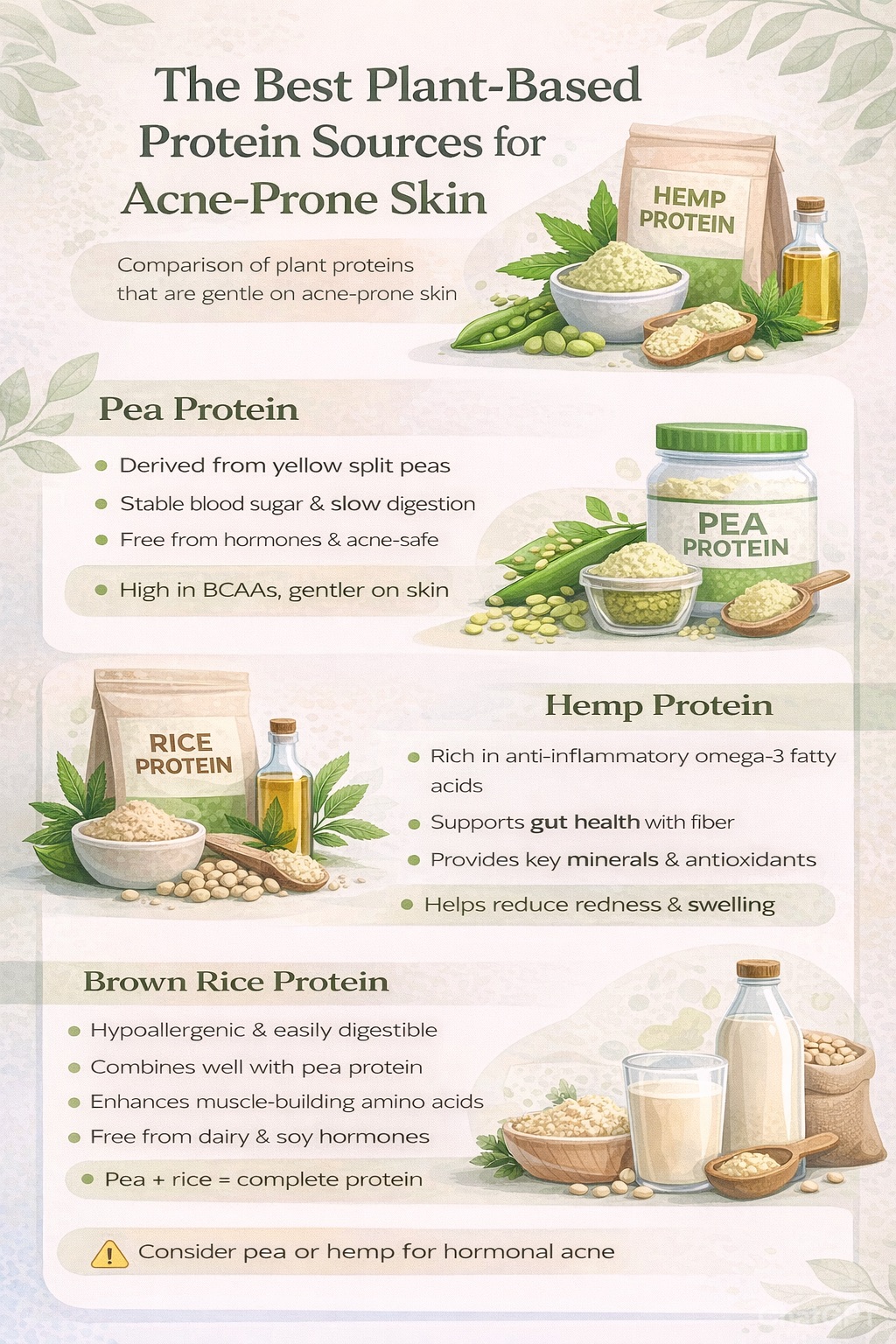
Pea Protein
Pea protein derived from yellow split peas has emerged as the top recommendation for people with acne-prone skin. Unlike whey, pea protein is absorbed more slowly, keeping blood sugar levels stable and reducing insulin spikes. This can help minimize sebum production and prevent acne flare-ups. Pea protein is naturally free from the hormones found in dairy-based whey. For those dealing with hormonal acne, this plant-based option offers a safer alternative.
Beyond the skin benefits, pea protein is rich in branched-chain amino acids (BCAAs) and is easily digested, making it gentle for acne-prone skin while still supporting muscle growth.
Hemp Protein
Hemp protein contains anti-inflammatory omega-3 fatty acids that help reduce acne-related redness and swelling while providing complete protein nutrition. For someone with acne-prone skin, those anti-inflammatory properties are genuinely valuable beyond just the protein content.
Hemp protein also has unsaturated fats which are beneficial for overall health, and it’s also rich in key minerals and antioxidants. Additionally, its high fiber content can be a major win since most Americans don’t get nearly enough fiber in their diets. The gut-skin connection is increasingly recognized in dermatological research — a healthier gut often means less systemic inflammation, which shows up in calmer skin over time.
Brown Rice Protein
Brown rice protein is one of the most hypoallergenic options available. Hemp protein provides additional benefits beyond muscle building. It contains natural omega-3 fatty acids, which have anti-inflammatory properties that may actually help improve skin health. Hemp protein also includes fiber, which supports digestive health and may indirectly benefit skin condition through improved gut health.
On its own, brown rice protein is lower in the amino acid lysine — which means it is not a “complete” protein by itself. But blended with pea protein, it becomes a powerhouse combination. Pea is high in lysine but lower in methionine; rice fills that gap. This is why pea-and-rice blends have become so widely recommended — together, they create a complete, muscle-building amino acid profile without any of the hormonal baggage tied to dairy.
Soy Protein
Soy protein isolate provides one of the most complete amino acid profiles among plant-based options. It contains all essential amino acids in proportions similar to animal proteins, making it highly effective for muscle protein synthesis. Scientific research has thoroughly debunked concerns about soy protein affecting hormone levels in healthy adults. Multiple studies show that moderate soy protein consumption doesn’t negatively impact testosterone levels or muscle building capacity in men or women.
If you have already identified hormonal acne as your specific concern, it may be worth trying pea or hemp protein first to see how your skin responds before introducing soy. Individual responses genuinely vary here.
Can Plant-Based Protein Really Build Muscle?
This is the big question that holds many people back from making the switch. The fitness world has long assumed animal protein is superior for muscle growth, and it is worth addressing that directly.
A study published in the Journal of the International Society of Sports Medicine found that rice and whey protein yielded similar outcomes for body composition and performance. And pea protein has also been found to be quite effective versus a placebo — and on par with whey.
Whey and plant-based protein powders are equally effective at promoting muscle hypertrophy, or muscle growth, as long as they contain similar amounts of protein and BCAAs per serving.
Whether you’re a professional athlete who chooses to eat plant-based or a recreational weightlifter just getting started, it’s definitely possible to accomplish your goals, as long as you’re hitting your target protein and calorie goals.
Researchers are finding that if you eat a wide variety of plant-based foods, you can still get all those amino acids and make the same muscle gains as people who eat meat. The key is variety and completeness of the amino acid profile — not the source itself.
For weightlifting specifically, total daily protein intake, training volume, sleep, and recovery remain the dominant factors. A high-quality plant protein consumed consistently absolutely supports muscle growth. It is not the ceiling that some people assume it to be.
What to Look For on the Label
Choosing a plant-based protein powder in a crowded market requires knowing what actually matters when you read a nutrition label.
Complete amino acid profile — This is the most important thing. Look specifically for a product that states it contains a “complete amino acid profile.” This is typically accomplished by combining more than one complementary plant-based proteins — like brown rice and pea protein. If the protein powder features only one plant-based protein source, you’ll want to see that it’s fortified with the specific amino acid it falls short on.
Protein content per serving — A good protein powder contains at least 20 to 30 grams of protein and 6 to 15 grams of essential amino acids — at least 1 to 3 grams of which are leucine — per serving.
Clean ingredient list — Look for simple and recognizable ingredients that are made up of real food. Avoid protein powders with added sugars or artificial sweeteners, which can detract from the nutritional quality. The fewer ingredients on a label, the better.
Sweetener type — If the product is sweetened, look for natural sweeteners like all-natural stevia or other natural flavors rather than synthetic sweeteners like sucralose or acesulfame-K.
Third-party testing — Certifications such as USDA Organic, Non-GMO Project Verified, or NSF Sport can provide additional assurance — but confirm their validity via official databases. In the US, the FDA oversees dietary supplements, but third-party testing provides an independent check that the product matches its label and is free from contaminants like heavy metals and pesticide residues.
Ingredients in Plant Protein Powders That Can Sneak Up on Your Skin
Even within plant-based options, some ingredients can work against clear skin if you are not paying attention.
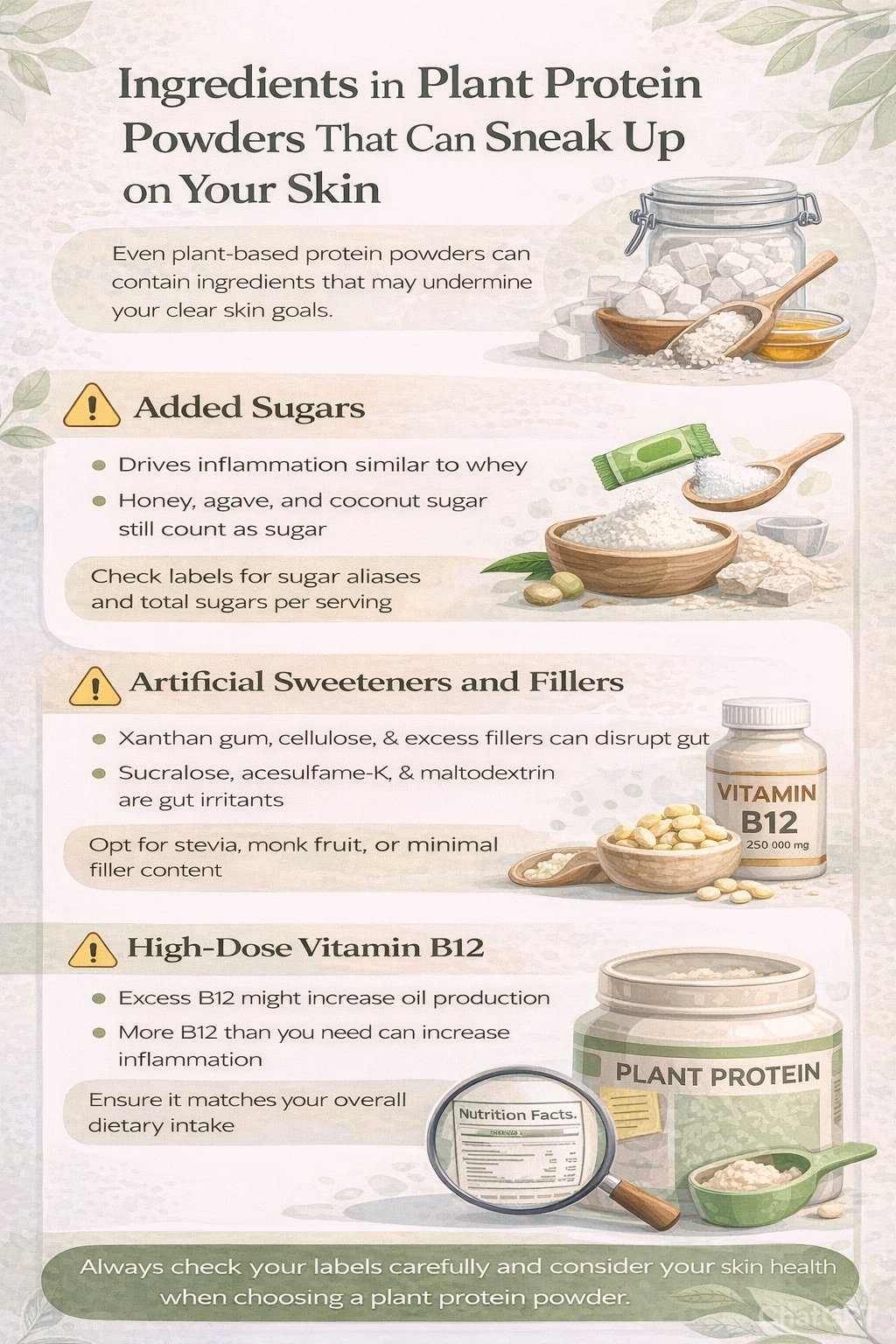
Added sugars — This is the biggest one. Some companies fix the taste problem with sugar — yes, honey, agave, and coconut sugar count as sugar. Always check your labels for suspicious ingredients. Added sugar drives blood sugar spikes that trigger the same inflammatory insulin response that makes whey problematic for acne-prone skin in the first place.
Artificial sweeteners and fillers — Steer clear of cellulose, gums like xanthan or guar in excess, artificial sweeteners sucralose and acesulfame-K, and maltodextrin, which can dull flavor or alter texture — and may also contribute to gut disruption in sensitive individuals.
High-dose vitamin B12 — Some scientists believe that excessive amounts of B12 may trigger more oil production and inflammation. Most folks just think of these as helping with gut health, but some research also suggests that probiotics might improve your skin health as well — so look for B12 in reasonable amounts, and consider whether the rest of your diet already covers this.
How to Actually Make Plant Protein Taste Good
One of the most common hesitations when switching from whey is flavor and texture. Older plant protein formulas had a reputation for being gritty or carrying a strong earthy taste. Modern formulas have improved dramatically, but preparation still makes a real difference.
Modern formulas are designed specifically for great flavor and smooth texture. Thanks to advances in food science, today’s best-tasting plant-based protein powders avoid the gritty, earthy aftertaste of older versions. When choosing a plant-based protein powder, look for blends with natural sweeteners like monk fruit or stevia, multi-source proteins to balance flavor, and finely milled powders for better mixability.
Some powders mix best with water, while others blend better with creamy plant-based milks. Think about what you use most — almond milk, oat milk, coconut milk, or water. Reviews often give clearer insight into flavor accuracy, smoothness, and mixability than the label. Look for consistent comments about taste, texture, and how well the protein source blends without becoming gritty.
Flavor additions like frozen banana, a small handful of berries, a spoonful of natural nut butter, or a pinch of cinnamon can completely change the profile of a plain or mildly flavored powder. Cocoa powder works particularly well with vanilla or neutral-flavored bases. A high-powered blender rather than a shaker bottle eliminates most gritty texture issues when using rice-heavy formulas.
How Long Before You See a Difference in Your Skin?
This is one of the most searched questions on this topic, and the honest answer is: give it more time than you expect.
Most people notice improvements in their skin within 2 to 6 weeks after switching from whey protein to a more skin-friendly alternative. However, it can take up to 3 months to see the full benefits, as skin cells have a natural turnover cycle of approximately 28 days.
Switching to pea protein may improve acne symptoms within weeks when paired with a consistent skincare routine. Commit Reducing dairy from other dietary sources — milk, cheese, yogurt — alongside the protein switch tends to accelerate results for people whose acne has a hormonal component.
During this period, keeping the rest of your diet as consistent as possible helps you clearly attribute any skin changes to the protein switch. Protein powder is one factor among many: hydration, sleep, stress, skincare routine, and overall diet all contribute. The protein switch is a meaningful variable, but it works best as part of a broader, consistent approach.
What Trusted Health Authorities Say
Several globally recognized health and nutrition authorities have weighed in on the diet-skin connection.
The American Academy of Dermatology (aad.org) recognizes the link between diet and acne, acknowledging that dairy — including dairy-derived supplements — can worsen acne in some individuals, particularly those with hormonal sensitivities.
Healthline (healthline.com), which follows strict evidence-based sourcing guidelines, has published extensively on both the plant protein versus whey comparison and the diet-acne connection, citing peer-reviewed research throughout.
PubMed Central / NIH (pmc.ncbi.nlm.nih.gov) hosts peer-reviewed studies on plant protein amino acid composition and muscle protein synthesis, including direct comparisons of pea protein and whey protein in resistance training populations.
Harvard T.H. Chan School of Public Health (hsph.harvard.edu) has addressed the relationship between high-glycemic foods, insulin, and acne in the context of dietary patterns — directly supporting why low-glycemic plant proteins are a preferable choice for acne-prone individuals.
MDacne, a dermatologist-led platform, recommends pea protein specifically as a skin-safe protein source for people managing acne, citing its hormone-free composition and slower absorption rate as key benefits.
A Practical Approach for Getting Started
If you are new to plant-based protein, here is a simple framework for making the switch without feeling overwhelmed.
Start with a pea-and-rice protein blend in a flavor you find appealing. Chocolate and vanilla are the most reliable starting points because they are easy to work with in smoothies and tend to mask any earthiness from the plant base. Give yourself two weeks to experiment with preparation — different liquids, different add-ins — before deciding whether a specific product is working for you.
Track your skin over the first four to six weeks. If you are not changing your skincare routine or diet in other significant ways, any improvement during this window can reasonably be attributed to the protein switch.
Consume 20 to 30 grams of vegan protein within 30 minutes after exercise for optimal recovery. Mix with water or plant-based milk for quick absorption and convenience. Blend protein powder with fruits, vegetables, and healthy fats to create balanced meal replacements. MDacne Building a post-workout shake into your daily routine creates the consistency that produces visible results over time.
At WellnessReadersDigest.com, we hear regularly from readers who made this switch after months — sometimes years — of struggling with protein-powder-related breakouts. The consistent theme is that it takes a couple of weeks to find a flavor and routine that clicks, but once it does, the combination of clearer skin and continued progress in the gym makes the switch feel obvious in hindsight.
Final Thoughts
The idea that you have to sacrifice your skin to build muscle, or sacrifice your fitness goals to keep your skin clear, is a false choice. Plant-based protein powders — particularly pea protein, brown rice protein, hemp protein, and well-formulated blends of multiple sources — offer genuinely complete nutrition that can support muscle growth, post-workout recovery, and daily protein needs without the hormonal side effects tied to dairy-based whey.
The science supports it. The products have gotten dramatically better. And the path forward is simpler than it might seem: read your labels carefully, prioritize clean ingredients, choose a complete amino acid profile, avoid added sugars, and give your skin the time it needs to respond.
Your fitness goals and your skin health are not at odds. With the right information and the right product, both can move in the right direction at the same time.