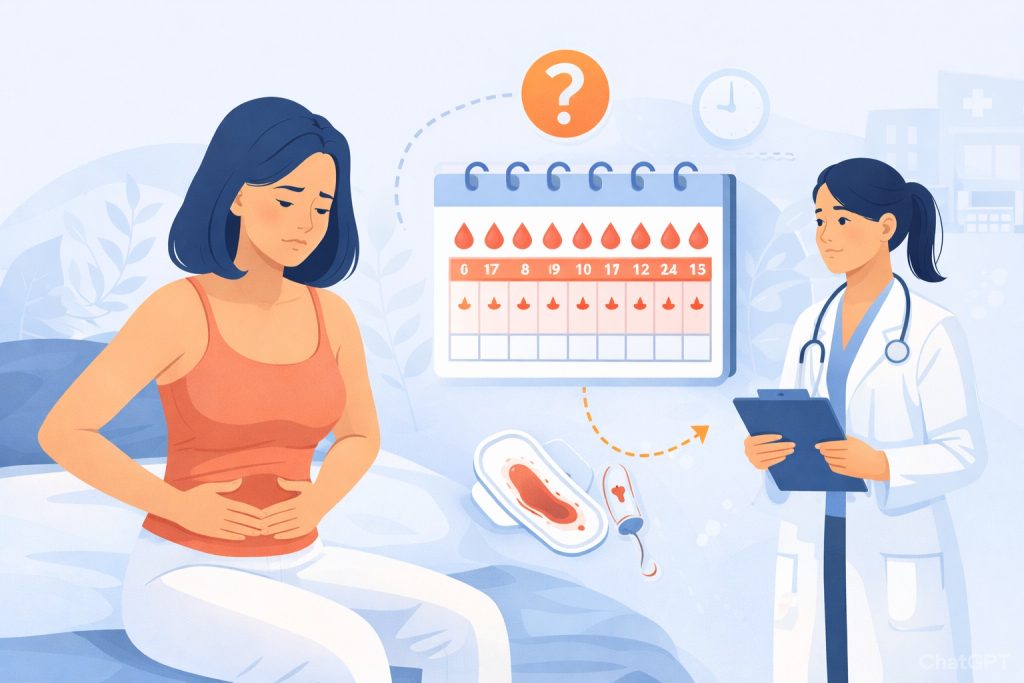
Many women in their late 30s notice big changes in their menstrual cycles. One month periods might skip entirely, the next could bring only light spotting, and then suddenly bleeding drags on for 13 days or more. The flow starts heavy, then tapers off but refuses to stop completely. This pattern leaves people feeling worried and tired, wondering if it’s normal or something that needs quick attention.
At WellnessReadersDigest.com, we explain common women’s health concerns in straightforward ways so you can decide your next steps with confidence. Here’s a clear look at prolonged periods, why they happen, and how to handle them.
What Counts as a Prolonged Period?
A typical period lasts 2 to 7 days, with most women bleeding for about 5 days every 21 to 35 days. According to the Mayo Clinic and Cleveland Clinic, anything beyond 7 days is considered longer than usual. When bleeding stretches past 10 days—even if it’s now light spotting—it’s often called prolonged menstrual bleeding or abnormal uterine bleeding. This isn’t rare, especially as hormone levels shift in the late 30s and beyond.
Common Reasons Periods Last Longer in Your Late 30s
Hormone changes top the list of causes. In perimenopause—the transition phase before menopause—estrogen and progesterone levels fluctuate wildly. This can make the uterine lining build up thicker than normal, leading to heavier starts followed by drawn-out light bleeding. The Mayo Clinic explains that irregular cycles, skipped periods, and then extended bleeding often signal early perimenopause, which can begin in the late 30s for some women.

Other frequent culprits include:
- Uterine fibroids or polyps: These noncancerous growths in the uterus cause heavier or longer bleeding. Cleveland Clinic notes they’re common in women approaching 40 and can make periods unpredictable.
- Polycystic ovary syndrome (PCOS): This hormonal condition disrupts ovulation, leading to irregular, prolonged, or missed cycles.
- Thyroid issues or other imbalances: Problems with thyroid function or conditions like diabetes can throw off hormones and extend bleeding.
- Medications or recent changes: Certain birth control methods, blood thinners, or even emergency contraception can sometimes prolong periods.
Stress, weight changes, or intense exercise might play a role too, but persistent issues usually point to something more specific.
Signs It’s Time to See Your Doctor
Health experts from trusted sources like the Cleveland Clinic, Mayo Clinic, and the U.S. Centers for Disease Control and Prevention (CDC) agree: don’t wait if bleeding lasts more than 7 days. See a doctor sooner if:

- Your period has gone on for 10 days or longer.
- You had skipped or very light cycles recently, then this long one appeared.
- Heavy flow soaked through pads or tampons quickly at the start.
- You feel unusually tired, dizzy, or short of breath (possible signs of anemia from blood loss).
- Bleeding includes large clots or comes with severe pain.
The NHS in the UK and ACOG (American College of Obstetricians and Gynecologists) recommend checking in if heavy or prolonged bleeding affects daily life or happens repeatedly. Even one very long episode after irregular months deserves attention to rule out underlying issues.
What to Expect at the Doctor’s Visit
Your GP or gynecologist will ask about your cycle history, symptoms, and any recent changes. They might do a physical exam, blood tests for hormones, thyroid, or anemia, or an ultrasound to check for fibroids or polyps. In some cases, further tests help pinpoint the cause. Early checks often lead to simple fixes like hormone-balancing medications, iron supplements, or lifestyle tweaks.
How to Manage While You Wait or After Checking In
Track your bleeding: Note start/end dates, flow strength, and any other symptoms in a simple app or notebook. This helps your doctor spot patterns. Stay hydrated, eat iron-rich foods (like spinach, red meat, or fortified cereals), and rest when needed to combat fatigue. Over-the-counter pain relief can ease cramps, but avoid relying on it without advice if bleeding is very heavy.
Frequently Asked Questions About Periods Lasting Over 10 Days
How long is too long for a period?
Most experts say more than 7 days is prolonged. Bleeding past 10 days, especially with recent skipped cycles, often needs medical review.
Can perimenopause cause periods to last longer than 10 days?
Yes—hormone fluctuations in perimenopause commonly lead to irregular, heavier, or extended bleeding after skipped months.
What causes heavy then light bleeding that won’t stop?
This pattern often ties to uneven hormone levels building a thick uterine lining that sheds slowly, or growths like fibroids. Cleveland Clinic lists these as top reasons.
Should I wait a few more days if my period is on day 13 but light now?
If it’s your first time or after skipped periods, see a doctor soon rather than waiting. Prolonged bleeding risks anemia and may signal treatable issues.
Is prolonged bleeding dangerous?
It can lead to low iron or fatigue if ongoing. Rarely, it points to serious conditions, so prompt checks from sources like Mayo Clinic help catch problems early.
Listen to Your Body
A period stretching beyond 10 days after irregular months isn’t something to ignore, even if the flow has lightened. In your late 30s, these shifts often link to natural hormone changes like perimenopause, but getting checked brings peace of mind and prevents complications.
WellnessReadersDigest.com shares reliable info on cycles and wellness to help you stay informed. If this sounds like your situation, reach out to your GP or a women’s health specialist—they’re there to guide you toward feeling like yourself again. Your health matters, and taking that step early makes a big difference.