Health has a way of slipping through our fingers, often when we’re too caught up in life to notice. One day you’re navigating a demanding job, relying on fast food, or sidelined by stress, and the next, you’re facing extra pounds, exhaustion, or a diagnosis that stops you cold. These low points, shared by many across decades, aren’t just setbacks—they’re turning points. From youthful recklessness to midlife burnout and the challenges of aging, stories of struggle and recovery reveal a universal truth: no matter how far you fall, small, deliberate steps can lead you back to vitality.
Youthful Excess: When Invincibility Fades
In our 20s, it’s easy to feel untouchable. But for some, those years were the unhealthiest. Picture a young adult, scraping by on a diet of cheap junk food, battling frequent illnesses due to poor nutrition. One person, now 69, recalls surviving on little more than processed snacks in their early 20s, only to transform their life by embracing organic vegetables and fiber, staying illness-free for over a decade. Another, caught in a haze of heavy drinking and drug use through their late teens and 20s, hit rock bottom before quitting cold turkey in 1989, emerging with excellent health markers years later.
College often amplifies bad habits. One individual remembers tipping the scales at 225 pounds, fueled by late-night pizza rolls and minimal sleep, with no exercise in sight. Another gained 50 pounds after moving to a rural area, where fast food replaced an active lifestyle and clean water was scarce. These early missteps highlight how freedom can lead to self-sabotage, but they also show the power of course correction—whether it’s learning to cook, cutting vices, or rediscovering movement.
Midlife Pressures: Where Stress and Neglect Collide
The 30s and 40s often bring a perfect storm of responsibilities—careers, families, and mounting stress—that can erode health. One person describes their mid-30s as a low point, crushed by a toxic boss until quitting brought relief. Another, in their early 40s, gained significant weight due to health issues but turned it around by overhauling their diet and adding exercise, shedding 60 pounds and keeping it off. The 40s were particularly brutal for some: a high-stress job, young kids, and neglect led to diabetes, hypertension, and obesity for one, while another developed Crohn’s disease amid business pressures, only finding relief after cutting out dairy, liquor, and fried foods, and embracing yoga and probiotics by 65.
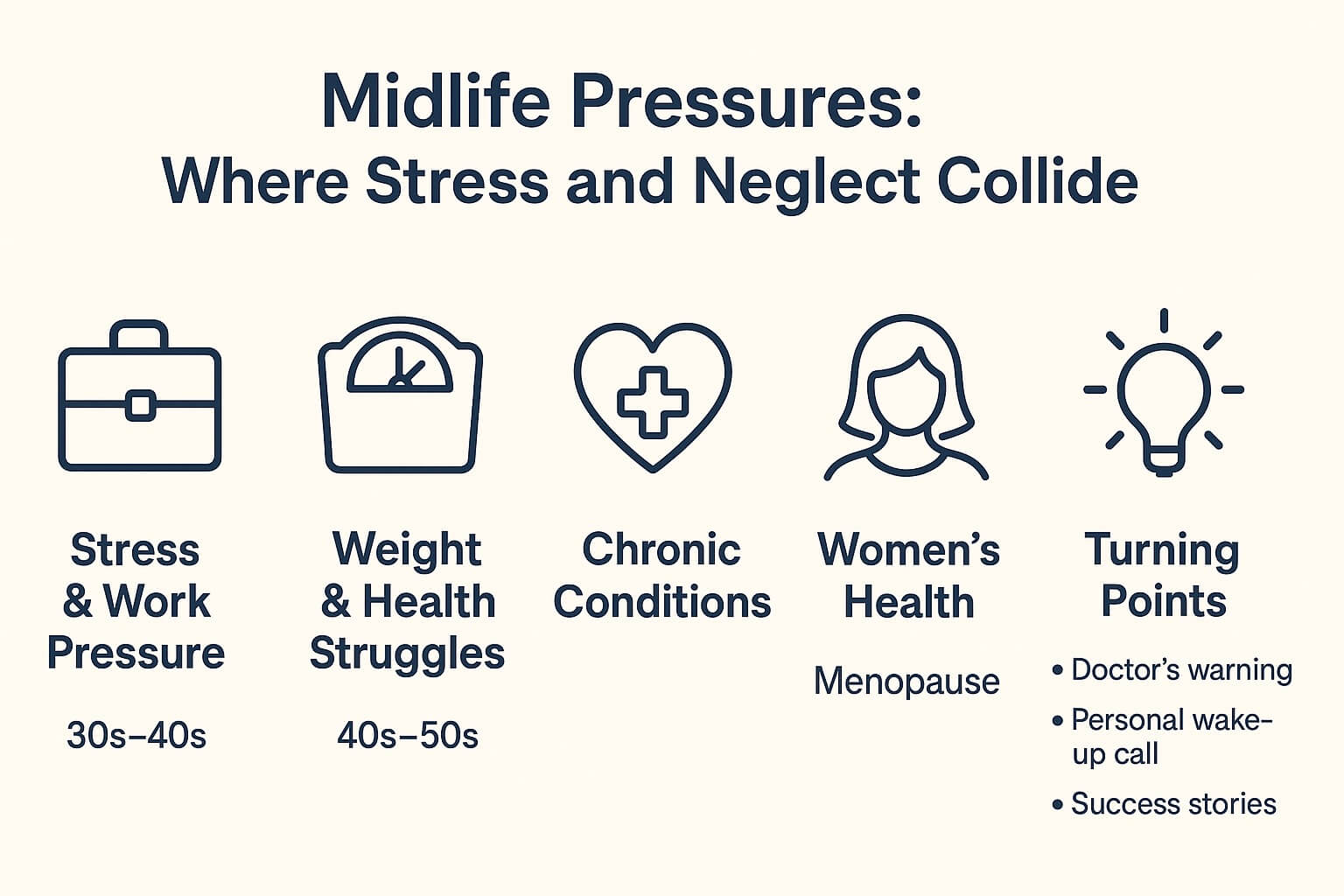
Menopause added complexity for women, with one 55-year-old struggling against stubborn weight gain. The 50s brought similar tales: one person, overweight with poor cholesterol and blood pressure, transformed their life by losing 60 pounds through medication and running a 10K. These stories underscore how midlife’s demands can derail health, but also how awareness—sparked by a doctor’s warning or a personal wake-up call—can ignite lasting change.
Later Years: Aging and Unexpected Challenges
As we age, health lows often stem from the body’s natural wear and tear or sudden diagnoses. A 70-year-old described feeling their worst now, plagued by general malaise, while a 58-year-old faced a shocking breast cancer diagnosis that had already spread. Another, at 66, recalled past struggles with migraines, high blood pressure, and 255 pounds, but now thrives by walking miles daily after significant weight loss.
The 60s brought tales of reduced activity and creeping weight, but also triumphs: one person joined a fitness challenge, lost 15% of their body weight, and returned to lifting. Heart issues loomed large—a 64-year-old survived a massive heart attack, another needed an ablation for arrhythmia, and a third managed two cancers while staying active with walks and pickleball. Chronic conditions like rheumatoid arthritis or traumatic brain injuries made daily life a grind for others, yet resilience shone through. A 76-year-old hit their lowest point the day before a pacemaker implant, then rebounded dramatically. These accounts remind us that aging brings new battles, but grit and medical support can shift the trajectory.
Crisis Points: Illness, Loss, and Breaking Points
Beyond age, specific moments defined some people’s lowest health. A 28-year-old landed in a Bangkok hospital with hepatitis and a kidney infection, losing 14 pounds in a harrowing ordeal. Another, also 28, faced malnutrition from a diet of restaurant food and no water, prompted by odd fingernails to start cooking and hydrating. Mental health crises hit hard for some: one endured suicidal thoughts from 33 to 54, triggered by job loss and grief, until proper diagnoses unlocked recovery.
Substance abuse marked many lows. Heavy drinking in the 30s and 40s led to near-fatal pancreatitis for one, forcing sobriety at 49. Lyme disease devastated another, described as worse than cancer. Post-COVID complications, like severe breathing issues or vaccine reactions, sidelined others temporarily. Weight extremes were common: one person hit 330 pounds, another battled anorexia in their teens, requiring hospitalization but emerging fit at 61. Sudden issues, like a coronary artery blockage mimicking old age, were reversed with a simple stent, restoring energy and even height.
The Comeback: Small Steps, Big Wins
The thread of recovery runs through every story. One person shed 80 pounds by eating smaller, frequent meals and tweaking favorite recipes. Another dropped from 330 pounds to a healthier weight, finding joy in fitting into stylish clothes. Exercise transformed lives—cardio led to marathons for a 59-year-old, while trail running revived another after their 40s. Practical advice abounded: don’t wait for motivation—start with one habit, like a daily walk or cutting sugary drinks. Check health markers like thyroid or testosterone. Use tools like Weight Watchers for mindful eating or medications like Ozempic for a boost, as one 55-year-old did, dropping from 272 to 242 pounds and banishing joint pain.
Mindset shifts were key. One person, after quitting a 20-year drinking habit, urged kindness toward one’s body. Ego—seeing an unflattering photo—spurred others to act. Support systems, from partners to professionals, made a difference, as did cutting out triggers like fried foods or alcohol. For those facing terminal conditions, like organ failure or incurable cancer, sharing stories offered connection and hope, with some exploring end-of-life options like medical assistance in dying.
The Long View: Health as a Journey
These raw accounts show that health lows are universal, striking at any age from any cause—bad habits, stress, illness, or life’s chaos. Yet, they also prove that recovery is possible, often starting with a single choice: a walk, a better meal, a doctor’s visit. The key is consistency over perfection, building systems like daily movement or mindful eating that flex with life’s demands. Support—from a partner, a fitness group, or a doctor—can be a lifeline. Whether you’re facing a tough decade or a sudden crisis, the lesson is clear: you’re never too far gone to start. Every small step is an investment in a stronger, healthier tomorrow.