Have you ever wondered why that once-beloved comfort food now tastes bland and unsatisfying? The answer lies in the fascinating world of epigenetics and how our dietary choices literally rewire our taste perception.
The Breakfast Burrito That Changed Everything
After 11 years of transforming my dietary habits, I recently had an eye-opening experience. I ate a breakfast burrito – the same type I used to find absolutely delicious just five years ago. But this time, it tasted like bland cardboard, void of any real flavor or satisfaction. This stark contrast got me thinking: what had changed? Was it the food, or was it me?
The answer, as science reveals, is both profound and exciting. Our dietary choices don’t just affect our waistline or energy levels – they fundamentally reprogram how we perceive and respond to food at the genetic level.
The Science of Taste Transformation
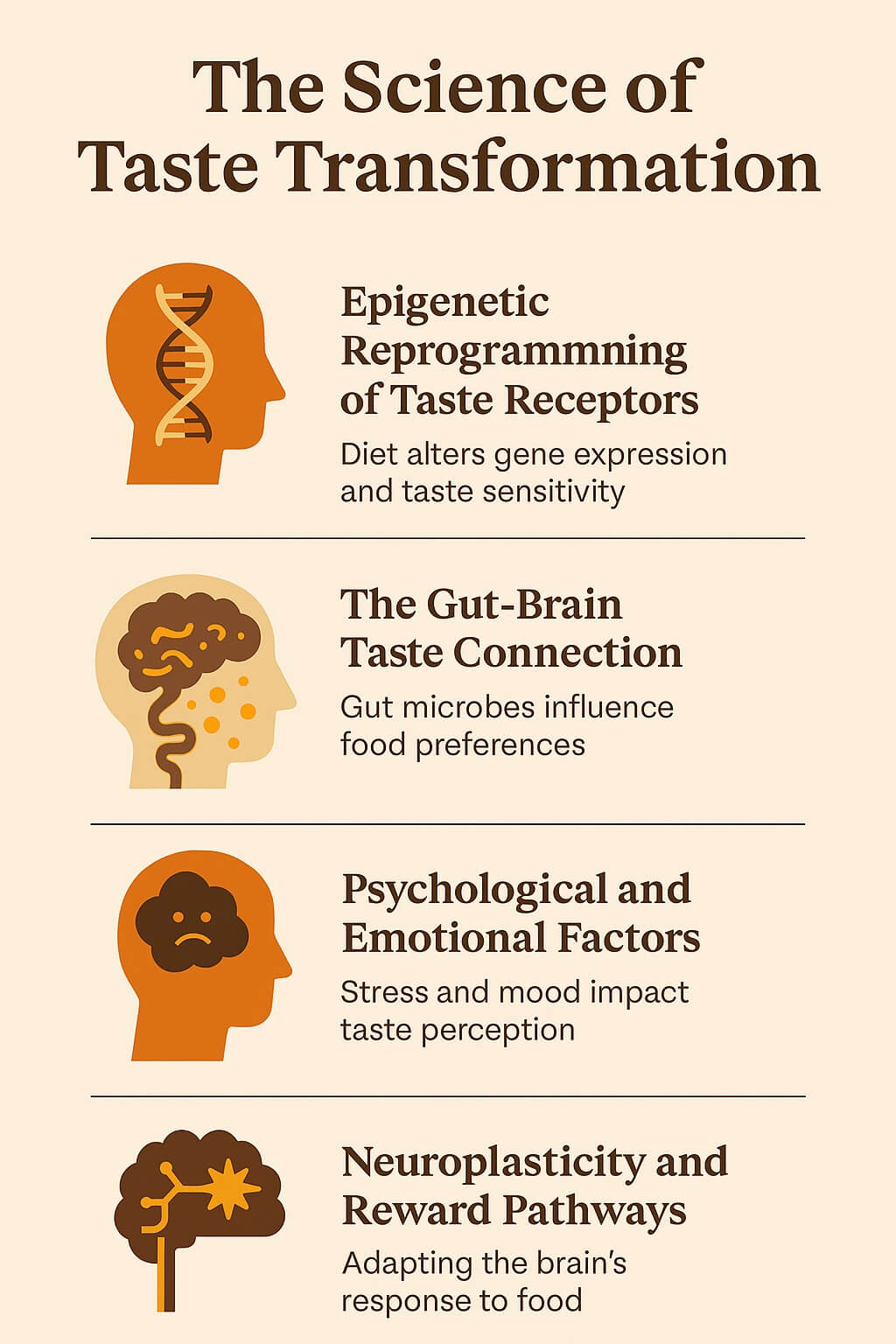
Epigenetic Reprogramming of Taste Receptors
Recent groundbreaking research has revealed that “diet composition activates epigenetic mechanisms that reprogram sensory responses to food”. This means that the foods we eat can literally turn taste-related genes on or off, changing how we experience flavors.
When we consume diets high in processed foods, sugar, and artificial additives, our taste receptors adapt to these intense, often artificial flavors. Over time, this creates a tolerance effect – we need increasingly stronger tastes to achieve the same satisfaction. Conversely, when we shift to whole, minimally processed foods, our taste sensitivity heightens, allowing us to appreciate subtle flavors that were previously masked.
The Gut-Brain Taste Connection
Your gut microbiome plays a crucial role in determining what you crave and how food tastes. “Gut microbes may manipulate eating behavior by hijacking their host’s nervous system” through the microbiome-gut-brain axis.
Different bacterial strains in your digestive system can influence:
- Food preferences and cravings
- Taste receptor expression
- Appetite regulation
- Reward pathways in the brain
Specific bacteria like Acetobacter and Lactobacillus are “particularly effective in influencing the appetites” and can suppress cravings for certain foods while increasing appetite for others.
The Multiple Layers of Taste Change
1. Psychological and Emotional Factors
Our relationship with food is deeply emotional. Stress, depression, and psychological state directly influence taste perception and food cravings. When we heal emotionally, our food preferences often shift naturally toward more nourishing options.
2. Neuroplasticity and Reward Pathways
The brain’s reward system is highly adaptable. Foods high in sugar, salt, and fat trigger dopamine release, creating addictive patterns. However, this system can be retrained. As you consistently choose healthier options, your brain begins to find satisfaction and reward in whole foods, fresh vegetables, and subtle natural flavors.
3. Habit and Sensory Adaptation
Simple exposure and habituation play significant roles. When you reduce salt and sugar intake, foods that once tasted “normal” become overwhelmingly salty or sweet. Your taste buds literally reset their baseline sensitivity.
4. Inflammation and Cellular Health
Nutrition impacts gene expression starting from conception, with studies showing that dietary patterns create epigenetic changes. Processed foods often trigger inflammatory responses that can dull taste perception, while anti-inflammatory whole foods help restore optimal sensory function.
The Seven-Day Transformation Phenomenon
Many people report dramatic shifts in taste preferences after just one week of significant dietary change. This isn’t coincidence – it reflects the rapid nature of epigenetic adaptation. “Diets high in methyl-donating nutrients can rapidly alter gene expression, especially during early development”, but these changes continue throughout life.
During such rapid dietary transitions, people often experience:
- Heightened sensitivity to artificial flavors and additives
- Increased appreciation for natural sweetness in fruits and vegetables
- Greater satisfaction from simple, whole foods
- Reduced cravings for processed foods
The Modern Food Environment Challenge
Our current food system presents unprecedented challenges to our natural taste mechanisms. Ultra-processed foods are engineered to override our natural satiety signals and taste preferences. They combine salt, sugar, and fat in ratios that don’t exist in nature, creating “supernormal stimuli” that can hijack our reward systems.
When we step away from this artificial flavor landscape, whole foods initially taste bland by comparison – not because they lack flavor, but because our receptors have been desensitized to subtle, natural tastes.
Practical Steps for Taste Transformation
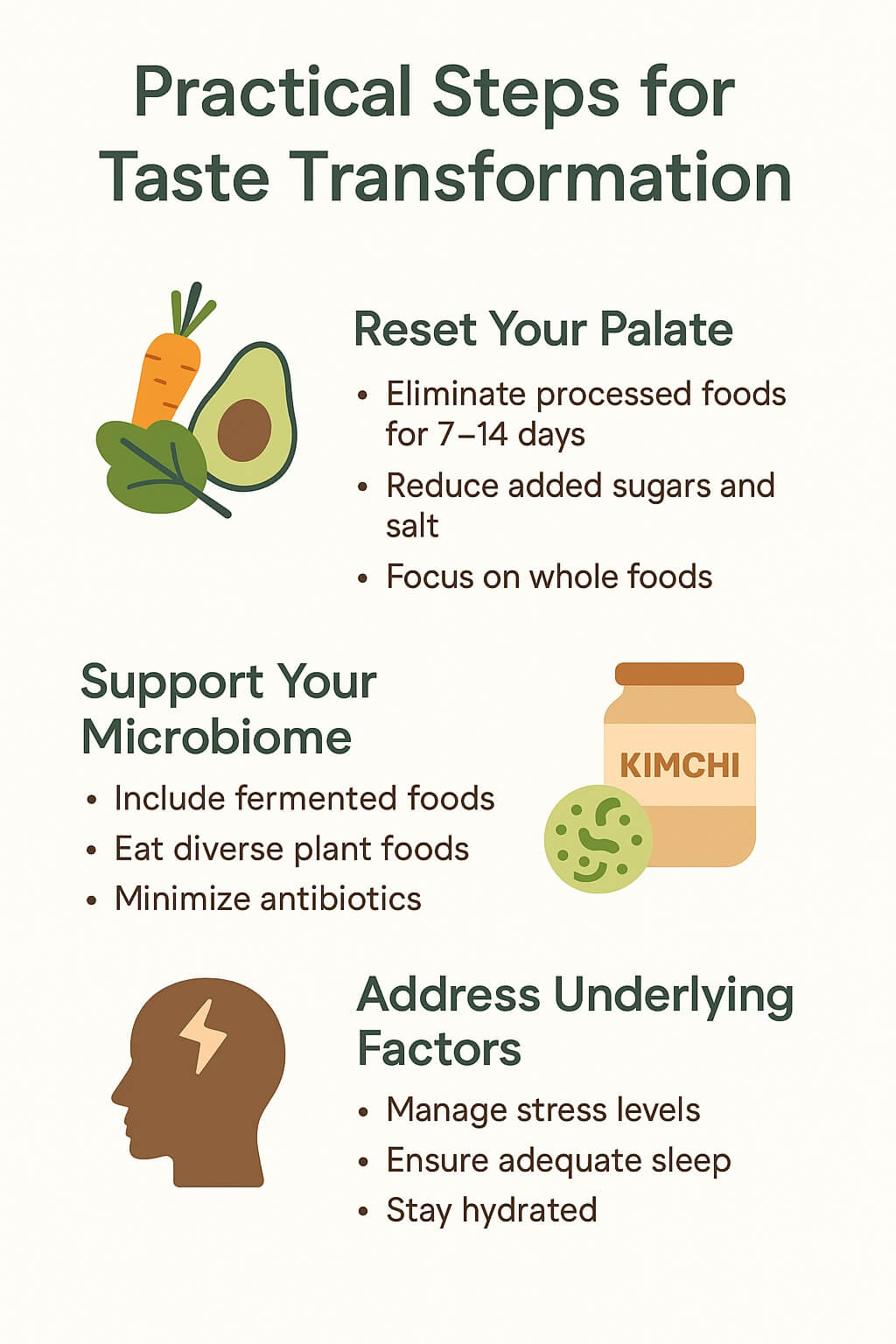
Reset Your Palate
- Eliminate processed foods for 7-14 days to reset baseline sensitivity
- Reduce added sugars and salt gradually to avoid overwhelming cravings
- Focus on whole foods with natural flavors and textures
- Practice mindful eating to enhance taste awareness
Support Your Microbiome
- Include fermented foods like kimchi, sauerkraut, and kefir
- Eat diverse plant foods to promote bacterial diversity
- Minimize antibiotics and antimicrobial additives when possible
- Consider targeted probiotic supplementation
Address Underlying Factors
- Manage stress levels, as chronic stress affects taste perception
- Ensure adequate sleep, which influences hunger hormones
- Stay properly hydrated to maintain optimal taste bud function
- Address any underlying inflammation through diet and lifestyle
The Journey Forward
The transformation of taste preferences through epigenetic mechanisms represents one of the most empowering aspects of nutrition science. Unlike our fixed genetic code, epigenetic patterns are modifiable throughout life. Every meal becomes an opportunity to influence which genes are expressed and how our bodies respond to food.
That bland breakfast burrito wasn’t a disappointment – it was evidence of profound positive change. My taste receptors had been reprogrammed to appreciate the subtle complexity of whole foods, making artificially flavored processed foods taste as artificial as they actually are.
This process isn’t just about taste – it’s about reclaiming our innate wisdom around food choices and reconnecting with nourishment in its truest form.
Citations and Sources
- Yang, C., et al. (2020). Persistent epigenetic reprogramming of sweet taste by diet. Science Advances.
- Rupa Health. (2025). Epigenetics and Diet: How Food Influences Gene Expression.
- University of Utah. Nutrition & the Epigenome.
- Stanford Lifestyle Medicine. Nutrition and Epigenetics: How Diet Affects Gene Expression.
- Alcock, J., Maley, C. C., & Aktipis, C. A. (2014). Is eating behavior manipulated by the gastrointestinal microbiota? Evolutionary pressures and potential mechanisms. PMC.
- Riera, C. E., & Dillin, A. (2021). Do Gut Microbes Taste? PMC.
- Scientific American. (2024). How Gut Bacteria Tell Their Hosts What to Eat.
- Psychology Today. Where Cravings Are Bred.
- National Center for Biotechnology Information. (2018). The Impact of Nutrition and Environmental Epigenetics on Human Health and Disease.