Imagine being out with friends when you notice someone who has hair that is so thick, dark, and glossy that it almost seems unfair. “I just eat healthy, and maybe it’s my mom’s genes,” they shrug when asked what their secret is. Despite being a straightforward response, it piques interest. Is it true that what you eat can change your hair? Let’s explore how your diet affects the health of your hair, what “eating healthy” means for your scalp and hair, and how to create meals that promote healthier, more glossy hair.
How Diet Influences Hair Health
Your hair serves as a window into your general health in addition to being a fashion statement. A constant supply of nutrients is essential for the growth of hair follicles, the microscopic factories that create your hair. While inadequate nutrition may cause your hair to become brittle, thinning, or dull, a diet rich in the proper foods can strengthen, shine, and promote hair growth. Your eating habits have the power to either strengthen or weaken the foundation that genetics has laid for the texture and growth patterns of your hair. Consider your diet to be the backstage crew that subtly makes sure your hair looks its best.
Nutrients That Make Your Hair Shine
To nurture your hair, focus on foods that deliver key nutrients. Hair is built from keratin, a protein, so lean sources like eggs, chicken, or lentils are essential for strength and growth. Biotin, a B vitamin, supports keratin production, giving your hair resilience—find it in avocados, nuts, or whole grains. Iron keeps oxygen flowing to your follicles, preventing thinning, and is abundant in spinach or pumpkin seeds. Omega-3 fatty acids, found in salmon or chia seeds, nourish the scalp and add gloss. Vitamin E, from almonds or sunflower seeds, protects follicles from damage, while Vitamin C, in citrus fruits or bell peppers, aids collagen production for sturdy strands. Zinc, present in chickpeas or cashews, supports scalp health, and Vitamin A, from carrots or kale, keeps your scalp moisturized with natural oils.

What “Eating Healthy” Means for Your Hair
What does eating a healthy diet mean for hair growth, then? It’s about forming enduring habits and embracing complete, nutrient-dense foods. Imagine plates that are full of lean proteins, colorful vegetables, and healthy fats like avocado or olive oil. It’s important to stay hydrated because water prevents your scalp and hair from drying out. Steer clear of drastic diets that eliminate whole food groups because they can deprive your hair of necessary nutrients, which can cause breakage or hair loss. Limit processed foods and sugary snacks as they can cause inflammation and interfere with the health of your scalp. To keep your body—and hair—thriving, instead, strive for balance by combining complex carbohydrates, fats, and protein in each meal.
A Day of Meals to Nourish Your Hair
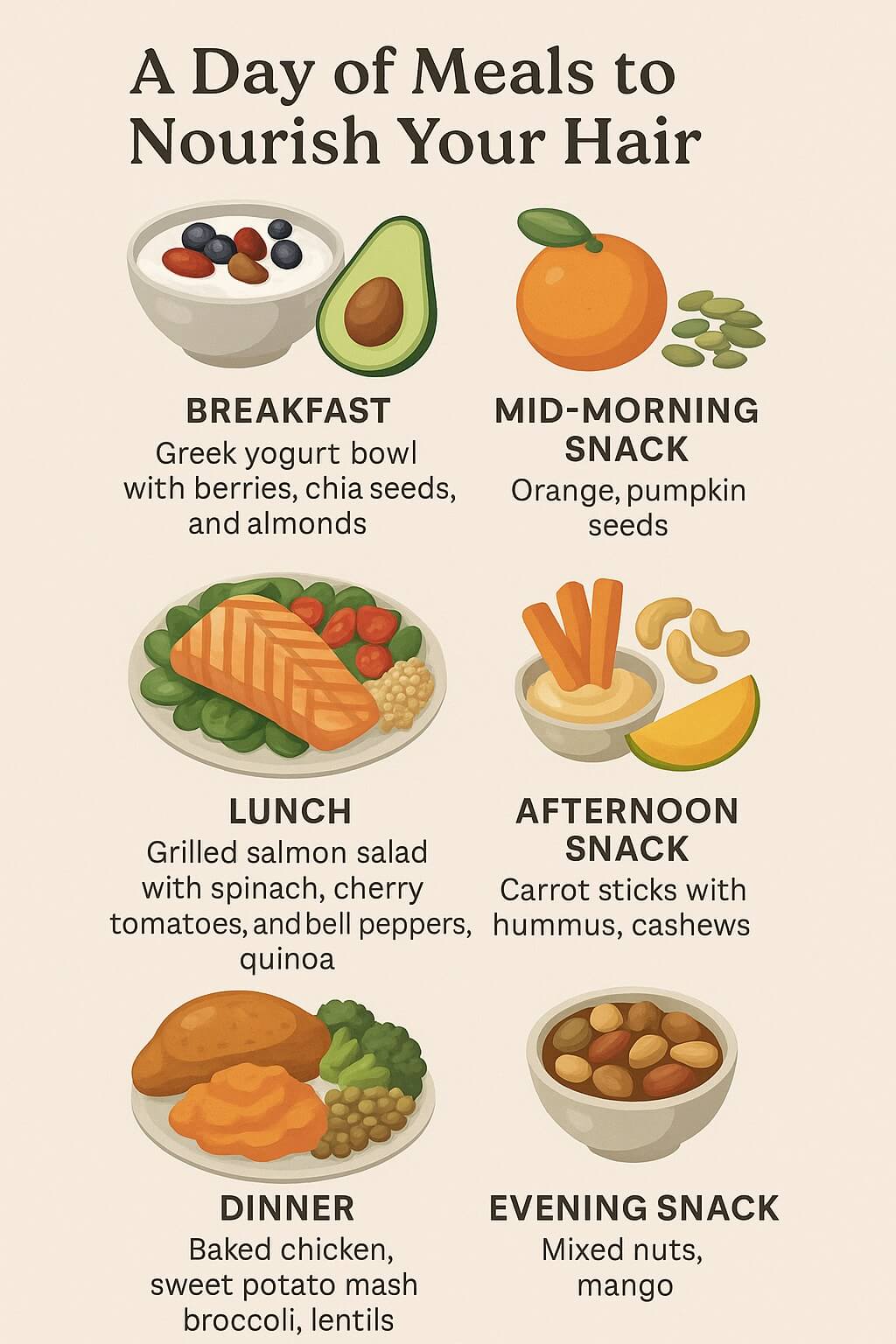
To put this into practice, imagine starting your day with a Greek yogurt bowl topped with berries, chia seeds, and a handful of almonds, paired with avocado toast. It’s a protein- and biotin-packed breakfast to kickstart hair health. Mid-morning, snack on an orange and some pumpkin seeds for a Vitamin C and iron boost. For lunch, try a grilled salmon salad with spinach, cherry tomatoes, and bell peppers, drizzled with olive oil, alongside a side of quinoa. In the afternoon, dip carrot sticks in hummus and munch on cashews for zinc and protein. Dinner could be baked chicken with sweet potato mash, steamed broccoli, and lentils—a nutrient-dense combo. If you’re peckish later, a small bowl of mixed nuts and a slice of mango delivers Vitamin E. This approach weaves hair-friendly nutrients into delicious, balanced meals. Adjust portions to suit your needs, and consider consulting a nutritionist for a tailored plan.
Beyond Diet: Tips for Healthier Hair
Although diet is an effective tool, it is not the only solution. Great hair starts with a healthy scalp, so try using mild, sulfate-free shampoos and giving your scalp a little massage to increase blood flow. Make time for relaxation by taking a short walk or practicing meditation, as stress can lead to hair loss. Your hair repairs itself when you sleep, so try to get 7-8 hours to allow your follicles to rest. A dermatologist can look for underlying causes, such as nutritional deficiencies or hormonal imbalances, if you observe excessive hair loss or problems with your scalp.
Can Your Diet Transform Your Hair?
Your hair can reach its full potential and become stronger, glossier, and more resilient with a diet high in nutrients. It’s not a panacea, though, as genetics still determines the fundamental characteristics of your hair, such as its thickness or curl pattern. Eating healthily makes the most of what you have, which enhances the appearance of your hair. When you combine a well-planned diet with good hair care, you’re creating the conditions for hair that stands out.
The secret to brighter, healthier hair is on your plate. You can feed your hair from the inside out by including protein, biotin, iron, omega-3s, and other essential nutrients in your meals. Aim to base your meals on whole foods, drink plenty of water, and maintain healthy hair practices to go along with your diet. Do you want hair that draws attention? Take what’s on your fork first.
Citations and References
Hair Follicles and Nutrient Requirements
Claim: “A constant supply of nutrients is essential for the growth of hair follicles, the microscopic factories that create your hair.”
Protein and Keratin Production
Claim: “Hair is built from keratin, a protein, so lean sources like eggs, chicken, or lentils are essential for strength and growth.”
- Wang, Y., Zhang, L., Zhao, G., Zhang, Y., Huang, Y., Chen, S., … & Du, J. (2022). Keratin-mediated hair growth and its underlying biological mechanism. Communications Biology, 5(1), 1264.
- Cleveland Clinic. (2023, August 22). Keratin: Protein, Structure, Benefits, Uses & Risks.
Biotin and Hair Health
Claim: “Biotin, a B vitamin, supports keratin production, giving your hair resilience.”
Important Note: Research shows mixed evidence on biotin effectiveness in healthy individuals.
- Patel, D. P., Swink, S. M., & Castelo-Soccio, L. (2017). A Review of the Use of Biotin for Hair Loss. Skin appendage disorders, 3(3), 166-169.
- National Institutes of Health Office of Dietary Supplements. (2025). Biotin – Health Professional Fact Sheet.
Iron Deficiency and Hair Loss
Claim: “Iron keeps oxygen flowing to your follicles, preventing thinning.”
- Guo, E. L., & Katta, R. (2017). Diet and hair loss: effects of nutrient deficiency and supplement use. Dermatology practical & conceptual, 7(1), 1-10.
- Harvard Health Publishing. (2024, April 22). Vitamins, minerals, and hair loss: Is there a connection?
- Ducray. (2022, March 17). Hair loss: the impact of iron, zinc, vitamin d, c and b12 deficiencies.
Omega-3 Fatty Acids for Scalp Health
Claim: “Omega-3 fatty acids, found in salmon or chia seeds, nourish the scalp and add gloss.”
Vitamin C and Collagen Production
Claim: “Vitamin C, in citrus fruits or bell peppers, aids collagen production for sturdy strands.”
Zinc and Scalp Health
Claim: “Zinc, present in chickpeas or cashews, supports scalp health.”
- International Society of Hair Restoration Surgery. (2025, January 11). Guide to Best Vitamins and Minerals for Hair Growth.
- Vinmec. (2025, June 17). 5 Best Vitamins for Hair Growth.
Multiple Vitamin Deficiencies and Hair Health
General support for various nutrient claims:
Amino Acids and Hair Structure
Claim: “Sulfur amino acids, such as methionine and cysteine, also play a major role in hair health. These small molecules found in food are used by the body to form a protein called keratin.”