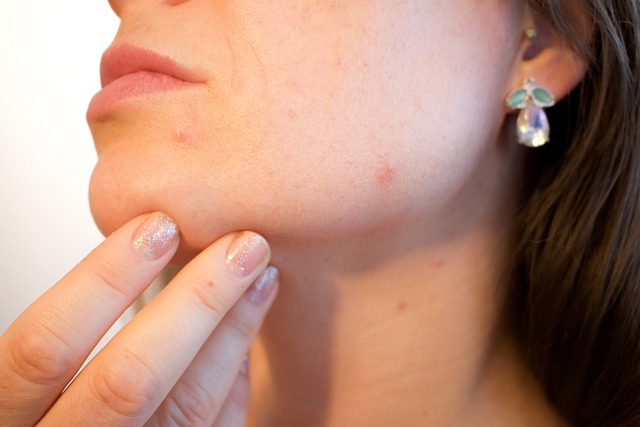
Scars on the lips behave differently than scars anywhere else on your face. The unique tissue composition, constant movement, and increased blood flow create challenges that standard scar treatments don’t always address. A faint mark left behind from a pimple might seem minor, but on such a visible, expressive area, even subtle discoloration feels frustrating. Understanding why lip scars persist and what actually works to fade them helps you choose effective treatments instead of accidentally making things worse.
Why do lips scar differently than regular facial skin?
Lip tissue contains a much thinner epidermis than regular skin, with the vermillion border existing as a transition zone between external skin and internal mucosa. This delicate tissue lacks the protective layers that help other areas heal without visible marks. The absence of hair follicles, sweat glands, and sebaceous glands means lips can’t produce protective oils or utilize the healing pathways available to regular skin.
Blood vessels sit closer to the surface in lip tissue, making any inflammation or injury immediately visible as redness. This increased vascularity explains why scars on lips often appear more prominent than similar marks elsewhere. The constant blood flow, while beneficial for healing, also means any irritation triggers immediate color changes that take longer to settle.
Lips move constantly during talking, eating, and facial expressions. This continuous motion prevents the undisturbed healing that allows scars to fade optimally. The mechanical stress of movement can perpetuate inflammation and prevent the scar tissue from fully maturing and fading. Unlike a scar on your forehead that stays relatively still, lip scars get stretched and compressed hundreds of times daily.
The position and visibility of lips means they face constant environmental exposure. UV radiation, wind, temperature fluctuations, and contact with foods, drinks, and products all impact healing. This exposure level would damage any scar, but lip scars face particularly intense challenges due to their location.
What makes some lip scars turn red with emotional or physical triggers?
The phenomenon of scars becoming more visible during crying, stress, or physical exertion relates to changes in blood flow and inflammation. Emotional responses trigger the sympathetic nervous system, causing blood vessel dilation throughout the body. In areas with existing scar tissue, this increased blood flow becomes especially visible because scar tissue contains different vascular structures than normal tissue.
New scar tissue initially has immature, disorganized blood vessels that respond more dramatically to circulatory changes. These vessels don’t regulate blood flow as efficiently as mature capillaries, leading to visible flushing. The scar essentially acts as a weak point where increased circulation shows through more obviously than in surrounding normal tissue.
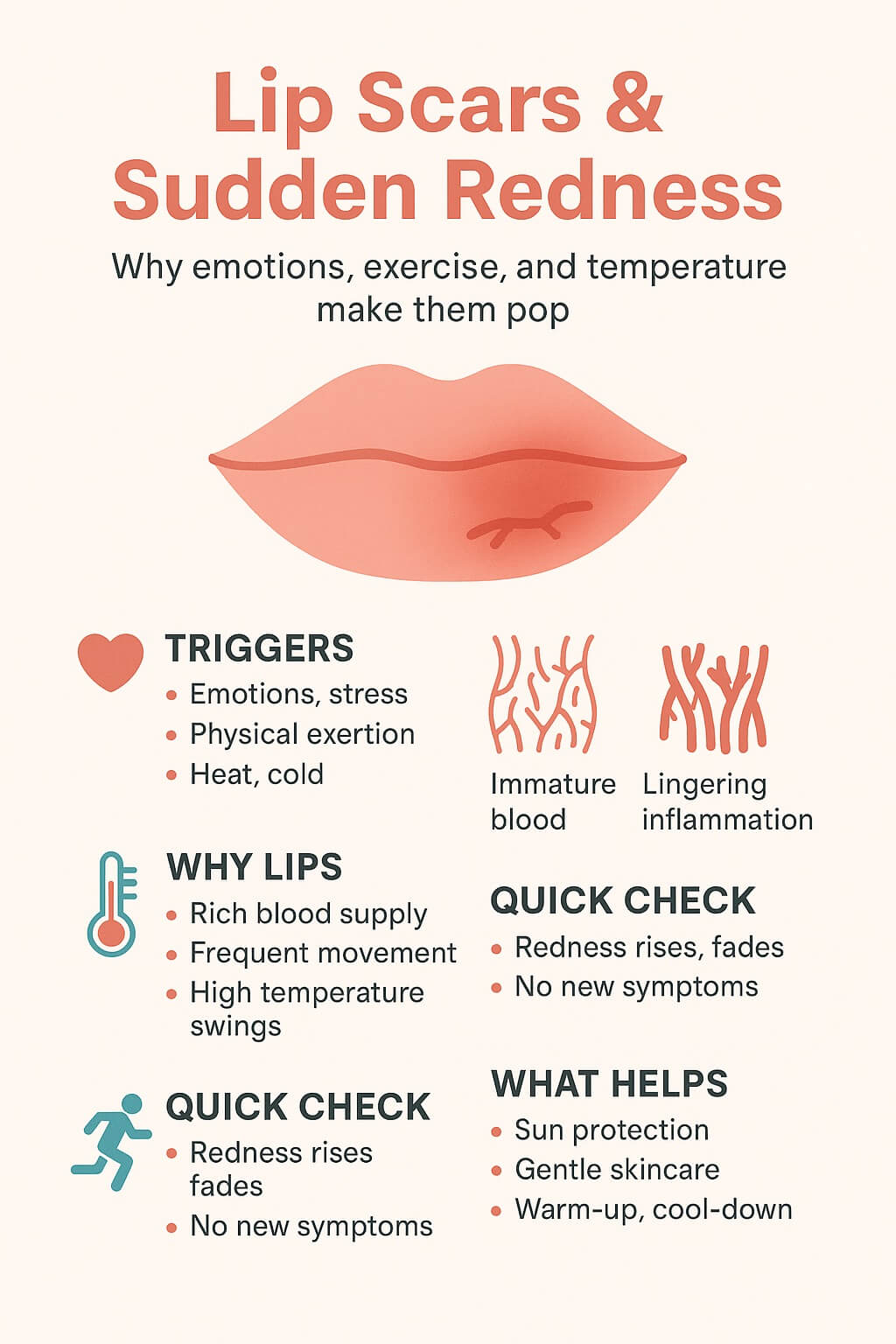
Inflammation plays a continuing role even in healed scars. Post-inflammatory erythema describes persistent redness after an injury heals. The inflammatory cascade triggered by the original pimple can take months or even years to completely resolve. Any stimulus that increases blood flow or triggers immune responses temporarily intensifies this residual inflammation.
Temperature changes during emotional responses also affect scar visibility. Crying involves facial muscle contractions and increased skin temperature, both of which enhance blood flow to the area. Cold exposure causes different vascular responses but can similarly make scars more apparent through color changes.
The psychological impact of noticing the scar becomes more visible during emotional moments can create a feedback loop. Awareness of the scar during vulnerable moments may increase self-consciousness, though the visibility itself is a purely physiological response to altered blood flow patterns.
Why did prescription retinoid cream make the scar more prominent?
Retinoids work by increasing cell turnover and stimulating collagen production, which generally improves skin texture and appearance. However, on the delicate tissue of lips, these powerful effects can backfire. The increased cell turnover causes more rapid exfoliation, which on lip tissue often leads to irritation, dryness, and inflammation rather than improvement.
Lip skin lacks the protective barrier that facial skin uses to tolerate retinoids. The stratum corneum on lips is significantly thinner, allowing retinoid penetration at much higher concentrations than intended. This excessive penetration causes inflammation that temporarily worsens scar appearance by increasing redness and swelling.
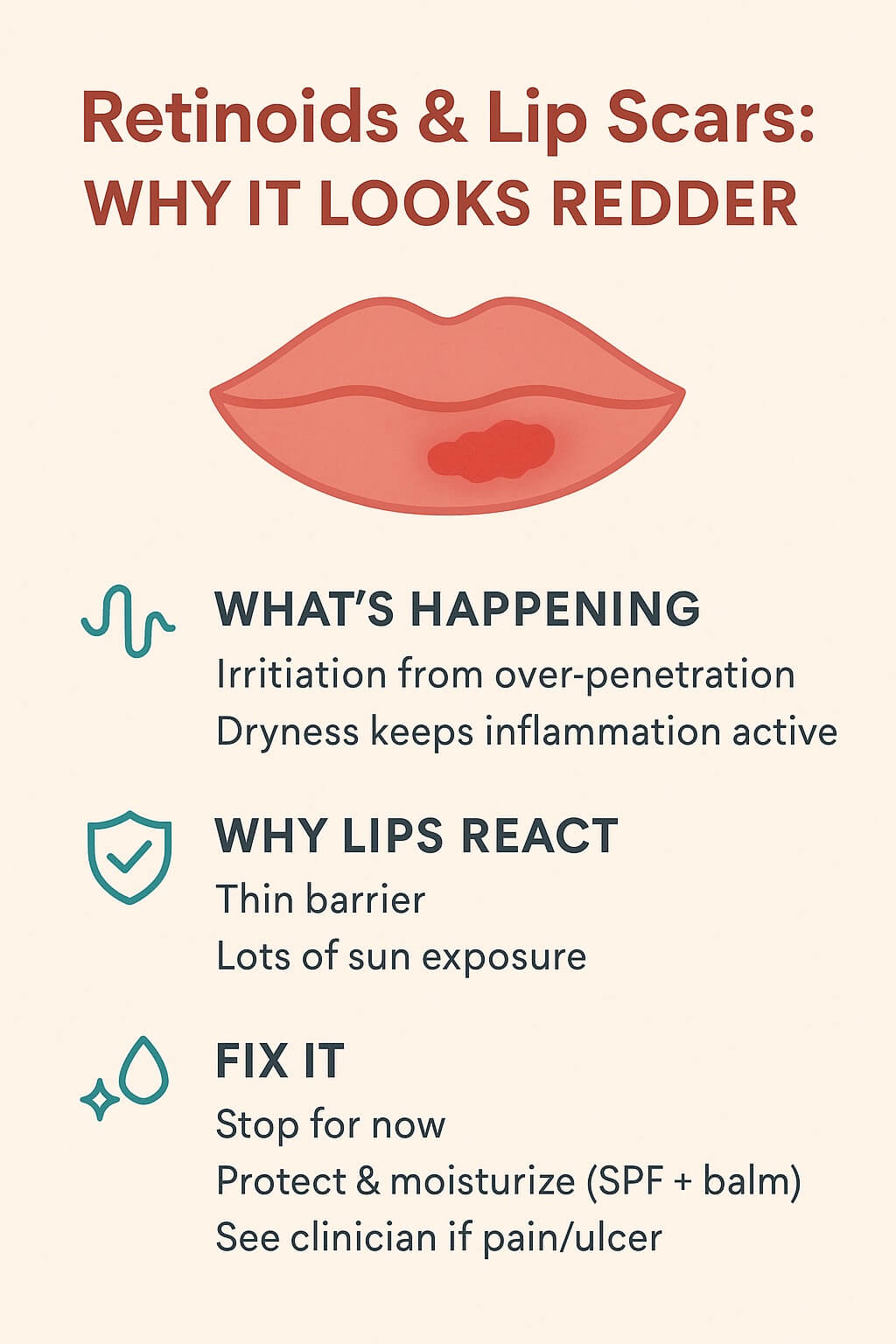
Retinoids are photosensitizing, meaning they make tissue more vulnerable to sun damage. Lips receive significant UV exposure during daily activities, and retinoid use without adequate sun protection can actually worsen hyperpigmentation and slow healing. The combination of increased sensitivity and constant sun exposure creates conditions that perpetuate rather than improve scarring.
The drying effect of retinoids proves particularly problematic on lips. Moisture is essential for optimal scar healing and maturation. Dry, irritated tissue can’t complete the remodeling process that gradually fades scars. Instead, the chronic irritation from retinoid use maintains an inflammatory state that keeps the scar red and visible.
Standard prescription retinoid formulations contain additional ingredients designed for facial skin that may irritate lip tissue. Even if the retinoid itself might eventually help, the vehicle or preservatives can cause reactions that override any potential benefits.
How long does it normally take for lip scars to fade naturally?
Scar maturation follows a predictable timeline, though individual variation exists. Fresh scars typically appear red or purple initially due to inflammation and new blood vessel formation. Over the first three months, this intense coloration gradually fades as inflammation subsides and blood vessels mature.
The remodeling phase continues for six to twelve months in most cases. During this period, collagen fibers reorganize from the disorganized pattern of new scar tissue into more aligned structures resembling normal tissue. The scar gradually softens, flattens, and lightens as this remodeling progresses.

Some scars continue improving for up to two years, though changes after the first year tend to be subtle. Lip scars may take longer than facial scars due to constant movement and environmental exposure. The five-month mark where your scar currently sits falls in the middle of the typical maturation period, meaning significant natural improvement likely remains ahead.
Post-inflammatory erythema, the persistent redness after a pimple heals, can last six months to two years depending on skin tone, the severity of original inflammation, and individual healing factors. Darker skin tones often experience longer-lasting discoloration, though the pattern differs from typical scarring.
Factors that slow natural fading include sun exposure, picking or irritation, use of harsh products, smoking, and nutritional deficiencies. Optimizing these factors allows scars to fade as quickly as your individual healing capacity permits.
What actually works to fade scars on lip tissue?
Silicone-based scar treatments show the most consistent evidence for improving scar appearance. Medical-grade silicone creates an optimal healing environment by hydrating the scar, regulating collagen production, and protecting against environmental damage. Unlike harsh treatments, silicone works gently by normalizing the healing process rather than forcing tissue changes.
Silicone sheets designed for lips or cut to fit provide occlusive hydration that helps remodel scar tissue. These work best with consistent overnight use over several months. Silicone gels offer a more practical option for lip application, absorbing quickly without the visibility or discomfort of sheets. The mechanism involves hydration and pressure that influence how collagen fibers organize during healing.

Gentle vitamin C serums support collagen synthesis and provide antioxidant protection without the irritation potential of retinoids. Lip-safe formulations with stable vitamin C derivatives work better than high-concentration L-ascorbic acid serums designed for facial skin. The antioxidant properties help reduce post-inflammatory erythema while supporting healthy tissue regeneration.
Niacinamide reduces inflammation and improves skin barrier function, making it particularly valuable for lip healing. This vitamin B derivative helps fade post-inflammatory erythema through multiple mechanisms including reducing inflammation, improving barrier function, and inhibiting melanosome transfer. Concentrations around five percent work well without causing irritation.
Centella asiatica extract, also called cica or gotu kola, promotes wound healing and reduces scar formation. This botanical ingredient increases collagen synthesis while preventing excessive scar tissue buildup. Many gentle, healing lip treatments incorporate centella for its soothing and regenerative properties.
Does sun protection really matter for fading lip scars?
UV radiation dramatically impacts scar healing and appearance. Sun exposure triggers melanocyte activity, causing darkening of healing tissue that can become permanent if exposure continues during the vulnerable healing period. The increased pigmentation in sun-exposed scars takes much longer to fade than scars consistently protected from UV radiation.
UV damage generates free radicals that interfere with normal collagen remodeling. Instead of organizing into neat, aligned patterns, collagen in sun-damaged scars remains disorganized, creating persistent texture differences and redness. The inflammatory effects of UV exposure maintain the very conditions that keep scars visible.
Lips receive significant sun exposure during normal daily activities. Walking outdoors, driving, or sitting near windows all expose lips to UV radiation. Most people don’t think to protect their lips the way they protect facial skin, leaving scars vulnerable to damage that prevents fading.
Mineral sunscreens using zinc oxide or titanium dioxide work better for lips than chemical filters. These physical blockers sit on the surface and reflect UV radiation rather than absorbing it through chemical reactions. They’re less likely to cause irritation and don’t require absorption time before providing protection.
Tinted lip balms with SPF provide both protection and immediate camouflage of scar discoloration. The coverage helps with self-consciousness while the sun protection supports healing. Reapplication after eating or drinking maintains consistent protection throughout the day.
Some dermatologists recommend avoiding sun exposure on healing scars entirely during the first six months if possible. This extreme protection gives scars the best chance to fade without UV interference. Wearing wide-brimmed hats and seeking shade provides additional protection beyond topical products.
Can professional treatments help lip scars fade faster?
Laser therapy specifically targets scar tissue and post-inflammatory erythema. Pulsed dye lasers treat the redness in scars by selectively heating blood vessels, causing them to collapse and be reabsorbed. This reduces the red or purple coloration that makes scars prominent. Multiple treatments spaced several weeks apart typically achieve optimal results.
Fractional lasers create controlled micro-injuries that stimulate collagen remodeling without damaging the entire treatment area. These lasers can improve texture differences between scar tissue and surrounding lips. However, lip tissue requires more conservative settings than facial skin due to its delicate nature and increased sensitivity.
Microneedling uses fine needles to create controlled injuries that trigger healing responses. The treatment stimulates collagen production and can help normalize the appearance of scar tissue. When performed professionally with appropriate depth and technique for lip tissue, microneedling offers benefits with manageable recovery time. At-home devices generally can’t safely treat lip tissue due to the precision required.
Chemical peels designed for sensitive areas can improve post-inflammatory hyperpigmentation and smooth texture irregularities. Very light peels using gentle acids may benefit lip scars, though the location requires extra caution. Many practitioners avoid aggressive peels on lips entirely due to the thin tissue and potential for complications.
Platelet-rich plasma injections deliver concentrated growth factors that promote healing and tissue regeneration. Some practitioners combine PRP with microneedling for enhanced results. The evidence for this treatment remains mixed, with some studies showing benefits and others finding minimal improvement over standard treatments.
Steroid injections treat raised or hypertrophic scars by reducing collagen production and inflammation. However, lip pimples rarely create raised scars, making this treatment unnecessary for post-acne marks. The risks of injections on delicate lip tissue usually outweigh potential benefits for flat, discolored scars.
What ingredients should you avoid putting on lip scars?
Strong exfoliating acids including glycolic, salicylic, and lactic acid in concentrations designed for facial skin cause excessive irritation on lips. While gentle exfoliation might help eventually, aggressive acid treatments damage the delicate tissue and worsen inflammation. The temporary redness from irritation makes scars more visible rather than less.
Essential oils frequently irritate healing tissue despite natural origin. Tea tree oil, peppermint, cinnamon, and citrus oils all cause inflammatory responses that interfere with scar healing. Even diluted essential oils can trigger reactions on the sensitive lip area, particularly in tissue already compromised by scarring.
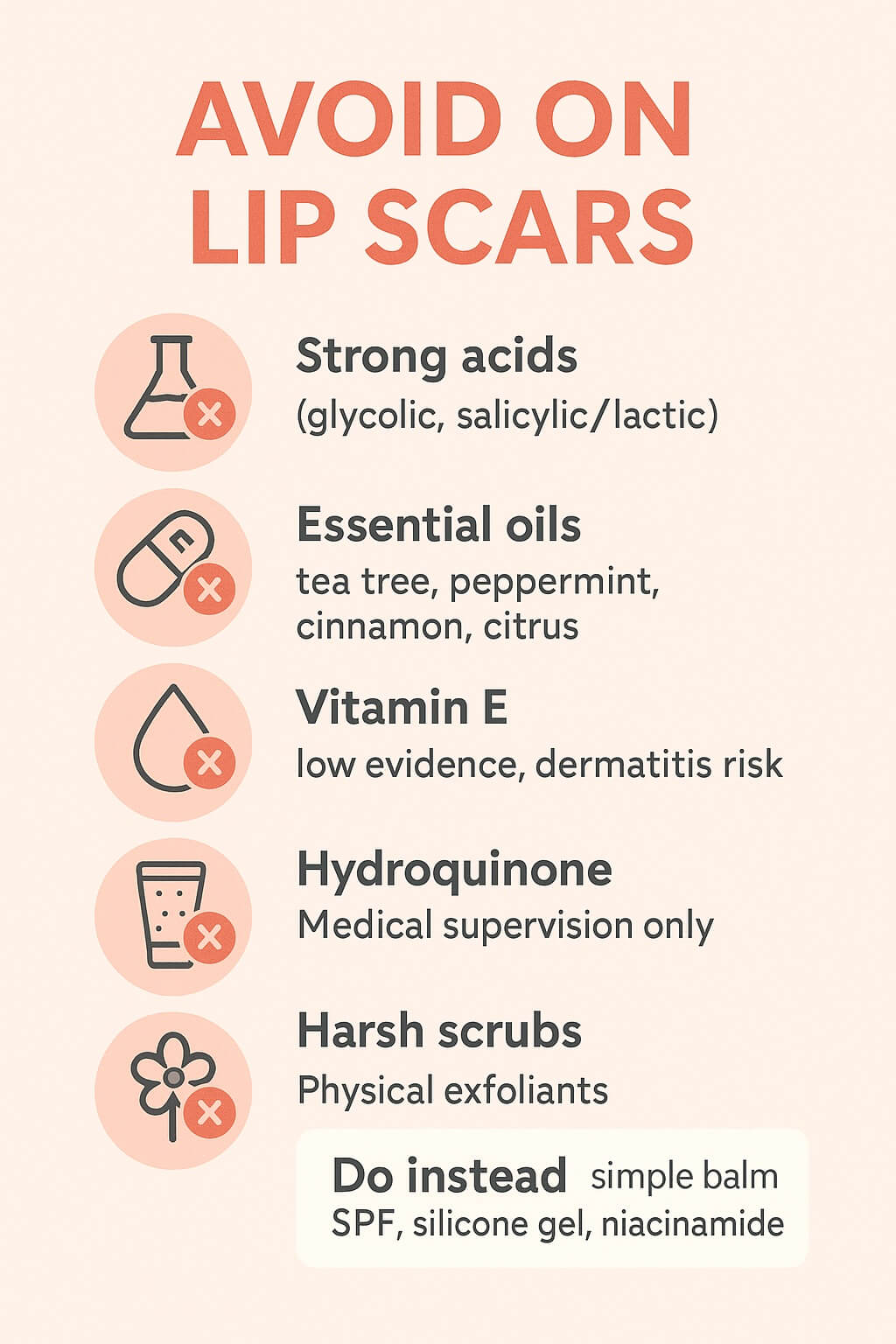
Vitamin E oil, often recommended for scars, actually shows poor evidence for improving scar appearance and causes allergic contact dermatitis in significant numbers of people. The thick, occlusive nature can clog the limited pores around the lip border. If you choose to try vitamin E, use it cautiously and discontinue immediately if any irritation develops.
Hydroquinone, a powerful skin-lightening agent, shouldn’t be applied to lips without specific medical supervision. The mucous membrane of lips absorbs this ingredient readily, potentially causing unwanted systemic absorption. Safer alternatives exist for treating post-inflammatory hyperpigmentation on lips.
Harsh physical exfoliants including scrubs with rough particles damage healing tissue. Lip scrubs marketed for smoothing might feel satisfying, but the mechanical trauma disrupts the healing process and can actually worsen scarring. Gentle care works better than aggressive treatment for maturing scars.
Fragrances and unnecessary additives increase the risk of irritation and allergic reactions. Healing scars need simple, targeted treatments rather than complex formulations with potential irritants. Even natural fragrances from plant extracts can trigger inflammation in sensitive, healing tissue.
How can you cover lip scars while they heal?
Color-correcting techniques neutralize scar discoloration more effectively than simply applying concealer. Red or purple scars benefit from green color correctors applied lightly before foundation or concealer. The complementary colors cancel each other optically, reducing the scar’s visibility. Choose cream formulations that blend smoothly on lip tissue.
Lip-safe concealers provide coverage without irritating healing tissue. Look for formulations specifically designed for lips or sensitive skin, avoiding products with fragrances, essential oils, or harsh preservatives. Mineral-based concealers often work well, as they provide coverage while allowing the skin to breathe.
Tinted lip balms offer lighter coverage with added benefits of moisture and often sun protection. While they won’t completely hide scars, they reduce visibility while supporting healing. The sheer color minimizes the contrast between scar tissue and surrounding lips without looking heavily made up.
Setting powder formulated for sensitive skin helps concealer last longer without migrating. Use sparingly, as too much powder emphasizes texture differences and dries out the area. Press powder gently with a soft brush or sponge rather than rubbing.
Lipstick in colors close to your natural lip shade provides coverage while looking intentional rather than like concealer. Matte formulations typically cover better than glossy finishes, though they may be more drying. Satin finishes offer a compromise between coverage and moisture.
Remove makeup gently at night using oil-based cleansers or micellar water. Harsh rubbing or strong cleansers irritate healing tissue and can strip away beneficial treatments applied underneath makeup. Pat dry rather than rubbing to minimize mechanical stress on the scar.
Does picking or touching the scar make it worse?
Physical manipulation of healing scars absolutely interferes with the maturation process. Every time you touch, rub, or pick at a scar, you trigger inflammation that perpetuates redness and prevents the tissue from settling into its final healed state. The mechanical stress disrupts collagen organization and can cause micro-injuries that restart the inflammatory cascade.
Psychological factors often drive repetitive touching. Scar-focused behaviors can become compulsive, with people unconsciously running their tongue or finger over the area to check if it’s still there. This constant monitoring and touching maintains awareness of the scar while physically preventing optimal healing.
Picking at scars, even gentle picking that doesn’t seem harmful, introduces bacteria and causes trauma that can worsen discoloration and texture. The barrier function of scar tissue is already compromised compared to normal skin, making it more vulnerable to infection and damage from manipulation.
Habit reversal training helps break cycles of touching or picking. This involves identifying triggers that prompt scar-focused behavior, developing awareness of the action, and implementing alternative behaviors. Keeping hands busy with stress balls or fidget tools redirects the impulse to touch your face.
Applying treatments with clean hands provides necessary contact for therapeutic purposes without harmful manipulation. Allow yourself designated times to gently apply products, then consciously avoid touching the area otherwise. This structure satisfies the urge to “do something” while preventing harmful behaviors.
Can diet or supplements improve lip scar healing?
Vitamin C plays essential roles in collagen synthesis and wound healing. Inadequate vitamin C impairs the body’s ability to produce quality collagen, leading to poor scar maturation. While deficiency is uncommon in developed countries, suboptimal intake is widespread. Ensuring adequate vitamin C through diet or supplementation supports optimal healing.
Zinc deficiency impairs wound healing through multiple mechanisms including reduced collagen synthesis and increased inflammation. This mineral acts as a cofactor in numerous enzymatic processes essential for tissue repair. Food sources include oysters, beef, pumpkin seeds, and lentils. Supplementation may help if dietary intake is insufficient.
Omega-3 fatty acids modulate inflammation and support healthy tissue formation. These essential fats reduce the excessive inflammation that perpetuates scar redness while providing building blocks for cell membranes. Fatty fish, walnuts, flaxseeds, and chia seeds provide dietary omega-3s, or supplementation offers concentrated doses.
Protein provides amino acids necessary for collagen formation and tissue repair. Inadequate protein intake slows healing and produces weaker scar tissue. Most people in developed countries get sufficient protein, but those following restrictive diets or with increased needs may benefit from ensuring adequate intake.
Antioxidants including vitamins A and E, selenium, and various phytonutrients protect healing tissue from oxidative stress. While specific supplementation shows mixed evidence for improving scars, a diet rich in colorful vegetables and fruits provides these compounds naturally. The synergistic effects of whole foods likely work better than isolated supplements.
Hydration affects all aspects of wound healing and tissue health. Even mild dehydration impairs skin function and slows healing processes. Adequate water intake supports optimal circulation, nutrient delivery, and waste removal from healing tissues.
Why do some scars never fully fade?
Genetic factors significantly influence scarring tendencies. Some people naturally form more prominent scars due to variations in collagen production, inflammatory responses, and pigmentation patterns. Family history of keloid formation or hypertrophic scarring suggests genetic predisposition to problematic scarring, though typical lip pimples rarely create these severe scar types.
Depth and severity of the original injury determine ultimate scar appearance. Superficial injuries affecting only the epidermis usually heal without permanent marks. Damage extending into the dermis creates true scars that involve collagen restructuring. Very deep injuries affecting the hypodermis may create permanent texture changes regardless of treatment.
Age influences healing capacity and scar formation. Younger skin produces more collagen and heals more quickly but sometimes forms more prominent scars due to vigorous inflammatory responses. Older skin heals more slowly and produces less collagen, potentially leading to different scarring patterns. The optimal healing capacity exists in the middle years before age-related decline becomes significant.
Skin tone affects how noticeable post-inflammatory changes remain. Melanin-rich skin tends to develop more prominent hyperpigmentation that lasts longer than in lighter skin tones. However, lighter skin often shows redness more dramatically. Different skin tones require different approaches to scar treatment.
Chronic inflammation from repeated injury, picking, or irritation prevents scars from completing the maturation process. Scars kept in a constant inflammatory state never progress through the remodeling phases necessary for fading. This creates a self-perpetuating cycle where the scar remains visible indefinitely unless the inflammation source is addressed.
Realistic expectations recognize that some degree of permanent change may remain even with optimal treatment. True scars involve permanent alterations to tissue structure that can improve dramatically but may not disappear completely. Post-inflammatory erythema, however, should eventually resolve entirely given enough time and appropriate care.
What’s the difference between hyperpigmentation and actual scarring on lips?
Post-inflammatory hyperpigmentation represents increased melanin production in response to injury or inflammation. The tissue structure remains normal, with only the pigmentation differing from surrounding areas. This type of discoloration typically appears brown, tan, or dark compared to the natural lip color. PIH eventually fades completely without treatment, though the process can take months to years.
True scarring involves structural changes to tissue including altered collagen organization, changes in blood vessel patterns, and modifications to tissue texture. Scars may appear discolored, but they also often have subtle texture differences detectable by touch even if not highly visible. These structural changes persist permanently, though they may become less noticeable over time.
Lip tissue shows post-inflammatory erythema more commonly than hyperpigmentation due to the high vascularity and unique tissue composition. PIE presents as pink, red, or purple discoloration caused by dilated blood vessels and lingering inflammation rather than increased pigment. This responds to different treatments than PIH, with vascular-targeting approaches working better than melanin-focused treatments.
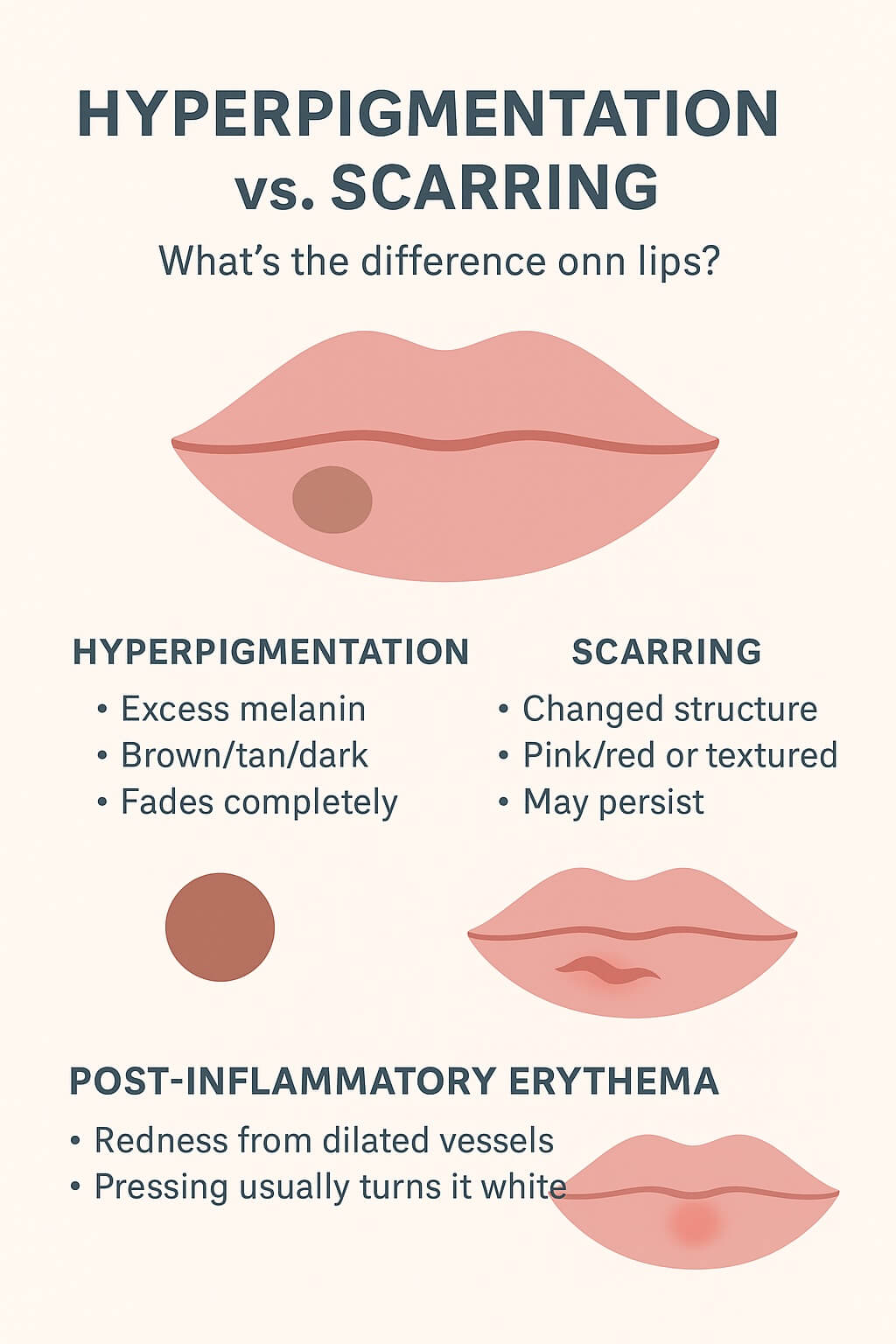
Determining whether you’re dealing with PIH, PIE, or structural scarring affects treatment choices. Pressing on the discolored area provides one clue: if the redness temporarily blanches (turns white) with pressure, it’s likely PIE from blood vessels. If the color remains unchanged with pressure, it’s more likely PIH or structural scarring.
Combined presentations occur frequently, with structural scarring accompanied by both PIE and PIH. Treating all components requires a comprehensive approach addressing inflammation, pigmentation, and scar remodeling. Sequential treatments targeting different aspects often work better than trying to address everything simultaneously.
How do you know if a lip scar needs medical evaluation?
Changing appearance after initial healing suggests something beyond simple scar maturation. Scars should gradually improve over time, becoming less red, flatter, and softer. If a scar becomes more prominent, develops raised areas, or shows increasing redness months after formation, medical evaluation is warranted.
Persistent pain, tenderness, or unusual sensations around a healed scar require assessment. Normal scars may feel slightly different from surrounding tissue but shouldn’t cause ongoing discomfort. Pain suggests possible infection, nerve involvement, or other complications.
Unusual texture including very firm, raised areas may indicate hypertrophic scarring or keloid formation. While rare on lips, these problematic scar types require medical treatment. Early intervention improves outcomes, making prompt evaluation important if you notice concerning changes.
Scars growing beyond the original injury site definitely require medical attention. This expansion suggests keloid formation, which requires specialized treatment to prevent continued growth. Keloids on lips are extremely uncommon but should be treated quickly if they develop.
Associated symptoms including fever, increasing pain, drainage, or swelling suggest infection. Even healed scars can develop infections if bacteria colonize the altered tissue. This requires antibiotic treatment and possibly other interventions.
Scars significantly affecting function including difficulty with eating, speaking, or lip movement warrant professional assessment. While cosmetic concerns motivate most scar treatments, functional impairment justifies more aggressive intervention and often coverage by insurance.
What realistic timeline should you expect for scar improvement?
The first three months after scar formation show the most dramatic changes. Initial intense redness gradually fades as acute inflammation resolves. The scar may still appear quite prominent at three months, but comparison to the immediate post-injury appearance usually shows significant improvement.
Between three and six months, the scar continues improving but changes become more subtle. This intermediate phase frustrates people who expected linear progression. Instead, improvement often plateaus for periods before resuming. Patience during these plateaus prevents abandoning effective treatments prematurely.
Six to twelve months represents the typical timeframe for near-complete scar maturation. Most scars reach their final appearance within this window, though subtle improvements may continue. The five-month mark where you currently find yourself falls in the middle of active improvement, meaning significant natural fading likely remains ahead.
Some scars, particularly those involving significant inflammation or darker skin tones, continue improving for up to two years. Post-inflammatory erythema can persist for extended periods before finally resolving. Don’t assume your scar’s current appearance represents the final outcome if you’re still within the two-year maturation window.
Treatment effects also require time to manifest. Silicone therapy typically requires three months of consistent use before showing significant results. Professional treatments like lasers need multiple sessions spaced weeks apart. Topical ingredients accumulate benefits over months rather than days.
Can stress or lack of sleep affect how lip scars heal?
Psychological stress significantly impacts wound healing through multiple mechanisms. Stress hormones including cortisol suppress immune function and slow tissue repair. The inflammatory effects of chronic stress perpetuate the redness and visibility of healing scars. Managing stress through relaxation techniques, exercise, or therapy supports optimal healing.
Sleep deprivation impairs virtually every aspect of healing. Growth hormone released during deep sleep promotes tissue repair and collagen synthesis. Immune function declines with inadequate sleep, increasing inflammation and slowing recovery. Even a few nights of poor sleep measurably affects wound healing and scar maturation.
The circadian rhythm influences skin repair processes, with peak regeneration occurring during nighttime hours. Disrupted sleep patterns interfere with these natural cycles, preventing optimal healing. Consistent sleep schedules support the circadian regulation of skin repair.
Stress and sleep problems often occur together, creating compounding effects on healing. Someone dealing with stressful circumstances often experiences disrupted sleep, while poor sleep increases stress vulnerability. Breaking this cycle through improved sleep hygiene and stress management supports better healing outcomes.
The visibility of facial scars can itself become a source of stress, creating a feedback loop. Self-consciousness about appearance increases anxiety, which slows healing, which maintains the visible scar, which perpetuates stress. Cognitive approaches addressing this cycle may improve both psychological wellbeing and physical healing.