The belief that addiction cravings never disappear is one of the most widespread and frightening myths in recovery circles. This idea has left countless people feeling hopeless about their chances of truly overcoming addiction. But what does science actually tell us about long-term recovery and whether cravings persist forever?
Do addiction cravings actually last forever?
The short answer is no, addiction cravings do not necessarily last forever. Generally, cravings are most intense in the early days of abstinence and tend to diminish over time as the brain adjusts to functioning without the substance. Studies suggest that the first 90 days of recovery are crucial, as the brain undergoes significant changes during this period.
The idea that cravings never go away comes from traditional recovery models that view addiction as a lifelong disease. However, modern neuroscience and addiction research paint a more hopeful picture. Different models of addiction and recovery exist, and not all subscribe to the belief that addictions necessarily last a lifetime.
While some people do experience occasional cravings even years into recovery, many others report that their cravings fade significantly or disappear entirely. The key is understanding that recovery is highly individual, and everyone’s experience is different.
How long do cravings typically last in early recovery?
The intensity and duration of cravings vary greatly depending on the substance, how long someone used it, their individual brain chemistry, and their recovery support system. Research from the National Library of Medicine reports that cravings typically last anywhere from a few minutes to 30 minutes when they occur.
In terms of the overall timeline, for many people, cravings may persist for weeks or months but typically become more manageable with time. The first few weeks are usually the most challenging, as the brain is still adjusting to functioning without the substance.
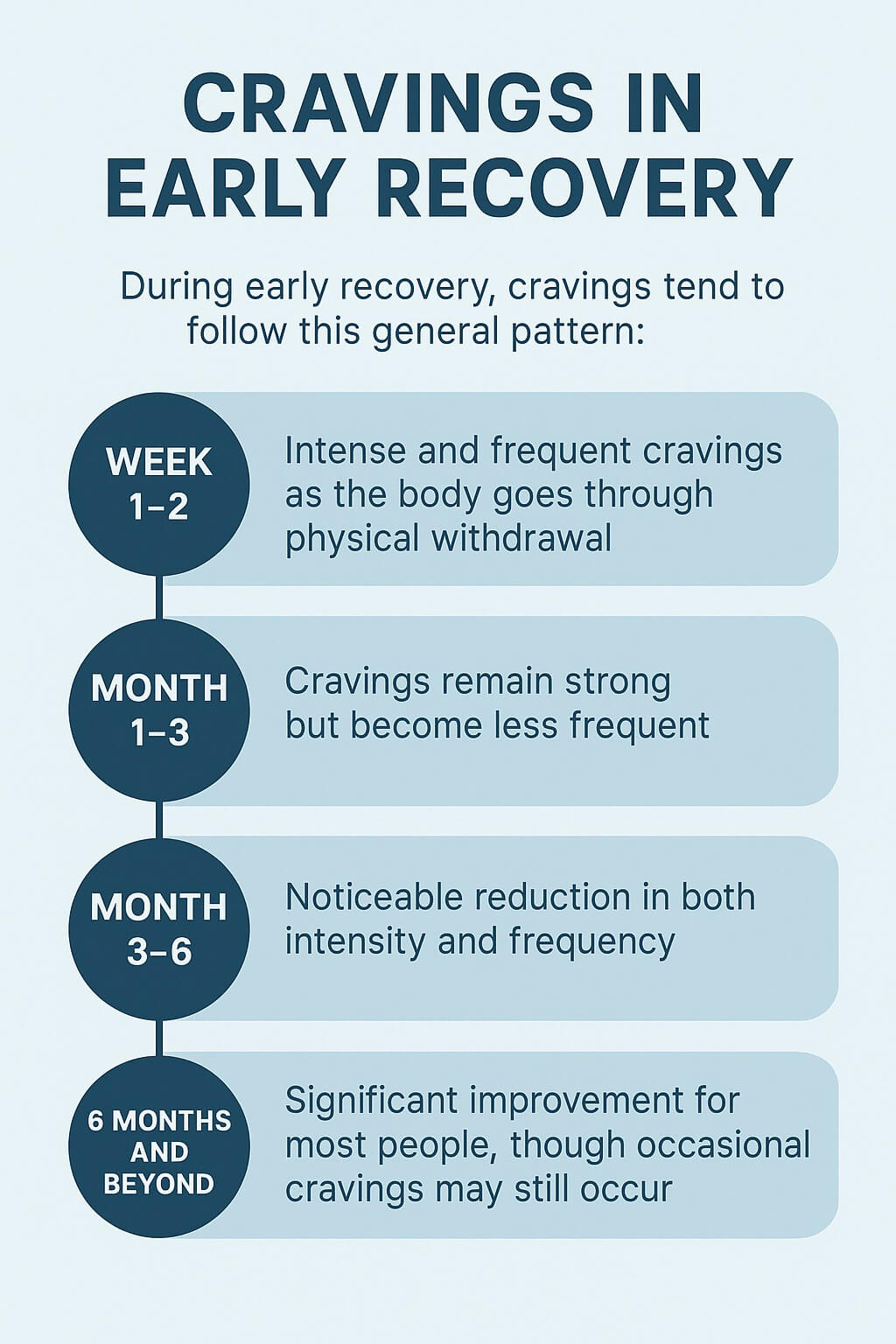
During early recovery, cravings tend to follow this general pattern:
- Week 1-2: Intense and frequent cravings as the body goes through physical withdrawal
- Month 1-3: Cravings remain strong but become less frequent
- Month 3-6: Noticeable reduction in both intensity and frequency
- 6 months and beyond: Significant improvement for most people, though occasional cravings may still occur
What happens to your brain during long-term recovery?
Understanding what happens in the brain during recovery helps explain why cravings diminish over time. Studies indicate that at least some addiction-induced brain changes can improve and possibly reverse with months of abstinence.
The brain has remarkable healing abilities called neuroplasticity. When someone stops using addictive substances, several important changes occur:
The reward pathways that were hijacked by drugs or alcohol begin to reset themselves. Areas of the brain responsible for decision-making, which were impaired during active addiction, start to function better. The brain’s natural production of feel-good chemicals like dopamine gradually normalizes.
This healing process takes time, which is why early recovery can be so challenging. But as the brain heals, the intense cravings that characterize early recovery typically fade.
Do cravings get easier as you get older?
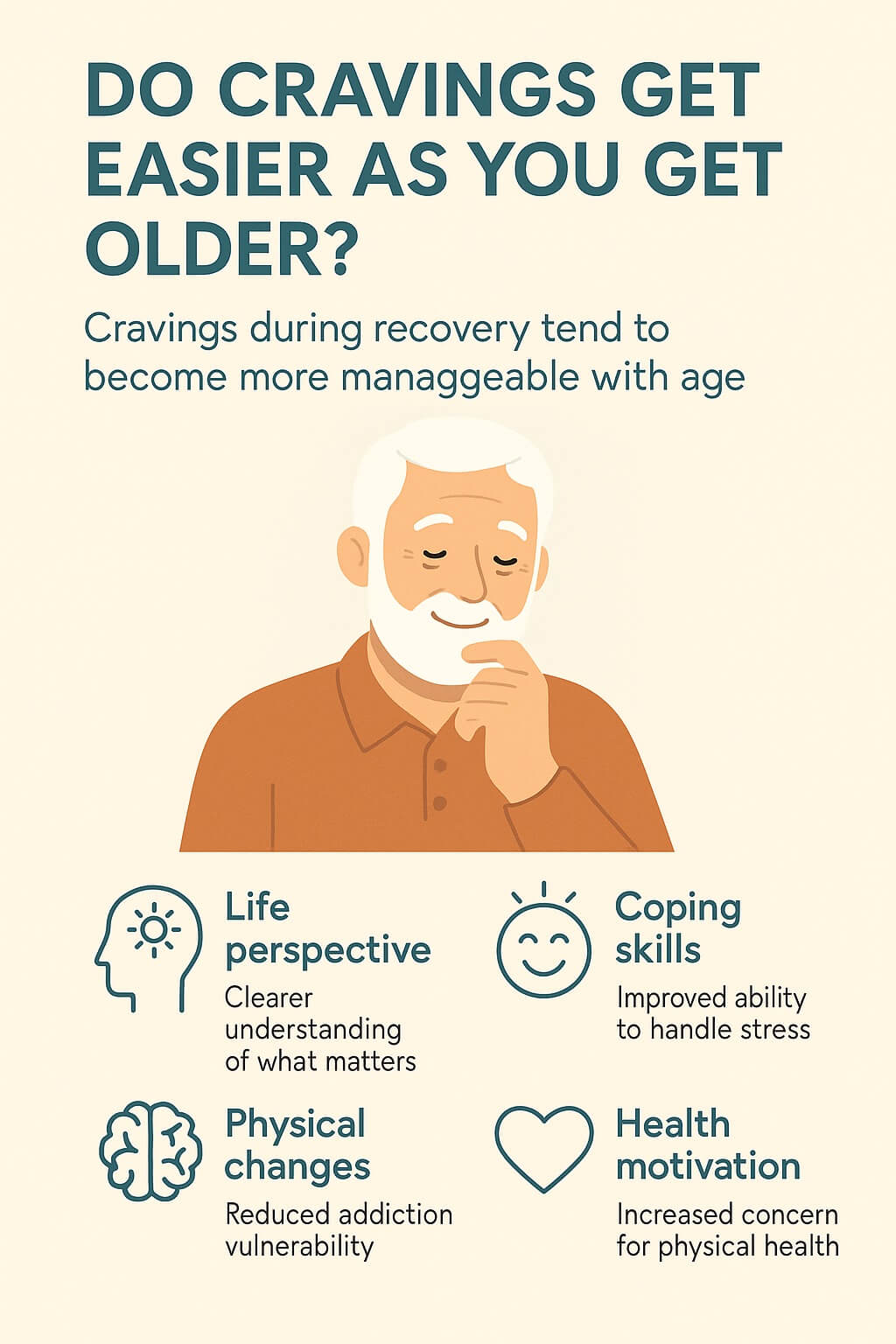
Age can play a significant role in how people experience cravings during recovery. Many people in their 50s and beyond report that cravings become much more manageable or even disappear entirely as they age.
Several factors contribute to this improvement with age:
Life perspective changes: Older adults often have a clearer understanding of what truly matters in life, making it easier to resist cravings when they do occur.
Better coping skills: Years of life experience typically provide people with more effective ways to handle stress and difficult emotions without turning to substances.
Physical changes: The brain continues to change with age, and some of these changes may actually help reduce addiction vulnerability.
Social factors: Older adults often have more stable living situations, stronger support networks, and fewer high-risk social situations that trigger cravings.
Health motivation: Physical health concerns that come with age can provide powerful motivation to stay clean and make cravings feel less appealing.
Why do some people still experience cravings after years of sobriety?
While many people find that cravings fade significantly over time, others do continue to experience them occasionally even after years of recovery. This doesn’t mean their recovery has failed or that they’re doing something wrong.
Several factors can contribute to persistent cravings:
Trauma and mental health: Unaddressed trauma or co-occurring mental health conditions can keep the brain in a state where cravings are more likely to occur.
Stress and life changes: Major life stressors, even positive ones like getting married or starting a new job, can sometimes trigger cravings.
Environmental triggers: Being around people, places, or situations associated with past substance use can awaken old neural pathways.
Physical health: Certain medical conditions or medications can affect brain chemistry in ways that make cravings more likely.
Individual brain differences: Some people’s brains may be more prone to maintaining addiction-related neural pathways than others.
What’s the difference between a craving and a passing thought?
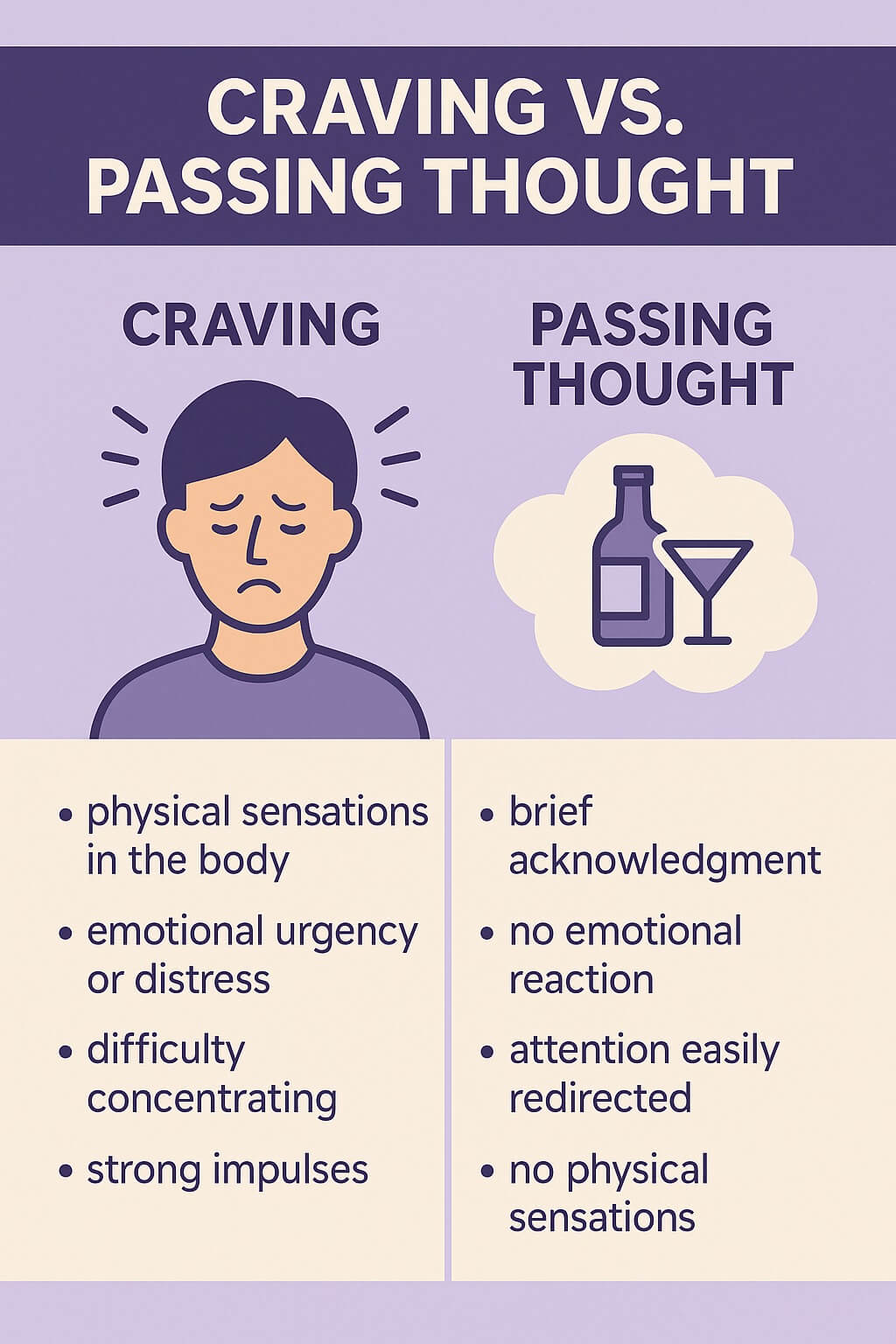
Many people in long-term recovery learn to distinguish between true cravings and fleeting thoughts about their substance of choice. This distinction is important because it affects how people respond to these experiences.
A true craving typically involves:
- Physical sensations in the body
- Emotional urgency or distress
- Difficulty concentrating on other things
- Strong impulses to seek out the substance
A passing thought, on the other hand, might involve:
- Brief mental acknowledgment of the substance
- No significant emotional reaction
- Ability to easily redirect attention elsewhere
- No physical sensations or urgent impulses
Many people in long-term recovery find that what they once experienced as intense cravings eventually become nothing more than occasional passing thoughts that don’t cause distress or create any real temptation to use.
Can certain substances cause longer-lasting cravings than others?
Different substances do seem to create different patterns of cravings during recovery. Understanding these differences can help set realistic expectations for the recovery process.
Alcohol: Many people find that alcohol cravings fade relatively quickly, often within the first few months of sobriety, especially with proper support.
Nicotine: Smoking cessation often involves intense cravings for the first few weeks, but most people report significant improvement within 3-6 months.
Stimulants: Drugs like cocaine or methamphetamine can create longer-lasting changes in the brain’s reward system, potentially leading to more persistent cravings.
Opioids: While physical withdrawal from opioids is relatively short, some people experience what’s called “post-acute withdrawal syndrome” that can include cravings for months or even years.
Sugar: Many people don’t realize that sugar can be genuinely addictive, but cravings for sugary foods often diminish significantly within a few weeks of reducing intake.
The key point is that regardless of the substance, cravings typically do improve over time with consistent abstinence and appropriate support.
What role does support play in reducing cravings over time?
The quality and consistency of support during recovery plays a crucial role in how quickly and completely cravings fade. Consistent engagement in supportive therapies helps make cravings more manageable over time.
Different types of support can help reduce cravings:
Professional therapy: Working with addiction counselors, therapists, or psychiatrists can help address underlying issues that fuel cravings.
Peer support groups: Whether traditional 12-step programs or alternative recovery communities, connecting with others who understand the experience can be invaluable.
Family and friends: Having supportive relationships with people who understand your recovery journey makes a significant difference.
Lifestyle changes: Regular exercise, healthy eating, adequate sleep, and stress management all contribute to brain healing and craving reduction.
Medical support: Some people benefit from medications that can help reduce cravings, especially in early recovery.
Are there warning signs that cravings might return?
Even people who have been free from cravings for years sometimes experience their return during particularly stressful or challenging periods. Recognizing early warning signs can help people take action before cravings become overwhelming.
Common warning signs include:
- Increased stress or anxiety levels
- Changes in sleep patterns or appetite
- Isolation from supportive people or activities
- Romantic thinking about past substance use
- Neglecting self-care practices that support recovery
- Major life changes, even positive ones
- Physical illness or new medications
- Spending time in high-risk environments
The good news is that even when cravings do return, they’re often less intense and shorter-lived than they were in early recovery, and people typically have better coping skills to deal with them.

What strategies work best for managing occasional cravings?
For people who do experience occasional cravings even in long-term recovery, having effective coping strategies is essential. The strategies that work best often depend on individual preferences and circumstances.
The “urge surfing” technique: This involves riding out the craving like a wave, knowing it will peak and then subside without taking action.
Distraction and redirection: Engaging in activities that occupy both mind and body can help cravings pass more quickly.
Mindfulness and meditation: These practices help people observe cravings without being controlled by them.
Social connection: Reaching out to supportive friends, family, or other people in recovery can provide immediate relief and perspective.
Physical activity: Exercise can help reduce craving intensity and provide a healthy outlet for stress and emotions.
Professional support: Having a therapist or counselor to call during difficult times can make all the difference.
How accurate are the statistics about lifelong addiction?
According to a landmark 2024 report from the Recovery Research Institute, an estimated 29.3 million U.S. adults (11.1%) report having resolved a significant substance use problem. This statistic is important because it shows that millions of people have successfully overcome addiction.
The traditional view that addiction is always a lifelong condition may not reflect the full picture of recovery experiences. Many people who overcome addiction never seek formal treatment or participate in support groups, so their stories of successful recovery often go unrecounted.
Recovery from addiction is a lifelong process in the sense that people need to continue making healthy choices, but this doesn’t necessarily mean struggling with cravings forever. For many people, staying in recovery becomes as natural as any other healthy habit after sufficient time has passed.
What does the research say about different recovery approaches?
Different approaches to recovery can influence how people experience cravings over time. Research on the science of addiction and the treatment of substance use disorders has led to the development of research-based methods that help people stop using drugs and resume productive lives.
Some people find success with traditional approaches that emphasize the chronic nature of addiction and the need for lifelong vigilance. Others benefit from newer approaches that focus on brain healing, personal growth, and the possibility of moving beyond addiction entirely.
The most important factor is finding an approach that works for each individual. What helps one person may not help another, and flexibility in treatment approaches leads to better outcomes overall.
Is it possible to be completely free from addiction thoughts?
Many people wonder whether it’s realistic to hope for a life completely free from thoughts about their former addiction. The answer varies from person to person, but many individuals in long-term recovery do report reaching a point where they rarely or never think about their substance of choice.
This freedom typically develops gradually:
- Year 1: Frequent thoughts and cravings are normal
- Years 2-3: Thoughts become less frequent and less intense
- Years 5+: Many people report rarely thinking about their former addiction
- Decades later: Some people find that their former addiction becomes just a part of their history rather than an ongoing struggle
The key is not to judge yourself if thoughts or cravings do occur, even years into recovery. Having an occasional thought doesn’t mean you’re at risk of relapse or that your recovery isn’t solid.
What hope is there for people struggling with persistent cravings?
For anyone struggling with persistent cravings, it’s important to know that hope is justified. Just as cardiovascular disease damages the heart and alters its functioning, addiction changes the brain and impairs the way it works, but the brain has remarkable healing abilities.
Even if cravings persist longer than hoped, this doesn’t mean recovery is impossible or that life can’t be fulfilling. Many people learn to live successful, happy lives despite occasional cravings. The cravings often become background noise rather than the overwhelming force they were in early recovery.
New treatments and approaches are constantly being developed, and what doesn’t work today might work tomorrow. The field of addiction treatment continues to evolve, offering new hope for people who haven’t found relief through traditional methods.
The bottom line about addiction cravings and recovery
The belief that addiction cravings never go away is not supported by the experiences of many people in long-term recovery or by current scientific understanding of brain healing. While everyone’s recovery journey is different, the majority of people find that cravings do diminish significantly or disappear entirely over time.
The key factors that influence whether cravings fade include the individual’s overall health, the quality of their support system, how they manage stress and emotions, and their commitment to recovery-supporting activities and relationships.
For people currently struggling with addiction or early in recovery, it’s important to know that the intense cravings of early sobriety are not necessarily a permanent feature of life. With time, support, and patience, most people find that recovery becomes easier rather than harder as the years go by.
Recovery is not about white-knuckling through intense cravings for the rest of your life. For most people, it’s about healing, growing, and eventually reaching a place where the addiction becomes a part of their past rather than a constant presence in their daily experience.