Mixing skincare acids with retinol is one of the most common questions in skincare. Many people want to combine multiple active ingredients to get faster results for acne, wrinkles, and dark spots. But is it safe to use retinol with AHA and BHA together? Let’s break down everything you need to know.
Is it dangerous to mix retinol with AHA and BHA?
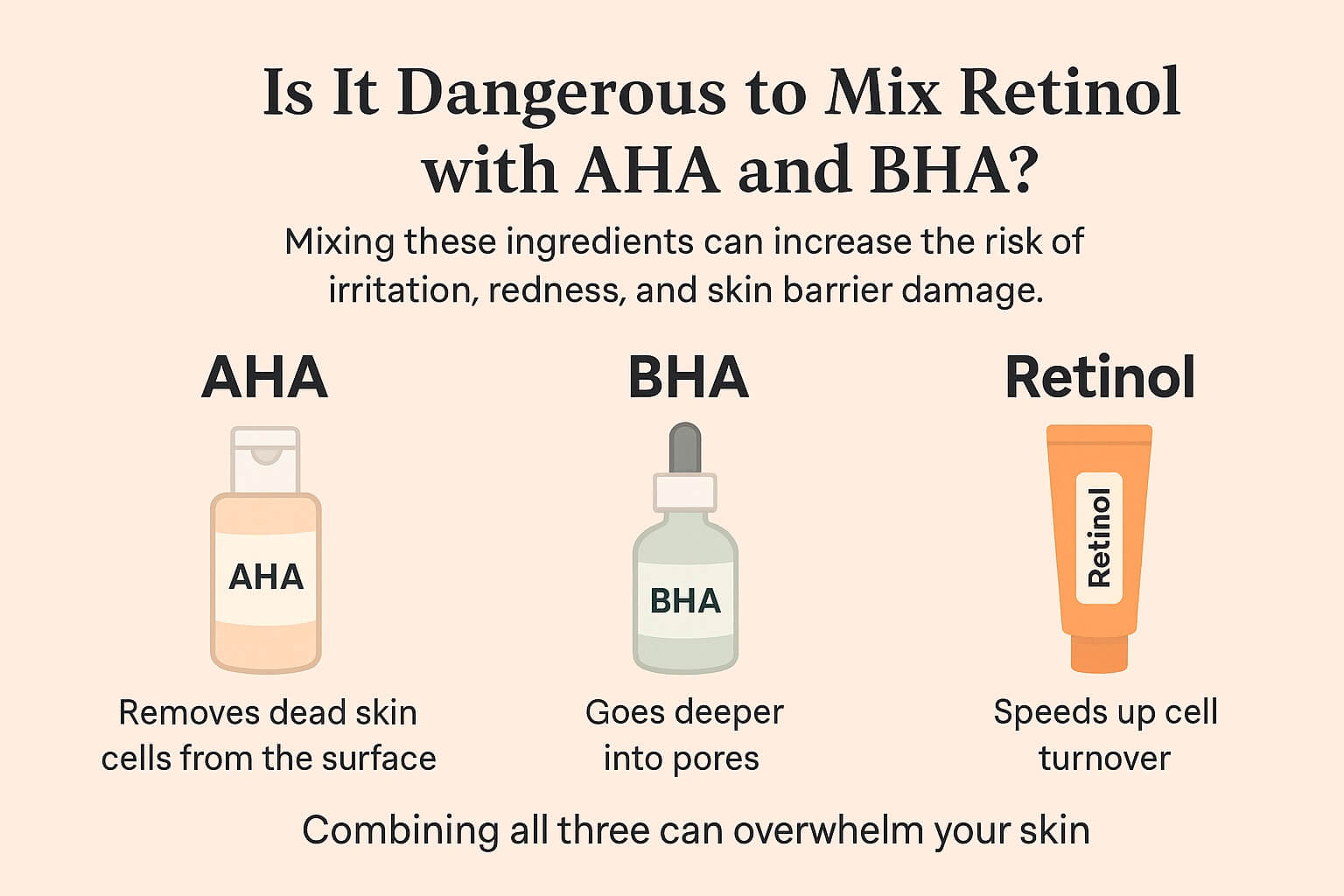
Yes, mixing retinol with AHA and BHA can be dangerous if not done properly. These ingredients can make your skin more sensitive and increase the risk of irritation, redness, and damage to your skin barrier. When used together without proper spacing, they can cause more harm than good.
AHA (alpha hydroxy acids) like glycolic acid and mandelic acid remove dead skin cells from the surface. BHA (beta hydroxy acid) like salicylic acid goes deeper into pores. Retinol speeds up cell turnover and builds collagen. When you combine all three, your skin gets hit with multiple powerful ingredients at once, which can overwhelm it.
What happens when you layer multiple acids with retinol?
When you layer acids with retinol, several things happen to your skin:
Your skin barrier becomes weaker because acids strip away protective layers. This makes retinol penetrate much deeper than it should, which can cause severe irritation. The combination also increases your skin’s sensitivity to sunlight, making sunburn and dark spots more likely.
Many people experience what’s called “overexfoliation syndrome” – where their skin becomes red, flaky, and more sensitive over time. Your skin might look good at first, but problems often show up after weeks or months of use.
Why do skincare brands warn against mixing retinol with acids?
Skincare brands include warnings because they’ve seen patterns of skin damage from these combinations. The warnings aren’t just being overly cautious – they’re based on real customer complaints and dermatologist feedback.
When companies test their products, they test them alone, not with other strong ingredients. They can’t guarantee safety or effectiveness when you mix their product with other actives. Legal liability is also a concern – if someone damages their skin by mixing products, the company could be held responsible.
Can I use retinol and acids on the same night safely?
Generally, it’s not recommended to use retinol and acids on the same night, especially if you’re new to these ingredients. Even experienced users should be very careful with this combination.
If you absolutely want to use them together, try the “sandwich method” – apply a gentle moisturizer first, then your acid or retinol, then another layer of moisturizer. This can help buffer the strength. However, alternating nights is much safer for most people.
Start by using acids 2-3 times per week and retinol 2-3 times per week on different nights. Once your skin adjusts over several months, some people can tolerate using them closer together.
What are the signs that you’re using too many actives?
Your skin will tell you when you’re overdoing it with active ingredients. Watch for these warning signs:
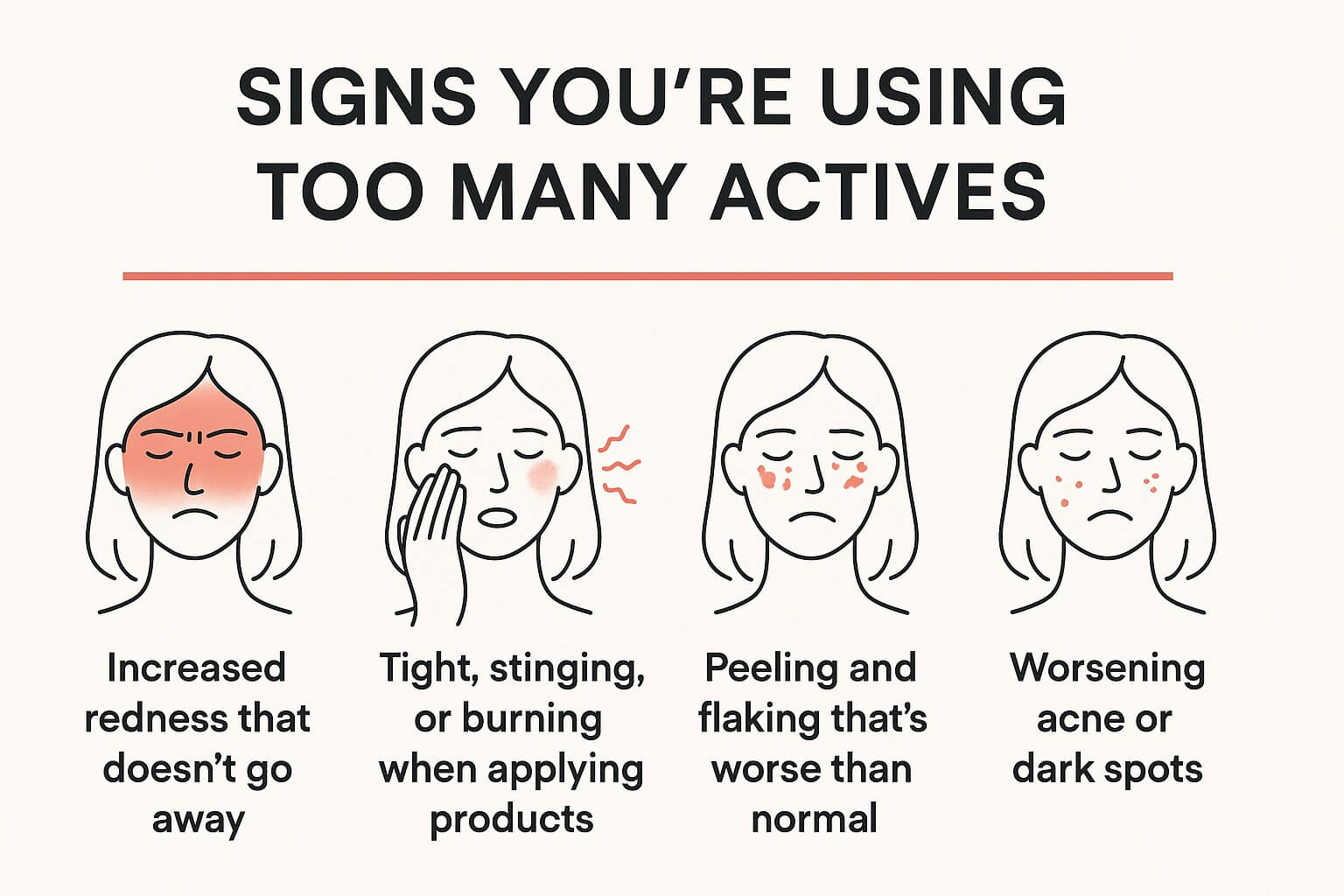
Increased redness that doesn’t go away, especially around your nose, cheeks, and forehead. Your skin might feel tight, stinging, or burning when you apply products, even gentle ones like moisturizer. Peeling and flaking that’s worse than normal, particularly if it’s accompanied by irritation.
Your skin might become more sensitive to products you used to tolerate well. Some people notice their acne getting worse instead of better, or new breakouts in areas where they don’t usually get pimples. Dark spots might actually get darker due to inflammation.
How long should you wait between applying different actives?
If you want to use multiple actives in the same routine, timing matters. Wait at least 10-15 minutes between applying different products to let each one absorb properly.
For acids, let your skin’s pH return to normal before applying the next product. This usually takes about 15-30 minutes. With retinol, you want your skin completely dry before application to prevent it from penetrating too deeply.
Many dermatologists recommend using acids in the morning and retinol at night, or alternating them on different days entirely. This gives your skin time to recover between applications.
What’s the safest way to combine retinol with acids?
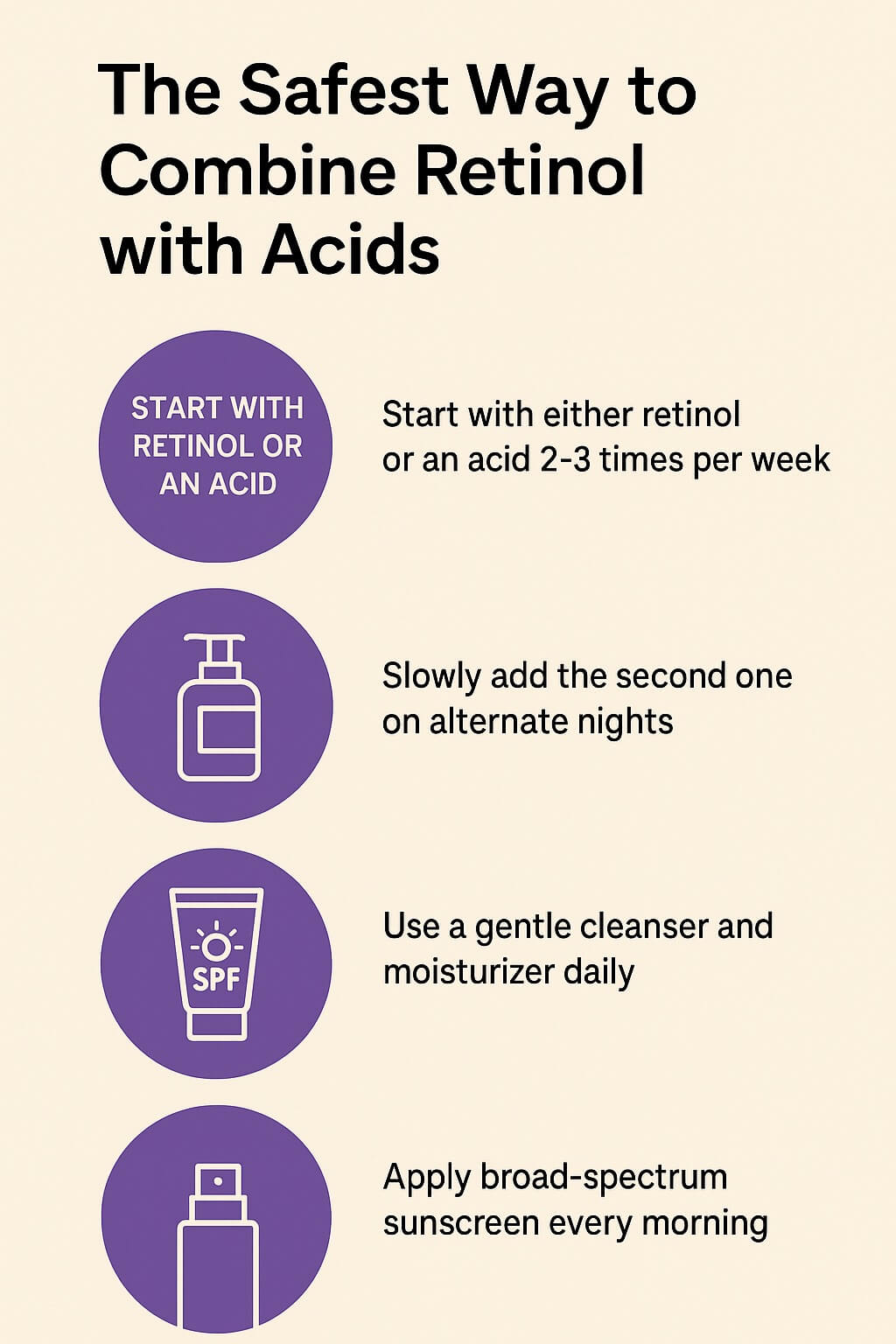
The safest approach is to introduce one active ingredient at a time and build up slowly. Start with either retinol or an acid (not both) and use it 2-3 times per week for at least a month.
Once your skin tolerates the first ingredient well, you can slowly add the second one on alternate nights. For example, use retinol on Monday, Wednesday, Friday and acids on Tuesday, Thursday, Saturday. Take Sunday off to let your skin rest.
Always use a gentle cleanser, moisturizer, and broad-spectrum sunscreen daily when using any actives. These basics help protect and repair your skin barrier.
Which combinations are most likely to cause problems?
Some ingredient combinations are riskier than others. High-concentration glycolic acid (10% or higher) with retinol is particularly harsh. Combining multiple acids like AHA, BHA, and mandelic acid with retinol creates too much exfoliation.
Sensitive areas like around your eyes, corners of your nose, and neck are more likely to react badly to active combinations. People with naturally sensitive skin, rosacea, or eczema should be extra careful with any active ingredients.
Certain ingredients like vitamin C can also interact poorly with retinol and acids, making the combination even more irritating.
When should you stop using multiple actives together?
Stop using multiple actives immediately if you experience severe stinging, burning, or pain when applying products. Persistent redness that lasts more than a few hours after application is another red flag.
If your skin becomes extremely dry, tight, or starts peeling excessively, take a break from all actives for at least a week. Sometimes your skin needs time to heal before you can resume any active ingredients.
Worsening of your original skin concerns (more acne, darker spots, increased wrinkles) can indicate that the combination is causing inflammation rather than helping.
What should you do if you’ve damaged your skin barrier?
If you’ve overdone it with actives, focus on healing your skin barrier first. Stop all active ingredients immediately and switch to a very simple routine with just gentle cleanser, moisturizer, and sunscreen.
Look for moisturizers with ingredients like ceramides, niacinamide, or hyaluronic acid that help repair the skin barrier. Avoid anything with fragrance, alcohol, or other potential irritants.
It can take 2-4 weeks for your skin barrier to fully recover. Don’t rush back into using actives – give your skin time to heal completely before slowly reintroducing one ingredient at a time.
Are there safer alternatives to mixing retinol with acids?
Yes, there are gentler ways to address multiple skin concerns without combining harsh actives. Consider using products specifically formulated to combine these ingredients safely – they’re usually buffered to reduce irritation.
You can also focus on one main concern at a time. Use retinol for anti-aging for a few months, then switch to acids for texture issues, rather than trying to tackle everything at once.
Gentler alternatives include bakuchiol (a plant-based retinol alternative), lactic acid (milder than glycolic), or lower concentrations of actives used less frequently.
What do dermatologists recommend for combining actives?
Most dermatologists prefer a “less is more” approach with active ingredients. They typically recommend mastering one active ingredient before adding another, and using the lowest effective concentration rather than the strongest available.
Professional treatments like chemical peels or prescription retinoids are often safer and more effective than trying to create your own intensive routine at home. A dermatologist can customize a routine based on your specific skin type and concerns.
If you want to use multiple actives, consider seeing a dermatologist or licensed esthetician who can guide you through the process safely and monitor your skin’s response.
The bottom line on mixing skincare actives
While it’s tempting to use multiple powerful skincare ingredients together for faster results, this approach often backfires. Your skin barrier is delicate, and overloading it with acids and retinol can cause more problems than it solves.
The safest approach is patience and consistency. Use one active ingredient at a time, build up slowly, and always prioritize your skin’s health over quick results. Remember that damaged skin often looks worse than the original problems you were trying to fix.
When in doubt, less is more in skincare. A simple, consistent routine with one or two well-chosen active ingredients will give you better long-term results than an aggressive multi-active approach that damages your skin barrier.