If you’ve ever had stiff muscles, tight muscles, or lingering injuries, you may have thought of getting a deep tissue massage gun. These handheld devices, which are often touted as must-haves for athletes and fitness fans, offer to give percussive therapy to help with pain and speed up recuperation. But because they cost between $50 and $600, it’s only logical to ask: Are deep tissue massage guns worth the money or just a fad? We’ll talk about the pros and cons of massage guns and other options in this article to help you determine if one should be in your recovery toolkit.
What is a Deep Tissue Massage Gun?
A deep tissue massage gun is a small device that uses quick, rhythmic vibrations to work on muscles and connective tissues. These guns send high-frequency pulses—usually 20 to 50 per second—into deeper layers of muscle, which is different from regular massage equipment. They usually come with different attachments (such round, flat, or pointed heads) with speed settings that may be changed to change the intensity. According to a 2023 fitness poll, 25% of those who frequent to the gym own a massage gun, and 60% of those people say they use it mostly for recuperation.
People who run, lift weights, or don’t move around much appreciate massage guns because they offer benefits like less muscle pain, better circulation, and faster recovery. But do they really live up to the hype, or are they merely a fad that costs a lot of money?
Benefits of Deep Tissue Massage Guns
Massage guns have gained traction for good reason. Here are the key benefits, backed by science and user experiences:
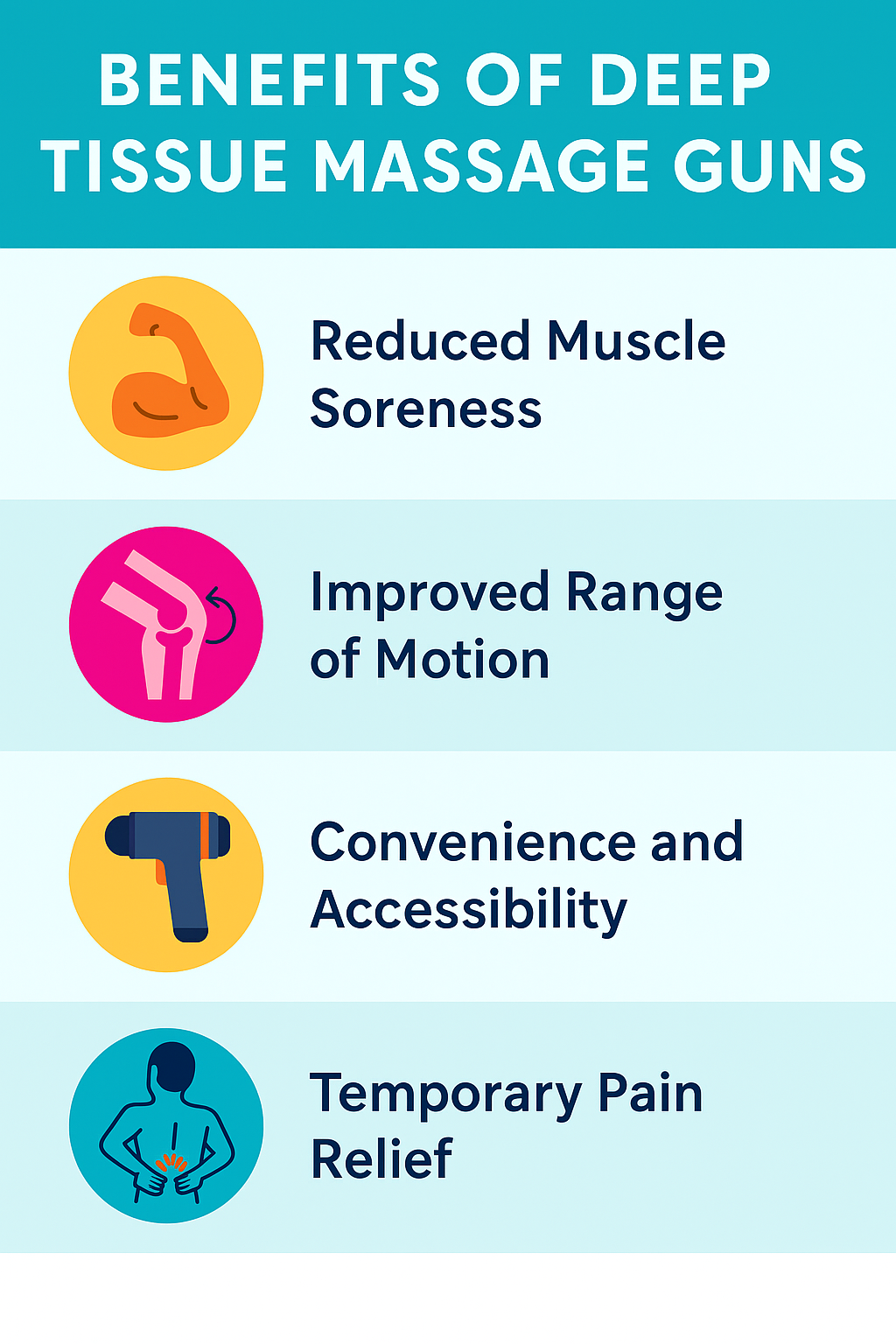
1. Reduced Muscle Soreness
A 2021 study in the Journal of Sports Science & Medicine found that percussive therapy reduced delayed-onset muscle soreness (DOMS) by up to 30% when used post-workout. Massage guns target tight muscles, helping to flush out lactic acid and improve blood flow.
-
Who Benefits: Runners, cyclists, or anyone with frequent muscle soreness from exercise.
2. Improved Range of Motion
By loosening tight muscles and fascia, massage guns can enhance flexibility. A 2020 study in Physical Therapy in Sportnoted a 10-15% improvement in joint mobility after regular percussive therapy.
-
Who Benefits: People with stiff joints or conditions like sciatica or frozen shoulder.
3. Convenience and Accessibility
Unlike foam rollers or lacrosse balls, massage guns require minimal effort. You can target hard-to-reach areas like the back or shoulders without contorting your body. A 2022 online fitness discussion highlighted that users found massage guns easier to use than foam rollers, especially for quick sessions.
-
Who Benefits: Busy individuals or those with limited mobility.
4. Temporary Pain Relief
Massage guns stimulate nerve endings, which can override pain signals—a phenomenon called the gate control theory of pain. This makes them effective for temporary relief from chronic issues like lower back pain or plantar fasciitis.
-
Who Benefits: Office workers with posture-related pain or athletes with minor injuries.
Benefits Overview
|
Benefit |
Description |
Best For |
|---|---|---|
|
Reduced Soreness |
Decreases DOMS and lactic acid buildup. |
Athletes, post-workout recovery |
|
Improved Mobility |
Enhances flexibility and joint range of motion. |
Stiff joints, chronic tightness |
|
Convenience |
Easy to use, targets hard-to-reach areas. |
Busy or less mobile individuals |
|
Temporarily reduces chronic or injury-related pain. |
Back pain, plantar fasciitis |
Drawbacks of Deep Tissue Massage Guns
While massage guns have their perks, they’re not a cure-all. Here are the main drawbacks to consider:
1. High Cost
Prices range from $50 for budget models to $600 for high-end devices. A 2023 consumer report noted that 30% of users regretted spending on premium models, as cheaper alternatives often performed similarly.
-
Concern: The cost may not justify the benefits, especially if you rarely use it.
2. Limited Scientific Evidence
While some studies support massage guns, the evidence is mixed. A 2022 review in Frontiers in Physiology found that percussive therapy is no more effective than foam rolling or stretching for long-term recovery. The benefits may be partly placebo-driven.
-
Concern: They don’t address underlying issues like poor movement patterns or stress.
3. Risk of Overuse or Injury
Using a massage gun too aggressively or on sensitive areas (e.g., joints, bones, or inflamed tissues) can cause bruising or worsen injuries. A 2023 fitness forum post warned that high settings on the quads led to muscle seizures during running.
-
Concern: Improper use can do more harm than good, especially for beginners.
4. Not a Replacement for Professional Care
Massage guns can’t replicate the expertise of a physical therapist or massage therapist. For serious injuries, like stress fractures or tendonitis, professional intervention is essential.
-
Concern: Relying solely on a massage gun may delay proper treatment.
Massage Guns vs. Alternatives
To decide if a massage gun is worth it, compare it to other recovery tools like foam rollers, lacrosse balls, and professional massages. Here’s a breakdown:
|
Tool |
Pros |
Cons |
Cost |
|---|---|---|---|
|
Massage Gun |
Convenient, targets deep tissue, customizable settings. |
Expensive, risk of overuse, mixed evidence. |
$50-$600 |
|
Foam Roller |
Affordable, effective for large muscle groups, promotes deep release. |
Requires effort, less precise, hard to target small areas. |
$10-$50 |
|
Lacrosse Ball |
Cheap, great for trigger points, portable. |
Limited to small areas, requires manual pressure, less comfortable. |
$5-$15 |
|
Professional Massage |
Expert care, tailored to needs, addresses root causes. |
Costly, time-consuming, less frequent. |
$60-$150/session |
When to Choose a Massage Gun
A massage gun is a great option for people who want a simple, cheap, and self-directed way to relieve muscle pain, but you need think about when it will work best for you. If you want a tool to use at home often, a massage gun is the best choice because it lets you deal with tired or tight muscles right after workouts, long days at work, or doing the same thing over and over again, without having to make appointments with a professional. This is especially useful for athletes, fitness fans, or busy professionals who have muscle tension that keeps coming back and require a portable, easy-to-use device that fits into their routine, whether they’re at home or on the move. If you have chronic tightness or soreness but can’t afford to get professional massages, a massage gun is a good investment. Professional massages can cost $60 to $150 per session, but a good massage gun usually costs between $100 and $400 and pays for itself quickly. It can help you save money in the long run by helping you deal with problems like stiff shoulders, tight hamstrings, or lower back pain caused by bad posture or not moving enough. You should be willing to learn how to use a massage gun safely, though, because if you don’t, you could hurt yourself or get bruises. You should also be okay with doing research on how to use it safely, like starting with low speeds, avoiding bones or sensitive areas, and limiting sessions to 1–2 minutes per muscle group. Massage guns are good for keeping muscles healthy and easing mild to moderate pain, but they’re not a full replacement for professional massages, which use expert techniques and are relaxing. They also shouldn’t be used for acute injuries or certain medical conditions without a doctor’s advice. In the end, a massage gun can be a game-changer for managing muscle healing and keeping your mobility in your daily life if you value accessibility, cost, and are willing to utilise the equipment correctly.
When to Choose Alternatives
-
Foam Roller: Best for runners or weightlifters targeting large muscle groups like quads or hamstrings.
-
Lacrosse Ball: Ideal for pinpoint trigger point release, like in the glutes or shoulders. A 2021 running forum post praised lacrosse balls for deeper pressure than foam rollers.
-
Professional Massage: Necessary for complex issues like sciatica or post-injury rehabilitation.
How to Use a Deep Tissue Massage Gun Safely
If you decide to invest in a massage gun, proper use is key to maximizing benefits and avoiding harm. Follow these guidelines:
-
Start Low: Use the lowest speed setting and a round attachment for beginners. Gradually increase intensity as needed.
-
Target Muscles, Not Joints: Avoid bones, joints, or inflamed areas to prevent injury.
-
Limit Time: Spend 1-2 minutes per muscle group, as recommended by a 2023 sports therapy post on social media. Overuse can cause soreness.
-
Combine with Stretching: Use the gun before or after stretching to enhance mobility. A 2022 running forum suggested pairing it with calf stretches for plantar fasciitis relief.
-
Stay Hydrated: Drinking water post-session helps flush out toxins released during massage.
-
Consult a Professional: If you have conditions like Ehlers-Danlos Syndrome or chronic injuries, check with a doctor first.
Sample Recovery Routine
|
Day |
Activity |
|---|---|
|
Monday |
Massage gun (calves, quads), stretching |
|
Wednesday |
Foam rolling (hamstrings), yoga |
|
Friday |
Lacrosse ball (glutes), massage gun (back) |
|
Sunday |
Rest day, light stretching |
Are Massage Guns Worth It for You?
The worth of a massage gun relies on how you live, how much money you have, and how much you need to heal. A mid-range massage gun ($100–$200) could alter your life if you are active and have aching muscles but can’t get frequent massages. But if you have a limited budget or like to use your hands A fitness poll from 2022 indicated that 70% of those who used massage guns thought they were worth the money, but 20% stopped using them after a few months because they didn’t see consistent advantages.
Questions to Ask Yourself
-
Do I exercise frequently enough to justify the cost?
-
Am I willing to learn proper techniques to avoid misuse?
-
Would I use it regularly, or would it collect dust?
-
Can I achieve similar results with cheaper tools like a lacrosse ball?
Key Takeaways
-
Deep tissue massage guns reduce muscle soreness, improve mobility, and offer convenient at-home relief.
-
They’re expensive, with mixed scientific evidence, and carry risks if used improperly.
-
Alternatives like foam rollers and lacrosse balls are cheaper and effective for many users.
-
Safe use involves low settings, short sessions (1-2 minutes per area), and avoiding joints or bones.
-
Massage guns are worth it for frequent exercisers but may not suit everyone’s budget or needs.
Frequently Asked Questions
Are deep tissue massage guns safe for everyone?
Most people can use them safely, but avoid them if you have conditions like blood clots, fractures, or connective tissue disorders without medical approval. Start with low settings to test tolerance.
How often should I use a massage gun?
Use it 2-3 times per week, targeting each muscle group for 1-2 minutes. Daily use is fine for mild soreness, but avoid overusing high settings to prevent bruising.
Can a massage gun replace professional massages?
No, they complement but don’t replace professional care. Therapists can address underlying issues that guns can’t, like structural imbalances.
Are budget massage guns as good as premium ones?
Budget models ($50-$100) can be effective for casual use, but premium models offer better durability and stronger percussion. A 2023 forum post noted that cheap guns often fail within months.
Do massage guns help with chronic pain conditions?
They can provide temporary relief for conditions like sciatica or back pain but won’t cure underlying issues. Consult a doctor for chronic pain management.
If you are active or often have tight muscles, deep tissue massage guns can be a great way to ease pain and speed up recovery. But they aren’t for everyone because they are expensive, take a while to learn, and don’t have many long-term benefits. Before you spend a lot of money, try a foam roller or lacrosse ball to see if they work for you. If you decide to get a massage gun, get one in the middle price range, learn how to use it correctly, and stretch while you use it for the best effects. In the end, the best healing tool is one that fits your budget and lifestyle and that you will use often.