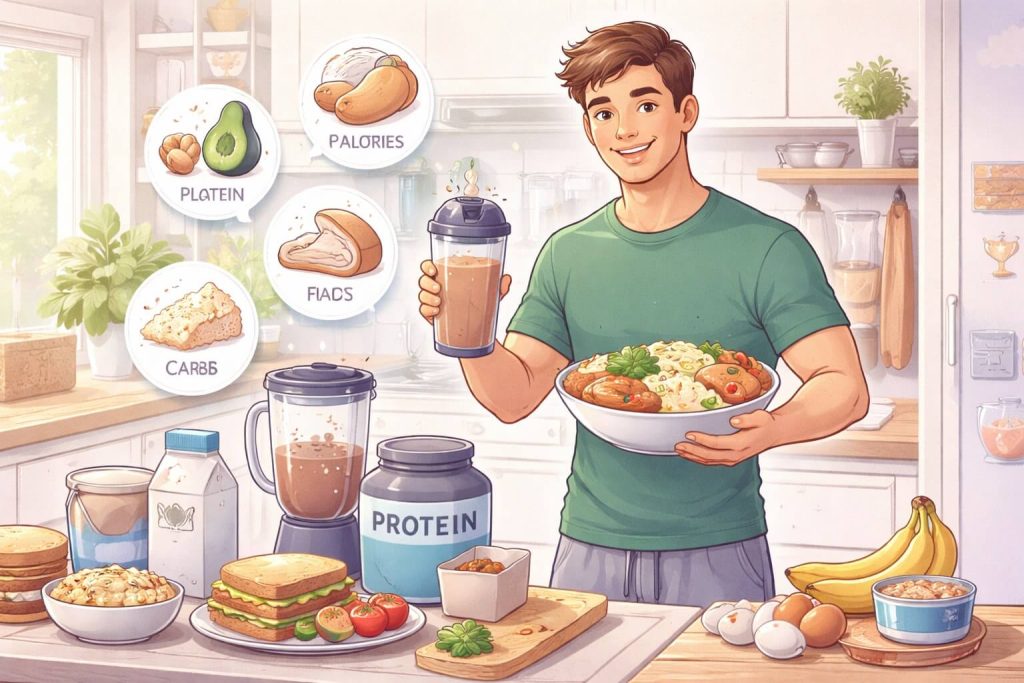
If you’ve stayed at the same low weight for years and want to gain while eating better (not just fast food), this guide is for you. Gaining weight is about eating more calories than your body burns — using real, cheap food instead of junk.
Most people who can’t gain weight eat too little without realizing it. The fix is consistent, bigger meals with calorie-rich foods that are easy to buy and prepare.
Step 1 – How Many Calories Do You Need?
You’ve been the same weight for years because you’re probably eating less than your body burns — even if it feels like a lot. This section explains the basic math in a super simple way so you know exactly how much to eat to start gaining.
Everyone’s body burns a different amount based on age, height, activity, and metabolism.
Rough starting point (adjust based on your situation):
- If you’re 18–30 years old, average height, light activity → maintenance is usually 2,000–2,600 calories per day
- To gain slowly (0.5–1 lb / 0.2–0.5 kg per week) → aim for 2,800–3,300 calories per day
Start with 3,000 calories. After 2–3 weeks:
- No gain on the scale? → Add 200–300 more calories (extra snack or bigger portion)
- Gaining too fast (>1 lb / 0.5 kg per week)? → Reduce a little
Use a free app like MyFitnessPal, FatSecret, or Cronometer for the first 1–2 weeks to see your real intake. Most beginners discover they were only eating 1,800–2,200 calories.
Step 2 – Best Cheap, High-Calorie Foods (Easy to Find Almost Anywhere)
Gaining weight doesn’t mean expensive protein shakes or fancy meats. The smartest way is using cheap, everyday foods that pack a ton of calories without making you feel stuffed. Here are the easiest, most budget-friendly ones almost anyone can buy.
Focus on foods that give lots of calories in small amounts so you don’t feel too full:
- Peanut butter (or any nut butter) – very high calories, cheap in jars
- Whole milk or full-fat milk powder – drink it plain or mix in food
- White rice or any rice – cheap, easy to cook big batches
- Eggs – affordable protein + fat (boil a lot at once)
- Bread (white or whole) + butter/margarine/peanut butter
- Bananas – cheap fruit with good calories
- Oats (instant or rolled) – cook with milk + peanut butter
- Potatoes – boil or mash, very filling and cheap
- Pasta or noodles – quick to make
- Cooking oil – add extra spoons to rice/pasta/eggs
- Canned fish (tuna/sardines in oil) or lentils/beans
- Yogurt (full-fat if possible)
- Honey, sugar, or molasses – small amounts for extra calories
Buy big packs: rice, oats, peanut butter, oil, eggs — they last long and cost less per calorie.
Step 3 – Easy Daily Eating Plan (~3,000–3,300 calories)
You don’t need to cook like a chef or spend hours in the kitchen. This plan gives you a full day of eating that hits around 3,000 calories — all with basic ingredients and almost no cooking skills. Just follow it and adjust as you go.
Eat 5–6 times a day so your stomach can handle it. No fancy cooking needed.
Breakfast (700–800 calories)
- 1 cup (about 100 g) dry oats cooked with 2–3 cups milk
- Stir in 2–3 big spoons peanut butter
- Slice 2 bananas on top
- Optional: 1 spoon honey or sugar (Boil oats in a pot or microwave – 5 minutes)
Morning Snack (400–500 calories)
- 3–4 slices bread with thick peanut butter
- 1 large glass (300 ml) whole milk
Lunch (800–900 calories)
- Big plate of cooked rice (2–3 cups)
- Add 1 can tuna/sardines in oil or 3–4 boiled eggs or beans
- Pour 1–2 spoons oil or butter on top
- Optional: boiled potato or simple veggies
Afternoon Snack (500 calories)
- Bowl of yogurt + 2 bananas sliced + 1–2 spoons peanut butter stirred in
- OR 3–4 slices bread + peanut butter + glass of milk
Dinner (800–900 calories)
- Pasta or noodles (100–120 g dry) with oil + garlic or sauce
- Add 2–3 boiled eggs or canned fish
- Extra bread or rice on the side
Before Bed Snack (400 calories)
- 1 large glass milk + 2 spoons peanut butter + 1 banana mashed in
- OR bread + peanut butter + milk
Total: ~3,000–3,300 calories — easy to reach even if you’re not always hungry.
Step 4 – Weekly Shopping List (Low Budget – ~$20–40 USD equivalent)
Worried about money? This list keeps everything cheap and realistic — around the same price as eating out a few times a week. Buy these once and you’ll have most of what you need for 6–7 days of solid eating.
Approximate global prices (adjust to your country):
- Rice 5–10 kg → cheap staple
- Oats 1 kg → affordable
- Peanut butter large jar → high-calorie winner
- Eggs 30–40 pieces → very cheap
- Milk (liquid or powder) 5–7 liters equivalent
- Bananas 4–5 dozen
- Bread 4–5 loaves
- Oil 1–2 liters
- Canned tuna/sardines or lentils 5–8 packs
- Potatoes + basic veggies
Buy rice, oats, peanut butter, oil in big sizes — they save money.
Step 5 – Tricks to Eat More Without Feeling Sick
A lot of people stop gaining because they feel too full too fast. These small habits make it way easier to get in extra calories every day without forcing yourself or getting uncomfortable.
- Eat even if you’re not super hungry — especially breakfast and bedtime snack
- Drink calories: mix milk + peanut butter + banana (stir or shake)
- Add extra oil/butter/peanut butter to every meal — adds calories easily
- Keep food visible: peanut butter jar and bread on the counter
- Eat slowly — helps your stomach accept more
- Cook rice/oats/eggs once or twice a week — store in fridge
Step 6 – How to Track & Adjust
You can’t guess if it’s working — you have to measure. This section shows the easiest way to track your progress so you know exactly when to eat more or eat less. No guesswork.
- Weigh yourself once a week (morning, after bathroom, before eating)
- Take front/side photos every 4 weeks (same place, same light)
- After 3 weeks:
- No gain → add 200–300 calories (extra banana + peanut butter)
- Gaining too fast → reduce slightly
- Expect 0.5–1 lb (0.2–0.5 kg) per week = healthy pace
Step 7 – Optional: Light Exercise to Build Muscle
You don’t need a gym or weights to look better while gaining. A few minutes of simple home exercises a few times a week turns extra calories into muscle instead of just fat — and it makes you feel stronger too.
Do 10–15 minutes at home 3 times per week:
- Push-ups (as many as you can)
- Squats (bodyweight)
- Walking or jumping jacks
This turns some extra calories into muscle instead of just fat.

You’ve stayed the same weight for a long time because no one ever showed you how to eat enough. Now you have a clear, cheap, easy plan. Start small, stay consistent, and watch the scale move. You’re not stuck forever — this is how you change it.
- Eat 5–6 times every day
- Use peanut butter, milk, oil, rice, eggs, bananas — cheap and effective
- Track weight weekly
- Be consistent — missing meals stops progress
Start tomorrow with a big breakfast: oats + milk + peanut butter + banana. In one month check your weight and how you feel. You’ll see the difference.
You’ve got this — one extra meal at a time. Good luck!