Fresh wild salmon at the grocery store can cost anywhere from $25 to $40 per pound, while farmed salmon often rings up at just $10 to $15 per pound. That price difference is significant, especially when you’re trying to eat healthy on a budget. But this raises an important question: is farmed salmon actually good for you, or should you skip salmon altogether if you can’t afford the wild-caught variety?
The answer might surprise you. Farmed salmon is absolutely worth eating, and in many cases, it’s a smart nutritional choice that shouldn’t be dismissed just because it doesn’t carry the “wild-caught” label.
Why Salmon Matters for Your Health
Before we dive into the farmed versus wild debate, let’s talk about why salmon deserves a spot on your plate in the first place.
Salmon is one of the most nutritionally dense foods available. It’s packed with high-quality protein that your body uses to build and repair tissues, maintain muscle mass, and support immune function. A typical serving of salmon provides about 25 grams of protein, which is roughly half of what most adults need daily.
But protein isn’t the star of the show here. Salmon is famous for being one of the best sources of omega-3 fatty acids, specifically EPA and DHA. These omega-3s play crucial roles in heart health, brain function, reducing inflammation throughout your body, and even supporting mental health.
The challenge is that most people don’t get enough omega-3s in their diet. The average American consumes far less than the recommended amounts, which contributes to a range of health issues. This is where salmon—even farmed salmon—becomes incredibly valuable.
The Real Nutritional Difference Between Farmed and Wild Salmon
Let’s address the elephant in the room: farmed salmon is different from wild salmon, but perhaps not in the ways you might think.
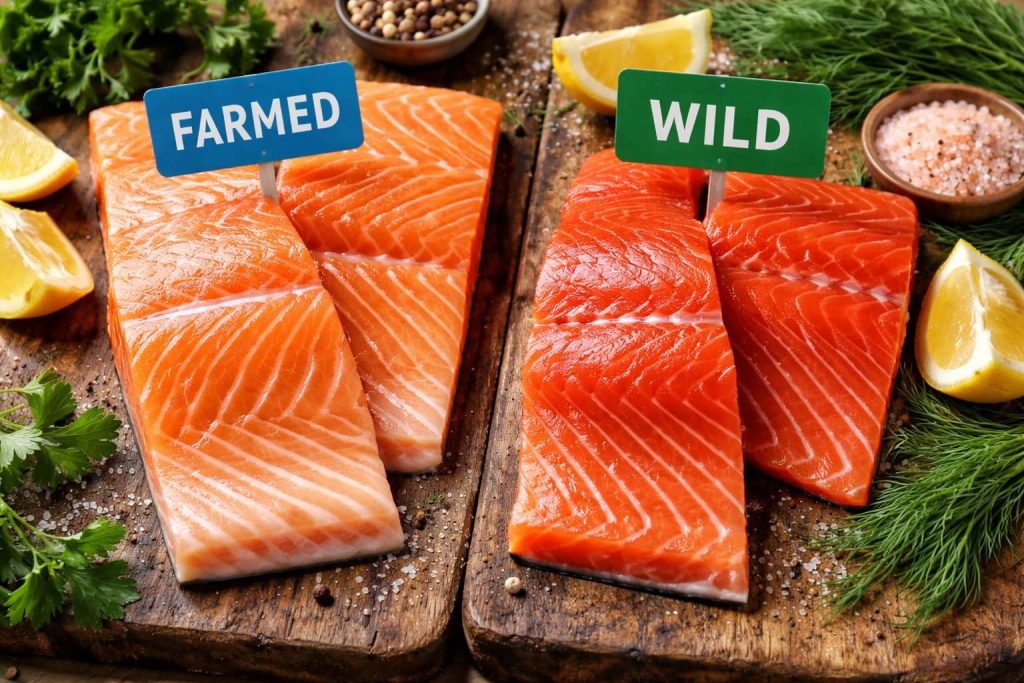
Wild salmon gets its distinctive deep red color from eating krill and small fish in the ocean. These natural prey contain astaxanthin, a powerful antioxidant that gives wild salmon its vibrant hue. Wild salmon tends to be leaner because it swims long distances in cold ocean waters.
Farmed salmon, raised in controlled environments, eats formulated feed. This feed now typically includes fish meal, fish oil, and plant-based ingredients. Because farmed salmon doesn’t swim the same distances as wild salmon, it tends to have a higher fat content.

Here’s the interesting part: that higher fat content in farmed salmon means it often contains more total omega-3 fatty acids than wild salmon. Yes, you read that correctly. Farmed Atlantic salmon typically provides about 2 grams of omega-3s per 3-ounce serving, while wild salmon ranges from 1.5 to 2 grams depending on the species.
The nutritional profiles aren’t dramatically different. Both types provide excellent protein, vitamin D, B vitamins (especially B12), selenium, and those crucial omega-3 fatty acids. The main differences come down to fat content and specific fatty acid ratios, but both are nutritious choices.
Modern Aquaculture Standards: Better Than You Think
One of the biggest concerns people have about farmed salmon involves how it’s raised. It’s worth understanding that salmon farming has evolved significantly over the past two decades.
Modern aquaculture operations in countries like Norway, Scotland, Canada, and parts of the United States operate under strict environmental and food safety regulations. These regulations cover everything from water quality and fish density to feed composition and antibiotic use.
In the United States and Canada, farmed salmon must meet the same food safety standards as any other protein sold in grocery stores. The FDA and Canadian Food Inspection Agency regularly monitor farmed fish for contaminants, including PCBs, dioxins, and heavy metals.
Studies comparing contaminant levels in farmed versus wild salmon have found that while farmed salmon may contain slightly higher levels of certain contaminants, both types fall well below safety thresholds established by health authorities. The health benefits of eating either type of salmon far outweigh any potential risks from these trace contaminants.
Additionally, responsible fish farms are increasingly adopting sustainable practices, including improved feed formulations that reduce reliance on wild fish stocks and better waste management systems that minimize environmental impact.
When Farmed Salmon Makes Sense
Let’s be practical about this. For most people working full-time jobs, managing tight budgets, and trying to maintain a healthy diet, farmed salmon offers several compelling advantages.

Affordability: This is the obvious one. At half the price or less compared to wild salmon, farmed salmon makes regular fish consumption financially feasible. If the choice is between eating farmed salmon twice a week or eating wild salmon once a month, the farmed option delivers more consistent nutritional benefits.
Year-round availability: Wild salmon has seasons. Most wild Pacific salmon are only available fresh during summer months. Farmed salmon is available fresh year-round, making it easier to incorporate into your regular meal rotation.
Consistent quality: Farmed salmon tends to have more predictable texture and flavor. While wild salmon can vary significantly based on species and what stage of their lifecycle they’re caught in, farmed salmon offers consistency that makes meal planning easier.
Still beats most alternatives: When you compare farmed salmon to other protein sources, it still comes out ahead nutritionally. Farmed salmon provides more omega-3s than chicken, beef, pork, or plant-based proteins. It’s a better source of vitamin D than most other foods. The protein quality rivals any other animal source.
The Alternative Protein Perspective
Here’s an important consideration: what would you eat instead of farmed salmon?
If the alternative is chicken breast or ground beef, farmed salmon offers nutritional advantages those proteins can’t match, particularly in omega-3 content. A chicken breast contains essentially zero omega-3 fatty acids. Ground beef contains minimal amounts. Neither provides the same vitamin D content as salmon.
If the alternative is no animal protein at all, you’re potentially missing out on complete proteins and highly bioavailable nutrients. While plant-based proteins have their place in a healthy diet, they don’t provide the EPA and DHA omega-3s found in fish. Plant sources like flax seeds and walnuts contain ALA, a different type of omega-3 that your body converts to EPA and DHA inefficiently.
If the alternative is other fatty fish like mackerel, sardines, or herring, those are excellent choices too and often less expensive than even farmed salmon. But many people find salmon more palatable and versatile in cooking.
The point is this: farmed salmon fills a nutritional gap that many other affordable proteins simply can’t fill.
How to Choose Quality Farmed Salmon
Not all farmed salmon is created equal. When shopping for farmed salmon, keep these tips in mind:

Look for country of origin: Salmon from Norway, Scotland, Canada, and the United States typically comes from operations with strong regulatory oversight. These countries have strict standards for aquaculture practices.
Check for certifications: Look for labels from organizations like the Aquaculture Stewardship Council (ASC) or Best Aquaculture Practices (BAP). These certifications indicate the farm meets specific environmental and social responsibility standards.
Fresh versus frozen: Both are nutritious. Frozen salmon is often flash-frozen shortly after harvest, which preserves freshness. Don’t hesitate to buy frozen farmed salmon—it’s often a better value and just as nutritious as fresh.
Color isn’t everything: Farmed salmon’s color comes from feed additives (usually natural astaxanthin), and the intensity of color doesn’t indicate quality or nutrition. Focus on freshness indicators like firm flesh and mild smell instead.
Addressing Common Concerns About Farmed Salmon
“But what about antibiotics?” Modern salmon farming in regulated countries uses antibiotics responsibly and only when necessary to treat disease. There are withdrawal periods before fish can be harvested, and testing ensures no antibiotic residues remain in the final product. Antibiotic use in aquaculture has actually decreased significantly over the past decade due to improved farming practices and vaccines.
“Aren’t the fish fed artificial colors?” The pink color in farmed salmon does come from feed additives, typically astaxanthin, which is the same compound wild salmon get from eating krill. Astaxanthin is a powerful antioxidant, so this isn’t necessarily a bad thing. Some salmon feed uses naturally derived astaxanthin from algae.
“What about sustainability?” This is a legitimate concern. While some farmed salmon operations have environmental impacts, the industry has made significant strides. Many farms now use feed with reduced wild fish content, implement better waste management, and work to minimize ecosystem disruption. Choosing certified sustainable farmed salmon helps support better practices.
“Is it less nutritious?” As we discussed earlier, farmed salmon actually contains comparable or even higher levels of omega-3s compared to wild salmon due to its higher fat content. The overall nutritional profile is excellent regardless of whether it’s farmed or wild.
The Bottom Line: Context Matters
Here’s the reality: farmed salmon is nutritionally valuable, affordable, and accessible. For people trying to improve their diet, increase omega-3 intake, and eat more fish, farmed salmon is absolutely better than no salmon at all.
Is wild salmon superior in some ways? Sure. It’s typically leaner, has a different flavor profile some people prefer, and comes from a completely natural environment. If you can afford wild salmon regularly and enjoy it, by all means, choose it.
But if cost is a barrier—and for most people, it is—don’t let perfect be the enemy of good. Eating farmed salmon twice a week delivers substantial health benefits. You’re getting high-quality protein, essential omega-3 fatty acids, vitamin D, and numerous other nutrients.
The health benefits of eating salmon, whether farmed or wild, far outweigh the minimal risks. The omega-3s support cardiovascular health, brain function, and reduce inflammation. The protein supports muscle maintenance and metabolic health. The vitamin D supports bone health and immune function.
Practical Tips for Including Farmed Salmon in Your Diet
Making farmed salmon a regular part of your meal rotation doesn’t have to be complicated or expensive.
Buy in bulk when it’s on sale and freeze portions individually. Farmed salmon freezes beautifully and maintains quality for several months.
Try different cooking methods to keep things interesting. Salmon is incredibly versatile—it can be baked, grilled, pan-seared, poached, or even cooked in an air fryer. Each method brings out different flavors and textures.
Mix it up with other affordable fish. Rotate farmed salmon with canned wild salmon (usually sockeye), sardines, mackerel, or tilapia to get variety while maintaining good nutrition.
Don’t overthink it. Simple preparations like baking salmon with lemon, garlic, and herbs take 15 minutes and deliver restaurant-quality results. You don’t need fancy recipes to enjoy nutritious salmon.
Final Thoughts
The question isn’t really whether farmed salmon is “good enough” compared to wild salmon. The real question is whether you’re getting enough omega-3s and quality protein in your diet at all.
For most people, farmed salmon is an accessible, affordable way to significantly improve their nutritional intake. It’s better than most alternative protein sources when it comes to omega-3 content and overall nutrient density.
Eat what’s available to you. If that means farmed salmon fits your budget while wild salmon doesn’t, choose farmed salmon without guilt. Your body will thank you for the omega-3s, protein, and nutrients regardless of where the salmon was raised.
Perfect nutrition doesn’t exist, and waiting for the “perfect” food choice often means missing out on perfectly good options. Farmed salmon is one of those good options that deserves a regular spot in your kitchen.