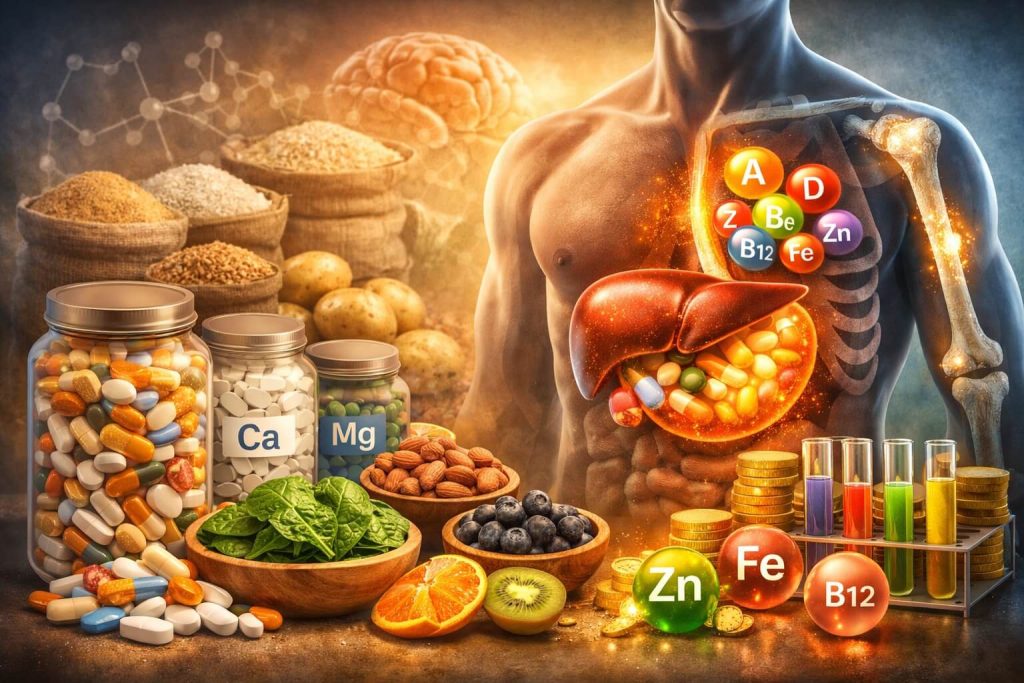
We’ve all heard about carb loading before a big race or athletic event. The idea is simple: eat extra carbohydrates a few days before you need energy, and your body stores it for later use. But what about other nutrients? Can you “calcium load” by eating three days’ worth of calcium in one sitting? What about protein loading or vitamin loading?
The short answer is: it’s complicated. Your body handles different nutrients in vastly different ways, and understanding these differences can help you make smarter decisions about your diet and supplementation strategy.
How Does Carb Loading Actually Work?
Before we dive into other nutrients, let’s understand why carb loading works in the first place.
When you eat carbohydrates, your body converts them into glucose for immediate energy. Whatever glucose you don’t use right away gets stored as glycogen in your muscles and liver. Think of glycogen as your body’s energy savings account.
Your body can store approximately 1,800 to 2,000 calories worth of glycogen, which is enough to fuel about 90 to 120 minutes of intense exercise. This is why marathon runners and endurance athletes practice carb loading—they’re literally topping off their glycogen stores before a big event.
The key difference here is that your body has a specific storage system for carbohydrates. But does it work the same way for other nutrients?
Can You Store Protein for Later?
Unfortunately, protein storage doesn’t work like carbohydrate storage. Your body doesn’t have a dedicated “protein reservoir” the way it has glycogen stores for carbs.
When you eat protein, your body breaks it down into amino acids. These amino acids are used immediately for various functions: building and repairing muscle tissue, creating enzymes and hormones, supporting immune function, and maintaining healthy skin and hair.
Here’s the catch: any amino acids your body doesn’t need right away can’t be stored as protein. Instead, excess protein follows one of two paths. The nitrogen component gets converted into urea and excreted through your urine, while the carbon skeleton either gets burned for energy or converted into fat for storage.
This is why nutrition experts recommend distributing your protein intake throughout the day rather than eating it all in one meal. Eating 20 to 30 grams of protein every few hours tends to be more effective for muscle maintenance and growth than consuming 100 grams in a single sitting.
The Two Types of Vitamins: Water-Soluble vs. Fat-Soluble
When it comes to vitamin storage, not all vitamins are created equal. The key distinction is between water-soluble and fat-soluble vitamins.
Water-Soluble Vitamins: Use It or Lose It
Water-soluble vitamins include vitamin C and all the B vitamins (B1, B2, B3, B5, B6, B7, B9, and B12). These vitamins dissolve in water and aren’t stored in significant amounts in your body.
When you consume water-soluble vitamins, your body takes what it needs and excretes the excess through urine, usually within 24 hours. This is why you can’t really “vitamin C load” by taking a massive dose one day and skipping the next few days.
There’s one exception: vitamin B12. Your liver can store several years’ worth of B12, which is why B12 deficiency typically takes years to develop even if you stop consuming it entirely.
Fat-Soluble Vitamins: Stored for the Long Haul
Fat-soluble vitamins—A, D, E, and K—behave very differently. These vitamins dissolve in fat rather than water, and your body stores them in fatty tissue and the liver for extended periods.
This storage capacity is both good and bad news. The good news is that you don’t need to consume these vitamins every single day. If you eat a vitamin A-rich meal today, your body can tap into those stores over the coming weeks or even months.
The bad news is that because these vitamins accumulate in your body, it’s possible to reach toxic levels if you take too many supplements. Vitamin A and vitamin D toxicity are real concerns, especially with high-dose supplementation.
Can You “Calcium Load” for Multiple Days?
Now to address the specific question about calcium: can you eat 3,000 mg of calcium in one day and coast for the next three days?
The answer is no, and here’s why.
Calcium serves two crucial functions in your body. First, it’s the primary mineral in your bones and teeth, giving them strength and structure. Second, it plays vital roles in muscle contraction, nerve transmission, blood clotting, and cellular signaling.
Your body maintains very tight control over calcium levels in your blood. When blood calcium drops even slightly, your body pulls calcium from your bones to maintain proper levels. When blood calcium is adequate, excess calcium from your diet either gets stored in bones or excreted through urine and feces.
Here’s the important part: your body can only absorb about 500 mg of calcium at one time. When you consume 3,000 mg in a single sitting, your intestines simply can’t absorb it all. Most of that calcium will pass through your digestive system without being absorbed.
Additionally, taking too much calcium at once can actually interfere with the absorption of other important minerals like iron, zinc, and magnesium. High calcium intake in a single dose can also increase the risk of kidney stones in susceptible individuals.
This is why calcium supplements typically come in 500 mg doses and why experts recommend taking them at different times throughout the day rather than all at once.
Which Minerals Can Be Stored Long-Term?
Different minerals have different storage capacities in your body.
Iron can be stored in your liver, bone marrow, and spleen in the form of ferritin and hemosiderin. Healthy adults typically store enough iron to last several months. However, this doesn’t mean you should try “iron loading”—excess iron can be toxic and is associated with various health problems.
Magnesium is stored primarily in your bones and soft tissues. Your body maintains a careful balance, but unlike fat-soluble vitamins, magnesium stores are relatively limited and need regular replenishment through diet.
Zinc has limited storage capacity. Your body doesn’t have a specialized zinc storage system, so you need consistent daily intake. Excess zinc gets excreted fairly quickly.
Sodium and potassium are electrolytes that your body carefully regulates through kidney function. You can’t really “store” extra sodium or potassium for later—your kidneys work constantly to maintain proper balance by excreting excess amounts.
What About Intermittent Fasting and Nutrient Timing?
Given what we know about nutrient storage, you might wonder how intermittent fasting fits into the picture. Can you consume all your daily nutrients in a shorter eating window without problems?
For most nutrients, the answer is yes—with some caveats. Your body is remarkably adaptable and can adjust to different eating patterns. However, for optimal nutrient absorption, especially for calcium, iron, and protein, spreading intake throughout your eating window is generally more effective than consuming everything in one meal.
Practical Takeaways for Your Daily Nutrition
Understanding nutrient storage helps you make better dietary decisions. Here’s what you should remember:
Carbohydrates: Yes, you can carb load effectively for 2-3 days before an endurance event. This strategy works because of glycogen storage.
Protein: Distribute protein intake throughout the day. Aim for 20-30 grams per meal rather than loading up once daily. Your body uses protein more efficiently this way.
Water-soluble vitamins: Take these daily. Your body excretes excess within 24 hours, so there’s little benefit to “loading.”
Fat-soluble vitamins: Your body stores these, but don’t use this as an excuse to take massive doses. Toxicity is a real risk. Regular, moderate intake is best.
Calcium and most minerals: Divide your intake throughout the day for better absorption. Taking large doses at once is wasteful and potentially harmful.
Listen to your body: While these guidelines are helpful, individual needs vary based on activity level, health status, age, and other factors.
The Bottom Line
Your body is not a simple storage tank that you can fill up with nutrients for days at a time. Different nutrients follow different metabolic pathways, and your body has evolved sophisticated systems to regulate each one.
The concept of carb loading works because of a specific physiological mechanism—glycogen storage in muscles and liver. This mechanism doesn’t exist for most other nutrients. While some vitamins and minerals can be stored for extended periods, absorption limits and regulatory mechanisms prevent effective “loading” strategies for most nutrients.
The best approach to nutrition remains consistent, balanced intake of nutrients throughout the day and throughout the week. Rather than trying to game the system with loading strategies, focus on eating a varied diet rich in whole foods, and consider supplementation only when needed to address specific deficiencies identified by healthcare professionals.
Your body is incredibly efficient at maintaining balance—trust it to do its job, and give it the steady supply of nutrients it needs to function at its best.