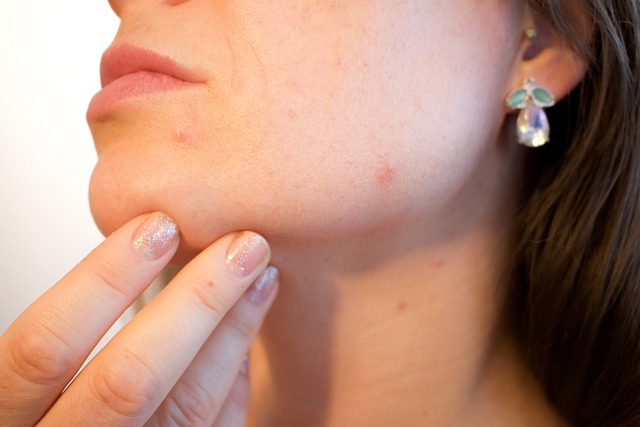
You’ve invested time and money in microneedling treatments for your acne scars. After several sessions, you notice improvement—the scars definitely look better. But when you examine your skin under bright, direct lighting, something interesting emerges: the surface still feels uneven, just…different somehow. The scars aren’t completely gone; they’re just less visible.
This observation raises a fascinating question that many people wonder about but rarely discuss openly: do treatments like microneedling actually heal scars, or do they simply redistribute the texture of your skin to make imperfections blend in better? Are we truly renewing our skin, or are we creating what one might call “organized chaos” that tricks the eye into seeing smoother skin?
Let’s dive into the science behind microneedling and other resurfacing treatments to understand what’s really happening beneath the surface.
What Actually Happens During Microneedling?
To understand whether microneedling truly heals or just camouflages, we need to look at what the treatment actually does to your skin.
Microneedling, also known as collagen induction therapy, is a minimally invasive dermatological procedure that involves using fine needles to create controlled micro-injuries in the skin. These micro-injuries trigger the body’s natural wound-healing processes, leading to increased production of collagen and elastin, which are crucial for maintaining healthy, youthful skin.
Here’s the three-phase process your skin goes through:

Phase 1: Inflammation (Immediate Response)
The moment those tiny needles puncture your skin, your body recognizes these as injuries and kickstarts an inflammatory response. Within minutes, transforming growth factor (TGF), platelet-derived growth factor (PDGF), and connective tissue activation protein (CTAP) are released from surrounding platelets and neutrophils.
Blood flow increases to the area, and your immune system sends specialized cells to begin the repair process. This isn’t just surface-level activity—it’s happening deep in the dermal layer where scars form.
Phase 2: Proliferation (New Tissue Formation)
Over the next several days, fibroblasts migrate to the injured area. These cells are crucial because they’re responsible for producing collagen and elastin—the structural proteins that give skin its firmness and elasticity.
Approximately five days after the procedure, a fibronectin matrix is formed from an arrangement of fibroblasts. These fibroblasts determine the deposition of new collagen that remain in place for 5-7 years, naturally tightening before degrading.
New blood vessels form (neovascularization) to supply the healing tissue with oxygen and nutrients. The needles also breakdown the old hardened scar strands and allow it to revascularize.
Phase 3: Remodeling (Long-Term Changes)
This is the most important phase for understanding whether microneedling truly heals or just hides. During remodeling, which continues for months after treatment, the newly formed collagen reorganizes itself.
Research shows that histological examination of the skin treated with 4 microneedling sessions 1 month apart shows up to 400% increase in collagen and elastin deposition at 6 months postoperatively, with a thickened stratum spinosum and normal rete ridges at 1 year postoperatively.
Here’s the crucial detail: collagen fibre bundles appear to have a normal lattice pattern rather than parallel bundles as in scar tissue. This suggests genuine tissue remodeling, not just surface redistribution.
So Are Scars Actually Healing or Just Becoming Less Visible?
This is where we need to have an honest conversation about what “healing” really means when it comes to scars.
The Complex Truth
The reality is more nuanced than a simple yes or no. Microneedling does create real structural changes in your skin, but it doesn’t completely erase severe scars back to virgin, never-damaged skin. What it does is impressive, but it’s important to understand the distinction.

What’s actually happening:
- New collagen replaces scar tissue: The treatment stimulates your body to produce fresh, properly organized collagen. Scar tissue has collagen fibers arranged in parallel bundles (like laying planks of wood side by side), while normal skin has collagen in a basket-weave lattice pattern. Microneedling encourages this normal lattice pattern to reform.
- The dermis thickens: Studies show that treated skin develops a thicker dermal layer with more collagen and elastin. This literally builds up the depressed areas of atrophic scars from underneath, making them less recessed.
- Surface texture does become more complex: Here’s where the observation about “tiny lazy elevations” comes in. Yes, the treatment does create micro-variations in the skin surface as new tissue forms. But this isn’t just creating random chaos—it’s encouraging skin to regenerate with a more natural, varied texture that light reflects off of differently than flat scar tissue.
The Optical Component Is Real
There’s truth to the idea that some improvement comes from how light interacts with your treated skin. When severely scarred skin is perfectly smooth but indented, light catches the edges sharply, making scars very obvious. When the skin surface becomes slightly more textured with micro-peaks and valleys from new collagen formation, light scatters differently across the surface.
This isn’t “cheating”—it’s actually how normal, healthy skin works. If you look at completely unscarred skin under a microscope, it’s not perfectly flat either. It has natural texture variation from pores, fine lines, and the normal topography of healthy tissue.
Do Acne Scars Ever Completely Disappear?
Let’s address the fundamental question: can any treatment completely eliminate scars?
The honest answer is that true scarring rarely disappears completely on their own. While acne scars can fade, they rarely go away completely on their own. After about 6 months of healing, acne scars will not improve further without intervention.
Here’s why:
Scars form when damage occurs deep enough to affect the dermal layer of your skin. When your body repairs this damage, it prioritizes speed and function over aesthetics. The replacement tissue is structurally different from the original tissue—that’s what makes it a scar.
Acne scars take on two main forms: either a scar develops when there is a loss of tissue, resulting in an indentation in the surface of the skin; or, a scar develops that is raised on the surface of the skin.
What “Improvement” Really Means
When dermatologists talk about treating scars, they use terms like “significantly reduce,” “greatly improve,” or “make less noticeable”—rarely “eliminate completely.” This language is important and honest.
Treatment goals for acne scars typically include:
- Raising depressed areas to be more level with surrounding skin
- Softening sharp edges that catch light
- Improving skin texture and smoothness
- Reducing discoloration
- Creating a more even overall appearance
Complete removal is often not realistic for severe scarring, but dramatic improvement absolutely is possible.
How Other Resurfacing Treatments Work
Microneedling isn’t the only treatment that raises questions about healing versus hiding. Let’s look at how other common scar treatments work:
Laser Resurfacing
Laser treatments remove the damaged top layer of skin and tighten the middle layer, leaving skin smoother. Some lasers (ablative lasers) vaporize the outer layers of scarred skin. Others (non-ablative lasers) heat the deeper tissue without wounding the surface, stimulating collagen production from within.
Is this healing or hiding? It’s actually both. The laser removes genuinely damaged tissue and stimulates new, healthier tissue formation. But it also creates a more uniform surface that reflects light differently.
Chemical Peels
Chemical peels involve applying an acid to release the outer layer of your skin, removing sun-damaged cells to freshen skin and fade spots. Deep peels penetrate to the dermal layer, triggering significant collagen remodeling.
Again, this is genuine tissue renewal, but with an element of surface modification that affects appearance.
Dermal Fillers
This treatment is the most honest about its approach: fillers don’t heal scars—they literally fill the depression to bring it level with surrounding skin. Results usually last a few months, although some fillers are permanent.
Fillers make no claim to heal; they simply hide the indentation. This is a valid approach for certain scar types, particularly when combined with collagen-stimulating treatments.
The Role of Retinoids and Other Topicals
You mentioned using tretinoin (a prescription retinoid) along with moisturizer and SPF. This is actually an excellent complementary approach to professional treatments. Here’s why:
Retinoids work by:
- Accelerating cell turnover
- Increasing collagen production over time
- Improving skin texture and tone
- Helping new skin cells organize more normally
When it’s put on your skin, retinol can help unclog pores, speed up the shedding of skin cells, and increase collagen. Retinoids promote genuine improvements in skin structure, not just surface camouflage.
The combination of professional treatments like microneedling with consistent retinoid use creates a two-pronged approach: professional treatments stimulate significant collagen remodeling, while daily retinoids maintain and gradually enhance those improvements.
Why Perfect Skin Might Not Be the Right Goal
Here’s something important to consider: perfectly smooth, uniform skin isn’t necessarily natural or realistic, even on people who’ve never had acne.
Human skin naturally has:
- Pores of varying sizes
- Fine lines and micro-wrinkles
- Slight texture variation
- Areas of different thickness
- Natural contours and shadows
The goal of scar treatment shouldn’t necessarily be to achieve perfectly flat, featureless skin (which would actually look unnatural and possibly even artificial). The goal is skin that looks healthy, normal, and doesn’t draw attention to specific problem areas.
When microneedling creates subtle texture variations alongside raising depressed scars and stimulating collagen, it’s actually creating a more natural-looking result than if it somehow made your skin perfectly flat and uniform.
What Research Actually Shows About Microneedling Results
Let’s look at what scientific studies reveal about microneedling effectiveness:
Objective measurements show:
- Comparative studies have demonstrated that microneedling is often more effective than traditional treatments, such as chemical peels and laser therapy, in reducing acne scars, with higher patient satisfaction and a lower risk of side effects
- The procedure helps firm the skin and create a youthful appearance by stimulating collagen production
- Patients often observe noticeable improvements within weeks following treatment
What patients report:
- After six sessions, people saw moderate improvement in their skin texture and good enhancement of scar appearance
- Most patients describe satisfaction with results, even though complete scar elimination isn’t achieved
- Improvements continue to develop over months as collagen remodeling continues
The Bright Light Test: What It Really Tells Us
Your observation about examining skin under very bright lighting is actually quite insightful. This reveals something important about scar treatment that’s rarely discussed openly.
Under harsh, direct lighting (the kind you’d never encounter in normal daily life), you can see every micro-variation in skin surface. Under these conditions, you can indeed see that the skin isn’t perfectly smooth even after treatment.
But here’s what this actually tells us:
In normal lighting conditions—the lighting in which you actually live your life—treated skin looks significantly better because:
- Real structural improvements have occurred (more collagen, raised depressions, softened edges)
- The more complex surface texture scatters light in a way that’s similar to normal skin
- The eye and brain perceive the overall appearance as smoother and more even
The bright light test is interesting from a scientific perspective, but it’s not necessarily the best measure of treatment success. What matters is how your skin looks and feels in the real world: in your bathroom mirror, in your office, in photos, when talking to people.
So What’s the Verdict? Healing or Hiding?
After examining the science, here’s the most accurate answer: microneedling and similar treatments do both, and that’s actually a good thing.
They genuinely heal by:
- Stimulating significant new collagen production (up to 400% increase)
- Breaking down old, disorganized scar tissue
- Encouraging normal lattice-pattern collagen arrangement
- Thickening the dermis beneath atrophic scars
- Creating structural improvements that last for years
They also improve appearance through:
- Creating a more varied surface texture that interacts with light naturally
- Reducing sharp edges and steep transitions that draw the eye
- Developing an overall appearance closer to normal skin
This isn’t “cheating” or some kind of optical illusion trick. It’s smart wound healing that addresses both the structural deficit (not enough tissue or wrongly organized tissue) and the aesthetic problem (obvious visual difference from surrounding skin).
Managing Expectations: What Microneedling Can and Cannot Do
To avoid disappointment, it’s important to have realistic expectations:

Microneedling can:
- Significantly reduce the appearance of most scar types
- Improve skin texture and overall appearance
- Create measurable increases in collagen and dermal thickness
- Provide long-lasting improvements (several years)
- Make scars blend better with surrounding skin
Microneedling cannot:
- Completely eliminate deep, severe scarring to perfectly pristine skin
- Create results identical to skin that was never damaged
- Work after just one treatment (multiple sessions are required)
- Produce perfectly uniform results across all scar types
The bad news is there’s no magic ingredient to make acne scars completely disappear. The good news, however, is there are safe and effective treatments available to diminish and reduce the appearance of acne scarring.
The Bottom Line: Are You Getting Real Results?
If you’ve undergone microneedling or similar treatments and wonder whether the improvements are “real,” here’s how to think about it:
Yes, the improvements are real if:
- Your scars are less noticeable in normal lighting
- The texture of your skin feels smoother to the touch
- Depressions are less deep than before treatment
- You feel more confident about your skin
- Photos show visible improvement
- The improvements persist over time
The fact that under harsh lighting you can still detect imperfections doesn’t negate these real improvements. Remember, even people with perfect skin have detectable texture variations under harsh lighting.
What matters is that your skin has undergone genuine structural improvement—new collagen, tissue remodeling, better organization—that makes it both look and actually be healthier than before treatment.
The question isn’t really “healing versus hiding.” It’s “has my skin meaningfully improved in a way that makes a difference in my daily life?” For most people who undergo these treatments, the answer is yes.
And that’s what really matters.