You’re scrolling through social media during your lunch break when you see another post about someone eating only meat and claiming they’ve never felt better. The carnivore diet (sometimes called the Carnimeal approach) has taken the wellness world by storm, but as a busy professional, you’re probably wondering: Is this actually healthy, or just another fad?
Let’s break down what you really need to know about an all-meat diet, minus the hype.
What Is the Carnivore Diet?
The carnivore diet is exactly what it sounds like: eating only animal products. This means consuming meat, poultry, fish, eggs, and some dairy while cutting out all fruits, vegetables, grains, nuts, seeds, and carbohydrates.
Think of it as the opposite of a vegan diet. While vegans avoid all animal products, carnivore dieters avoid all plant products. It’s an extreme approach that’s getting attention from people looking to lose weight, reduce inflammation, or manage chronic health conditions.
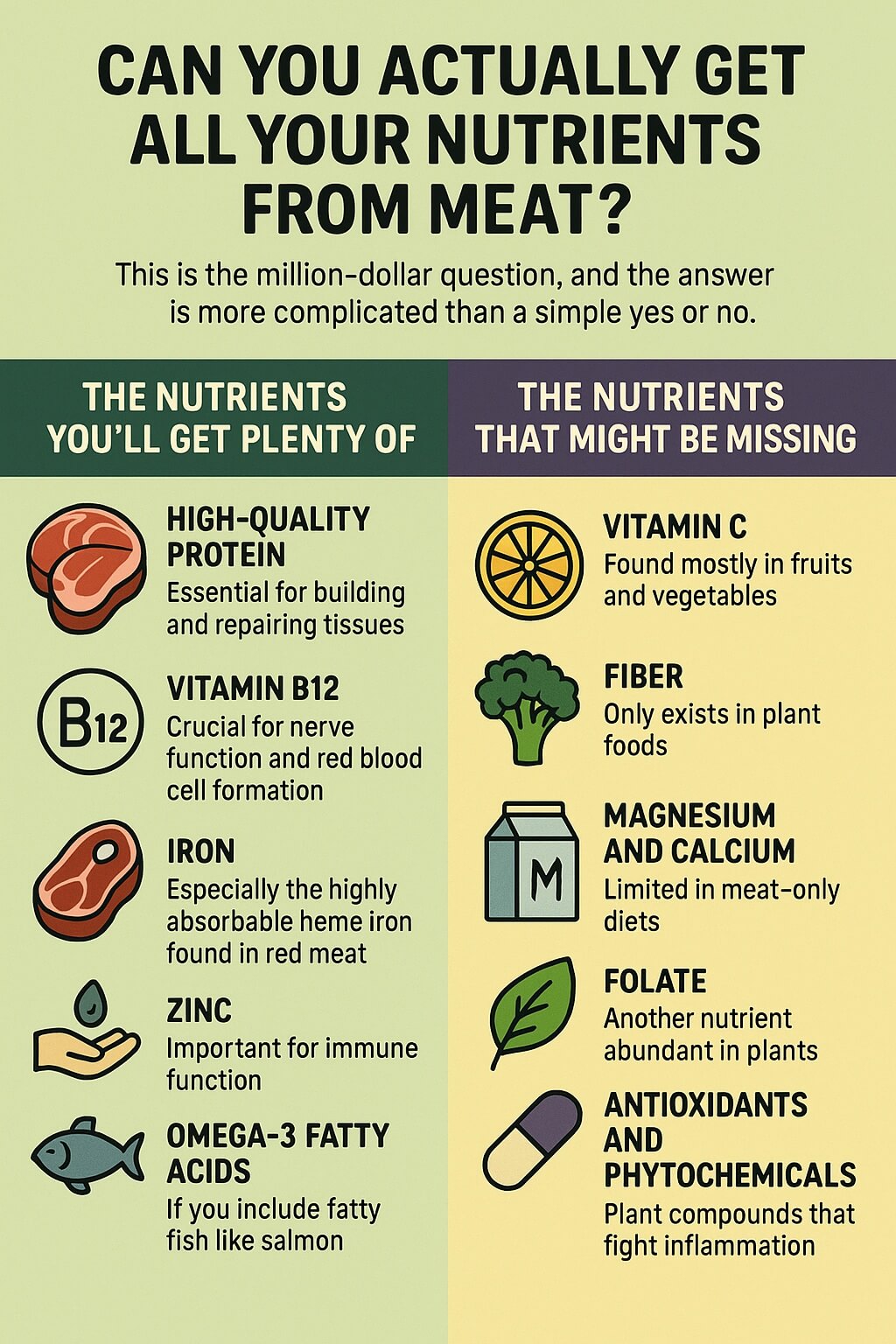
Can You Actually Get All Your Nutrients from Meat?
This is the million-dollar question, and the answer is more complicated than a simple yes or no.
What the Research Shows
Recent studies analyzing carnivore diet meal plans found that this eating style meets nutritional requirements for several important nutrients including riboflavin, niacin, phosphorus, zinc, Vitamin B6, Vitamin B12, selenium, and Vitamin A.
That’s the good news. The not-so-good news? The same research showed the diet fell short in thiamin, magnesium, calcium, and Vitamin C, plus iron, folate, iodine, and potassium in some cases, with fiber intake significantly below recommended levels.
The Nutrients You’ll Get Plenty Of
When you eat a meat-based diet, you’re getting:
- High-quality protein: Essential for building and repairing tissues
- Vitamin B12: Crucial for nerve function and red blood cell formation
- Iron: Especially the highly absorbable heme iron found in red meat
- Zinc: Important for immune function
- Omega-3 fatty acids: If you include fatty fish like salmon
The Nutrients That Might Be Missing
Here’s where things get tricky:
- Vitamin C: Found mostly in fruits and vegetables
- Fiber: Only exists in plant foods
- Magnesium and calcium: Limited in meat-only diets
- Folate: Another nutrient abundant in plants
- Antioxidants and phytochemicals: Plant compounds that fight inflammation
The Vitamin C Question: Will You Get Scurvy?
If you’re worried about developing scurvy like an 18th-century sailor, here’s some reassuring news.
Many carnivore dieters thrive on as little as 10-20 mg of vitamin C per day from organ meats and fresh meat alone, and despite thousands following this diet, there are virtually no reports of scurvy.
Why is this? Glucose and vitamin C compete for the same receptor in the body, so when carbohydrate intake is significantly reduced, the body’s vitamin C requirements may decrease.
However, it’s important to note that even with liver and other organ meats included, it’s still extremely difficult to get enough vitamin C on a carnivore diet, and most meal plans are severely deficient.
How People Make the Carnivore Diet Work
Real people following this approach typically do a few key things to stay healthy:
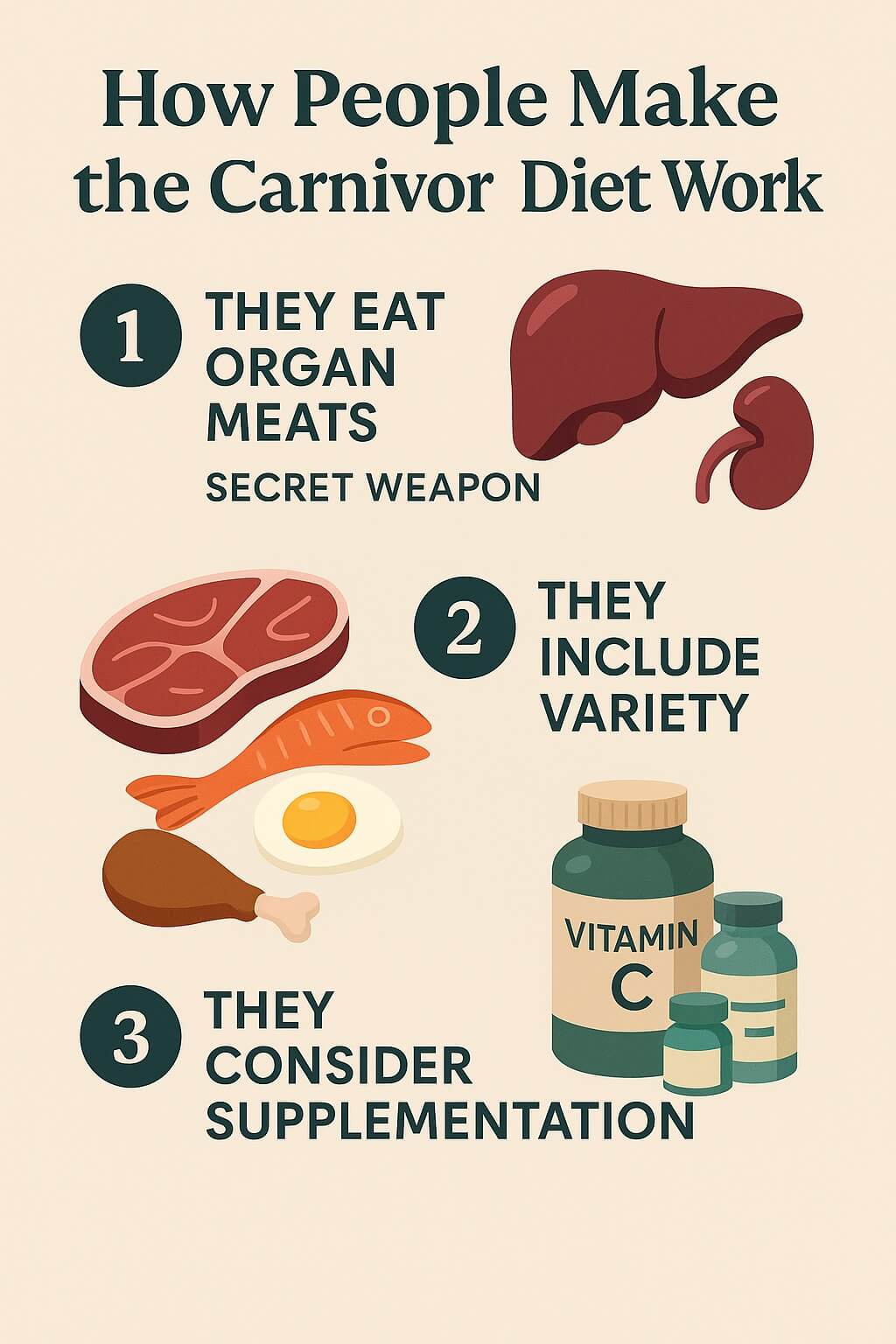
1. They Eat Organ Meats (The Secret Weapon)
Most successful carnivore dieters don’t just eat steaks. Traditional meat-eating cultures like the Inuit ate extremely fresh meat, sometimes raw, and almost always ate the organs, which are packed with important nutrients.
Liver, kidney, heart, and other organ meats provide nutrients that muscle meat lacks. For example, liver is rich in vitamin A, while spleen contains vitamin C.
2. They Include Variety
Instead of eating the same chicken breast every day, successful followers rotate between:
- Beef (especially fatty cuts like ribeye)
- Fish and seafood
- Eggs
- Pork
- Lamb
- Poultry
This variety helps ensure a broader nutrient intake.
3. They Consider Strategic Supplementation
Many people on long-term carnivore diets do supplement certain nutrients. Health experts recommend taking vitamin, mineral, and fiber supplements to fill in the nutritional gaps created from the food groups not included in the diet.
Common supplements include:
- Vitamin C
- Magnesium
- Electrolytes (sodium, potassium, calcium)
- Vitamin E
- Boron
Is the Carnivore Diet Safe Long-Term?
Here’s where medical professionals start raising red flags.
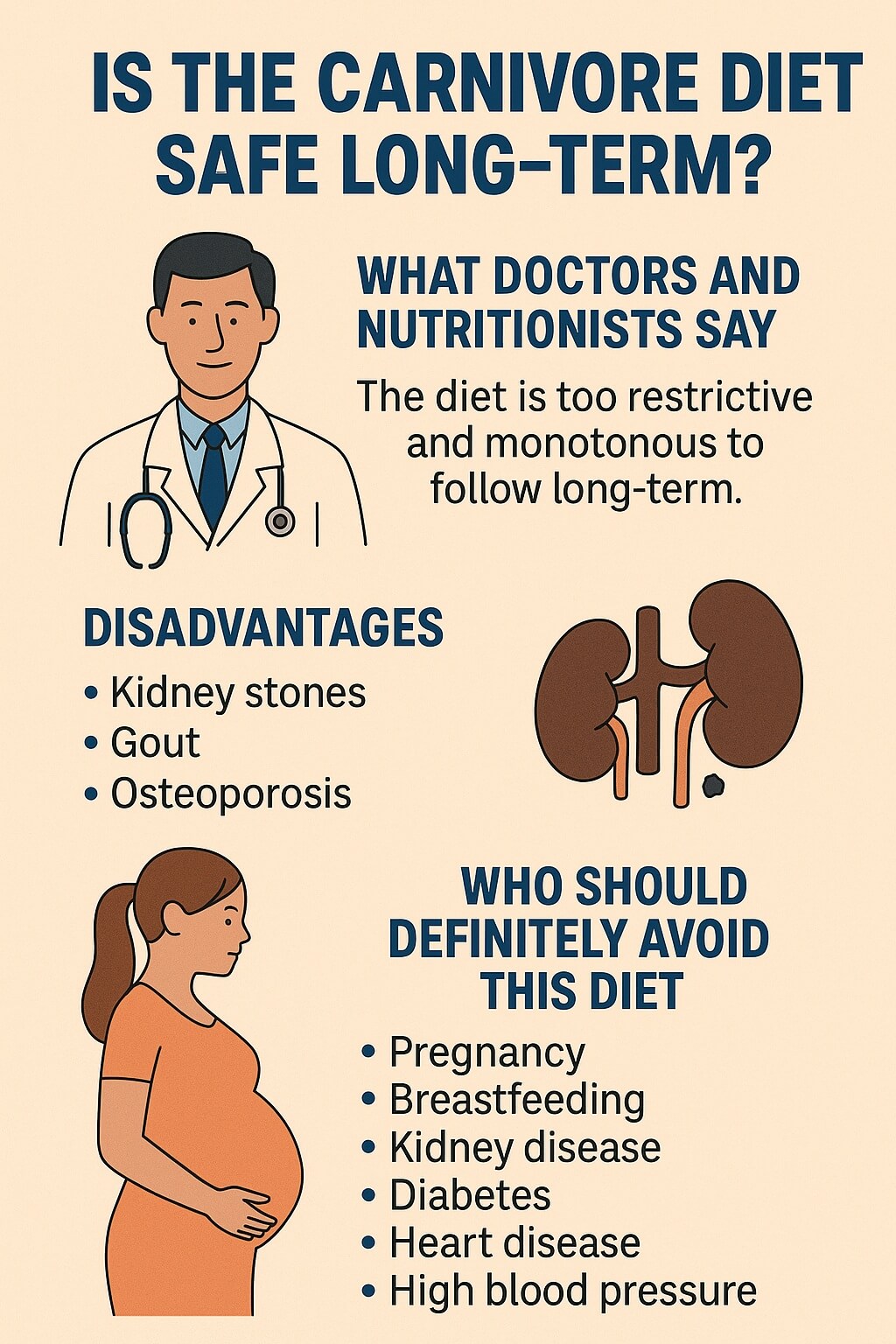
What Doctors and Nutritionists Say
Registered dietitians express concerns that the carnivore diet is too restrictive and too monotonous to follow long-term, noting that food cravings will eventually return.
The disadvantages of carnivore diets include increased risk of kidney stones, gout, and osteoporosis, with the very high protein intake potentially leading to impaired kidney function.
Who Should Definitely Avoid This Diet
This diet isn’t safe during pregnancy or while breastfeeding, and should be avoided by anyone with kidney disease, diabetes, heart disease, or high blood pressure due to the high saturated fat and sodium content.
The Benefits People Actually Experience
Despite concerns from health professionals, many people report positive changes. Common benefits include:
- Weight loss: Cutting out processed foods and sugar naturally reduces calorie intake
- Reduced inflammation: Some people with autoimmune conditions report symptom relief
- Improved mental clarity: The stable energy from high fat and protein intake
- Simplified meal planning: No counting calories or tracking macros for most followers
The Real Downsides to Consider
Beyond nutrient deficiencies, there are practical concerns:
1. Social Challenges
Imagine going to a restaurant with friends or attending a family dinner. Eating only meat can be socially isolating and challenging in everyday situations.
2. Cost
Quality meat, especially grass-fed and organ meats, isn’t cheap. This diet can significantly increase your grocery bill.
3. Digestive Changes
Without fiber, many people experience digestive issues, especially in the beginning. Your gut microbiome thrives on plant diversity, and removing all plants changes this ecosystem.
4. Environmental Concerns
A diet consisting entirely of animal products has a larger environmental footprint than diets including plant foods.
Making It Work: Practical Tips from Real Followers
If you’re considering trying this approach, here’s what experienced carnivore dieters recommend:
Start Gradually: Don’t go from eating pizza to only ribeye overnight. Transition slowly through a low-carb diet first.
Focus on Quality: Choose grass-fed, pasture-raised, and wild-caught animal products when possible.
Don’t Skip Organs: Even if you hate liver, find ways to include it (mixed into ground beef, supplements, etc.).
Monitor Your Health: Get regular blood work done to check for nutrient deficiencies.
Listen to Your Body: If you’re feeling consistently tired, getting frequent infections, or experiencing other concerning symptoms, reassess.
Stay Hydrated: Drink plenty of water and consider adding electrolytes.
The Bottom Line for Busy Professionals
No controlled studies support claims that the carnivore diet can help eliminate health issues, and it lacks beneficial nutrients including fiber and plant compounds like antioxidants.
Whether the metabolic changes from consuming such a diet facilitate a lower requirement of certain nutrients, or whether it poses risks of micronutrient inadequacies, remains to be determined.
Here’s the practical takeaway: While some people thrive on a carnivore diet short-term, most nutrition experts agree it’s not sustainable or advisable as a permanent lifestyle. If you’re healthy, it’s probably okay to try this diet, as long as you don’t stay on it for more than a week to 10 days.
A Balanced Approach
If the carnivore diet appeals to you because you’re looking to reduce inflammation, lose weight, or simplify your eating, consider a more moderate approach:
- Increase high-quality animal proteins without eliminating plants entirely
- Focus on whole foods and eliminate processed junk
- Reduce (but don’t eliminate) carbohydrates if that helps you feel better
- Include low-toxin vegetables that work for your body
Remember, the best diet is one you can stick to long-term that provides all the nutrients your body needs. While the carnivore diet might offer short-term benefits for some people, the lack of long-term research and potential nutrient deficiencies make it a risky choice as a permanent eating style.
Should You Try It?
If you’re considering the carnivore diet, talk to your doctor first. This is especially important if you have any existing health conditions or take medications.
For most busy professionals, a more balanced approach that includes both high-quality animal products and nutrient-dense plant foods is likely the better choice for long-term health. But if you do decide to experiment with carnivore eating, do it mindfully, monitor your health closely, and be honest with yourself about how you’re actually feeling.
Your health is too important to leave to internet trends. Make informed decisions, listen to your body, and remember that what works for someone else might not work for you.