As a busy mom 5 months postpartum and still breastfeeding, dealing with super dry skin on your face (and everywhere else) is no joke. You’re not alone—many new moms notice their skin feels like sandpaper after baby arrives. One mom shared exactly what you’re going through: “I’m 5 months PP and my skin is sooooo dry along with everywhere else. My OB/GYN offered estrogen vaginal cream to help dryness down there, and I am wondering if I should apply it to my face too… apparently breastfeeding hormones are similar to the hormone drop in menopause! Has anyone tried this before?” Sound familiar? Let’s break it down simply and honestly.
Why Does Postpartum Dry Skin Happen When Breastfeeding?
After giving birth, your estrogen levels drop sharply. If you’re breastfeeding, they often stay low because the hormone prolactin (which helps make milk) suppresses estrogen. This is why postpartum feels a lot like a “mini menopause” for some women—dry skin, vaginal dryness, even mood swings or hot flashes.
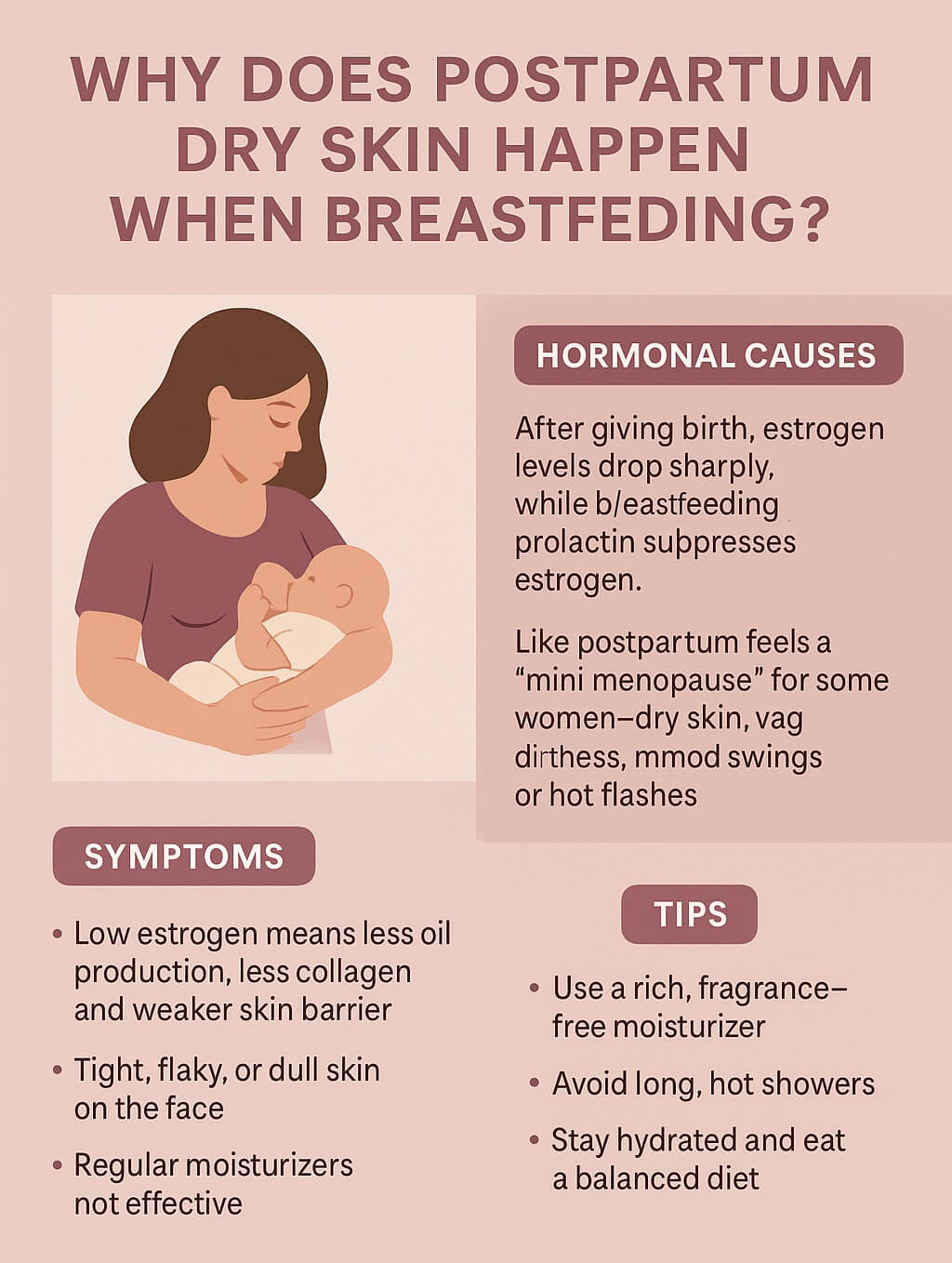
Common searches like “postpartum dry skin breastfeeding” or “why is my skin so dry after baby while nursing” lead right here. Low estrogen means less oil production, less collagen, and weaker skin barrier. Your face might feel tight, flaky, or dull, and regular moisturizers just don’t cut it sometimes.
Can You Use Estrogen Vaginal Cream on Your Face While Breastfeeding?
This is a hot topic with questions like “is estrogen cream on face safe while breastfeeding?” or “estradiol cream face postpartum nursing risks”.
The short answer: Most experts say no—don’t use your prescribed vaginal estrogen cream on your face if you’re breastfeeding. Here’s why:
- Vaginal creams (like estradiol-based ones) are designed for a very absorbent area. Some estrogen gets into your bloodstream and can show up in breast milk.
- Even small amounts might lower your milk supply, especially if your baby is under 6 months and supply isn’t fully established yet.
- Reliable sources like LactMed (from the National Institutes of Health) and Drugs.com note that vaginal estrogen leads to measurable levels in milk, unlike patches or gels which are safer.
- While some moms online say they used a tiny bit with no issues, doctors warn it could affect baby or your supply. One common worry: “Does topical estrogen cream affect milk supply while breastfeeding?” It can, because estrogen naturally drops supply (that’s why birth control with estrogen isn’t recommended for nursing moms).
Applying it to your face? Facial skin absorbs less than vaginal tissue, but it’s still not zero-risk. Plus, these creams aren’t tested or formulated for facial use—they might irritate sensitive skin or cause uneven results.
Has Anyone Tried Estrogen Cream on Face Postpartum While Breastfeeding?
In mom forums, some women (especially those past menopause) swear by dabbing a pea-size amount of vaginal estrogen cream on their face for plumper, hydrated skin. They call it a “skincare hack” for collagen boost and fewer wrinkles. But for breastfeeding moms? Stories are mixed—most who tried it weren’t nursing, or they stopped if supply dipped. No large studies back it for faces during breastfeeding, and OBs usually say stick to the prescription area only.
Safer Ways to Fix Postpartum Dry Facial Skin While Breastfeeding
Good news: You have tons of breastfeeding-safe options to get that glow back without risking your milk. Busy professionals like you need quick, effective routines.
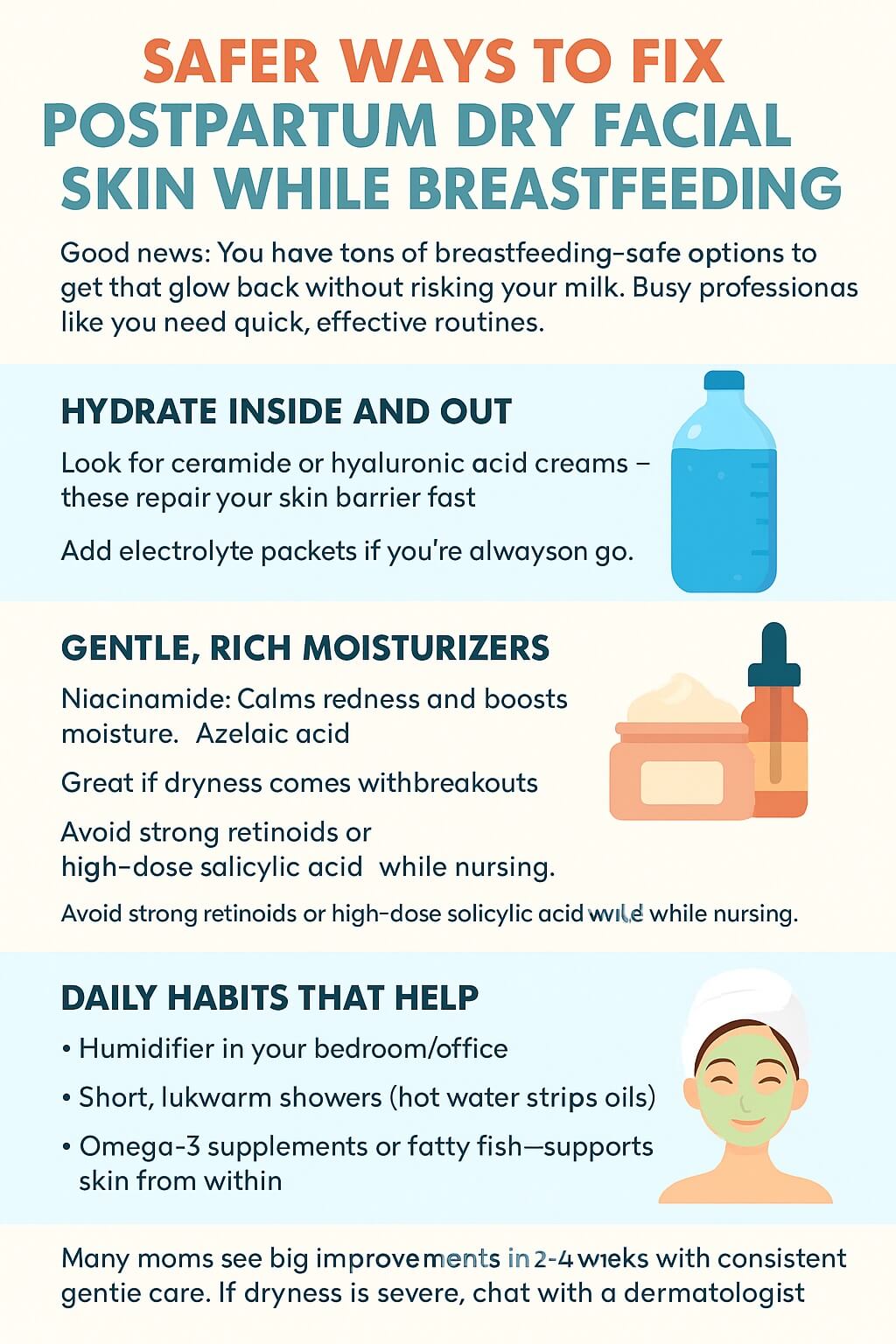
- Hydrate Inside and Out Drink water like it’s your job (aim for 100+ oz daily since nursing pulls fluids). Add electrolyte packets if you’re always on the go.
- Gentle, Rich Moisturizers Look for ceramide or hyaluronic acid creams—these repair your skin barrier fast. Slather on a thick layer at night (occlusive like aquaphor on top locks it in).
- Breastfeeding-Safe Actives
- Niacinamide: Calms redness and boosts moisture.
- Azelaic acid: Great if dryness comes with breakouts.
- Peptides or bakuchiol: Gentle “retinol alternatives” for firmness. Avoid strong retinoids or high-dose salicylic acid while nursing.
- Daily Habits That Help
- Humidifier in your bedroom/office.
- Short, lukewarm showers (hot water strips oils).
- Omega-3 supplements or fatty fish—supports skin from within.
- Quick 5-minute mask with aloe or oatmeal a few times a week.
Many moms see big improvements in 2-4 weeks with consistent gentle care. If dryness is severe, chat with a dermatologist who knows breastfeeding safety.
What About Vaginal Dryness—the Original Reason for the Cream?
Your OB prescribed it for a reason! Low-dose vaginal estrogen is often considered low-risk for “down there” issues postpartum, even while nursing. Studies show minimal transfer to milk when used as directed, and it can make a huge difference for comfort and intimacy. Just follow the exact dose—don’t double-dip for your face.
Final Thoughts: Talk to Your Doctor First
Every mom and baby is different. What works for one might not for another. If your dry skin is driving you nuts, bring it up at your next appointment. Ask specifically: “Is vaginal estrogen cream safe on face while breastfeeding at 5 months postpartum?” They know your history best.
You’re doing an amazing job powering through these hormone rollercoasters. That dry phase won’t last forever—once supply regulates or you wean, estrogen bounces back and skin often glows again. Hang in there!
Have you found any holy-grail moisturizers for postpartum dry skin? Share in the comments—we’re all in this together.