How Healthy Snacking Actually Helps You Lose Weight (And Keep It Off)
Let’s get one thing straight: snacking isn’t the enemy of weight loss. In fact, when done right, it might be one of your most powerful tools for shedding pounds and keeping them off for good.
The real problem isn’t that we snack—it’s what we snack on and how we do it. Those mindless handfuls of chips while watching Netflix or the vending machine run at 3 PM? That’s where things go wrong. But strategic, nutritious snacking? That’s a game-changer for anyone trying to manage their weight while juggling a busy schedule.
Can Snacking Really Help With Weight Loss?
Here’s something that might surprise you: smart snacking can actually support your weight loss goals instead of sabotaging them.
When you go too long without eating, your blood sugar drops, your hunger spikes, and suddenly you’re ordering the largest pizza available or clearing out your pantry. Sound familiar? This is where planned snacking comes in. By eating smaller amounts of nutritious food between meals, you keep your hunger in check, maintain stable energy levels, and avoid the desperate overeating that derails so many diets.
Think of it this way: your metabolism works best when it’s consistently fueled. Regular, healthy snacks keep your body burning calories efficiently throughout the day instead of slowing down and holding onto every calorie because it thinks you’re starving.
What Actually Makes a Snack Healthy?
Not all snacks are created equal. The key is choosing foods that satisfy real hunger, not just temporary cravings.
A truly healthy snack should include at least two of these three elements: protein, fiber, and healthy fats. This combination keeps you full longer and prevents the blood sugar rollercoaster that leaves you hungry again thirty minutes later.
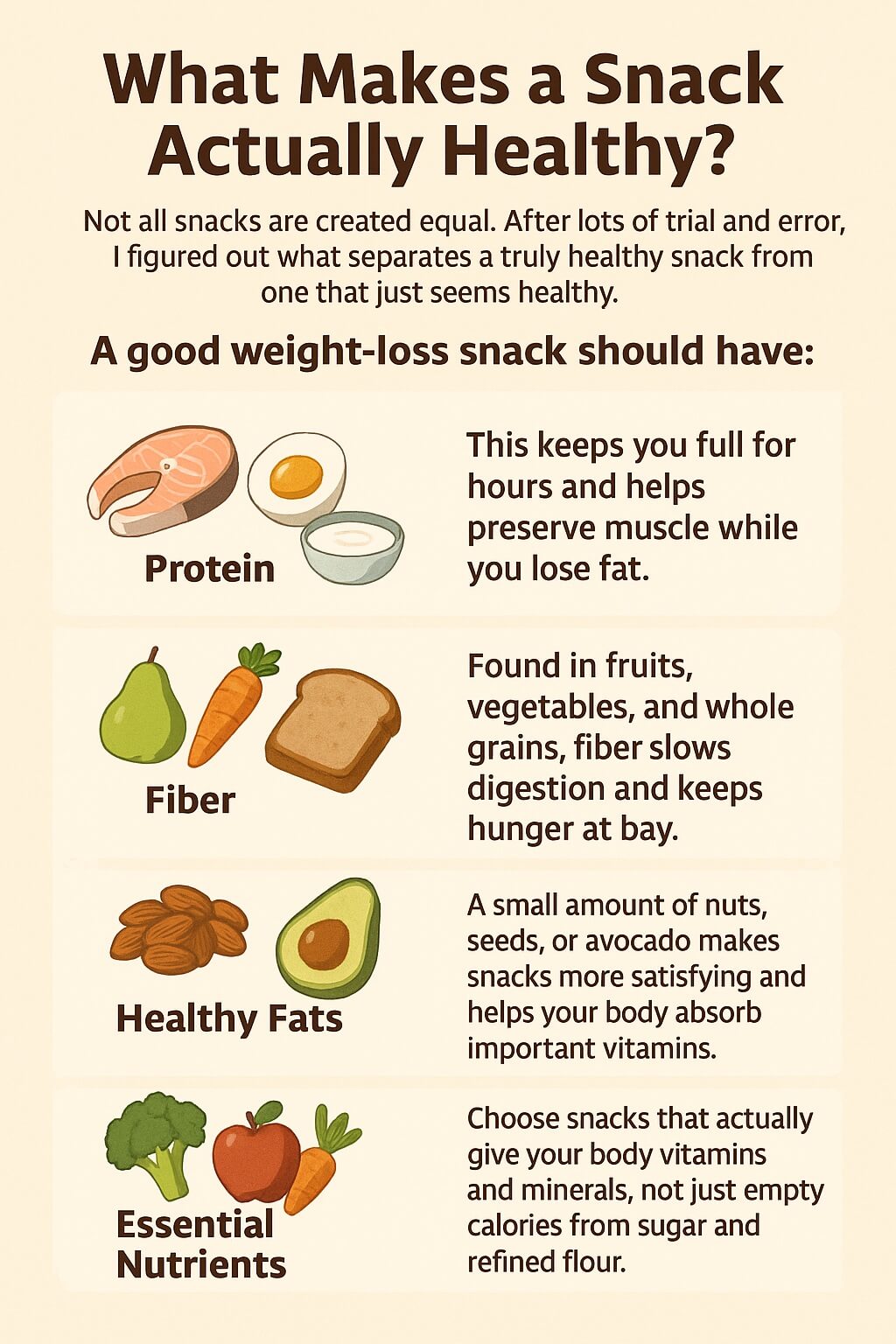
Aim for snacks in the 100 to 200 calorie range. This is enough to curb hunger without adding too many extra calories to your day. And here’s the golden rule: if the ingredient list reads like a chemistry experiment, with added sugars, refined flour, or hydrogenated oils leading the charge, put it back on the shelf.
The best snacks are nutrient-dense—meaning they pack vitamins, minerals, and other good stuff into a relatively small calorie package. You want foods that work for your body, not against it.
What Are the Best Snacks for Weight Loss?
Let’s talk about snacks that actually deliver on keeping you full and supporting your weight loss journey.
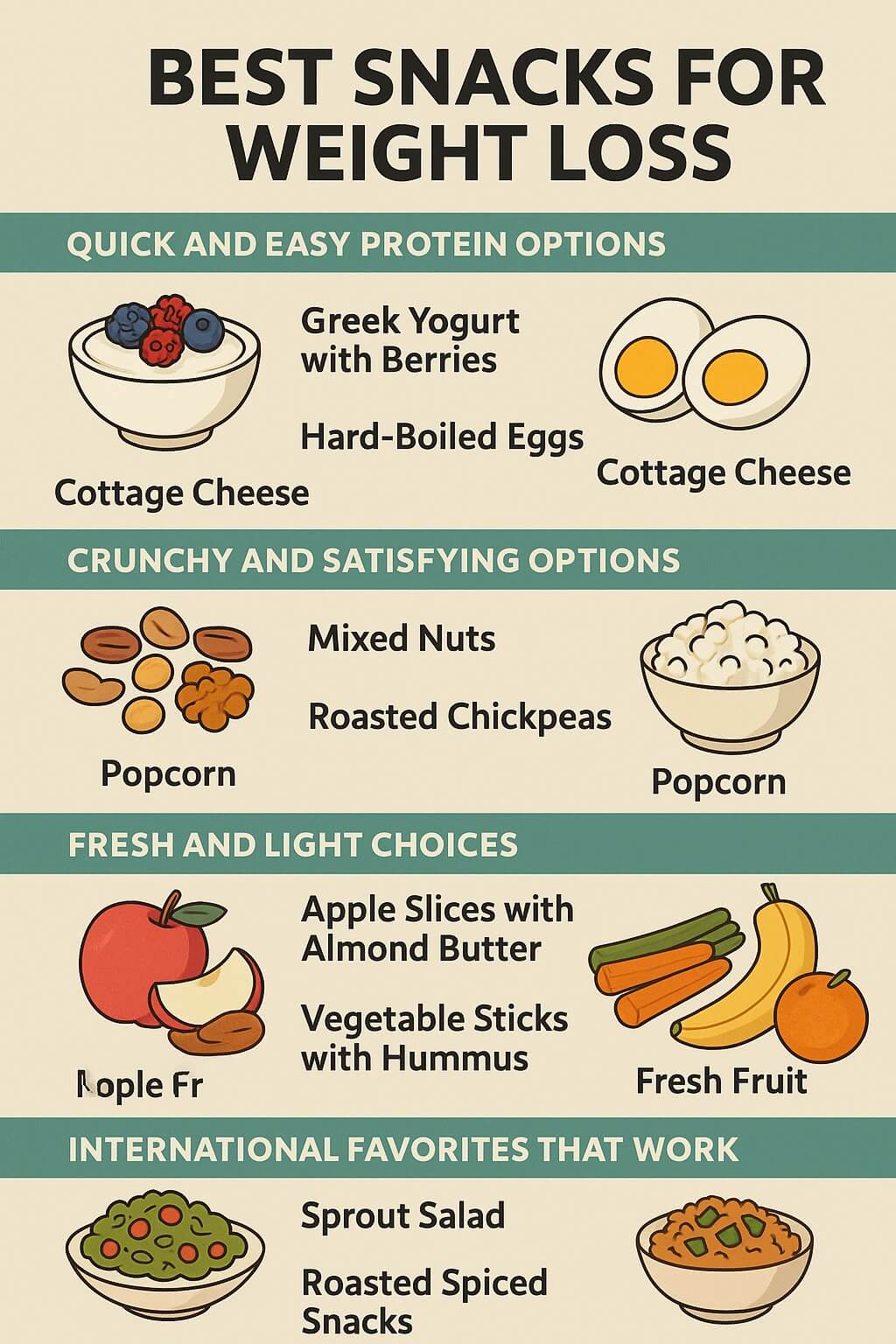
Quick and Easy Protein Options
Greek Yogurt with Berries: This combination hits all the right notes. The yogurt provides protein and probiotics, while berries add fiber, antioxidants, and just enough sweetness to satisfy your taste buds. Choose plain yogurt to avoid added sugars, and you’ve got a winner.
Hard-Boiled Eggs: If you’re looking for convenience, it doesn’t get better than this. One or two hard-boiled eggs give you high-quality protein and healthy fats for around 70-140 calories. Prep a batch on Sunday and you’re set for the week.
Cottage Cheese: Another protein powerhouse that’s incredibly versatile. Eat it plain, add some cucumber slices, or top it with a sprinkle of cinnamon. It’s filling, nutritious, and perfect for busy professionals who need something quick.
Crunchy and Satisfying Options
Mixed Nuts: A small handful (about a quarter cup) of almonds, walnuts, or cashews provides healthy fats, protein, and fiber. Yes, nuts are calorie-dense, but they’re so satisfying that a little goes a long way. Just watch your portions—it’s easy to overdo it.
Roasted Chickpeas: These are perfect when you’re craving something crunchy and salty. They deliver protein and fiber with way fewer calories than chips. You can buy them pre-made or roast your own with olive oil and your favorite seasonings.
Popcorn: Air-popped popcorn is actually a whole grain and surprisingly low in calories. Three cups give you about 100 calories and plenty of fiber. Skip the butter and heavy salt, and season with herbs or a light sprinkle of parmesan instead.
Fresh and Light Choices
Apple Slices with Almond Butter: The classic combo that works every time. The apple provides fiber and natural sweetness, while almond butter adds protein and healthy fats. Stick to one tablespoon of nut butter to keep calories in check.
Vegetable Sticks with Hummus: Carrots, celery, bell peppers, cucumber—pick your favorites and dip them in hummus for a satisfying snack that’s loaded with nutrients and fiber. This combo rarely exceeds 150 calories and keeps you full for hours.
Fresh Fruit: Sometimes simple is best. A medium banana, orange, or pear gives you natural energy, fiber, and vitamins without any prep work. Pair it with a handful of nuts for extra staying power.
International Favorites That Work
If you enjoy diverse flavors, there are plenty of options inspired by global cuisines that fit perfectly into a weight loss plan.
Sprout Salad: Mixed sprouts tossed with tomatoes, onions, lemon juice, and spices create a refreshing, high-fiber snack that’s incredibly filling for minimal calories.
Roasted Spiced Snacks: Think roasted chickpeas seasoned with cumin, or puffed lotus seeds lightly salted. These satisfy the urge to munch without the guilt.
Savory Grain Bowls: A small portion of whole grains like bulgur or quinoa mixed with vegetables makes for a more substantial snack when you need something heartier. Add herbs and a squeeze of lemon for flavor.
What Are the Best High-Protein Snacks?
When weight loss and muscle maintenance are your goals, protein becomes even more important. Here are the heavy hitters:
Protein-Rich Dairy: Beyond Greek yogurt and cottage cheese, options like fresh cheese cubes seasoned with herbs or black pepper make excellent protein snacks. They’re filling, portable, and pair well with vegetables.
Edamame: These young soybeans are a complete protein source and incredibly satisfying. A half cup provides about 90 calories and 8 grams of protein. Buy them frozen and just heat when needed.
Nut Butter on Whole Wheat: One tablespoon of peanut or almond butter on a slice of whole grain bread gives you protein, fiber, and healthy fats. It’s simple but effective at keeping hunger at bay.
Protein Bars: Choose carefully here. Look for bars with at least 10 grams of protein, minimal added sugar (under 8 grams), and a short, recognizable ingredient list. These are perfect for your desk drawer or gym bag.
Which Snacks Should You Avoid for Weight Loss?
Let’s talk about the culprits that pretend to be snacks but really just add empty calories and leave you hungrier than before.
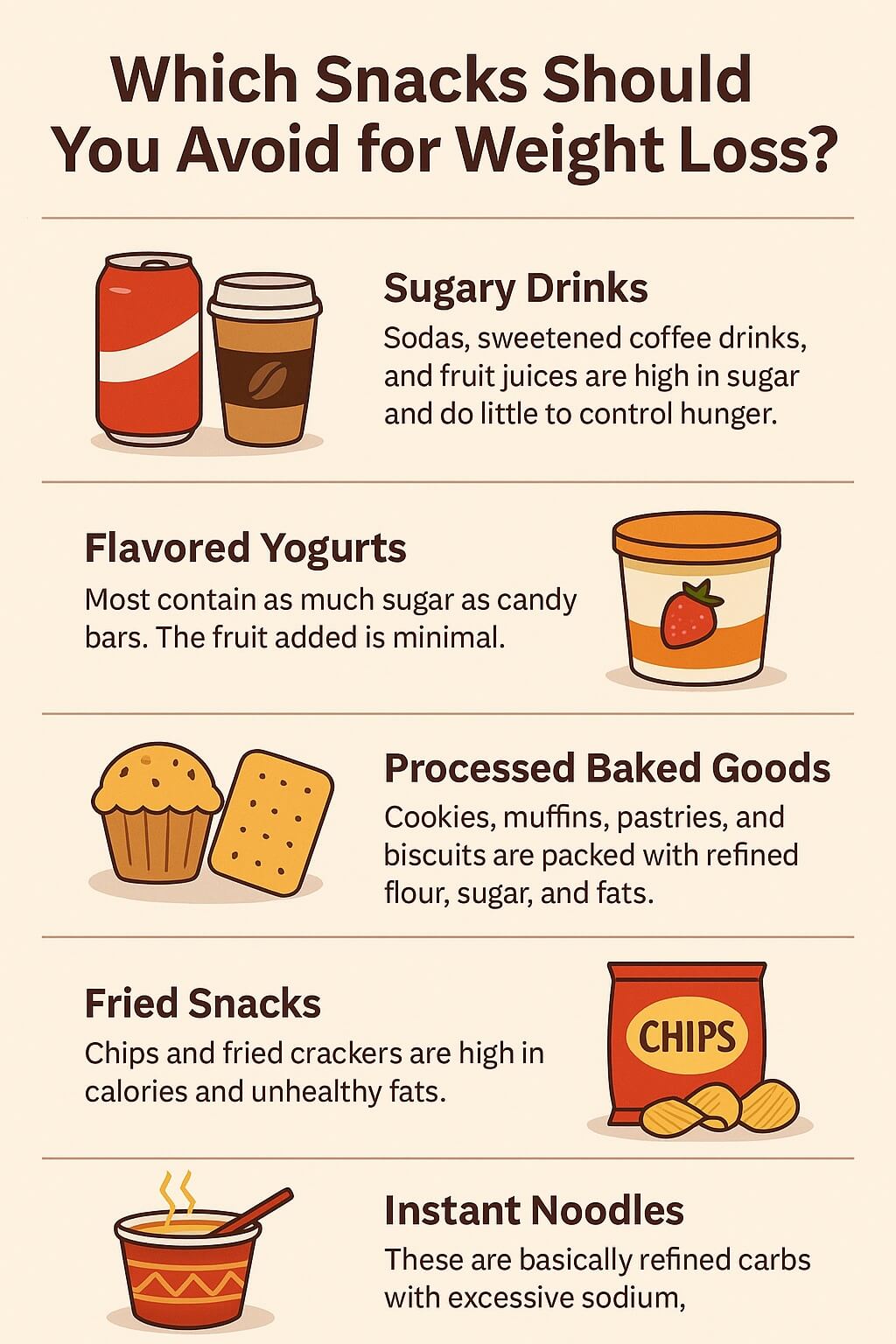
Sugary Drinks: Sodas, sweetened coffee drinks, and fruit juices deliver massive sugar hits without any fiber or protein to slow absorption. They spike your blood sugar, crash your energy, and do nothing for hunger.
Flavored Yogurts: Most commercial flavored yogurts contain as much sugar as candy bars. The “fruit” versions often have very little actual fruit. Stick with plain and add your own fresh berries.
Processed Baked Goods: Cookies, muffins, pastries, and even those “digestive” biscuits are usually packed with refined flour, sugar, and unhealthy fats. They taste good for two minutes and then leave you craving more.
Fried Snacks: Chips, fried crackers, and similar products are calorie bombs with little nutritional value. The combination of refined carbs and unhealthy fats makes them incredibly easy to overeat.
Instant Noodles: While convenient, these are essentially refined carbs with excessive sodium. They won’t keep you full and often lead to energy crashes.
How Can You Snack Smarter?
Having healthy snacks available is just the first step. How you snack matters just as much as what you snack on.
Portion Control is Everything
Never eat directly from the package. It’s way too easy to polish off an entire bag of almonds or box of crackers when you’re not paying attention. Instead, portion out your snacks into small containers or bags. Seeing exactly how much you’re eating makes a huge difference.
Balance Your Snacks
Try to include both a protein source and a fiber source in each snack. This combination takes longer to digest, keeping you fuller longer and preventing blood sugar spikes. For example, pair apple slices with cheese, or whole grain crackers with hummus.
Check Your Hunger
Before reaching for a snack, drink a glass of water and wait five minutes. Sometimes we mistake thirst for hunger. Also, ask yourself if you’re truly hungry or just bored, stressed, or eating out of habit. Real hunger builds gradually, while emotional eating hits suddenly.
Use a Plate
This sounds simple, but it works. Putting your snack on a plate instead of eating from the bag makes you more mindful of portions and helps you enjoy your food more. It transforms mindless munching into intentional eating.
Plan Ahead
Don’t wait until you’re starving to think about snacks. Prep options at the beginning of the week—wash and cut vegetables, portion out nuts, hard-boil eggs. When healthy snacks are as convenient as junk food, you’ll make better choices.
What’s the Best Snacking Schedule for Weight Loss?
Creating a simple routine takes the guesswork out of when to snack and helps prevent overeating.
Mid-Morning (10-11 AM): If you eat breakfast early, a small snack here prevents excessive hunger at lunch. Try a piece of fruit with a handful of nuts, or Greek yogurt with berries.
Afternoon (3-4 PM): This is when most people hit an energy slump and raid the vending machine. Be prepared with a protein-rich snack like hard-boiled eggs, cheese with crackers, or a protein bar.
Early Evening (If Needed): If dinner is several hours away and you’re genuinely hungry, a light snack prevents overeating at dinner. Vegetable sticks with hummus or a small portion of cottage cheese works perfectly.
The key is flexibility. If you workout in the evening, you might need a snack beforehand. If you eat larger meals, you might need fewer snacks. Listen to your body and adjust accordingly.
The Bottom Line: Making Snacking Work for You
Healthy snacking isn’t about deprivation or following rigid rules. It’s about being strategic with your food choices so you can lose weight without feeling hungry or deprived all the time.
The right snacks keep your metabolism humming, prevent overeating at meals, stabilize your blood sugar, and provide essential nutrients your body needs. Whether you prefer quick protein options like eggs and yogurt, crunchy choices like nuts and chickpeas, or fresh options like fruit and vegetables, there’s a healthy snack that fits your lifestyle.
For busy professionals juggling work deadlines, family responsibilities, and fitness goals, planning your snacks is just as important as planning your meals. Spend a little time each week preparing healthy options, and you’ll find that staying on track with your weight loss goals becomes much easier.
Remember: weight loss isn’t about being perfect. It’s about making better choices more often. When you swap processed junk for nutrient-dense snacks and eat mindfully instead of mindlessly, those small changes add up to significant results over time.
Start simple. Pick two or three healthy snacks from this guide that appeal to you, prep them for the week, and see how you feel. You’ll likely notice more stable energy, better hunger control, and steady progress toward your weight loss goals—all while actually enjoying what you eat.
That’s the real secret to sustainable weight loss: finding an approach that works with your life, not against it.