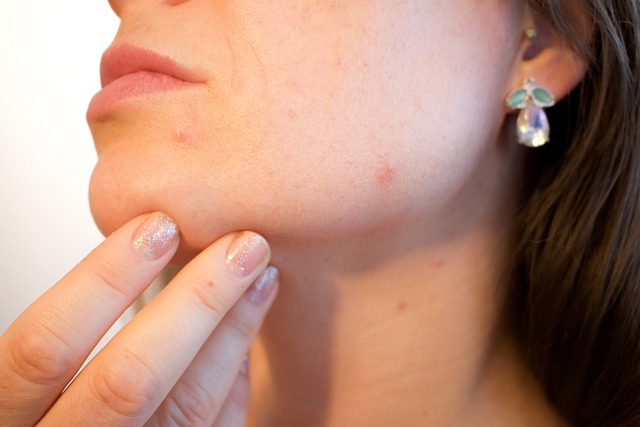
Looking tired and dull in the mirror is frustrating, especially when every skincare solution seems to cost a fortune or require needles. Wrinkles are completely normal—they’re literally just proof that you’ve smiled, frowned, and lived your life. But wanting your skin to look fresh and healthy rather than tired and dull? That’s totally reasonable, and you don’t need to drain your bank account to make it happen.
The skincare industry loves to push expensive procedures and luxury products as the only path to better-looking skin. But the truth is that some of the most effective solutions are surprisingly affordable and don’t require injections at all. Let’s talk about what actually makes skin look dull and tired, and what you can do about it without breaking the bank.
Why does skin start looking dull and blah in the first place?
Understanding what causes dull skin helps you fix it more effectively. Several things happen as we age and go through life that make skin lose its fresh, glowing appearance.
Dead skin cells build up on the surface instead of shedding naturally like they did when you were younger. This layer of dead cells makes your skin look gray or ashy rather than bright. Light doesn’t reflect off rough, uneven surfaces the way it bounces off smooth ones, so your complexion loses its natural radiance.
Slower cell turnover means your skin takes longer to regenerate. When you were a teenager, your skin cells turned over about every two weeks. By your thirties and forties, that process slows to three or four weeks. This means dull, damaged cells stick around longer before fresh new ones replace them.
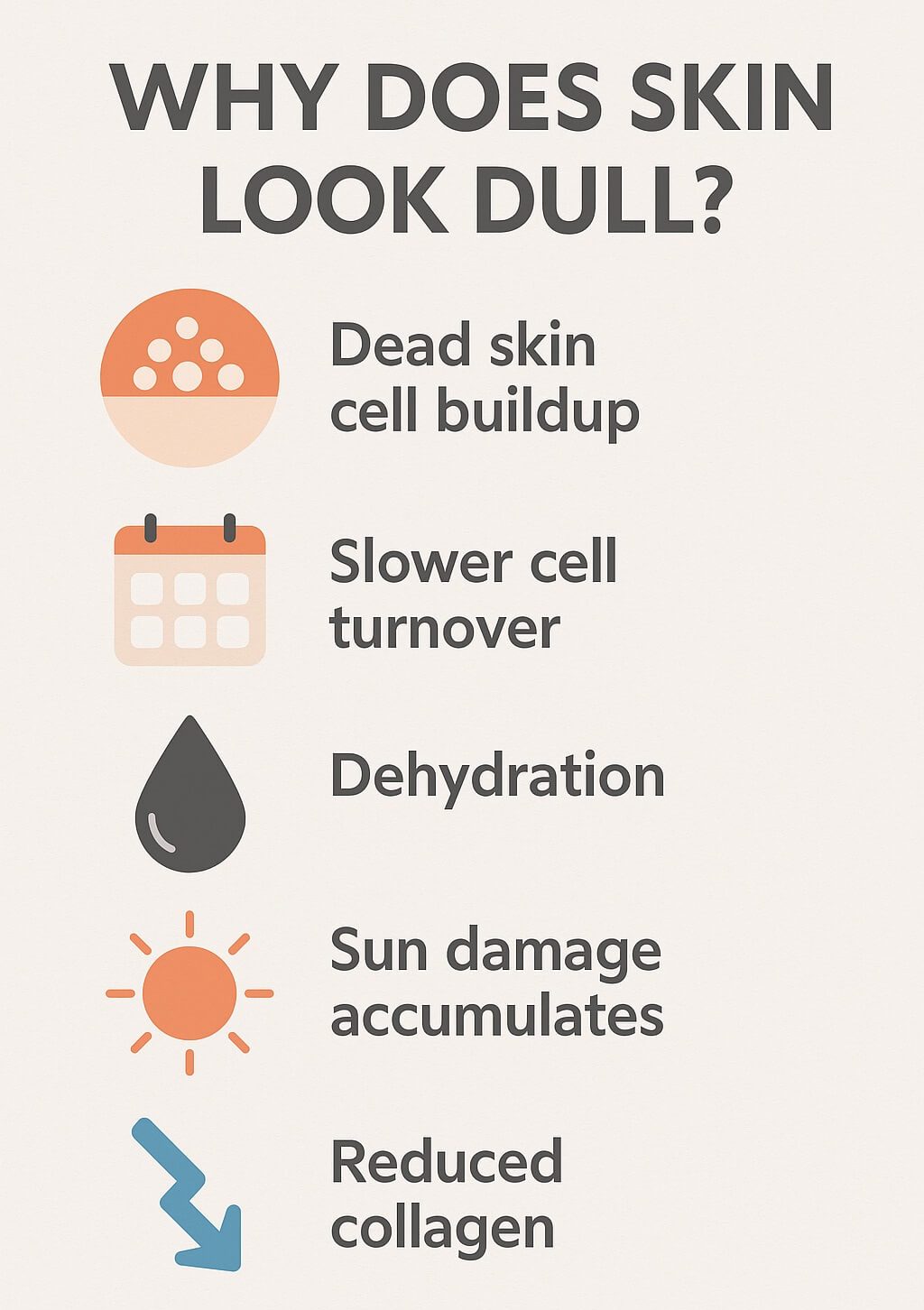
Dehydration makes skin look flat and lifeless. When your skin lacks moisture, it literally deflates a bit. Fine lines become more obvious, and the surface looks rough rather than plump and smooth. This happens even if you drink plenty of water, because skin hydration is about keeping moisture in your skin, not just putting water in your body.
Sun damage accumulates over years and creates uneven pigmentation, rough texture, and broken blood vessels. Even if you weren’t a sun worshipper, everyday exposure adds up. This damage makes skin look tired and older than it actually is.
Reduced collagen production means your skin loses some of its structural support. This doesn’t just cause sagging—it also makes skin thinner and less vibrant-looking. Thinner skin shows blood vessels and shadows more easily, which can make you look tired even when you’re not.
What affordable products actually make a visible difference?
You don’t need to spend hundreds of dollars to see real improvements in how your skin looks. Several ingredients have solid science behind them and cost relatively little.
Retinol is probably the single most effective anti-aging ingredient you can buy without a prescription. It speeds up cell turnover, smooths texture, fades pigmentation, and stimulates collagen production. Drugstore retinol products work—you don’t need luxury brands. Start with a low concentration like 0.25 or 0.5 percent and use it two or three nights per week at first. Your skin needs time to adjust, so be patient. After a few weeks, you can increase frequency. Results take about three months to become really noticeable, but they’re worth the wait.
Vitamin C serums brighten dull skin and protect against further damage. Look for products with L-ascorbic acid or ascorbic acid listed near the top of the ingredient list. These serums can be pricey, but affordable options exist. Apply it in the morning before sunscreen. Vitamin C is unstable and breaks down when exposed to light and air, so buy smaller bottles that you’ll use up within three months, and store them in a cool, dark place.
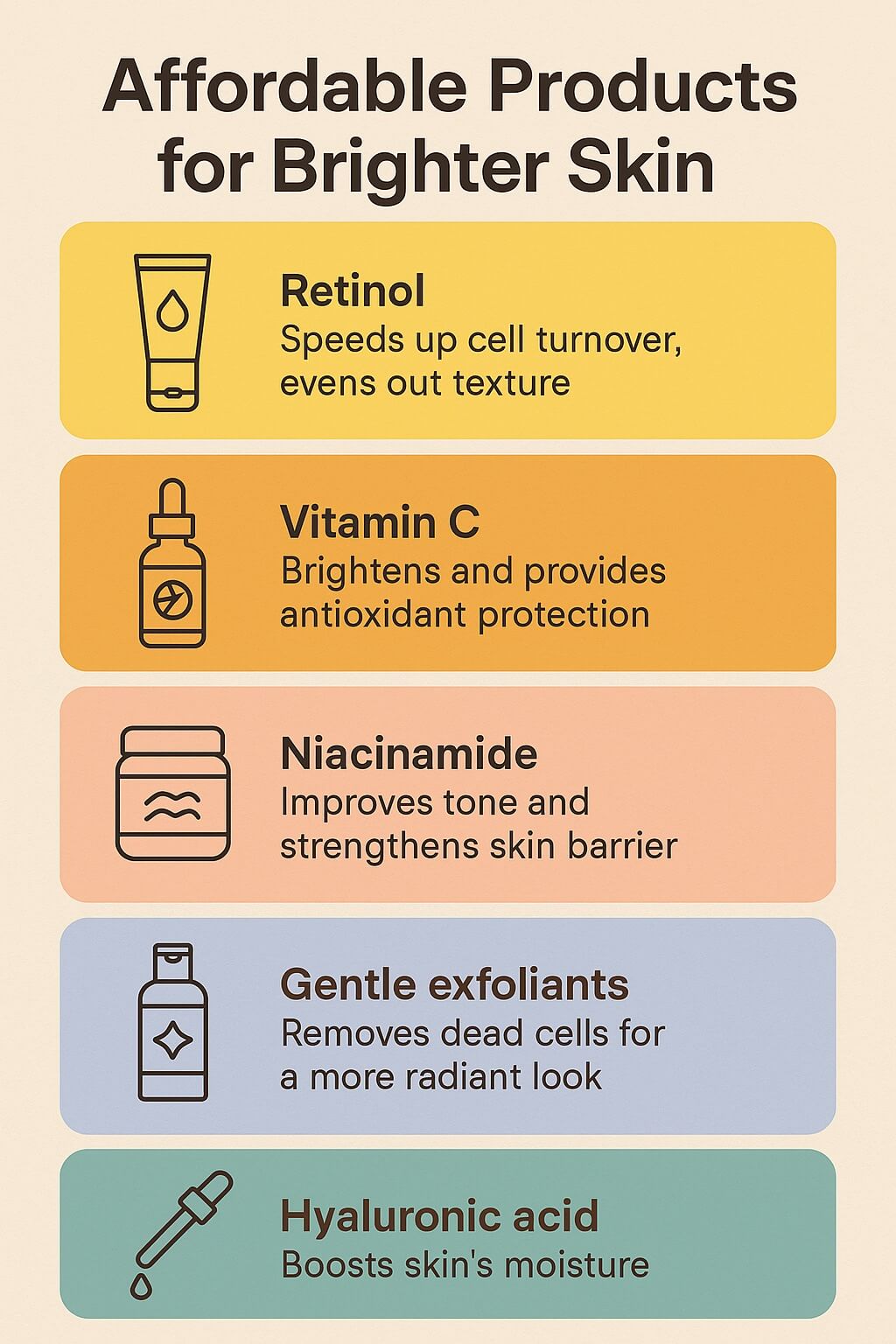
Niacinamide improves skin texture, reduces the appearance of pores, evens out skin tone, and strengthens your skin barrier. It’s gentle enough for daily use and works well with other ingredients. Many affordable moisturizers and serums now contain niacinamide. Look for products with 5 to 10 percent concentration for best results.
Gentle chemical exfoliants remove dead skin buildup without harsh scrubbing. AHAs like glycolic acid and lactic acid work on the skin surface to dissolve dead cells and reveal brighter skin underneath. BHAs like salicylic acid penetrate into pores and work well for oily skin. Start with products containing 5 to 8 percent AHAs or 2 percent BHA, used two or three times per week.
Hyaluronic acid is a humectant that pulls moisture into your skin and holds it there. It plumps up fine lines temporarily and makes skin look dewy and fresh. Apply it to damp skin, then seal it in with moisturizer. Hyaluronic acid products are widely available at all price points.
How important is sunscreen for making skin look better?
More important than almost anything else, honestly. Daily sunscreen prevents new damage while your other products work to repair existing issues. Without sunscreen, you’re basically taking one step forward and two steps back.
UV radiation breaks down collagen, creates pigmentation, causes roughness, and speeds up aging. Every day you go without sunscreen, you’re undoing some of the good work your other skincare products are doing. Even on cloudy days, even in winter, even if you’re just going from your house to your car to your office.
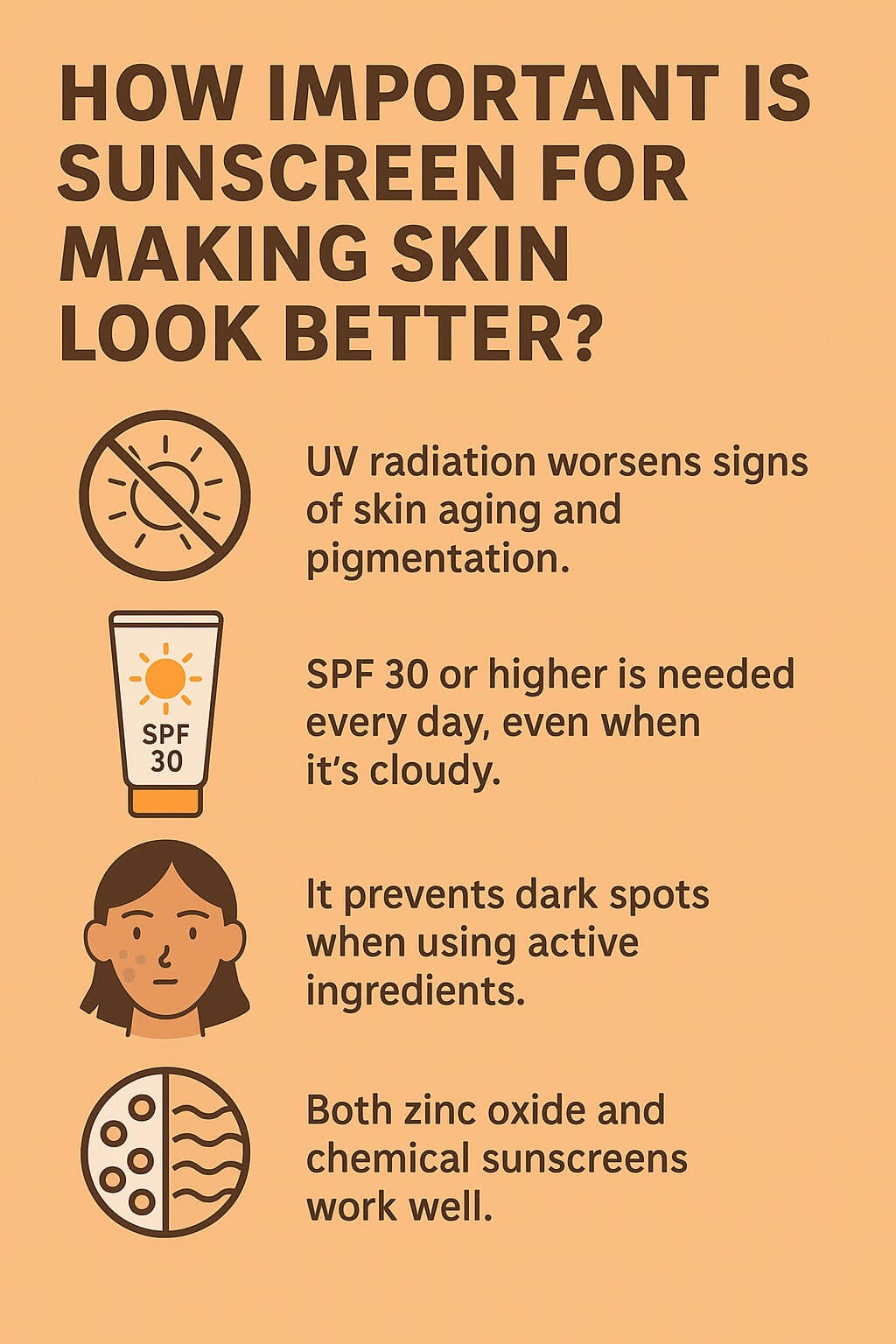
You need SPF 30 at minimum, though SPF 50 is better. Reapply every two hours if you’re outside for extended periods. For everyday indoor life, one morning application is usually sufficient as long as you’re not sitting directly by windows all day.
Sunscreen also prevents the post-inflammatory hyperpigmentation that can happen when you’re using active ingredients like retinol or exfoliants. These products can make your skin more sensitive to sun, so protection becomes even more critical.
Physical sunscreens with zinc oxide or titanium dioxide sit on top of your skin and reflect UV rays. Chemical sunscreens absorb into your skin and convert UV radiation into heat. Both types work, so choose whichever texture you prefer and will actually use daily.
What can I do about forehead wrinkles specifically without injections?
Forehead lines form from repeated muscle movements combined with lost skin elasticity. While nothing topical will completely erase deep expression lines the way injections can, you can definitely make them less noticeable.
Retinol used consistently will gradually improve the appearance of forehead lines over several months. It won’t paralyze the muscle like injections do, but it thickens skin slightly, smooths texture, and improves skin quality overall. This makes wrinkles less prominent even though they’re still there.
Peptide serums support collagen production and can help with fine lines. Peptides are chains of amino acids that signal your skin to produce more collagen. They work slowly and subtly, but over time they can improve skin firmness and reduce the appearance of wrinkles. Look for products containing matrixyl or copper peptides.
Facial massage and exercises might help to some degree. Gently massaging your forehead increases blood flow and can temporarily plump the skin. Some people find that facial exercises targeting the forehead area create slight improvements over time, though the evidence is mixed. At minimum, the massage helps products absorb better and feels relaxing.
Hydration makes a bigger difference than you’d think. When skin is well-hydrated, wrinkles appear softer and less deep. Use a rich moisturizer on your forehead, especially at night. Products with ceramides and fatty acids strengthen your skin barrier and help it hold onto moisture better.
Silicone-based primers can temporarily fill in wrinkles and create a smoother appearance, especially under makeup. These products don’t treat wrinkles, but they make them less visible for several hours. This can be useful for special occasions when you want your forehead to look particularly smooth.
Is there a simple routine that doesn’t take forever?
A basic routine that actually improves skin doesn’t need to be complicated or time-consuming. Three minutes in the morning and five minutes at night is enough.
Morning routine starts with washing your face with a gentle cleanser. Pat dry, then apply vitamin C serum while your skin is still slightly damp. Follow with a moisturizer that contains SPF, or use a separate sunscreen. That’s it—three products, three minutes.
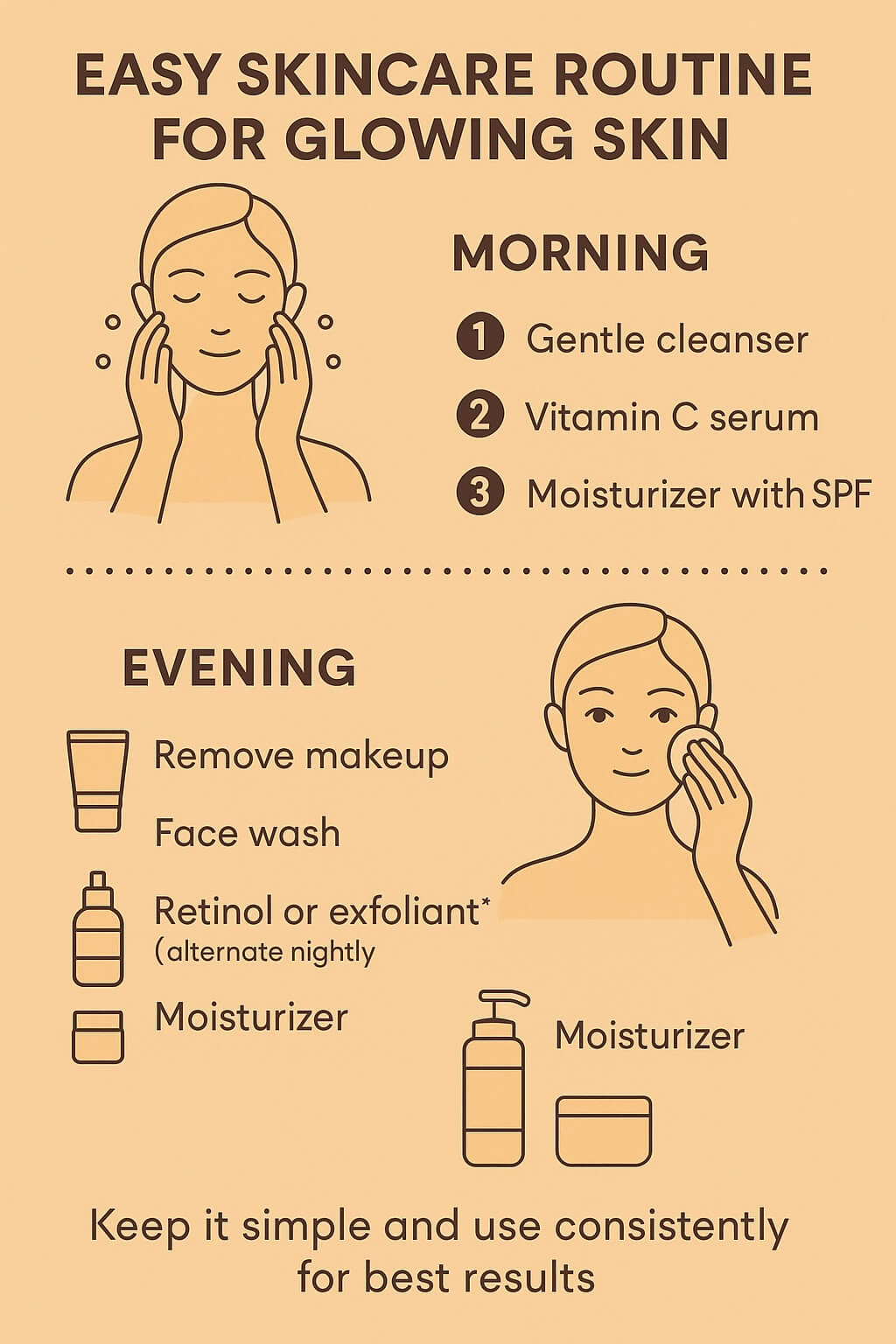
Evening routine begins with removing makeup or sunscreen using a cleansing balm or micellar water. Follow with a gentle face wash. On nights you’re using retinol, apply a pea-sized amount after your skin is completely dry. Wait about 20 minutes, then apply your regular moisturizer over it. On non-retinol nights, you can use an exfoliating product or just go straight to moisturizer.
You don’t need ten different serums and creams. More products doesn’t equal better results. Often it just means more money spent and more potential for skin irritation from overloading your face with active ingredients.
Consistency matters more than having the perfect routine. Using basic, effective products every day will always beat using fancy products sporadically.
How long before I see results from affordable skincare?
Managing expectations is important because skincare isn’t instant. Different improvements happen on different timelines.
Hydration and brightness from moisturizers and vitamin C show up relatively quickly—within one to two weeks. Your skin will look plumper, fresher, and more glowing once you’re consistently keeping it moisturized and protected.
Texture improvements from exfoliants become noticeable within three to four weeks. Your skin will feel smoother and look more even as dead cells slough off and cell turnover increases.
Pigmentation changes take about six to eight weeks. Dark spots from sun damage or old acne marks will gradually fade as your products work on evening out your skin tone.
Wrinkle reduction from retinol requires patience—usually three to six months of consistent use before you see real improvement. The first changes you’ll notice are smoother texture and more even tone. The wrinkle softening comes later as collagen production increases.
Taking progress photos helps you see the gradual changes that are hard to notice day-to-day. Take pictures in the same lighting, from the same angle, once a month. After three months, compare your photos and you’ll likely see differences that weren’t obvious in the mirror.
What mistakes make affordable skincare not work?
Even good products fail if you’re using them wrong. Several common mistakes prevent people from getting results.
Using too many active ingredients at once irritates your skin and causes more problems than it solves. Your face gets red, flaky, and sensitive, which makes you look worse, not better. Start with one active ingredient, give it several weeks, then gradually add others if needed.
Not wearing sunscreen daily completely sabotages your results. You cannot repair and protect your skin simultaneously if you’re letting UV damage happen every day. Sunscreen is non-negotiable.
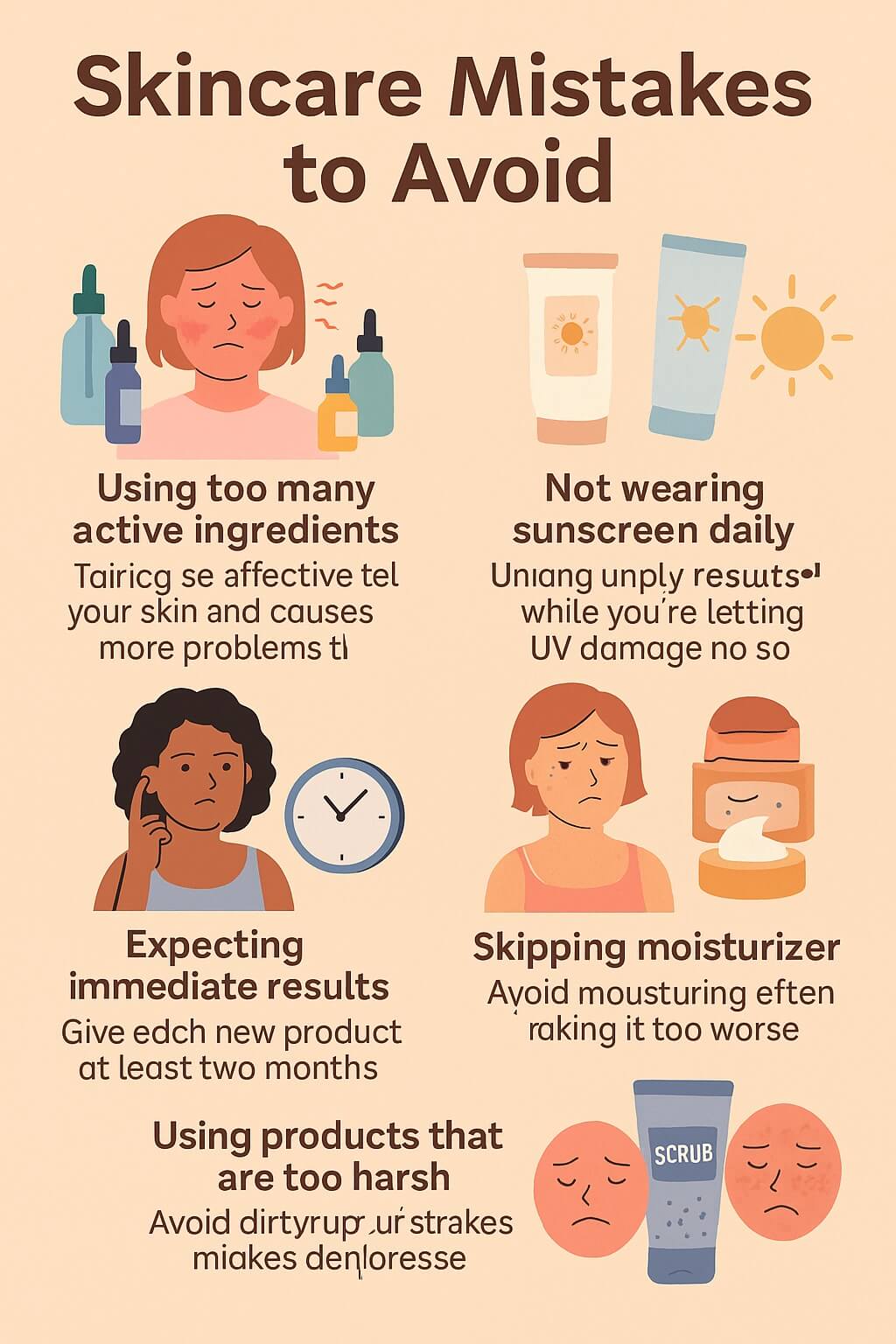
Expecting immediate results leads to frustration and product-hopping. You try something for two weeks, don’t see dramatic changes, and switch to something else. Your skin never gets a chance to respond to any single product. Give each new product at least two months before deciding it’s not working.
Skipping moisturizer because you think it makes you oily actually makes things worse. When your skin is dehydrated, it can overproduce oil to compensate. Proper moisturizing often reduces oiliness rather than increasing it.
Using products that are too harsh for your skin causes inflammation and damage. Strong exfoliants or high-concentration retinoids might seem like they’d work faster, but they often just irritate your skin. Damaged, inflamed skin looks dull and tired no matter what else you’re doing.
Can lifestyle changes help without spending any money at all?
Absolutely. Some of the most effective things for fresh-looking skin are completely free.
Sleep quality affects how your skin looks dramatically. When you’re sleep-deprived, your skin doesn’t repair itself properly, inflammation increases, and you literally look tired. Aiming for seven to eight hours of quality sleep makes a visible difference within a week.
Water intake matters for overall health, and while drinking water alone won’t hydrate your skin, chronic dehydration affects everything including your complexion. Having water regularly throughout the day supports your body’s ability to maintain healthy skin.
Managing stress reduces inflammation throughout your body, including in your skin. Chronic stress elevates cortisol, which breaks down collagen and makes skin age faster. Finding ways to genuinely relax—whether that’s walking, meditation, or just time with people you enjoy—benefits your skin along with everything else.
Sleeping on your back instead of your face prevents sleep lines that can become permanent wrinkles over time. If you always sleep on the same side, you might notice deeper wrinkles on that side of your face. Back sleeping eliminates this issue.
Not smoking or quitting if you do smoke is possibly the single biggest free change you can make for your skin. Smoking destroys collagen, reduces blood flow to your skin, and causes premature aging more than almost any other factor.
Reducing alcohol consumption helps too. Alcohol dehydrates you and causes inflammation, both of which make skin look dull and tired. You don’t need to quit completely, but cutting back can create noticeable improvements.
What about facial tools and devices?
Some tools provide benefits without the cost of professional treatments, though results are subtle compared to in-office procedures.
Jade rollers and gua sha tools increase circulation and help products absorb better. They also feel nice and can reduce morning puffiness. These tools won’t erase wrinkles or fundamentally change your skin, but they’re inexpensive and make a small positive difference.
Derma rollers at home are riskier. While professional microneedling can improve skin significantly, at-home versions require extreme care with sanitation and technique. Done wrong, they can cause scarring and infection. If you’re interested in this approach, getting professional treatments is safer than DIY.
LED face masks have some science behind them, particularly red light for collagen stimulation and blue light for acne. However, quality devices cost several hundred dollars, which defeats the purpose of looking for affordable options. Professional LED treatments might be worth occasional splurges if they fit your budget.
Facial cleansing brushes can help remove dead skin and clean more thoroughly than hands alone. They’re relatively affordable and can improve product absorption. However, over-use irritates skin, so limit to a few times per week maximum.
The bottom line is that fresh, bright skin doesn’t require injections or luxury products. Consistent use of affordable, evidence-based ingredients combined with sun protection and healthy habits will make a real visible difference. Your skin won’t look twenty years younger, but it will look healthier, brighter, and more alive—which is probably what you actually want anyway.