Open someone’s kitchen cabinet and you might find a lineup of supplement bottles that looks like a small pharmacy. Open someone else’s and there’s nothing but food. Both people probably think they’re doing the right thing for their health, and honestly, they might both be correct for their own situations.
The question of how much to rely on supplements versus whole foods doesn’t have one perfect answer that works for everyone. Your age, health conditions, diet preferences, lifestyle, and even where you live all play into what makes sense. Let’s break down how to think about this balance in a practical way that actually fits into real life.
Should I try to get all my nutrients from food first?
In an ideal world, yes, food should be your primary source of nutrition. Whole foods contain thousands of compounds that work together in ways scientists are still figuring out. When you eat an orange, you’re not just getting vitamin C—you’re getting fiber, flavonoids, potassium, and dozens of other beneficial compounds that all interact with each other.
This is what nutrition experts mean when they talk about food synergy. The vitamin C in that orange gets absorbed better because of the other nutrients present. The fiber slows digestion so you get a steady release of energy instead of a spike. The antioxidants protect the vitamin C from breaking down before your body uses it.
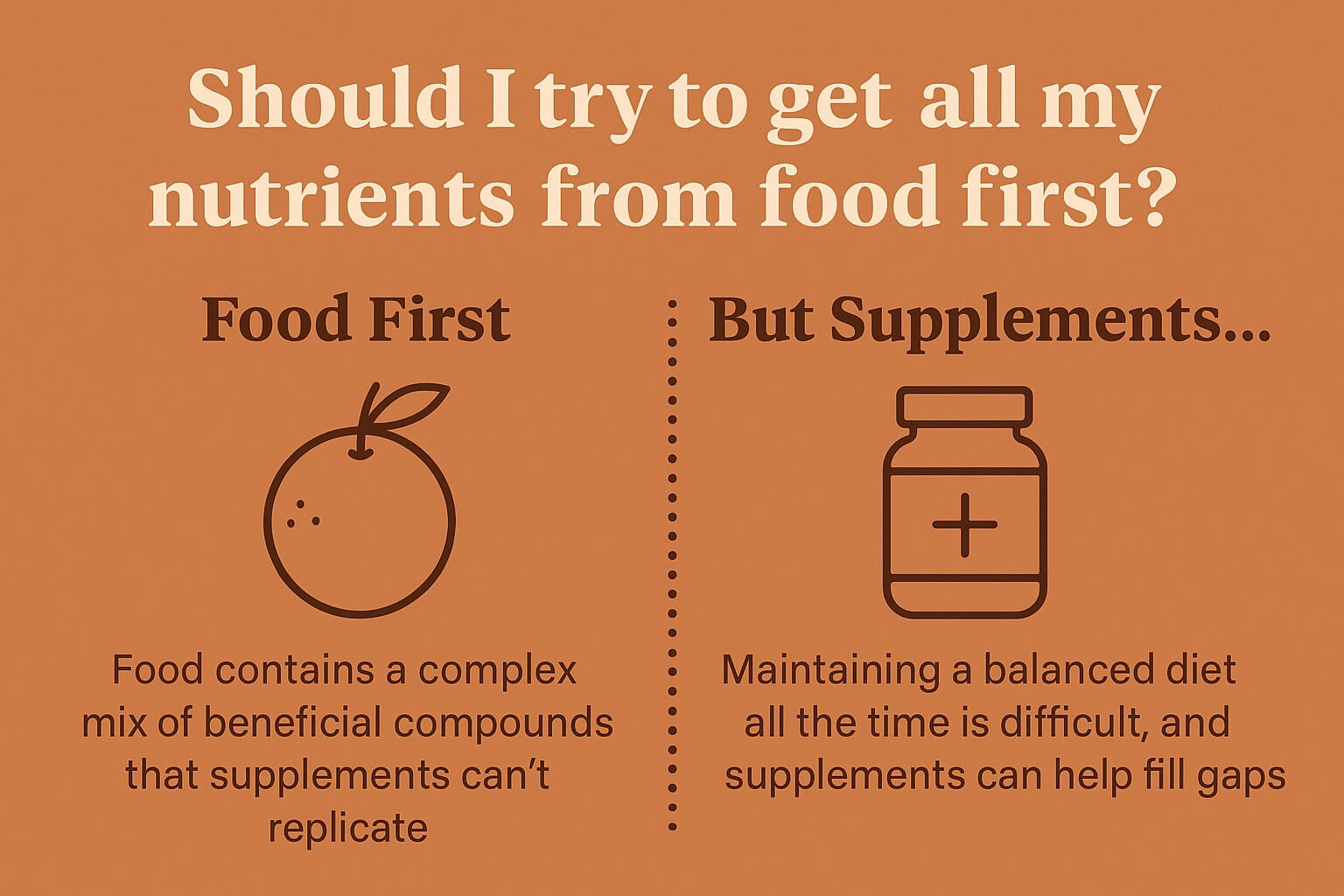
Supplements can’t replicate this complexity. A vitamin C pill gives you the vitamin, but not all those supporting players that help your body use it effectively. This is why study after study shows that people who eat nutrient-rich diets tend to be healthier than people who eat poorly but take supplements.
But here’s the catch—eating a perfectly balanced diet every single day is really hard. It requires time, money, access to quality ingredients, cooking skills, and frankly, a level of dedication that most people can’t maintain long-term. Life gets in the way. You work late and grab takeout. You travel for a week. You go through a stressful period where cooking feels impossible.
This is where the rigid “food only” approach falls apart for most people. Aiming for food first while being realistic about when supplements fill genuine gaps makes more sense than either extreme.
How do I know if I actually need supplements or if I’m wasting money?
This is probably the most important question, and it’s where a lot of people get stuck. The supplement industry is great at making you feel like you need everything, while some nutrition purists act like supplements are always unnecessary.
Start by looking at your actual diet over a typical week, not your ideal diet or what you wish you ate. Keep a food journal for seven days and be honest. Are you really eating two servings of fatty fish per week for omega-3s? Are you getting three cups of dairy or fortified alternatives daily for calcium? Do you eat leafy greens most days?
Certain nutrients are notoriously hard to get enough of from food alone. Vitamin D is the big one—unless you’re spending significant time in the sun year-round without sunscreen, you’re probably not making enough. Very few foods naturally contain vitamin D in meaningful amounts.
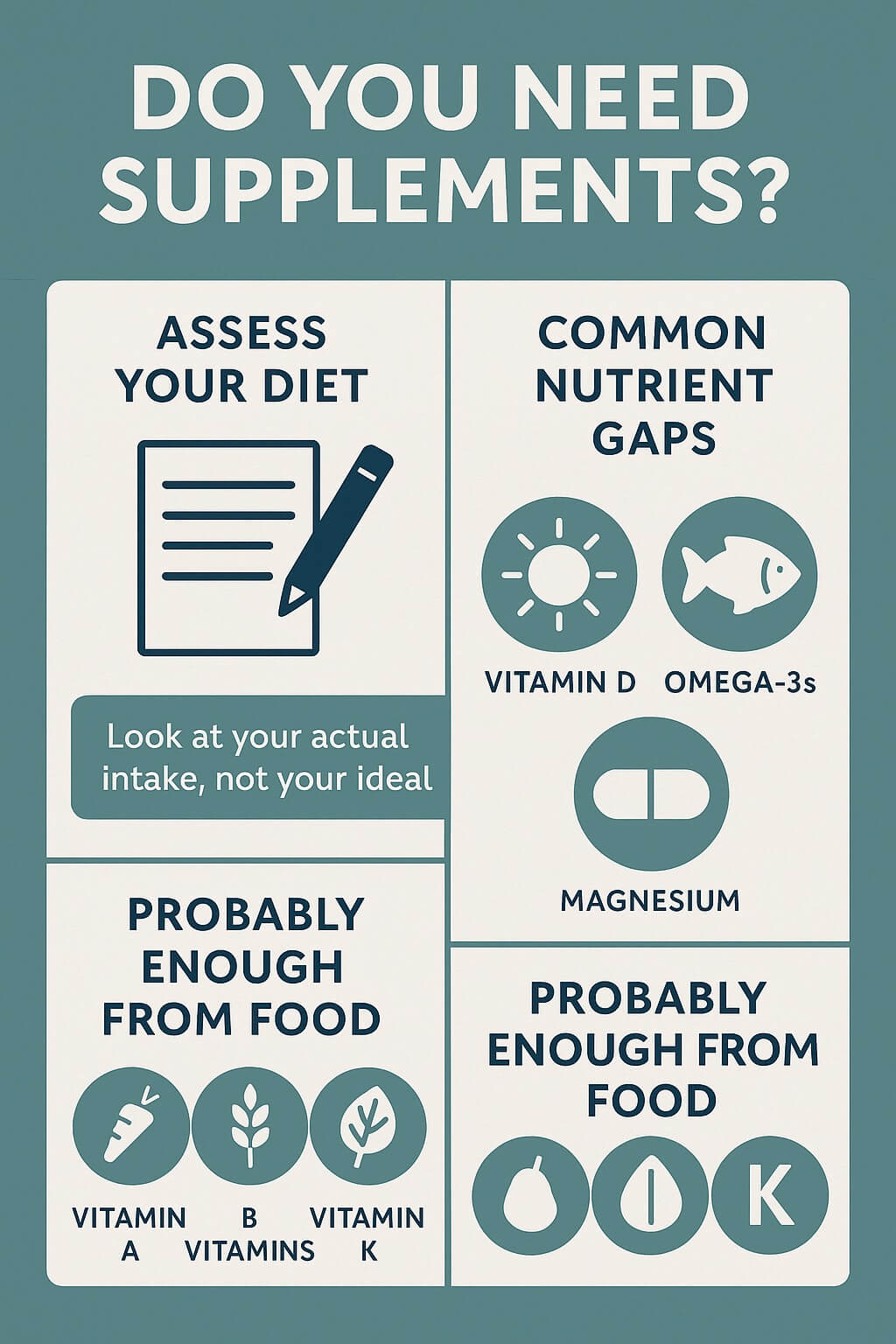
Omega-3 fatty acids are another common gap. If you don’t regularly eat fatty fish like salmon or sardines, you’re likely not getting enough EPA and DHA. Plant sources like flaxseed give you ALA, which your body has to convert to EPA and DHA, and it’s not very efficient at doing so.
Magnesium is surprisingly difficult to get enough of because soil depletion means even magnesium-rich foods contain less than they used to. Many people fall short even when eating a decent diet.
On the flip side, nutrients that are easy to get from food probably don’t need supplementing unless you have a specific health issue. Most people get plenty of vitamin A from colorful vegetables, enough B vitamins from grains and meat, and adequate vitamin K from leafy greens.
Getting blood work done can reveal actual deficiencies rather than guessing. Ask your doctor to check vitamin D, B12, iron, and magnesium levels if you’re curious. This gives you real data instead of just hoping supplements are helping.
What nutrients work better from food than supplements?
Some nutrients are dramatically more effective when they come from food rather than isolated in a pill. Understanding this helps you prioritize where to put your effort.
Antioxidants are a great example. Taking high-dose antioxidant supplements like beta-carotene or vitamin E hasn’t shown the same health benefits as eating antioxidant-rich foods. In fact, some studies found that high-dose antioxidant supplements might even cause harm in certain situations.
But eating berries, dark leafy greens, and colorful vegetables consistently shows clear health benefits. The difference seems to be that foods contain hundreds of different antioxidants that work together, while supplements give you one or two in unnaturally high amounts.

Fiber is another nutrient that works better from food. You can take fiber supplements, and they help with digestion, but they don’t provide the same benefits as fiber from whole grains, fruits, and vegetables. Food-based fiber comes packaged with vitamins, minerals, and phytonutrients that supplements lack.
Calcium absorption depends heavily on vitamin K2, vitamin D, and magnesium being present at the right times. While you can supplement all of these, eating calcium-rich foods as part of balanced meals naturally provides this synergy.
Protein is most effective when it comes from varied food sources throughout the day. Protein powder has its place, especially for athletes or people with high needs, but it shouldn’t replace actual food sources like eggs, meat, beans, and dairy.
When do supplements actually make more sense than food?
Despite everything above, there are clear situations where supplements are the smarter choice, either because food sources aren’t practical or because therapeutic doses require more than diet can provide.
Vitamin D supplementation makes sense for most people living far from the equator, especially during winter months. You’d need to drink nearly ten glasses of fortified milk daily to get adequate vitamin D from food alone, which isn’t realistic.
Pregnant women need folic acid supplements because the amount required to prevent neural tube defects is difficult to get consistently from food, and it needs to be present in the very early weeks of pregnancy before many women even know they’re pregnant.
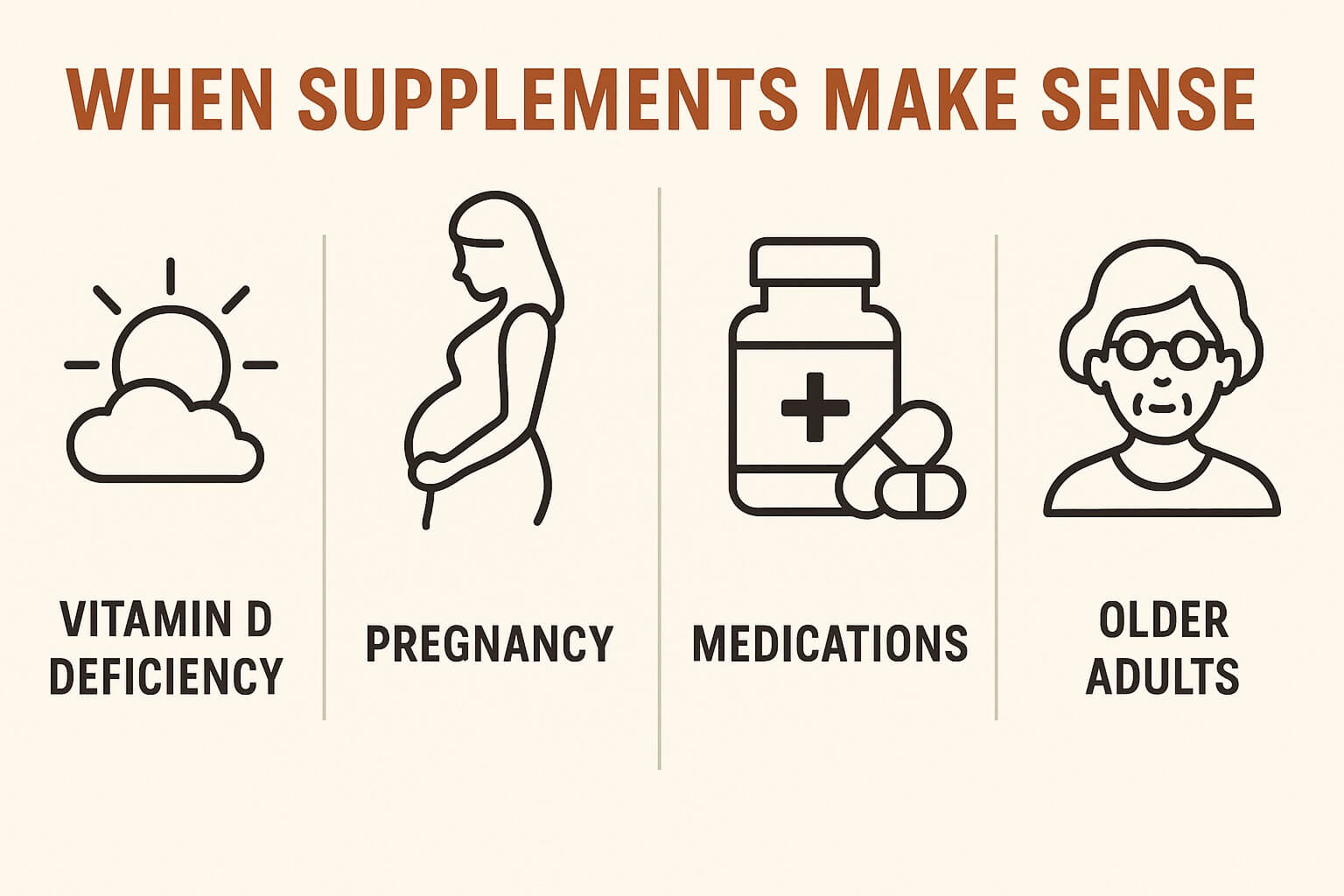
People taking certain medications need supplements to counteract nutrient depletion. Birth control pills can lower B vitamins, acid reflux medications reduce B12 absorption, and some blood pressure medications deplete magnesium and potassium.
Vegans need to supplement B12 since it only comes from animal products. No amount of plant foods will provide it. They may also need to supplement iron, zinc, and omega-3s depending on their diet quality.
Athletes with high energy demands sometimes struggle to eat enough food to meet their needs. Strategic supplement use for protein, electrolytes, or specific performance nutrients can be more practical than trying to eat massive amounts of food.
Older adults often need supplements because their bodies become less efficient at absorbing nutrients from food, even when eating well. B12, vitamin D, and calcium supplements become increasingly important with age.
How much of each nutrient should come from food versus supplements?
A reasonable target is to aim for at least 70 to 80 percent of your nutrition from whole foods, with supplements filling specific identified gaps rather than providing the foundation of your nutrient intake.
Think of supplements as insurance, not as the main policy. Your diet is the main policy. Supplements are there to cover you when your diet falls short, not to replace eating well in the first place.
For most vitamins and minerals, you want to get some from food and only supplement to bridge the gap. For instance, if you need 1000 mg of calcium daily and you get 600 mg from food, a 400 mg supplement makes sense. Taking 1000 mg in supplement form while also eating calcium-rich foods can push you over safe upper limits.
This requires actually knowing what you’re eating, which most people don’t track carefully. A general rule that works without detailed tracking is to eat a varied, nutrient-dense diet and then supplement only the nutrients you know are hard to get from your specific eating pattern.
If you eat meat regularly, you probably don’t need iron supplements. If you’re vegetarian, you might. If you eat salmon twice a week, you might not need fish oil. If you never eat seafood, you probably do.
Can taking too many supplements interfere with nutrient absorption from food?
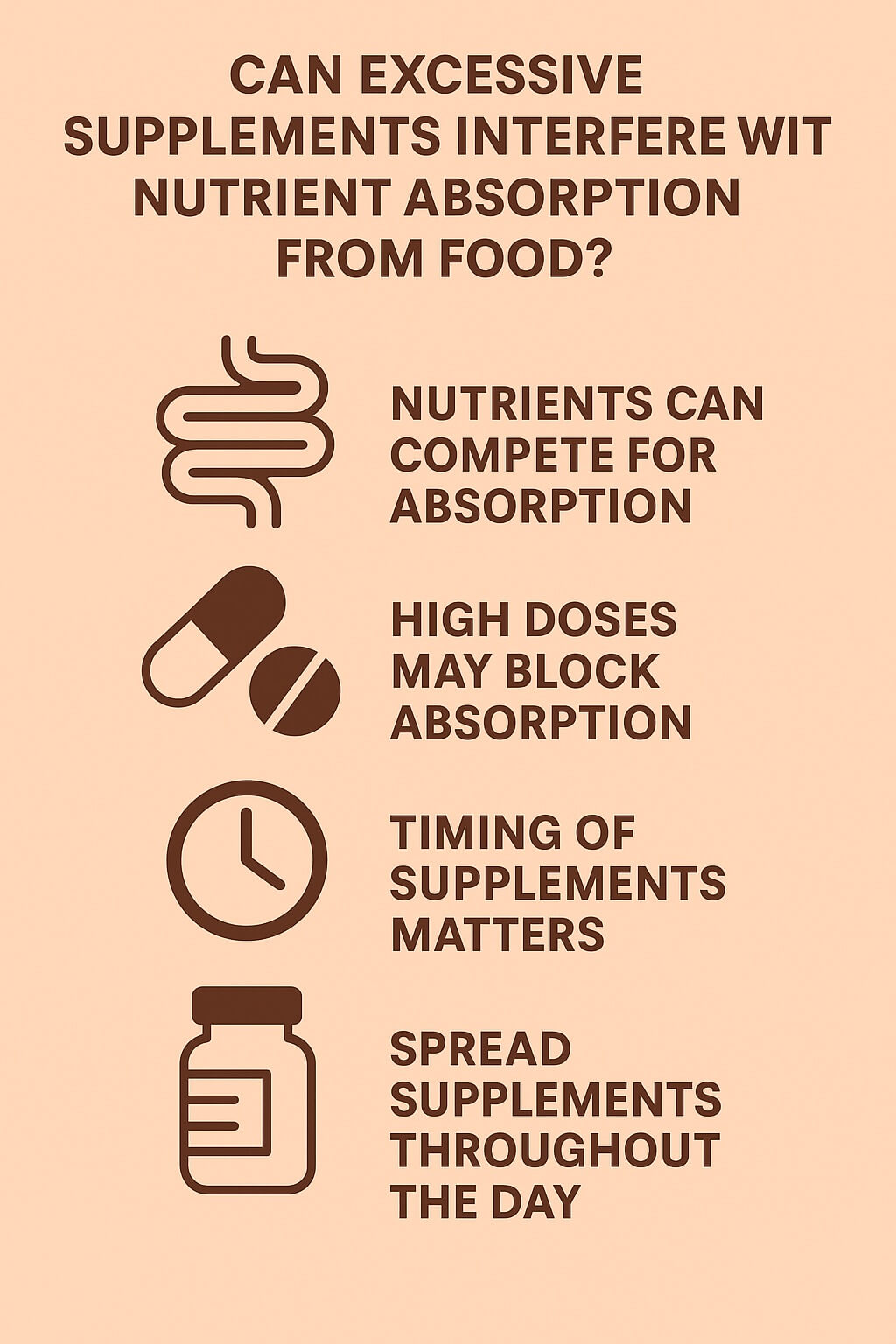
Yes, this is a real concern that doesn’t get talked about enough. Nutrients compete for absorption in your digestive system, so loading up on supplements can actually block your body from absorbing nutrients from food.
High-dose zinc supplements interfere with copper absorption. Too much calcium blocks iron and magnesium. Large amounts of one B vitamin can deplete others. Iron supplements reduce zinc absorption. The list goes on.
This is another reason why getting nutrients primarily from food works better—you naturally get them in balanced ratios. When you start taking multiple high-dose supplements, you risk creating imbalances that weren’t there before.
The timing of supplements matters too. Taking iron with calcium-rich foods or calcium supplements dramatically reduces how much iron you absorb. Taking fat-soluble vitamins without any fat in your meal means most of it passes through unused.
If you’re taking multiple supplements, spread them out throughout the day rather than taking everything at once. This reduces competition for absorption and is easier on your digestive system.
Should I cycle on and off supplements or take them consistently?
For most basic nutritional supplements, consistent daily use makes more sense than cycling. Your body uses vitamin D, magnesium, and omega-3s every single day, so providing a steady supply helps maintain optimal levels.
Cycling makes more sense for supplements taken at therapeutic doses for specific purposes. If you’re taking high-dose vitamin C to fight off a cold or extra zinc for immune support during flu season, you might use them short-term and then stop.
Some people cycle certain supplements because they worry about dependency or reduced effectiveness over time. For most vitamins and minerals, this isn’t a real concern. Your body doesn’t become “dependent” on supplements the way it might with some medications.
The exception is supplements that affect hormone production or have drug-like effects. These might benefit from cycling, but at that point you’re beyond basic nutritional supplementation and should work with a healthcare provider.
What matters most is consistency. Taking supplements sporadically doesn’t allow your body to maintain stable levels. If you’re going to use them, commit to daily use, or at least most days of the week.
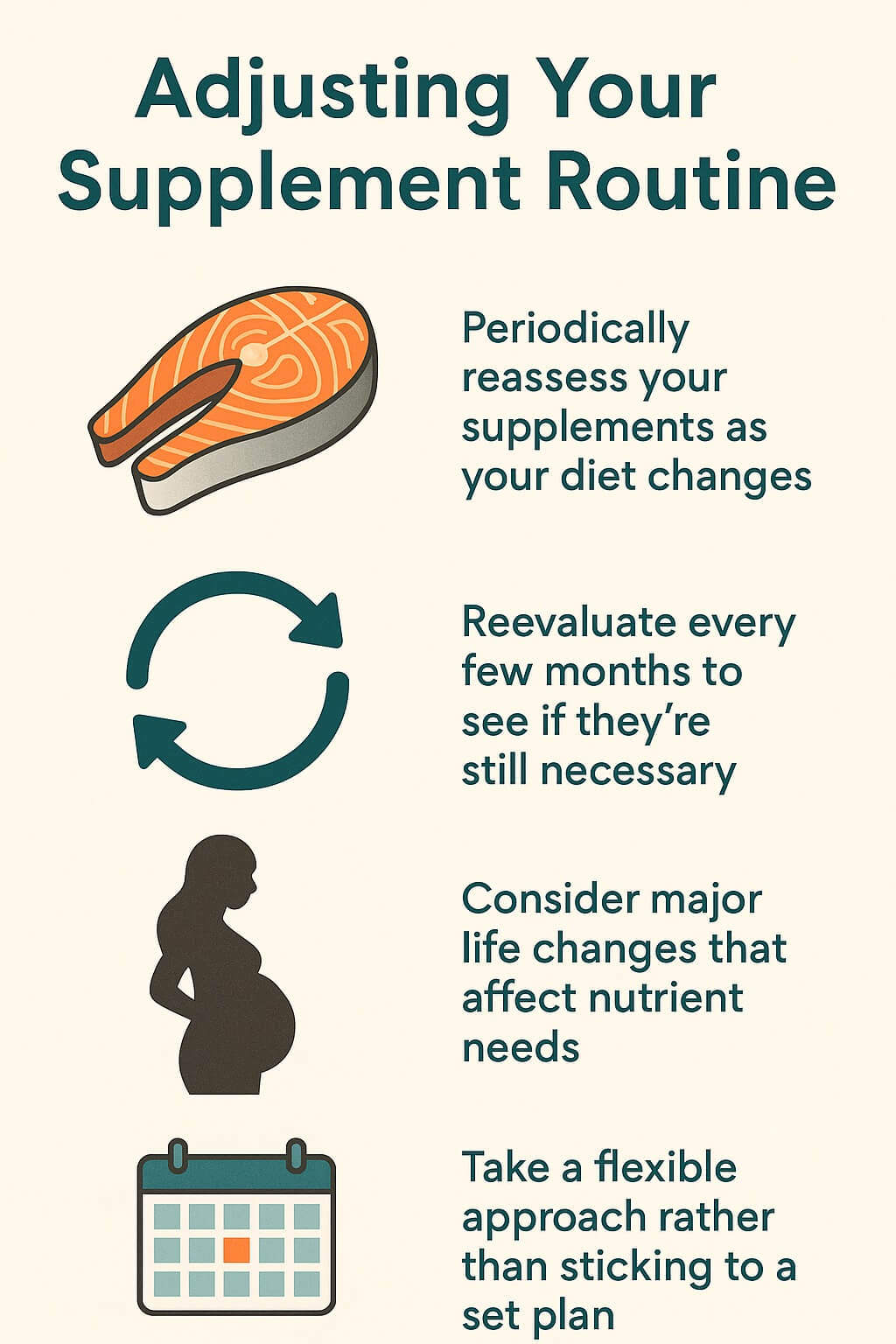
How do I adjust my supplement routine as my diet changes?
Your supplement needs should evolve as your eating patterns change. If you start eating more fish, you might not need fish oil anymore. If you stop eating dairy, you might need to add calcium and vitamin D.
Every few months, take stock of what you’re actually eating versus what you’re supplementing. Many people continue taking supplements they no longer need because it becomes habit.
Major life changes often require adjustment. Starting a new diet like vegetarian or keto changes your nutrient intake significantly. Getting pregnant, reaching menopause, or entering your senior years all shift nutritional needs. Developing a health condition or starting new medications can create new gaps or eliminate old ones.
The best approach is to think of your supplement routine as flexible rather than set in stone. What worked in your twenties might not be right in your forties. What makes sense in summer when you’re outside daily might not work in winter when you’re indoors most of the time.
What’s the simplest way to balance food and supplements without overthinking it?
For most people, a simple framework works better than detailed nutrient tracking. Focus on eating a variety of whole foods including vegetables, fruits, whole grains, proteins, and healthy fats. This covers the majority of your nutritional bases without obsessing over every micronutrient.
Add a few targeted supplements for nutrients that are genuinely hard to get from food in your specific situation. For many people, this means vitamin D, omega-3s if you don’t eat fish, and maybe magnesium. That’s it.
Get blood work done every year or two to check if your approach is working. Adjust based on actual data rather than guessing or following trends.
Don’t take supplements just because everyone else is or because they’re trendy. Have a specific reason for each one you take, whether that’s correcting a deficiency, addressing a health goal, or filling a gap in your diet.
Remember that expensive supplements can’t fix a poor diet. If you’re choosing between spending money on supplements or spending it on higher-quality food, the food almost always wins. Supplements support good nutrition; they don’t create it out of thin air.
The balance between food and supplements isn’t about achieving perfection. It’s about being realistic about what you actually eat, strategic about filling genuine gaps, and flexible enough to adjust as your life changes. That’s sustainable, and sustainability is what actually affects your health over the long run.