You’ve probably heard that salmon is one of the healthiest foods you can eat, mainly because it’s packed with omega-3 fatty acids that support your heart, brain, and overall health. But what if you don’t eat fish? Maybe you’re vegetarian, vegan, allergic to seafood, or you simply don’t like the taste. The good news is that several plant-based foods contain omega-3s too. The more complicated news is that not all omega-3s work the same way in your body.
Understanding the difference between the omega-3s in plants versus fish helps you make informed choices about your diet. While plant sources can definitely contribute to your omega-3 intake, the story is more nuanced than simply swapping flaxseeds for salmon and calling it even.
What’s the difference between plant omega-3s and fish omega-3s?
The omega-3 fatty acids in plants and fish are chemically different types, and your body handles them differently. This is the most important thing to understand when comparing plant and fish sources of omega-3s.
Plant foods like flaxseeds, chia seeds, and walnuts contain a type of omega-3 called ALA, which stands for alpha-linolenic acid. This is a shorter chain fatty acid that your body needs to convert into the longer chain omega-3s called EPA and DHA before it can use them for most health benefits.
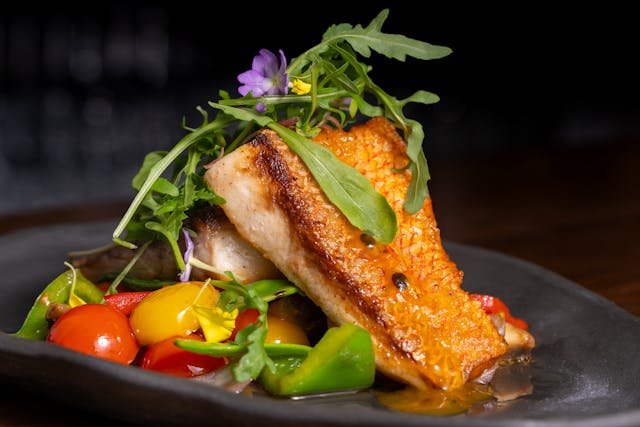
Fish, especially fatty fish like salmon, contain EPA and DHA directly. These are the omega-3s that have been studied most extensively for heart health, brain function, reducing inflammation, and supporting eye health. When you eat salmon, you’re getting these beneficial forms ready to use.

The conversion problem is where things get tricky. Your body can convert ALA from plants into EPA and DHA, but it does so very inefficiently. Studies show that typically only about 5-10% of the ALA you eat gets converted to EPA, and less than 1% makes it all the way to DHA. This means eating a tablespoon of flaxseed oil with 7 grams of ALA doesn’t give you 7 grams of usable EPA and DHA.
Many factors affect how well your body converts ALA to EPA and DHA. Women convert ALA slightly better than men, possibly because estrogen helps with the conversion process. Your overall diet matters too—eating too much omega-6 fatty acids from vegetable oils can interfere with ALA conversion because both types of fats compete for the same enzymes.
This doesn’t mean plant omega-3s are useless. ALA itself has some health benefits, and any conversion to EPA and DHA is better than none. But it does mean you can’t directly compare the grams of ALA in plant foods to the grams of EPA and DHA in fish and assume they’re equivalent.
Which plant foods have the most omega-3s?
Several plant foods are genuinely rich in ALA omega-3s and can be valuable parts of a healthy diet, especially when you eat them regularly and in adequate amounts.
Flaxseeds and flaxseed oil are the superstars of plant-based omega-3s. Ground flaxseeds or flaxseed oil provide substantial amounts of ALA in a small serving. One tablespoon of flaxseed oil contains about 7 grams of ALA, while two tablespoons of ground flaxseeds have roughly 3.2 grams. The oil is more concentrated, but whole ground seeds provide fiber and other nutrients along with the omega-3s.
Chia seeds are another excellent source, with about 5 grams of ALA in just two tablespoons. These tiny seeds are easy to add to smoothies, yogurt, oatmeal, or baked goods. They also absorb liquid and create a gel-like texture, which some people use to make puddings or as an egg substitute in vegan baking.
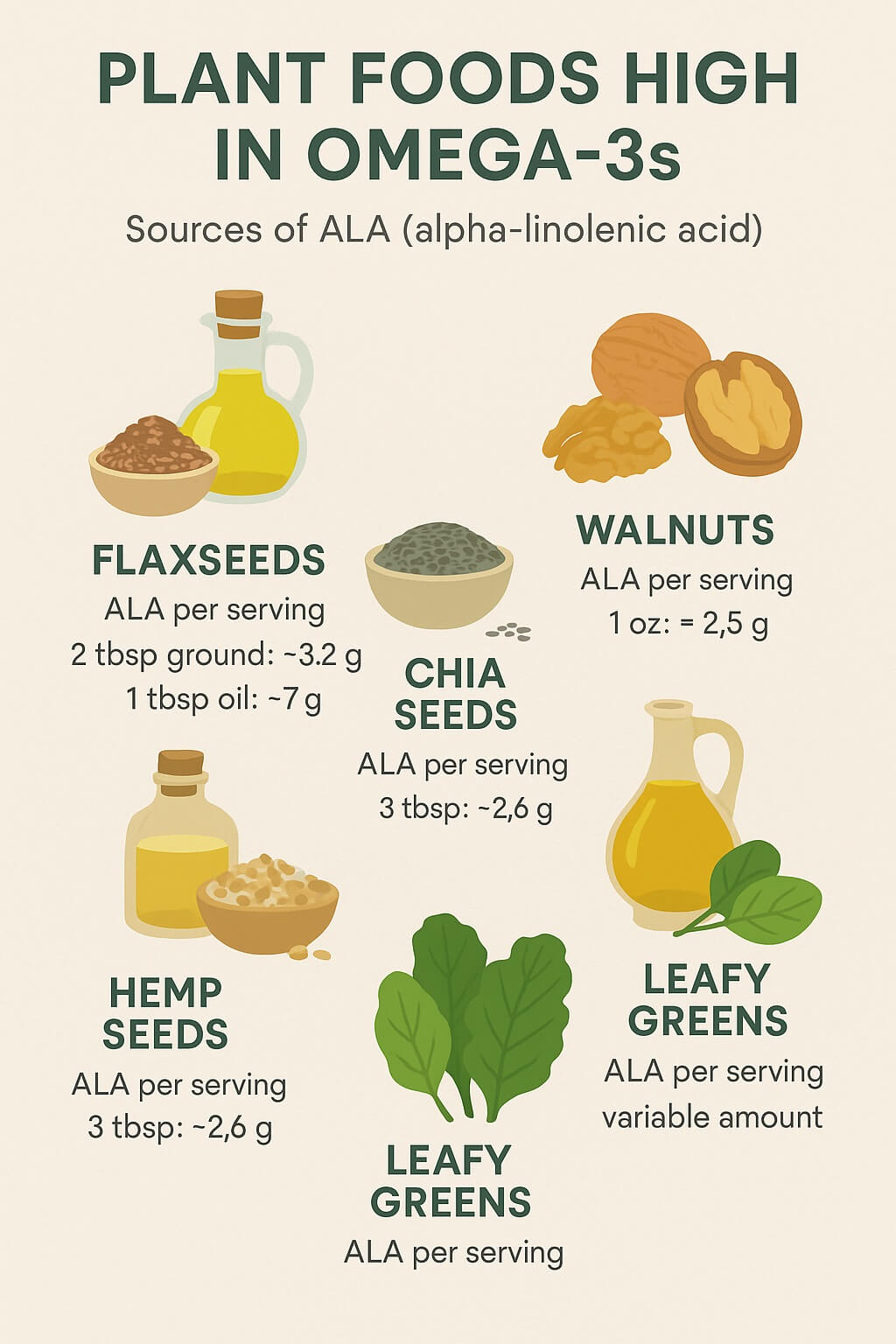
Walnuts stand out among nuts for their omega-3 content. A one-ounce serving, which is about a handful or 14 walnut halves, provides approximately 2.5 grams of ALA. Most other nuts contain very little omega-3, so walnuts are special in this regard. They’re also tasty and versatile for snacking or adding to meals.
Hemp seeds, or hemp hearts as they’re sometimes called, contain about 2.6 grams of ALA in three tablespoons. They have a mild, slightly nutty flavor and soft texture that works well sprinkled on salads, blended into smoothies, or stirred into oatmeal.
Some cooking oils derived from plants are also omega-3 sources, though they’re less impressive than seeds and nuts. Soybean oil, canola oil, and walnut oil all contain ALA, with amounts varying by oil type and processing method. However, these oils are also high in omega-6 fatty acids, which as mentioned earlier, can interfere with omega-3 metabolism.
Leafy green vegetables like spinach, kale, and Brussels sprouts contain small amounts of ALA. While the concentration isn’t high, if you eat these vegetables regularly, they contribute to your overall omega-3 intake along with providing many other nutrients.
How much omega-3 do I actually need?
Understanding how much omega-3 you need helps you figure out whether plant sources can realistically meet your requirements.
Health organizations recommend different amounts depending on which type of omega-3 they’re measuring. For ALA specifically, the adequate intake is set at about 1.6 grams per day for adult men and 1.1 grams per day for adult women. This amount is fairly easy to get from plant foods if you’re intentional about including them.
However, for EPA and DHA—the forms your body actually uses for most health benefits—recommendations are often given separately. Many health experts suggest getting at least 250-500 milligrams combined of EPA and DHA daily for basic health maintenance. People with heart disease or other health conditions might need even more.
This is where the conversion issue becomes critical. If only 5-10% of your ALA converts to EPA and barely any makes it to DHA, you’d need to eat huge amounts of ALA to get adequate EPA and DHA. Theoretically, to get 500 milligrams of EPA and DHA, you might need 10 grams or more of ALA, and even that might not be enough for adequate DHA specifically.
Pregnant and breastfeeding women need higher amounts of DHA for fetal brain and eye development. The recommendation for pregnancy is often 200-300 milligrams of DHA daily. Getting this amount from converted plant ALA is extremely difficult, which is why many healthcare providers recommend DHA supplements for pregnant women who don’t eat fish.
Athletes, people with inflammatory conditions, and those with certain health concerns might benefit from higher omega-3 intake than the basic recommendations. In these cases, relying solely on plant sources becomes even more challenging.
Can I really skip fish if I eat enough plant omega-3s?
Whether you can skip fish entirely and maintain optimal omega-3 status depends on several factors including your genetics, overall diet quality, health status, and life stage.
Some people seem to convert ALA to EPA and DHA more efficiently than others, possibly due to genetic variations. If you’re someone with favorable genetics for conversion, you might do fine getting all your omega-3s from plants. However, most people don’t know their conversion efficiency without specific testing.
People who eat no fish at all, including vegetarians and vegans, often have lower blood levels of EPA and especially DHA compared to people who eat fish regularly. Multiple studies have confirmed this pattern. Lower blood levels don’t necessarily mean immediate health problems, but they could potentially increase long-term risk for certain conditions.

If you’re generally healthy, not pregnant, and eating a balanced diet with plenty of plant omega-3 sources, you might meet your basic needs without fish. Adding a variety of flaxseeds, chia seeds, walnuts, and hemp seeds to your daily diet while keeping omega-6 intake moderate gives you the best chance of adequate conversion.
However, certain situations make it harder to rely only on plant sources. Pregnancy and breastfeeding increase DHA needs significantly. Older adults might have reduced conversion efficiency. People with inflammatory conditions like arthritis often benefit from higher EPA and DHA intake than plant conversion typically provides.
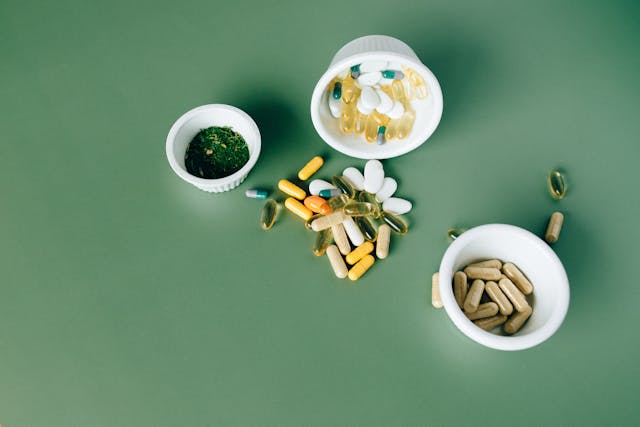
The safest approach if you don’t eat fish is to include abundant plant omega-3 sources in your diet and consider supplementation with algae-based EPA and DHA. Algae supplements provide the same forms of omega-3 found in fish, but derived from plant sources since fish get their omega-3s from eating algae anyway.
What about algae supplements for omega-3s?
Algae-based omega-3 supplements bridge the gap between plant and fish sources by providing EPA and DHA directly without requiring conversion, and they’re suitable for vegetarians and vegans.
Certain types of algae naturally produce EPA and DHA, which is actually where fish get their omega-3s in the first place. Small fish eat algae, bigger fish eat smaller fish, and the omega-3s accumulate up the food chain. Algae supplements skip the middle step and harvest omega-3s directly from the source.
These supplements typically come in softgel capsules or liquid form, similar to fish oil supplements. The amounts of EPA and DHA vary by product, but many provide 200-400 milligrams per serving, which covers the basic daily recommendation.
The advantages of algae supplements include being vegetarian and vegan-friendly, having no fishy taste or burps, avoiding potential mercury or other contaminants that can accumulate in fish, and being more environmentally sustainable than harvesting wild fish or farming salmon.
Algae supplements are generally more expensive than fish oil supplements, and some provide less total EPA and DHA per dose compared to concentrated fish oil products. However, for people who don’t eat fish for ethical, environmental, or dietary reasons, the cost difference might be worth it.
If you’re relying entirely on plant foods for omega-3s and not eating any fish, seriously consider algae supplementation, especially if you’re pregnant, breastfeeding, older, or have health conditions that benefit from adequate omega-3 intake. The combination of eating plant omega-3 sources plus supplementing with algae-derived EPA and DHA gives you the best of both approaches.
How should I add plant omega-3s to my diet?
Making plant omega-3 sources a regular part of your eating routine doesn’t require complicated meal planning or expensive specialty foods. Simple additions to meals you already eat can significantly boost your intake.
Ground flaxseeds work beautifully mixed into morning oatmeal, smoothies, yogurt, or even stirred into soup or sauce. Buy whole flaxseeds and grind them yourself in a coffee grinder, or purchase pre-ground flaxseed meal and store it in the freezer to keep it fresh. Whole flaxseeds pass through your digestive system without breaking down, so grinding them is essential for absorbing the omega-3s.
Chia seeds can be sprinkled on almost anything. Add them to cereal, blend them into smoothies, mix them into baked goods, or make chia pudding by soaking them in milk or milk alternative overnight. They don’t require grinding like flaxseeds because their nutrients are accessible even when eaten whole.
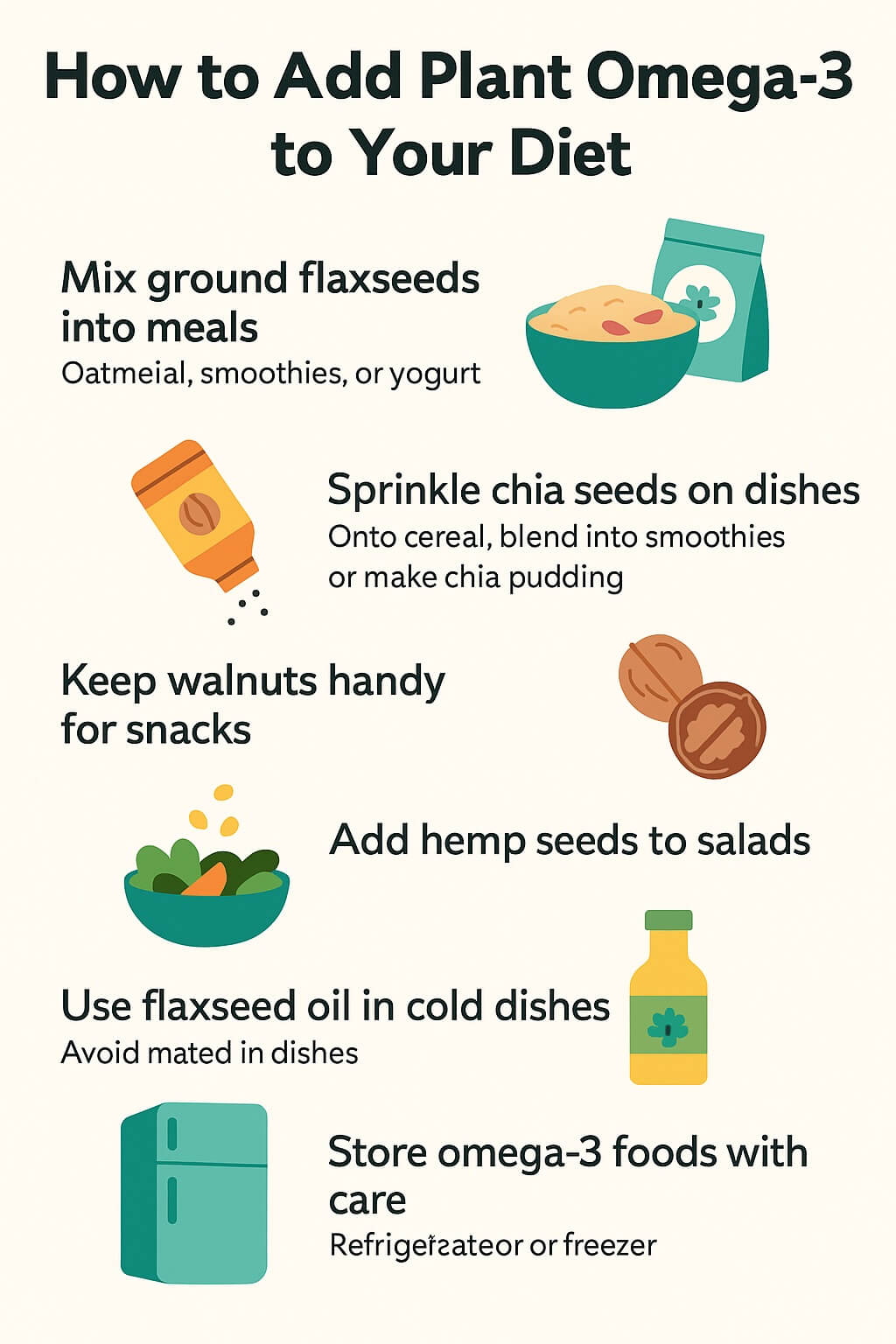
Keep walnuts on hand for easy snacking, or chop them and add to salads, oatmeal, roasted vegetables, or grain dishes. Walnuts also work well in baked goods and can be ground into a butter similar to peanut butter.
Hemp seeds have a pleasant, mild flavor that doesn’t overpower other foods. Sprinkle them on salads, stir them into cooked grains, blend them into smoothies, or use them as a crunchy topping for roasted vegetables or soup.
If you use flaxseed oil, add it to foods after cooking rather than using it for high-heat cooking. Heat damages omega-3 fatty acids and creates harmful compounds. Drizzle flaxseed oil on salads, blend it into smoothies, or mix it into dips and spreads. The flavor is somewhat strong and grassy, so start with small amounts.
Store omega-3-rich foods properly to prevent rancidity. Flaxseeds and flaxseed oil should be refrigerated or frozen. Walnuts keep better in the fridge or freezer than in the pantry. Chia seeds and hemp seeds are more stable but still benefit from cool, dark storage.
Do plant omega-3s have the same health benefits as fish omega-3s?
The health benefits that have been extensively studied and confirmed are mostly related to EPA and DHA from fish, not ALA from plants. This doesn’t mean plant omega-3s are worthless, but the evidence is stronger for fish-derived omega-3s.
EPA and DHA from fish have been shown in numerous studies to reduce triglyceride levels, lower blood pressure slightly, reduce inflammation, and possibly lower the risk of heart disease and stroke. They support brain health and may reduce the risk of cognitive decline. DHA specifically is crucial for eye health and brain development in infants.
ALA from plant sources has some benefits independent of conversion to EPA and DHA. Studies suggest ALA intake is associated with reduced heart disease risk, though the effect size is generally smaller than what’s seen with EPA and DHA. ALA might help lower cholesterol levels and has some anti-inflammatory properties on its own.
The challenge is that most studies showing dramatic health benefits from omega-3s have used fish or fish oil supplements, not plant sources. We have less research specifically testing whether people who get all their omega-3s from plants experience the same health benefits as people who eat fish.
Some observational studies find that vegetarians and vegans have similar or even better heart health compared to people who eat fish, but these populations also differ in many other ways. Vegetarians typically eat more vegetables, fruits, and whole grains, less saturated fat, and have different lifestyle habits. It’s hard to isolate omega-3 type as the determining factor.
The most honest answer is that we’re not completely sure if plant omega-3s provide identical benefits to fish omega-3s. They probably provide some overlapping benefits, especially for heart health, but might not be quite as protective for brain health and definitely don’t provide adequate DHA for pregnant women and infant development without supplementation.
What are the common mistakes people make with plant omega-3s?
Several misconceptions and mistakes can prevent people from getting the maximum benefit from plant-based omega-3 sources.
The biggest mistake is assuming that equal grams of ALA provide the same benefits as EPA and DHA. You might think eating a tablespoon of flaxseeds with 2.4 grams of ALA is equivalent to eating salmon with 2.4 grams of EPA and DHA, but because of conversion limitations, it’s not.
Many people add flaxseeds to their diet but don’t grind them first. Whole flaxseeds are too hard for your digestive system to break down, so they pass through largely intact without releasing their omega-3s. Always use ground flaxseeds or grind them yourself right before using.
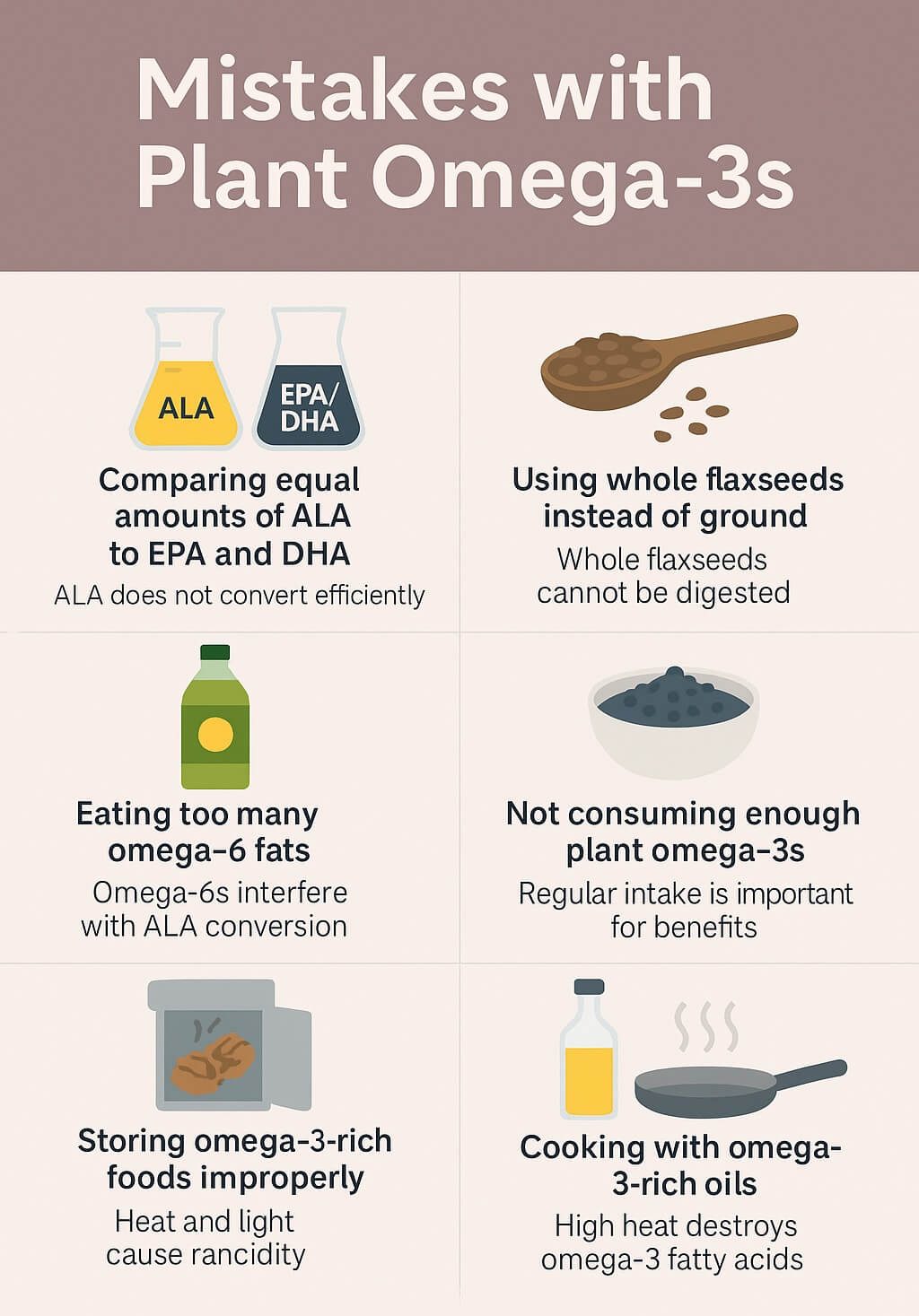
Eating plant omega-3s while consuming large amounts of omega-6 fatty acids from vegetable oils sabotages conversion. The typical Western diet is very high in omega-6s from soybean oil, corn oil, and other processed foods. These omega-6s compete with omega-3s for the enzymes needed to convert ALA to EPA and DHA. Reducing omega-6 intake makes plant omega-3s work better.
Not eating enough plant omega-3s in the first place is common. Sprinkling a few chia seeds on your yogurt once a week isn’t enough. You need consistent, substantial amounts of these foods to make a real difference, especially if you’re not eating any fish.
Storing omega-3-rich foods improperly leads to rancidity, which not only makes them taste bad but also destroys the beneficial fats and creates potentially harmful compounds. Heat, light, and air all damage omega-3s, so proper storage in cool, dark, airtight conditions matters.
Some people rely entirely on cooking oils as their omega-3 source without realizing that cooking damages omega-3s. High heat breaks down these delicate fats. If you’re using omega-3-rich oils, add them to food after cooking rather than using them for frying or roasting.
Should I take a supplement if I don’t eat fish?
Supplementation becomes more important the more restrictive your diet and the higher your omega-3 needs.
If you’re vegetarian or vegan, eating a varied diet with multiple plant omega-3 sources daily, and you’re not pregnant or dealing with specific health conditions, you might meet your basic needs without supplements. However, getting your blood levels tested would provide actual data rather than guessing.
Pregnant and breastfeeding women who don’t eat fish should strongly consider algae-based DHA supplements. The developing fetal brain and eyes need DHA, and the amounts required are difficult to obtain through ALA conversion alone. Most prenatal vitamins don’t contain adequate DHA, so a separate supplement is often necessary.
People with inflammatory conditions like rheumatoid arthritis, inflammatory bowel disease, or other chronic inflammatory conditions might benefit from higher doses of EPA and DHA than plant sources typically provide. Fish oil or algae supplements can help manage inflammation.
Older adults might benefit from EPA and DHA supplementation because omega-3 needs might increase with age and conversion efficiency might decrease. Cognitive health in aging is one area where EPA and DHA have shown benefits in research.
Athletes and highly active people often use omega-3 supplements to support recovery and manage exercise-induced inflammation. While ALA provides some benefits, many athletes find better results with EPA and DHA supplementation.
If you decide to supplement, look for third-party tested products that verify purity and potency. For vegans and vegetarians, algae-based supplements are the clear choice. Start with the basic recommended dose unless your healthcare provider suggests otherwise.
What’s the bottom line on plant versus fish omega-3s?
Plant foods can definitely contribute to your omega-3 intake and should be part of a healthy diet regardless of whether you eat fish. However, they’re not perfect substitutes for the EPA and DHA found in fatty fish due to conversion limitations.
If you eat fish regularly, you’re likely meeting your EPA and DHA needs and don’t need to stress about plant sources, though including them adds extra nutrition. If you’re vegetarian or vegan by choice, being intentional about eating multiple plant omega-3 sources daily while considering algae supplementation gives you the best chance of adequate omega-3 status.
The idea that you can simply eat flaxseeds instead of salmon and get the same benefits oversimplifies the science. It’s not that simple, but that doesn’t mean plant-based omega-3s are useless or that you must eat fish to be healthy.
Focus on eating a variety of omega-3-rich plant foods including ground flaxseeds, chia seeds, walnuts, and hemp seeds regularly. Keep your omega-6 intake moderate by limiting processed foods and refined vegetable oils. If you’re in a high-need category like pregnancy or if you have health conditions that benefit from omega-3s, seriously consider algae-based EPA and DHA supplements.
Your individual situation matters more than general rules. What works for a healthy young adult might not work for a pregnant woman or someone with heart disease. Be honest about your dietary patterns, health needs, and willingness to supplement when deciding how to meet your omega-3 requirements without fish.