You’re doing everything that’s supposed to work. You’re eating healthy, getting tons of steps every day, and staying active. Your weight is in a healthy range, but there’s this one area of your body that still bothers you. Maybe it’s your arms, your lower belly, or your thighs. No matter what you do, that specific spot seems to hold onto fat while the rest of your body looks fine. It’s frustrating because you’re working hard and seeing results everywhere except the one place you care about most.
This situation is incredibly common, and it often leads people down unhealthy paths trying to fix something that’s actually completely normal. Understanding why certain areas hold fat more stubbornly, and what you can realistically do about it, helps you make better decisions about your health and body.
Why does fat stick around in certain spots even when I’m lean everywhere else?
Your body has a genetically programmed pattern for where it stores and loses fat. This pattern is different for everyone and is largely determined by your hormones, genetics, and biological sex. Women typically store more fat in their hips, thighs, and arms, while men tend to store it in their midsection. These patterns exist because of evolutionary reasons related to reproduction and survival.
When you lose weight, your body decides where the fat comes off, not you. Generally, fat comes off in the reverse order of how it went on. The places where you gain fat first are usually the last places to lose it. If your arms have always been your “problem area,” they’re probably genetically programmed to hold more fat, which means they’ll be the last place to lean out when you lose weight.

Fat cells in different body areas actually behave differently on a cellular level. Some fat deposits are more “stubborn” because they have more alpha receptors than beta receptors. Without getting too scientific, beta receptors help release fat for energy, while alpha receptors make fat harder to mobilize. Areas with more alpha receptors resist fat loss more stubbornly than other areas.
Your hormone levels also influence where you store fat. Estrogen, cortisol, insulin, and other hormones all affect fat distribution. Women dealing with hormonal fluctuations from their menstrual cycle, birth control, or stress might notice their fat distribution changes or certain areas become more resistant to fat loss during different times.
The concept of “spot reduction”—losing fat from just one specific area—doesn’t work the way most people hope. You can’t do arm exercises and expect the fat on your arms to disappear. Exercise burns calories overall, and your body decides where to pull that energy from based on genetics and other factors, not based on which muscles you’re working.
Is it unhealthy to keep trying to lose this last bit of fat?
When you’re already at a healthy weight and trying to get rid of the last remaining fat in specific areas, you’re pushing into territory that can become unhealthy both physically and mentally. There’s a difference between having aesthetic preferences and developing obsessive behaviors around your body that interfere with your wellbeing.
If you’re already at the lower end of a healthy weight range and increasing exercise while decreasing food intake to get leaner, you’re risking several health problems. For women especially, getting too lean can disrupt your menstrual cycle, weaken your bones, affect your mood and energy, mess up your hormones, and reduce your immune function. The body fat you’re trying to eliminate might actually be necessary for your body to function properly.
The fact that the only time you felt satisfied with your arm fat was when you couldn’t eat for a week after oral surgery is a significant red flag. That level of restriction and the resulting extreme leanness isn’t sustainable or healthy. Your body wasn’t meant to maintain that level of leanness long-term, which is why the fat returned when you resumed normal eating.
Exercising excessively—like doing hours of cardio daily plus strength training—while eating very low fat and low carb can create a chronic stress state in your body. This actually makes fat loss harder because elevated cortisol (stress hormone) can increase fat storage, particularly in stubborn areas. You might be working so hard that you’re making the problem worse.
Mental health considerations matter just as much as physical health. If you’re constantly thinking about your arm fat, if it affects your clothing choices or your confidence, if you’re willing to go to extreme lengths to change it, these thought patterns can develop into disordered eating or exercise addiction. These conditions are serious and require professional help.
Most healthy bodies carry some soft, jiggly fat in various places. That’s completely normal and doesn’t indicate poor health or lack of fitness. The bodies you see on social media and in magazines are often at unsustainably low body fat levels, achieved through extreme measures, or digitally altered. Comparing your everyday body to those images sets you up for constant dissatisfaction.
Can I build muscle to make the area look better?
Building muscle in areas where you’re unhappy with fat deposits can change how that body part looks, even if the actual fat doesn’t disappear. Muscle adds shape and firmness under the fat layer, which can create a more toned appearance and make the area feel less jiggly.
For arms specifically, working your biceps, triceps, and shoulders creates definition and shape. While this won’t melt away the fat covering those muscles, it does change the overall appearance. A soft arm with defined muscle underneath looks and feels different than a soft arm without that muscle foundation, even if the fat layer is similar.
However, you mentioned you used to lift but don’t anymore, and now you’re only doing light leg work once or twice weekly. If you want to see changes in your arms, you need to actually work your arms with progressive resistance training. Light, infrequent workouts won’t create the muscle development that changes how the area looks.
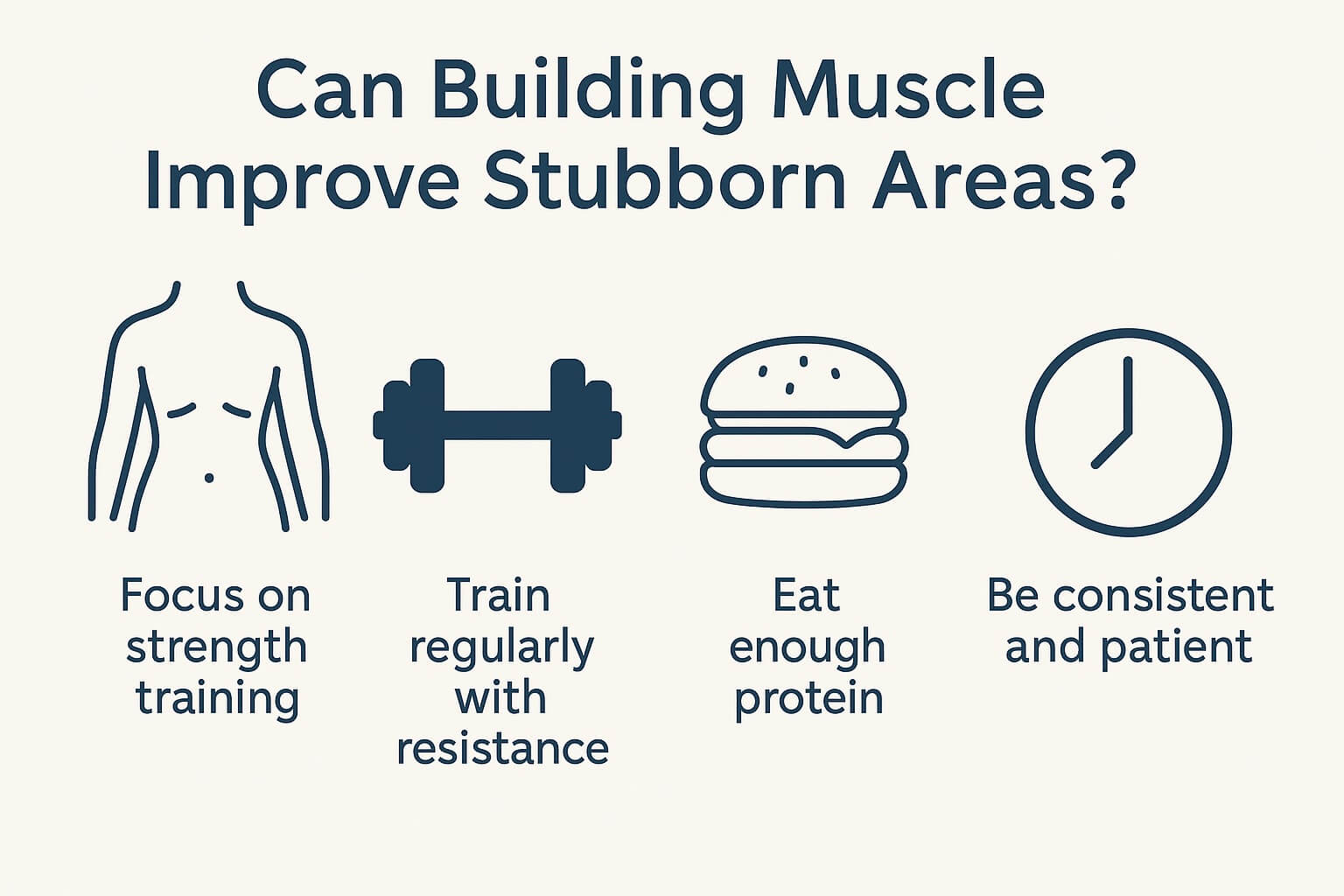
Building muscle requires adequate nutrition, particularly protein and overall calories. If you’re eating very low fat and low carb while trying to maintain an extremely lean physique, you’re probably not eating enough to support muscle growth. Your body needs energy to build muscle, and chronic calorie restriction prevents muscle development even if you’re training.
The muscle-building process takes months of consistent training with progressive overload, meaning you gradually increase the weight or resistance over time. You won’t see changes from a few weeks of light exercise. Real muscle development that noticeably changes your body shape requires sustained effort over many months.
Some people successfully shift their focus from losing fat to building muscle and find they’re much happier with how their body looks and feels, even if the scale doesn’t change much. Muscle takes up less space than fat, so you can actually look leaner while maintaining or even gaining weight if you’re building muscle while losing some fat.
Why does everyone say I need to eat more fat if I want to lose fat?
The very low fat diet approach you’re following might actually be working against your goals. Dietary fat is essential for hormone production, and hormones regulate everything about how your body stores and burns fat. When you don’t eat enough fat, your hormone levels can get messed up, which can make it harder to lose body fat.
Fat is particularly important for female reproductive hormones. If you’re eating extremely low fat while maintaining very low body weight and doing excessive exercise, you’re creating the perfect storm for hormonal disruption. This can show up as irregular or missing periods, which is a sign that your body is under too much stress.
Essential fatty acids from foods like nuts, avocados, fatty fish, olive oil, and seeds support healthy inflammation levels in your body. Chronic inflammation can actually make stubborn fat more stubborn by affecting how your fat cells respond to signals to release stored energy.
Low fat diets often leave people feeling constantly hungry because fat helps you feel full and satisfied after meals. If you’re always hungry and using willpower to avoid eating more, that’s stressful for your body and mind. Chronic stress elevates cortisol, which as mentioned before, can increase fat storage especially in stubborn areas.
Your brain needs fat to function properly. Low fat diets can affect your mood, focus, and energy levels. If you’re feeling tired, foggy, or moody, your extremely low fat intake might be contributing. These symptoms are your body’s way of telling you it needs more nourishment.
Many vitamins that your body needs are fat-soluble, meaning you need to eat fat in order to absorb them properly. Vitamins A, D, E, and K all require dietary fat for absorption. If you’re eating low fat, you might be eating nutritious foods but not actually absorbing all the nutrients from them.
Is doing hours of cardio every day actually helping?
Excessive cardio can actually work against fat loss goals, especially when combined with low calorie or low fat eating. Your body adapts to chronic cardio by becoming more efficient, meaning it burns fewer calories doing the same activity over time. What once helped you stay lean might now be maintaining your current state rather than creating further change.
Doing two hours of high incline walking plus an hour of running plus four miles walking your dogs equals many hours of exercise daily. This is athlete-level activity volume. Unless you’re eating to fuel this activity level, you’re creating a massive energy deficit that stresses your body.
When exercise volume is very high and food intake is restricted, your body can start breaking down muscle for energy. This is the opposite of what you want. Less muscle means a slower metabolism, which makes it harder to stay lean. It also means the soft, jiggly appearance you dislike might actually get worse because you’re losing the muscle that gives body parts their shape.
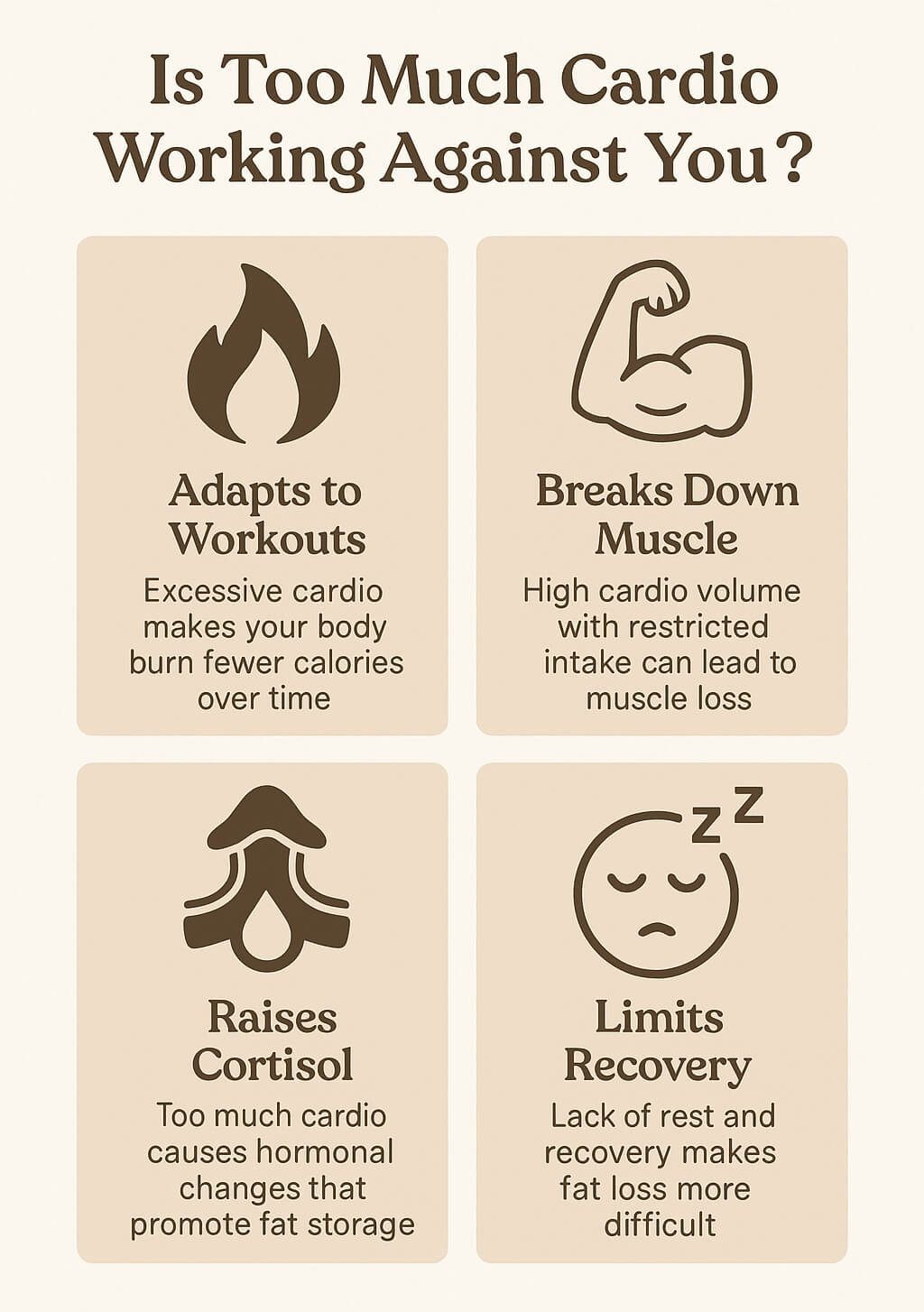
Excessive cardio with inadequate recovery raises cortisol levels. High cortisol tells your body to hold onto fat, particularly in stubborn areas. So ironically, doing more and more cardio to get rid of stubborn fat might be sending hormonal signals that make your body hold onto that fat more tightly.
Many people who reduce their cardio volume and add more strength training actually see better body composition changes. Strength training builds muscle, which increases your resting metabolism and creates shape. It also causes less overall stress on your body compared to hours of daily cardio.
Rest and recovery are when your body actually makes adaptations from training. If you’re exercising for several hours every single day, you’re not giving your body adequate recovery time. This chronic under-recovery keeps your body in a stressed state, which again, makes fat loss harder.
What does healthy fat loss actually look like?
Healthy fat loss happens slowly, preserves muscle mass, maintains energy and mood, and doesn’t require extreme measures that you can’t sustain long-term. If your approach to losing fat involves things you couldn’t imagine doing for the rest of your life, it’s probably not a healthy approach.
A realistic healthy fat loss rate is about half a pound to one pound per week for most people, and even slower when you’re already lean. If you’re already at a healthy weight, losing any additional fat will be very slow. Your body doesn’t want to let go of those last fat stores easily because it views them as important reserves.
Healthy fat loss includes eating enough protein to preserve muscle, eating adequate healthy fats for hormone health, including enough carbohydrates to fuel your activity and support recovery, and taking rest days from exercise. None of these requirements match what you’ve described doing.
Sustainable approaches don’t require constant vigilance or create anxiety around food. If you’re blaming outside factors like your sister bringing home desserts for your inability to maintain your goal weight, that suggests your approach is too restrictive to maintain in normal life situations. Truly healthy habits accommodate occasional treats without derailing everything.
Your menstrual cycle should be regular and healthy while you’re losing fat. If your period becomes irregular or stops, that’s a sign you’ve pushed too far and need to eat more and exercise less, regardless of what’s happening with your body composition.
Mental health indicators matter as much as physical ones. Healthy fat loss doesn’t involve constant thoughts about food and your body, anxiety about specific body parts, or willingness to engage in extreme behaviors. If thoughts about your arm fat are taking up significant mental space, that’s a problem worth addressing.
Should I just accept my body as it is?
There’s a difference between accepting that your body has genetic patterns for fat storage that you can’t completely override, and giving up on health and fitness altogether. Acceptance means understanding that your body might never match your exact aesthetic ideal, while still treating it well through nourishing food and enjoyable movement.
Some degree of soft tissue on your arms, thighs, stomach, or wherever is completely normal and healthy for most people. Bodies that are lean and firm everywhere all the time are rare, often require extreme maintenance, and frequently aren’t as healthy as they look despite their appearance.
Consider whether the discomfort you feel about your arms comes from your own genuine preferences or from external messages about how bodies should look. Social media, fitness culture, and diet culture all profit from making people feel inadequate about normal bodies. Questioning whether your standards for yourself are realistic and kind might reveal that your expectations are harsher than they need to be.
Acceptance doesn’t mean you can’t have fitness goals or work toward changing your body. It means your wellbeing and self-worth aren’t dependent on achieving a specific physical appearance. You can work out because it feels good and makes you strong, eat well because it nourishes you, and still have body parts that don’t match your aesthetic preferences.
Many people find that shifting focus from appearance to performance or health markers improves their relationship with their body and their actual health outcomes. Instead of obsessing over arm jiggle, you might set goals like increasing your strength, running a certain distance, or maintaining stable energy throughout the day.
Professional help from a therapist who specializes in body image and eating issues can be valuable if you’re struggling with constant dissatisfaction about your body. These feelings often have roots that go deeper than just wanting to look a certain way, and addressing the underlying issues can be more effective than continuing to try to change your body.
What’s realistic to expect for stubborn fat areas?
Being realistic about what’s achievable helps you make peace with your body while still pursuing health. Some fat deposits, particularly the ones that bother you most, might never completely disappear without getting to an unhealthily low body fat level.
For women, essential body fat is around 10-13% of total body weight. Going below this range creates serious health problems. Athletic women typically maintain body fat between 14-20%. Regular fitness enthusiasts usually sit between 21-24%. Anything in the healthy range will include some soft areas that jiggle, particularly on arms and thighs for many women.
The fat that remains on your body when you’re at a healthy weight and living a balanced, healthy lifestyle is probably supposed to be there. Your body is trying to maintain it for good reasons related to hormone production, temperature regulation, organ protection, and energy reserves.
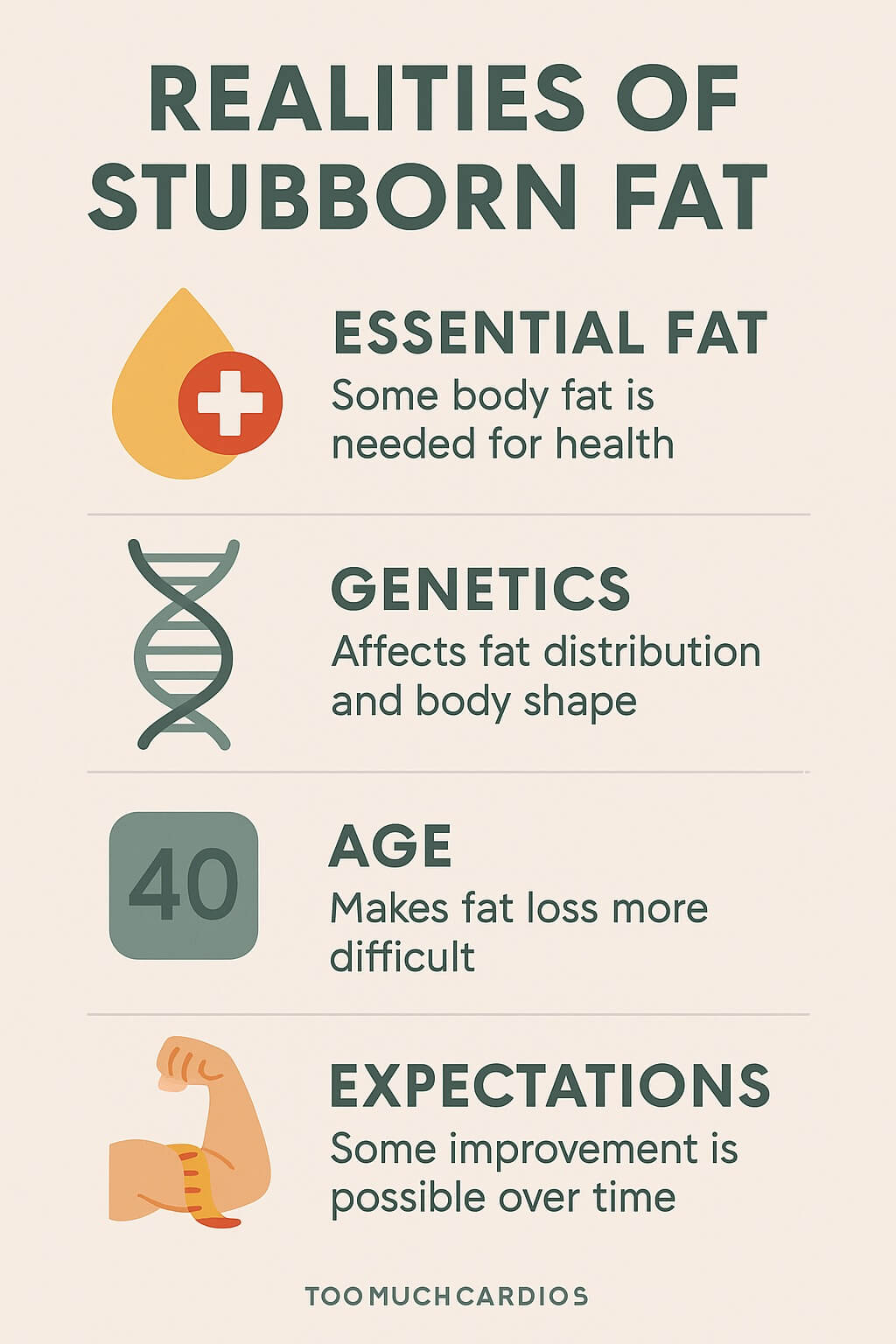
Genetics play a huge role in how your body looks at any given body fat percentage. Two people at the same body fat percentage might look completely different because of where their bodies store fat, their muscle distribution, their bone structure, and their height. Comparing your stubborn areas to someone else’s is comparing different genetic blueprints.
Age also affects body composition and fat distribution. As you get older, your body naturally holds onto fat more readily and builds muscle less easily. Fighting against these natural changes becomes increasingly difficult and potentially unhealthy.
The most realistic expectation is that consistent strength training, adequate nutrition, reasonable activity levels, and patience might create some improvement in how these areas look and feel. The improvement probably won’t be dramatic transformation, but rather subtle changes that make you feel somewhat better about the area.
When should I talk to a doctor about my body concerns?
Medical guidance becomes important when your pursuit of a certain body composition starts affecting your health or mental wellbeing. Several signs indicate it’s time to talk to a healthcare provider about what you’re doing and experiencing.
If your menstrual cycle has become irregular or stopped, you need medical evaluation. Missing or irregular periods signal that your body is under too much stress from some combination of low body weight, inadequate nutrition, excessive exercise, or psychological stress. This isn’t just a minor inconvenience—it indicates your hormones are disrupted in ways that can have long-term health consequences.
Persistent injuries like shin splints that don’t heal properly might indicate you’re not giving your body adequate rest and nutrition to recover. If you’ve been dealing with the same injury for many months, continuing to push through high activity levels isn’t helping you heal.
If you’re experiencing mood changes, constant fatigue, trouble sleeping, difficulty concentrating, or increased anxiety or depression, these could be related to underfueling, overtraining, or the stress of trying to maintain an unsustainable lifestyle.
Talking to a doctor or registered dietitian about your current eating and exercise habits can provide objective feedback about whether your approach is healthy. Be completely honest about what you’re actually doing, including your activity volume and food restrictions. Healthcare providers can’t help you if they don’t have accurate information.
A mental health professional who specializes in eating disorders and body image issues can help if you recognize that your thoughts and behaviors around food, exercise, and your body are becoming problematic. Warning signs include constantly thinking about your body, anxiety around eating certain foods, exercising even when injured or exhausted, and basing your self-worth on your appearance.
What’s the bottom line on stubborn body fat?
Some body fat simply won’t go away without extreme measures that harm your health. This isn’t a personal failing or lack of willpower. It’s your body trying to maintain itself at a healthy, sustainable level. The fat you’re fighting to eliminate might actually be necessary for your body to function properly.
If you’re already at a healthy weight, exercising regularly, and eating reasonably well, you’ve probably already achieved the body composition that’s healthy and sustainable for you. The additional fat loss you’re pursuing would require increasingly extreme measures that carry real health risks.
Your body at its natural healthy weight, with adequate food and reasonable activity levels, is probably going to include some soft areas that jiggle. This is completely normal and doesn’t indicate anything wrong with you. It’s just how human bodies work, particularly women’s bodies.
Consider whether the energy you’re spending trying to eliminate small amounts of fat from specific body parts could be better used elsewhere in your life. Obsessing over body parts that are actually fine takes up mental space and time that could go toward relationships, interests, career goals, or just enjoying your life.
The healthiest approach is probably eating enough to fuel your activity including adequate protein and healthy fats, doing strength training to build muscle, doing moderate amounts of cardio that you enjoy, taking rest days, and treating your body with kindness rather than punishment. These habits support health even if they don’t create dramatic changes in stubborn fat areas.