Living with both gastroparesis and Hashimoto’s thyroiditis creates a complicated dietary puzzle. You need to avoid gluten to manage the autoimmune thyroid condition, while also limiting fat and fiber to accommodate your slowed digestive system. This triple restriction can feel overwhelming, especially when you’re dealing with unintended weight loss and struggling to find foods that actually stay down and nourish you.
The good news is that there are more options than you might think once you understand which foods work within these constraints. Finding meals that are gentle on your stomach while still providing adequate nutrition takes some creativity, but it’s absolutely possible to create a varied diet that helps you maintain your weight and feel better.
What can I actually eat for breakfast with these restrictions?
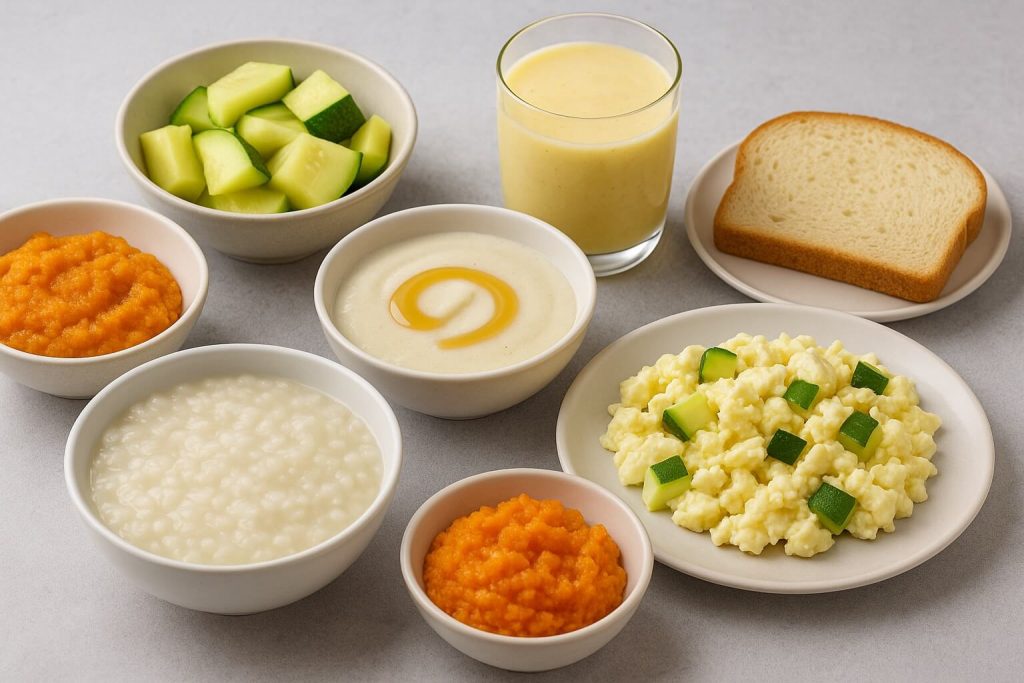
Breakfast on a gastroparesis diet looks different from typical morning meals, but you can still create satisfying options. White rice porridge, also called congee, is an excellent choice. Cook white rice with extra water or low-sodium chicken broth until it’s very soft and soupy. This provides easily digestible carbohydrates and some protein from the broth without any fat, fiber, or gluten.
Scrambled egg whites offer protein without the fat from yolks. Cook them very soft and moist, not dry and rubbery, which makes them easier to digest. You can mix in some well-cooked, peeled zucchini or yellow squash for variety. Season lightly with salt and herbs like basil or oregano.
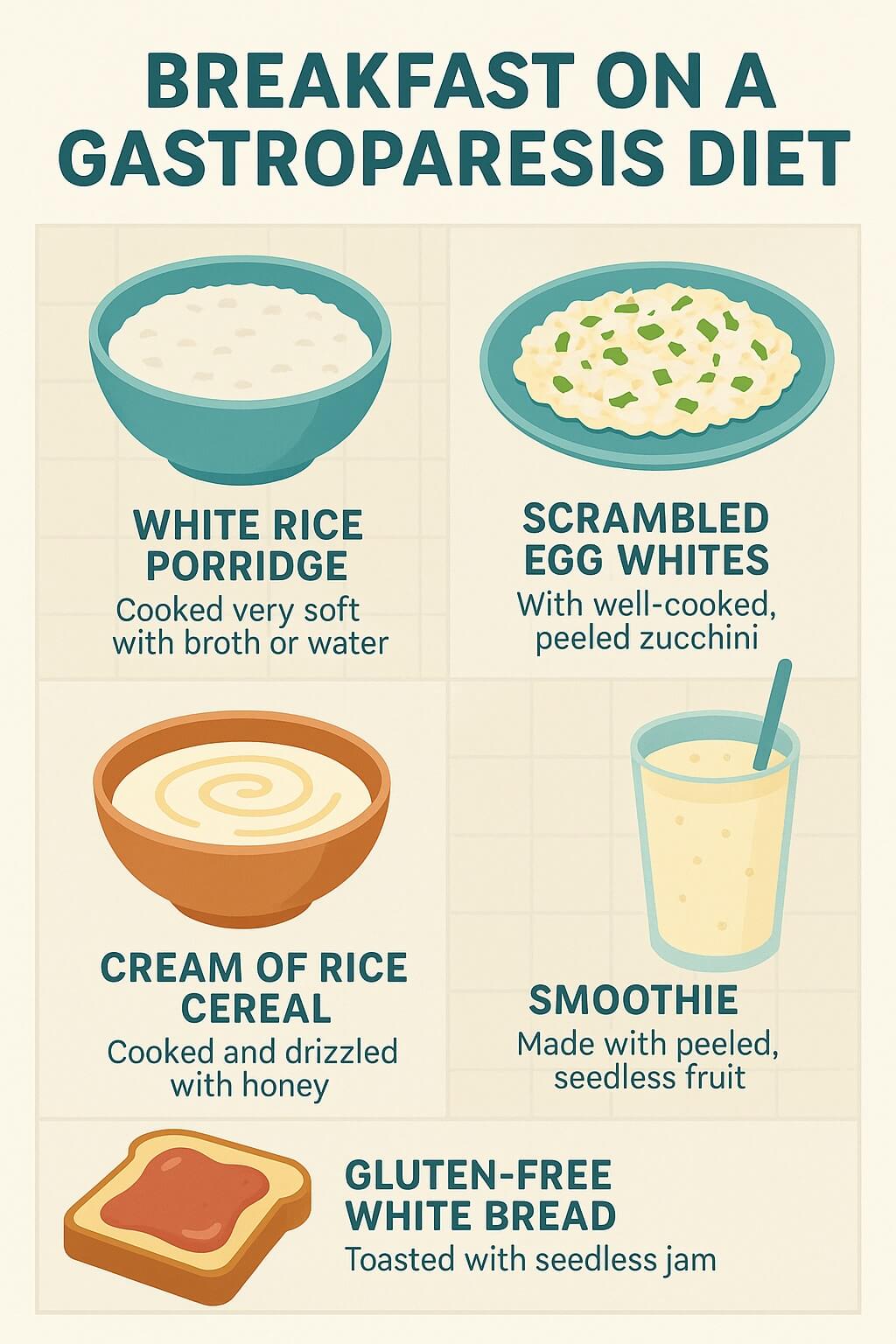
Cream of rice cereal provides another gentle breakfast option. Unlike cream of wheat, which contains gluten, cream of rice is naturally gluten-free and very low in fiber. Cook it with water or a low-fat milk alternative, and add a drizzle of honey for sweetness if your blood sugar tolerates it. Avoid adding nuts, seeds, or dried fruit, which are too high in fiber.
Smoothies can work if you make them correctly for gastroparesis. Use peeled and seedless fruits like banana, canned peaches, or melon. Blend with water, coconut water, or a low-fat milk alternative until completely smooth. Add a scoop of low-fiber, low-fat protein powder if you need extra protein. Keep portions small, around eight to twelve ounces, since liquids can fill you up quickly.
Gluten-free white bread, toasted and eaten plain or with a thin spread of honey or seedless jam, provides quick energy. The toasting makes it easier to digest, and keeping it simple avoids adding fats that slow digestion. Look for brands made primarily from white rice flour rather than high-fiber alternatives.
What proteins can I eat without triggering symptoms?
Protein is crucial when you’re dealing with weight loss, but many protein sources are problematic for gastroparesis. The key is choosing lean proteins and preparing them in ways that make them as easy to digest as possible.
Skinless chicken breast is one of your best options. Poach, bake, or steam it until very tender, then shred or dice it into small pieces. Ground chicken breast works even better because it’s already broken down. Cook it thoroughly and drain any fat that renders out during cooking.
White fish like cod, tilapia, or sole are naturally low in fat and easy to digest. Bake or poach the fish until it flakes easily, then break it into small pieces. Fish tends to digest more quickly than other meats, making it ideal for a slow stomach.
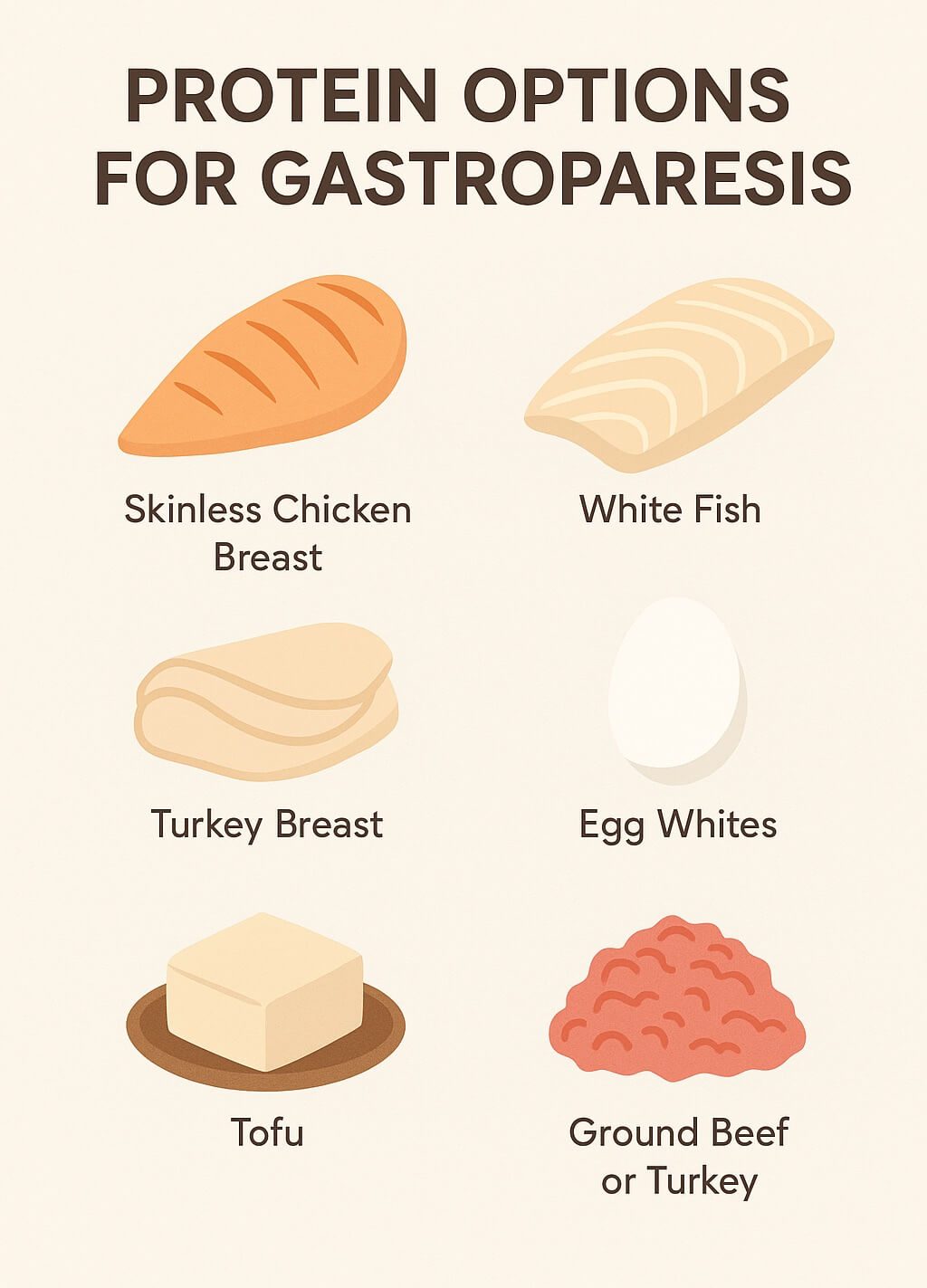
Turkey breast, prepared similarly to chicken, provides another lean protein source. Deli turkey can work for quick meals, but check labels carefully to ensure it’s gluten-free and low in fat. Many processed meats contain hidden gluten or added fats.
Egg whites, as mentioned for breakfast, work at any meal. Hard-boiled egg whites, egg white omelets with safe vegetables, or egg white scrambles all provide protein without fat. The whites digest much more easily than whole eggs.
Tofu can be surprisingly helpful if prepared correctly. Use silken or soft tofu rather than firm varieties, and cook it gently. Scrambled soft tofu seasoned with gluten-free tamari provides protein with minimal fat. Avoid fried tofu or tofu prepared with oil.
Small portions of very lean ground beef or ground turkey can work occasionally. Choose the leanest options available, cook thoroughly, and drain all visible fat. Break the meat into very small crumbles. Ground meats are easier to digest than whole cuts because they’re already mechanically broken down.
What vegetables are safe with gastroparesis?
Most vegetables need careful preparation to work with gastroparesis since fiber is a major concern. The goal is to choose naturally lower-fiber vegetables and cook them until they’re extremely soft, then remove any remaining skins or seeds.
Peeled and well-cooked zucchini and yellow squash are among the safest vegetables. Cut them into small pieces and cook until they’re almost falling apart. The flesh is naturally low in fiber compared to many vegetables, especially once you remove the skin and seeds.
Carrots become gastroparesis-friendly when cooked until very soft and then pureed or mashed. Baby carrots or peeled regular carrots boiled until mushy provide vitamins without much fiber. You can blend cooked carrots into soups or purees for easier digestion.
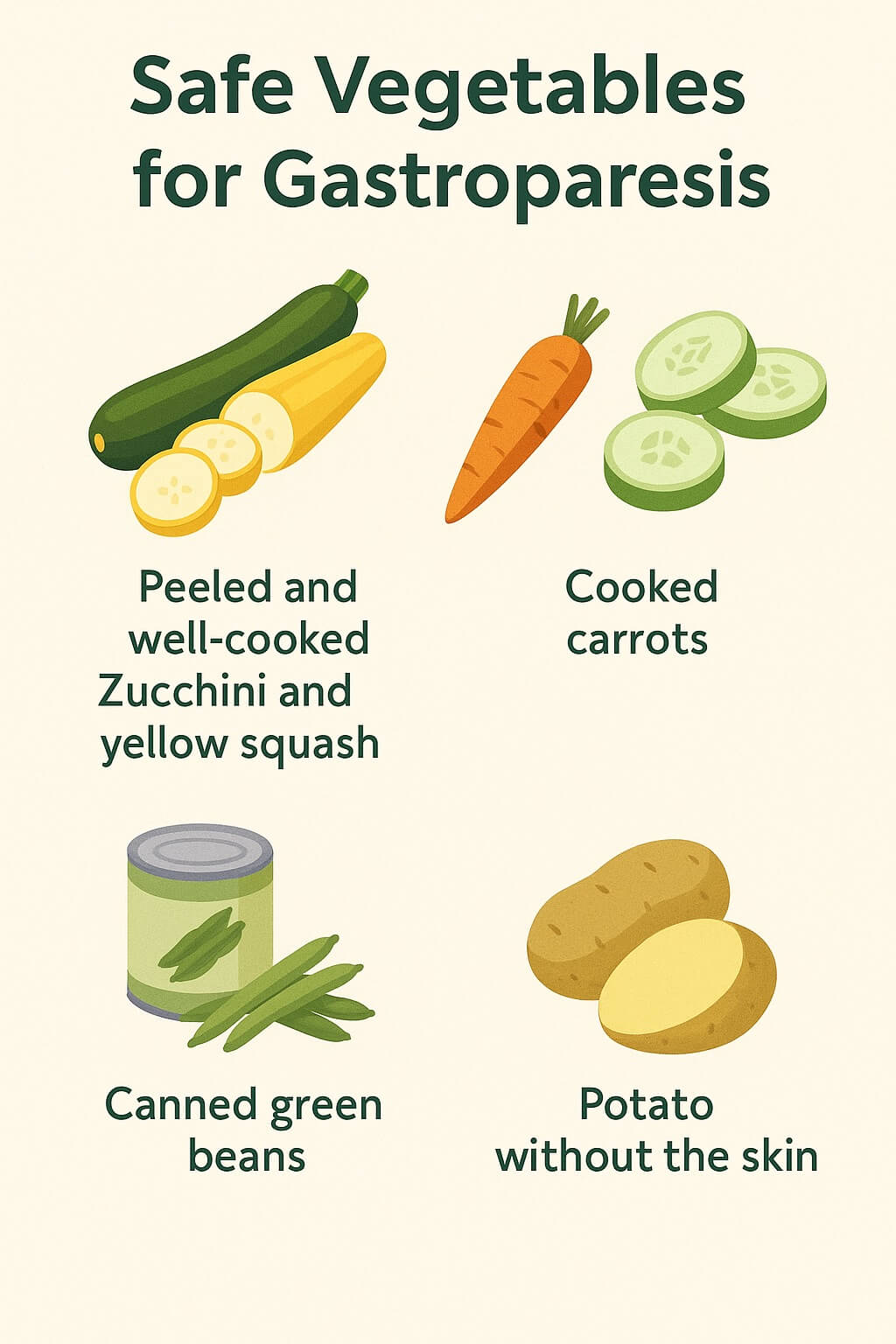
Peeled cucumbers in very small amounts can work for some people. Remove all seeds and cut the flesh into tiny pieces. Cucumbers are mostly water, which makes them relatively easy to digest, though everyone’s tolerance varies.
Canned vegetables are often better tolerated than fresh because the canning process breaks down fiber. Choose low-sodium versions of green beans, carrots, or beets. Drain them well and cook them even softer if needed. The mushy texture might not appeal to everyone, but it’s easier on your stomach.
Winter squash like butternut or acorn squash can work if prepared correctly. Peel completely, remove all seeds, and cook until very soft. Puree or mash thoroughly before eating. The natural sweetness makes them more palatable than some vegetables.
Potatoes without the skin provide safe, easily digestible carbohydrates. Boil, bake, or microwave them until very soft, then mash thoroughly. Avoid adding butter or oil. Season with herbs, salt, or a small amount of low-fat chicken broth instead.
How do I get enough calories when everything fills me up quickly?
Weight maintenance and gaining weight back with gastroparesis requires eating frequently in small amounts rather than three large meals. Your stomach empties slowly, so you need to work with its limitations rather than against them.
Eat five to six small meals throughout the day instead of three regular meals. Each mini-meal might be just a few bites, but spreading food intake across the day helps you consume more total calories without overwhelming your stomach at any one time.
Liquids empty from the stomach faster than solids, so incorporating liquid nutrition helps when you’re struggling with solid food. Homemade broths, thin soups, and carefully made smoothies can provide calories and nutrients when eating feels impossible. Sip them slowly throughout the day rather than drinking large amounts at once.
Choose the most calorie-dense versions of your safe foods. White rice cooked with low-sodium chicken broth contains more calories than rice cooked in water. Bananas provide more calories than watermelon. Small choices add up when you’re trying to maintain weight.
Time your eating strategically. Many people with gastroparesis feel better earlier in the day, so front-load your calories. Eat your largest meal at breakfast or lunch when your stomach is more likely to cooperate, then have lighter foods in the evening.
Don’t lie down immediately after eating. Stay upright or walk around gently for at least an hour after meals. Gravity helps move food through your stomach, which might allow you to eat again sooner for your next small meal.
Track your intake honestly. When you’re eating tiny amounts at a time, it’s easy to lose track and end up consuming far fewer calories than you realize. Writing down what you eat or using a food tracking app helps ensure you’re actually getting enough.
What can I eat for lunch that’s easy to prepare?
Lunch needs to be simple and quick when you’re dealing with complex dietary restrictions and limited energy. Having a rotation of easy options prevents meal fatigue and ensures you actually eat.
Gluten-free pasta made from white rice cooks quickly and provides easy calories. Top it with skinless chicken breast pieces and a simple sauce made from low-sodium chicken broth with herbs. Keep portions small and chew thoroughly. The soft pasta texture makes it easier to digest than many foods.
Homemade chicken and rice soup becomes a staple for many people with gastroparesis. Use skinless chicken breast, well-cooked white rice, peeled and diced carrots and zucchini, and low-sodium chicken broth. Cook everything until extremely soft. This one-pot meal provides protein, carbohydrates, and vegetables in an easy-to-digest form.

A baked potato without skin, topped with shredded chicken breast and a drizzle of low-sodium chicken broth, makes a filling lunch. The potato provides calories, the chicken provides protein, and the moist preparation helps everything go down easier.
Tuna packed in water, drained thoroughly and mixed with a tiny amount of mayonnaise made from egg whites, served on gluten-free white bread, offers quick protein. Keep the mayonnaise minimal to stay low-fat. Some people tolerate this better if the tuna is mashed very smooth.
Rice noodle soup with very soft vegetables and small pieces of fish provides warm, comforting nutrition. Use thin rice noodles that cook quickly, add well-cooked vegetables, and include chunks of white fish. Season with gluten-free tamari and ginger for flavor without adding fat or fiber.
Leftover dinner proteins work well for lunch. Prepare extra chicken, turkey, or fish at dinner, then use it the next day with white rice or gluten-free pasta. This saves energy and ensures you always have safe food available.
What works for dinner when I’m exhausted?
Evening meals need to be even lighter and simpler than lunch since digestive function often slows down as the day progresses. Focus on foods that require minimal preparation and are gentle enough not to cause overnight discomfort.
Baked white fish with steamed white rice and well-cooked carrots makes a balanced dinner that’s easy to prepare. Season the fish with lemon juice and herbs, bake everything on one sheet pan, and you have a complete meal with minimal cleanup.
Turkey meatballs made from extra-lean ground turkey can be prepared in batches and frozen. Make them small, cook them thoroughly, and serve them with gluten-free white rice pasta and a simple marinara sauce made from pureed tomatoes without added oils. Check your tolerance for tomatoes, as some people find them problematic.
Rotisserie chicken breast meat, with the skin completely removed, provides easy protein when you’re too tired to cook. Serve it with instant white rice and canned vegetables that you’ve heated and cooked even softer. This meal takes five minutes to assemble.
Slow cooker meals can be lifesavers. Put skinless chicken breast, peeled carrots, peeled potatoes, and low-sodium chicken broth in your slow cooker in the morning. By evening, everything is extremely soft and easy to digest. Shred the chicken and serve everything together.
Egg drop soup made with egg whites and low-sodium chicken broth provides light nutrition when you can’t face solid food. Add some well-cooked rice noodles for carbohydrates and very soft vegetables for nutrients. This Asian-inspired soup is soothing and gentle on your stomach.
Sometimes dinner needs to be just broth and crackers. On difficult days, don’t force solid food. Sip warm chicken broth and nibble gluten-free crackers made from white rice. Getting some nutrition is better than eating nothing or making yourself sick trying to force down a full meal.
What can I snack on between meals?
Snacking becomes essential when you’re eating small meals and trying to maintain your weight. Keep simple, safe snacks readily available so you’re never stuck without something to eat.
Gluten-free crackers made from white rice provide easy carbohydrates. Eat them plain or with a thin spread of seedless jam. Keep them at your desk, in your bag, and next to your bed for easy access whenever you feel hungry.
Canned fruit in juice or light syrup offers quick calories and natural sweetness. Choose varieties like peaches, pears, or mandarin oranges. Drain well and eat slowly. The soft texture and high water content make canned fruit easier to tolerate than fresh fruit for many people.
Rice cakes, while bland, provide portable carbohydrates. Look for plain varieties without added seeds or high-fiber ingredients. Top with honey or a little bit of seedless jam if you want more flavor.
Applesauce without added fiber works well for many people. Choose smooth varieties rather than chunky. The pureed texture requires minimal digestive work, and it provides quick energy when you need a snack.
Jello or other gelatin desserts offer calories with essentially no fiber or fat. They’re mostly sugar and water, which might not be nutritionally ideal, but they provide energy when you can’t tolerate other foods. The wobbly texture can be soothing.
Freeze pops or Italian ice made from fruit juice give you calories in frozen form. The cold can be soothing if you’re dealing with nausea, and sucking on them slowly allows you to take in nutrition without overwhelming your stomach.
How do I handle eating out or social situations?
Eating out with gastroparesis and multiple dietary restrictions can be stressful, but it’s not impossible. Planning ahead and choosing restaurants wisely makes social eating more manageable.
Asian restaurants, particularly Japanese and Thai places, often have good options. Steamed white rice, plain steamed fish, and rice noodle soups can usually be ordered without problematic ingredients. Ask for sauces on the side and request that food be prepared without oil.
Many restaurants will accommodate special requests if you explain your medical needs. Call ahead and ask if the kitchen can prepare plain grilled chicken breast or fish with steamed white rice and well-cooked vegetables without butter or oil. Most chefs are willing to help when they understand you have a medical condition.
Bring safe snacks with you to social events. If you’re invited to someone’s home, eat a small meal beforehand and then nibble on what you can from what’s offered. Most people understand dietary restrictions and won’t be offended if you explain you have medical food limitations.
Choose restaurants with simple menus where you can clearly identify safe ingredients. Avoid buffets and places with heavy sauces, fried foods, or complex preparations where you can’t control what goes into your meal.
Don’t be embarrassed to be high-maintenance when ordering. Your health depends on avoiding trigger foods. Ask questions about ingredients, request modifications, and send food back if it’s not prepared correctly. A good server will understand and work with you.
Consider eating your main meal at home and just having a small snack or beverage while socializing. The social aspect matters more than the food, and you’ll feel better knowing you’re not risking a flare of symptoms.
What supplements or nutrition drinks might help?
When you can’t eat enough solid food to meet your nutritional needs, carefully chosen supplements and drinks can fill gaps. However, always discuss supplements with your healthcare provider, as they can interact with thyroid medication and other treatments.
Low-fiber, low-fat protein powders mixed with water can provide concentrated nutrition when solid food feels impossible. Look for whey protein isolate or egg white protein rather than plant-based options, which often contain more fiber. Start with small amounts to test your tolerance.
Electrolyte drinks without artificial sweeteners can help when you’re struggling to stay hydrated. Coconut water provides natural electrolytes, though some people find it too heavy. Diluted fruit juice works too, providing both hydration and calories.
Your doctor might recommend prescription nutrition formulas designed specifically for gastroparesis. These medical-grade drinks are formulated to empty from the stomach quickly while providing concentrated nutrition. They’re expensive but can be lifesaving when you’re losing weight despite your best efforts.
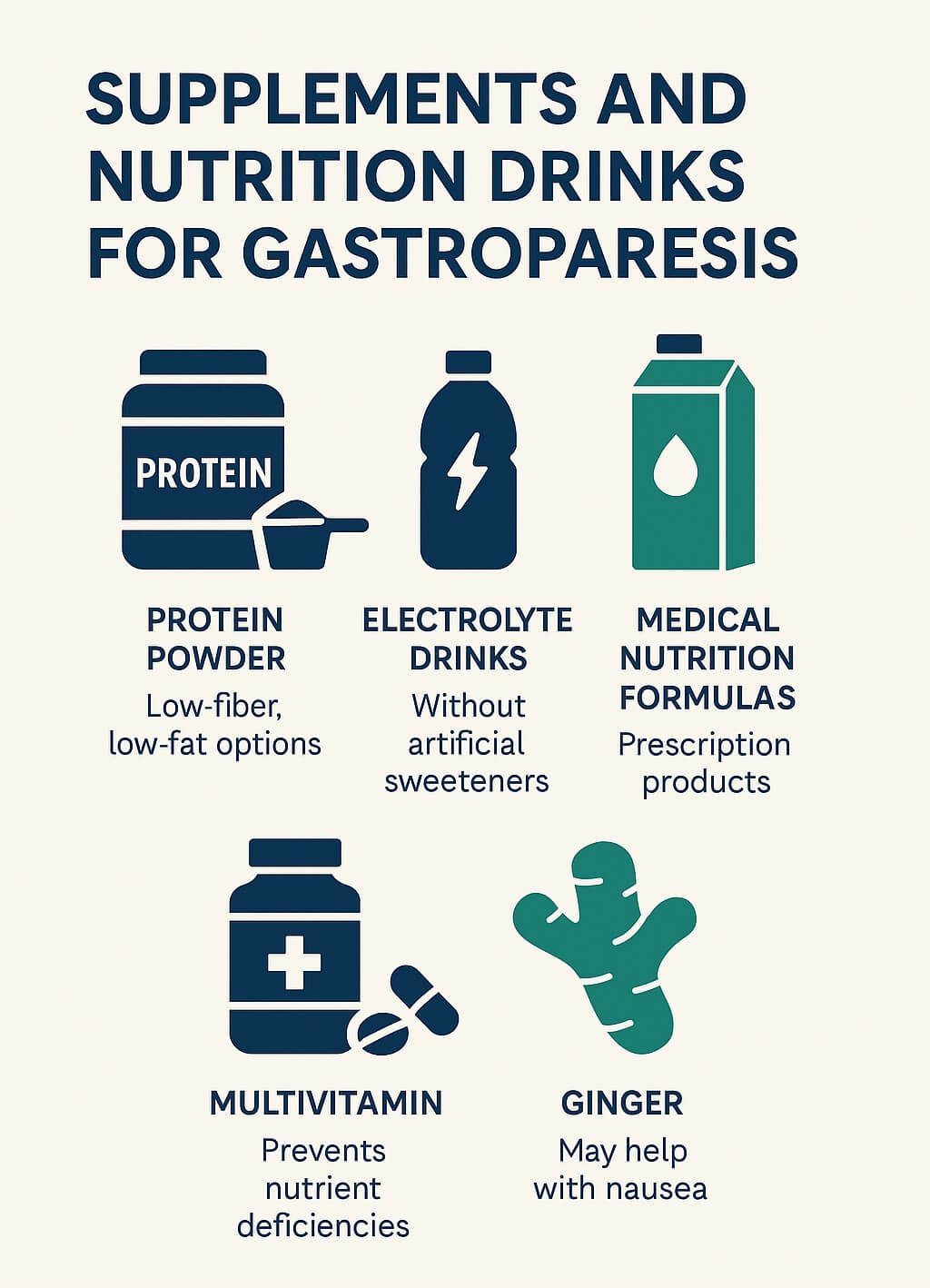
A good multivitamin ensures you’re getting essential nutrients even when your diet is limited. Take it with food if possible, and choose one that’s easily absorbed and doesn’t require fat for absorption. Avoid gummy vitamins, which often contain fiber and can be hard to digest.
Individual vitamins might be necessary depending on your labs. Iron, vitamin D, and B12 are commonly deficient in people with both Hashimoto’s and gastroparesis. Work with your doctor to test levels and supplement appropriately.
Ginger supplements or ginger tea can help with nausea for some people. Ginger has natural anti-nausea properties and doesn’t interfere with most medications. Steep fresh ginger in hot water and sip it slowly, or try ginger capsules if your doctor approves.
How do I know if a food is making things worse?
Tracking your symptoms in relation to what you eat helps identify problem foods and patterns. Everyone’s triggers are slightly different, so keeping records provides personalized information.
Keep a detailed food and symptom diary for at least two weeks. Write down everything you eat, the portion size, and the time. Then note any symptoms like nausea, pain, bloating, or vomiting, including when they started and how severe they were. Patterns will emerge over time.
Introduce new foods one at a time rather than adding several at once. If you try multiple new things in one day and feel terrible, you won’t know which food caused the problem. Test one new food, wait a day or two to assess your reaction, then try another if you want.
Pay attention to portion sizes. Sometimes the food itself is fine, but eating too much overwhelms your stomach. You might tolerate a quarter cup of something but feel sick after eating a full cup.
Notice the timing of symptoms. If you always feel worse two hours after eating a particular food, that food might be slowing your digestion. If symptoms appear immediately, the food might be irritating your stomach lining or triggering nausea directly.
Don’t be afraid to eliminate foods that consistently cause problems, even if they’re supposedly safe for gastroparesis. Everyone’s body responds differently, and what works for someone else might not work for you. Trust your own experience over general guidelines.
When should I talk to my doctor about my eating struggles?
While managing gastroparesis through diet is important, some situations require medical intervention beyond food choices. Knowing when to reach out to your healthcare team can prevent serious complications.
Contact your doctor if you continue losing weight despite your best efforts to eat enough. Unintended weight loss can lead to malnutrition, muscle wasting, and other serious health problems. Your doctor might need to adjust your treatment plan or recommend additional interventions.
Persistent vomiting or inability to keep down liquids requires immediate medical attention. Dehydration happens quickly and can be dangerous. If you’re vomiting multiple times daily or can’t drink water without throwing up, you need medical help right away.
Severe pain that doesn’t improve with dietary changes might indicate a complication or different problem. While gastroparesis causes discomfort, severe pain isn’t typical and should be evaluated.
If you’re feeling weak, dizzy, or unable to function normally, your nutritional intake probably isn’t adequate. These symptoms can indicate electrolyte imbalances, low blood sugar, or malnutrition, all of which need medical treatment.
Changes in your bowel movements, particularly if you’re experiencing severe constipation, should be discussed with your doctor. Gastroparesis affects your entire digestive system, and constipation can worsen your symptoms and discomfort.
What’s the most important thing to remember?
The most crucial thing to understand is that managing gastroparesis with Hashimoto’s is a marathon, not a sprint. You’re dealing with chronic conditions that require ongoing adjustment and patience. What works this month might need tweaking next month as your symptoms and tolerance change.
Prioritize getting enough calories over eating a perfectly balanced diet. When you’re losing weight, the immediate concern is stopping that weight loss and maintaining basic nutrition. You can work on optimizing your diet once you’ve stabilized your weight.
Be kind to yourself on difficult days. If all you can manage is broth and crackers, that’s okay. Tomorrow might be better. Pushing yourself to eat when your stomach won’t cooperate often backfires and makes you feel worse.
Build a support system that understands your challenges. Whether that’s family, friends, online support groups, or a therapist, having people who understand how hard this is makes a real difference. You’re not being dramatic or difficult. You’re managing serious medical conditions.
Work closely with your healthcare team, including your endocrinologist, gastroenterologist, and potentially a registered dietitian who specializes in gastroparesis. These professionals can provide personalized guidance, monitor your progress, and adjust treatments as needed.
Remember that eating with these restrictions isn’t about perfection. It’s about finding what works for your body, maintaining adequate nutrition, and preserving your quality of life as much as possible. You’re doing the best you can with a genuinely difficult situation, and that’s enough.