Discovering a stubborn yellow film on your face the morning after applying retinal can be confusing and alarming. The product seems glued to your skin, refusing to rinse away despite multiple cleansing attempts. This sticky situation happens more often than you might think, and understanding why it occurs helps you prevent it while using retinal products more effectively. The issue usually stems from formulation characteristics, application technique, or interactions with other products rather than indicating anything wrong with your skin.
Why does retinal leave a yellow residue on skin?
Retinaldehyde, the active form of vitamin A in retinal products, naturally appears yellow to orange in color. This vibrant pigmentation comes from the molecule’s chemical structure, which contains conjugated double bonds that absorb certain wavelengths of light. Unlike colorless retinol that requires multiple conversion steps, retinaldehyde maintains its distinctive color throughout formulation and application.
The yellow tint becomes visible on skin because retinal formulations concentrate the active ingredient at therapeutic levels. When you apply the product, you’re essentially depositing a layer of yellow-pigmented molecules onto your skin surface. In proper formulations with appropriate carriers, this color should absorb or dissipate as the product penetrates. However, certain formulation choices can cause the pigment to remain on the surface rather than absorbing completely.
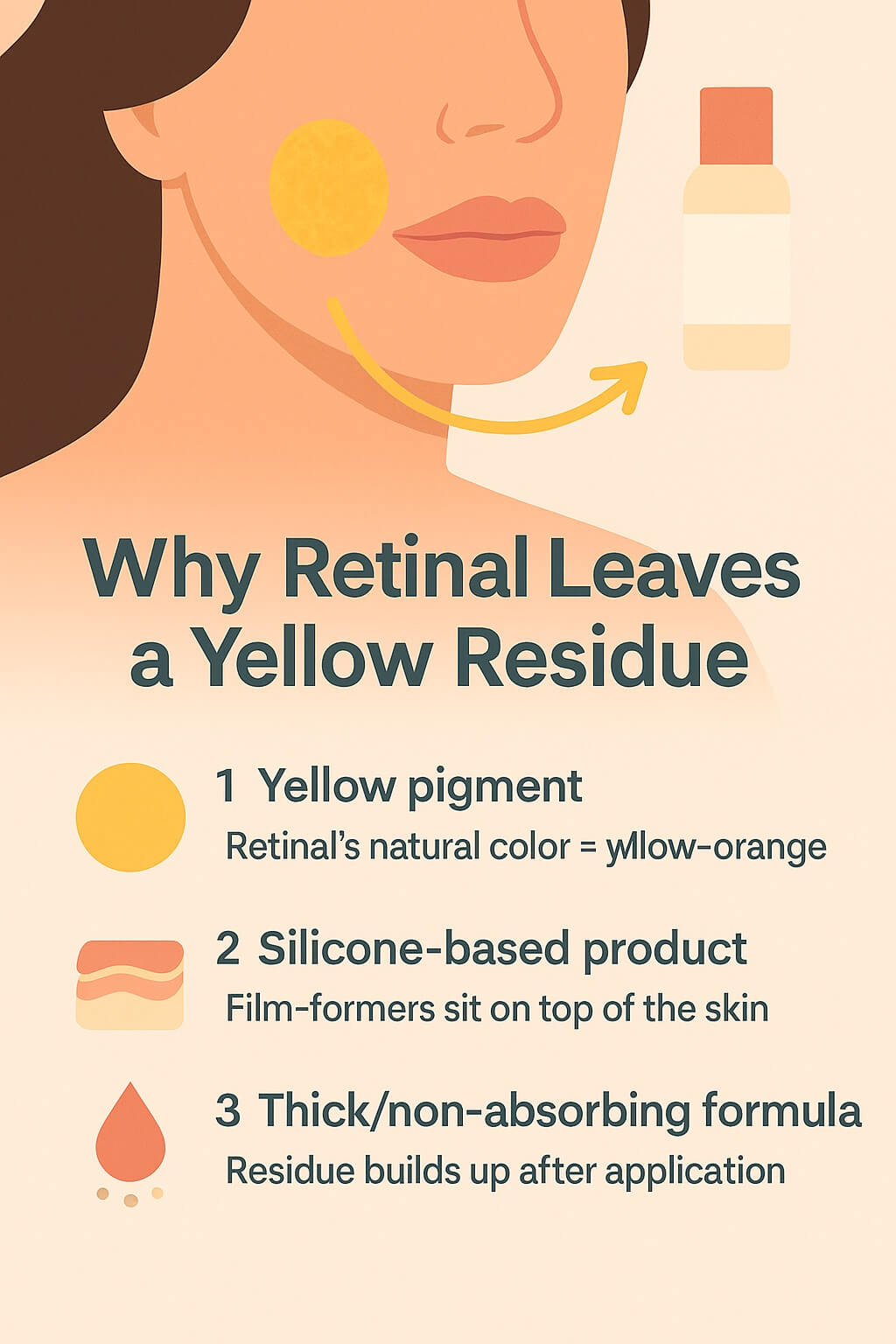
Some retinal products use silicone-based delivery systems that create a film on the skin surface. These silicones help stabilize the notoriously unstable retinaldehyde molecule and control its penetration rate. However, silicones don’t absorb into skin the way water-based or oil-based ingredients do. Instead, they sit on top, creating a protective layer. When this silicone film contains yellow retinaldehyde, the color remains visible as a surface coating.
Formulation viscosity affects how products spread and absorb. Thicker, more emollient retinal formulations may not fully penetrate, especially if you apply too much product. The excess sits on the skin surface, and the yellow pigmentation becomes increasingly obvious as the product oxidizes overnight. Oxidation can intensify the yellow color, making morning residue appear more dramatic than the product looked during application.
The pH and solubility characteristics of retinal products influence their interaction with skin. Retinaldehyde works best in specific pH ranges, and formulators must balance efficacy with stability and cosmetic elegance. Sometimes these formulation compromises result in products that don’t fully absorb or rinse cleanly, particularly in higher concentrations.
What causes retinal products to feel sticky or won’t rinse off?
Film-forming ingredients in retinal formulations create the sensation of product that won’t wash away. These ingredients serve important purposes including protecting the unstable retinaldehyde from degradation and controlling its release into skin. Silicones, certain polymers, and specific emulsifiers create these protective films. While beneficial for the active ingredient, they can feel uncomfortable when you skip moisturizer or apply too much product.
Water-resistant formulation components make removal more challenging. Some retinal products incorporate ingredients designed to withstand moisture and prevent the product from breaking down too quickly on skin. This stability helps maintain potency but creates difficulty during cleansing. Standard water-based cleansers may slide over these water-resistant films without breaking them down effectively.
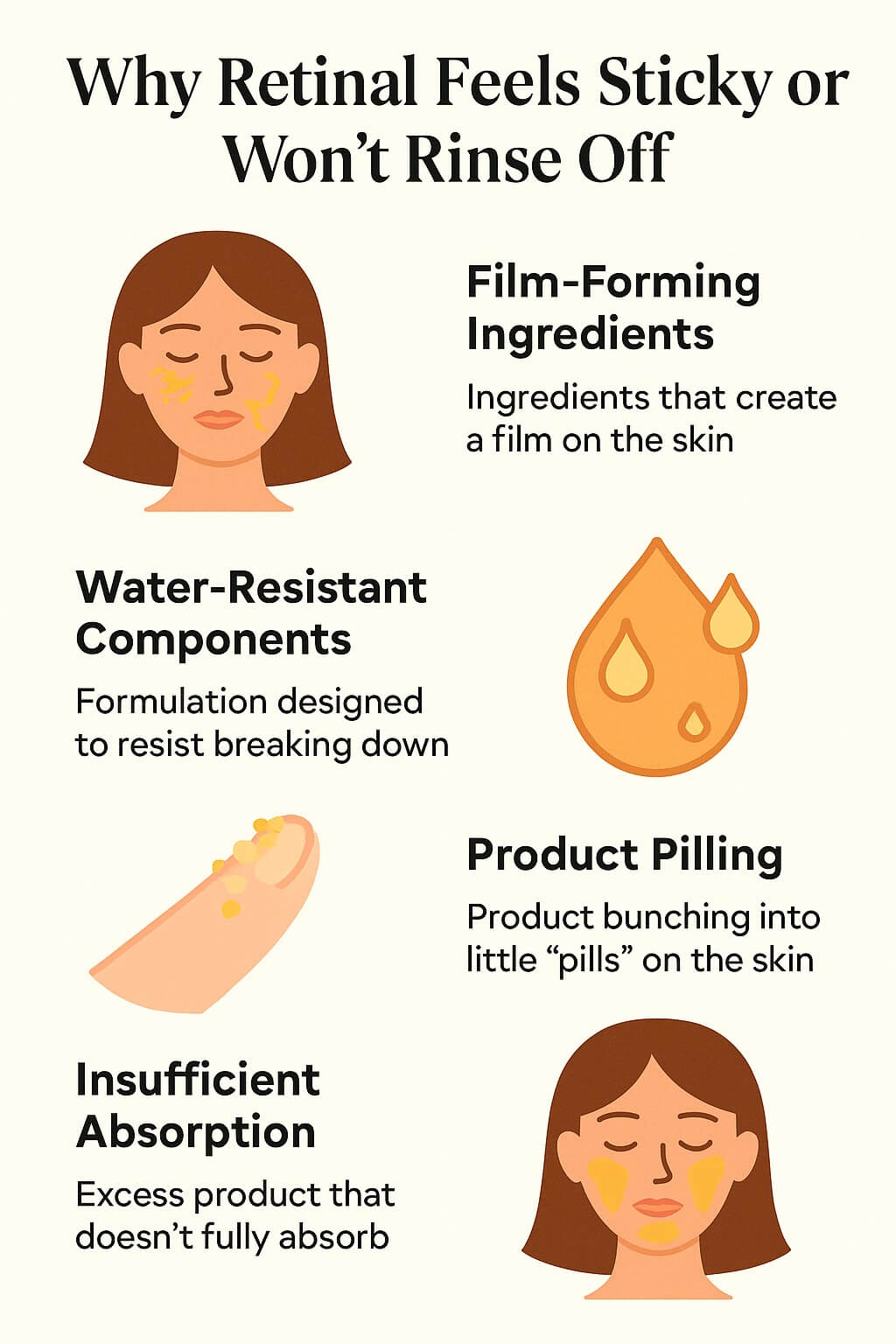
Product pilling occurs when formulation ingredients don’t integrate properly with skin or subsequent products. This manifests as little balls or flakes of product that roll off during cleansing attempts. The yellow retinal pigment concentrates in these pilled particles, creating visible residue that seems impossible to remove. Pilling happens more frequently when you use incompatible products in sequence or apply too much of any single product.
Insufficient absorption leaves excess product sitting on the skin surface overnight. Skin can only absorb a limited amount of any topical product. When you apply more than this absorption capacity allows, the remainder stays on the surface. Without an occlusive moisturizer on top to blend with the excess, the retinal layer dries down into a concentrated film that becomes increasingly difficult to remove.
Dead skin cell accumulation traps product in surface texture irregularities. Retinoids increase cell turnover, paradoxically creating more surface texture in the short term before long-term smoothing occurs. Product can settle into these textured areas, and the combination of dead cells plus retinal residue creates stubborn patches that resist standard cleansing.
Did skipping moisturizer cause the problem?
Omitting moisturizer after retinal application significantly changes how the product behaves on your skin. Moisturizers serve multiple functions beyond simple hydration. They provide occlusivity that seals in treatment products, distribute and dilute concentrated actives, and prevent excessive evaporation that concentrates products on the surface.
When you skip moisturizer, any excess retinal that didn’t absorb immediately has nowhere to go. Without an emollient layer to blend into, the product dries down in place, creating a concentrated film. This film formation happens as the product’s carrier ingredients evaporate, leaving behind higher concentrations of the yellow-pigmented active ingredient and film-forming excipients.
The tight, stretched feeling you experienced indicates excessive dehydration of the skin surface. Retinal products are inherently drying due to increased cell turnover and potential irritation. Moisturizer counteracts this drying effect by replenishing lipids and drawing water into the skin. Without this protective layer, transepidermal water loss accelerates overnight, leaving skin feeling tight and uncomfortable by morning.
Moisturizer also helps buffer the intensity of retinal contact with skin. When applied over retinal, moisturizer creates a gradient that moderates the concentration reaching deeper skin layers. This buffering reduces irritation while maintaining efficacy. The moisturizer essentially “finishes” the application, integrating the treatment product into your skin’s surface rather than leaving it as a distinct layer.
The combination of concentrated surface product plus dehydrated skin creates the perfect conditions for difficult-to-remove residue. The dried-down retinal adheres more strongly to dehydrated skin texture, and standard cleansers struggle to break down the concentrated film without adequate moisture present.
How much retinal should you actually apply?
The appropriate amount of retinal for facial application is surprisingly small, typically about a pea-sized amount or even less. This quantity seems insufficient when you first dispense it, leading many people to apply two or three times the necessary amount. However, retinal products are highly concentrated, and more definitely doesn’t mean better results.
Applying excessive product wastes expensive formulations while increasing the likelihood of irritation and residue problems. Your skin can only absorb a finite amount of any topical ingredient in a given timeframe. Anything beyond this absorption capacity sits on the surface contributing nothing to efficacy but everything to side effects and morning residue.
The coverage technique matters as much as quantity. Rather than applying retinal in thick layers, use a thin, even distribution across the entire treatment area. Dot small amounts across your forehead, cheeks, nose, and chin, then gently spread using upward and outward motions. This technique ensures coverage without creating thick deposits that can’t fully absorb.
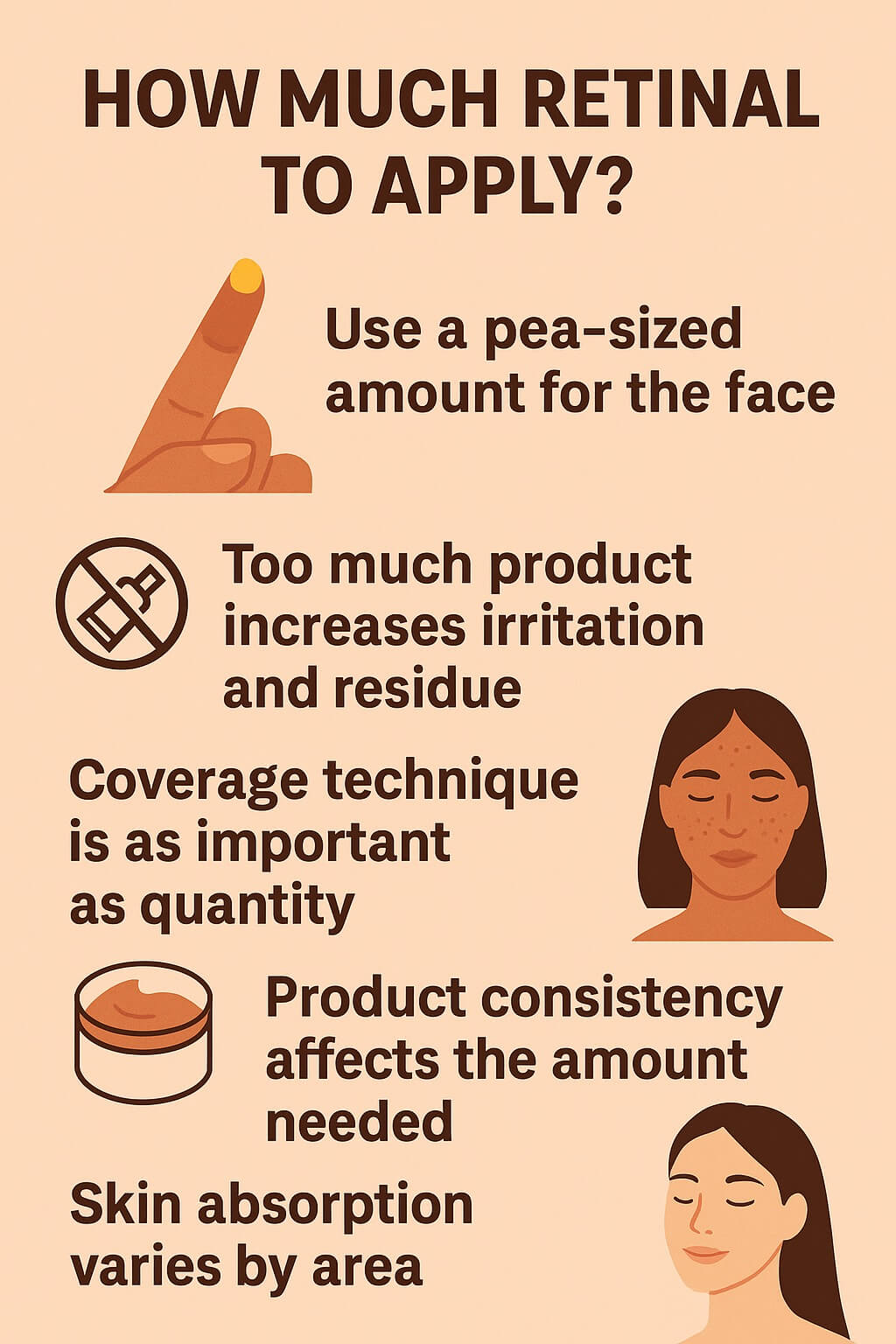
Product consistency affects how much you need. Some retinal formulations have very liquid textures that spread easily and require minimal product. Others feature thicker, cream-like consistencies that need slightly more to achieve full coverage. Adjust your amount based on the specific product texture, always erring on the side of less rather than more.
Skin absorption capacity varies by area. The delicate skin around eyes requires much less product than the thicker skin of cheeks or forehead. Applying the same amount everywhere results in excess in thin-skinned areas. Many experienced users apply minimal amounts to sensitive zones or skip them entirely, focusing retinal application on areas that tolerate it better.
Why won’t regular cleansers remove retinal residue?
Water-based cleansers alone often can’t break down the film-forming ingredients and silicones in retinal formulations. These products require emulsification to dissolve properly. Standard foaming cleansers work through surfactants that lift water-soluble dirt and oils, but they struggle with certain synthetic polymers and silicones that don’t respond to conventional cleansing mechanisms.
The oil-loving (lipophilic) nature of retinaldehyde itself resists simple water rinsing. While some carrier ingredients in retinal products are water-soluble, the active ingredient and many protective components are not. This means water-based cleansing alone leaves behind the most problematic components including the yellow-pigmented retinaldehyde.
Double cleansing exists specifically to address these limitations. The first cleanse, typically with an oil-based product or micellar water, breaks down makeup, sunscreen, and treatment products. Oil dissolves oil-based and silicone-based ingredients that water cannot touch. The second cleanse with a water-based cleanser then removes the oil from the first cleanse along with any remaining water-soluble residue.
Micellar technology works differently than standard surfactants, making it particularly effective for stubborn residue. Micelles are tiny spheres of cleansing molecules that attract both oil-loving and water-loving substances. They surround and lift away resistant residue without requiring harsh rubbing. Multiple passes with micellar water often succeed where single-cleanse methods fail.
Cleansing balms and oils specifically target the types of ingredients found in retinal formulations. These products contain emulsifiers that allow them to rinse away with water despite their oil base. When massaged onto dry skin before water contact, they effectively dissolve film-forming ingredients and silicones that standard cleansers can’t touch.
What’s the best way to remove stubborn retinal residue?
Start with an oil-based cleanser or cleansing balm applied to completely dry skin. The dry application is crucial because water dilutes the cleansing oils and reduces their ability to break down resistant residue. Massage the cleanser gently but thoroughly over areas with visible yellow residue, giving it time to dissolve the stubborn film. This process typically takes 30 to 60 seconds of gentle circular motions.
Add a small amount of water to emulsify the cleansing oil once you’ve massaged it thoroughly over dry skin. The product should turn milky white as emulsification occurs, indicating that it’s ready to rinse away. This emulsification step is critical because it allows the oil-based cleanser to become water-soluble, taking the dissolved retinal residue with it when you rinse.
Follow with a gentle water-based cleanser to ensure complete removal of the first cleanse. This second step removes any remaining oil and truly cleans the skin rather than just displacing products. Use lukewarm water rather than hot, as excessive heat can irritate skin already stressed by retinal use and residue accumulation.
For particularly stubborn patches that resist this double-cleanse approach, try a micellar water on a cotton pad after cleansing. The physical action of the pad combined with micellar technology can lift remaining residue that even double cleansing missed. Replace the cotton pad as it becomes discolored with yellow residue, continuing until the pad stays clean.
Gentle exfoliation with a soft washcloth can help if residue persists despite proper cleansing. Wet a soft, clean washcloth with warm water and very gently wipe over problem areas. Avoid aggressive rubbing, which irritates skin without effectively removing product. The slight texture of the cloth helps lift surface buildup that resists liquid cleansers alone.
Chemical exfoliation should be a last resort if other methods fail. A very gentle acid toner like lactic acid or a low-concentration glycolic acid can help remove accumulated dead skin cells trapping retinal residue. However, use this approach cautiously since you’re already using a strong active ingredient and don’t want to over-exfoliate. Skip your regular retinal application the night after using chemical exfoliation to give skin recovery time.
Does the yellow staining damage your skin?
The yellow discoloration from retinal residue is cosmetically undesirable but not inherently harmful to skin. The pigmentation comes from the retinaldehyde molecule itself rather than from dyes or colorants. This natural color doesn’t penetrate deeply or cause permanent staining. Once you successfully remove the surface residue, the yellow appearance disappears completely.
However, the conditions that allow visible residue to form may indicate problems worth addressing. If product isn’t absorbing properly, you might not be getting the full benefit of the retinal treatment. The active ingredient sitting on your skin surface rather than penetrating provides minimal therapeutic effect while maximizing irritation potential.
Prolonged contact with high concentrations of retinal on the skin surface can increase irritation risk. While modern retinal formulations are generally well-tolerated, excessive surface contact time with concentrated product contributes to dryness, redness, and sensitivity. This is particularly true when you skip moisturizer, removing the buffering protection it provides.
The tight, stretched feeling accompanying residue buildup indicates compromised skin barrier function. This sensation suggests that the retinal application caused excessive moisture loss and possibly irritation. While not permanent damage, repeated episodes of barrier disruption can sensitize skin over time and impair its protective functions.
Oxidation of the yellow residue overnight might create free radicals that contribute to oxidative stress on skin. Retinoids are notoriously unstable and degrade when exposed to light and air. The surface residue you see in the morning has undergone this degradation process, potentially producing reactive molecules. While the impact is likely minimal, it’s another reason to ensure proper application and removal.
Can you prevent retinal residue with better application technique?
Starting with properly cleansed, completely dry skin creates the optimal foundation for retinal absorption. Even slight moisture on skin can dilute retinal products and interfere with proper absorption. Wait at least 10 to 15 minutes after cleansing before applying retinal, ensuring skin is truly dry rather than just feeling dry to the touch.
Apply retinal in a very thin, even layer using the minimal effective amount. Dispense a small amount, much less than seems adequate, then spread it thoroughly across the treatment area. The goal is a nearly invisible application rather than a visible layer. If you can see product on your skin after spreading, you’ve applied too much.
Use gentle patting or pressing motions rather than rubbing to encourage absorption. Excessive rubbing generates friction heat that can degrade retinal while creating an uneven distribution. Light pressing helps the product settle into skin without disturbing the delicate retinaldehyde molecules.
Wait for complete absorption before applying moisturizer, typically 10 to 20 minutes depending on the product and your skin type. This waiting period allows the retinal to penetrate without being diluted or disrupted by subsequent products. Some people prefer to apply retinal, complete other parts of their routine like brushing teeth, then return to apply moisturizer once the retinal has absorbed.
Choose a compatible moisturizer that works well with your retinal formulation. Some moisturizers contain ingredients that interact poorly with retinal, causing pilling or preventing proper absorption. Simple, fragrance-free moisturizers with minimal ingredients tend to work best over retinal treatments. Avoid anything containing acids, additional exfoliants, or high concentrations of niacinamide in the immediate layering sequence.
Consider the sandwich method if you experience persistent irritation or residue. Apply a thin layer of moisturizer first, then retinal, then another layer of moisturizer. This technique moderates retinal intensity while ensuring adequate moisturization. Some absorption capacity may be sacrificed, but improved tolerability and reduced residue often make this trade-off worthwhile.
What if you have naturally yellow-toned or darker skin?
The yellow pigmentation from retinal residue shows differently on various skin tones. On naturally yellow-toned or olive skin, the discoloration may be less obvious but can still create an uneven, muddy appearance. The residue doesn’t match your natural skin color and creates patches of intensified yellowness that look dull or dirty.
Darker skin tones may notice an ashy or grayish cast in areas with retinal residue rather than obvious yellow discoloration. The yellow pigment combined with the skin’s natural melanin creates this altered appearance. The texture issues from residue remain equally problematic regardless of skin tone, with the tacky, film-like feel causing makeup application difficulties.
The importance of proper retinal use actually increases for darker skin tones due to the risk of post-inflammatory hyperpigmentation from irritation. If improper application technique causes irritation, darker skin responds with increased melanin production that can persist for months. Preventing irritation through correct application and moisturizer use becomes critical for avoiding these pigmentation complications.
Testing products on a small area before full-face application helps identify formulations that work well with your specific skin chemistry. What works beautifully for one person may cause residue, pilling, or irritation for another regardless of skin tone. This preliminary testing period allows you to adjust technique and identify potential problems before they affect your entire face.
Does the retinal formulation quality affect residue formation?
Formulation quality dramatically impacts whether retinal products absorb cleanly or leave stubborn residue. Higher-quality formulations invest in sophisticated delivery systems that enhance absorption while minimizing surface residue. These products typically cost more but provide better experiences with fewer application problems.
The choice of carrier system determines much of the user experience. Emulsion-based carriers, anhydrous systems, and encapsulation technologies all deliver retinal differently. Some formulations prioritize stability at the expense of elegance, creating products that work effectively but feel uncomfortable or leave residue. Others balance multiple factors to create pleasant textures that absorb well.
Concentration of the active ingredient influences residue formation. Higher retinal concentrations mean more yellow-pigmented molecules deposited on skin. If the formulation doesn’t provide adequate vehicle to carry these molecules into skin, excess accumulates on the surface. Sometimes stepping down to a lower concentration improves the experience while still providing benefits.
Additional ingredients in the formulation can either help or hinder absorption. Penetration enhancers improve how retinal moves into skin, reducing surface residue. Film-forming ingredients protect the unstable retinal but can create the sticky sensation and difficult removal that prompted your question. Humectants attract moisture that aids absorption, while certain emollients might create occlusive barriers that trap product on the surface.
The age and storage conditions of your product affect its behavior. Retinal oxidizes over time, especially when exposed to light and air. Oxidized retinal may change color, become more yellow, and behave differently than fresh product. Store retinal products in cool, dark places and replace them within the recommended timeframe after opening, typically three to six months.
Should you change your morning skincare routine after retinal use?
Your morning routine requires adjustment to accommodate the realities of retinal use the previous night. The potential for residue and the increased skin sensitivity from retinal both necessitate modifications to your standard morning approach.
Thorough cleansing becomes more important the morning after retinal application. Even if you typically just rinse with water in the morning, you’ll need proper cleansing to remove any residue and prepare skin for subsequent products. This doesn’t require aggressive double cleansing unless you notice visible residue, but a gentle cleanser is necessary rather than just water.
Hydrating serums with hyaluronic acid help replenish moisture lost overnight due to retinal’s drying effects. Apply these to slightly damp skin immediately after cleansing for maximum hydration. The plumping effect from proper hydration also helps smooth out any texture changes caused by the retinal treatment.
Antioxidant serums provide additional protection for skin sensitized by retinal use. Vitamin C, vitamin E, ferulic acid, and other antioxidants defend against environmental stressors that skin is more vulnerable to while using retinoids. Apply antioxidant serums after hydrating products but before moisturizer and sunscreen.
Moisturizer in the morning should be gentle and repairing, focusing on barrier support rather than just hydration. Look for ingredients like ceramides, cholesterol, and fatty acids that help rebuild the skin barrier potentially disrupted by overnight retinal use. Avoid anything potentially irritating including fragrance, essential oils, or high concentrations of active ingredients.
Sunscreen becomes absolutely critical when using retinal. This is non-negotiable regardless of whether you see residue or notice skin sensitivity. Retinal increases photosensitivity, making skin more vulnerable to sun damage. Use a broad-spectrum sunscreen with at least SPF 30, applied generously and reapplied every two hours during sun exposure. Physical sunscreens with zinc oxide or titanium dioxide often work better than chemical filters on retinal-sensitized skin.
How often should you use retinal to avoid buildup problems?
Frequency of application significantly affects whether you experience residue and irritation issues. While some people tolerate nightly retinal use, many find that this frequency creates cumulative irritation and product buildup that leads to the residue problems you’re experiencing.
Starting with twice-weekly application allows your skin to adapt to retinal while minimizing the risk of problems. Use retinal on non-consecutive nights like Monday and Thursday, maintaining your regular routine on other nights. This conservative approach helps you gauge tolerance while avoiding the overwhelm that can come from daily use.
Gradually increase frequency only after your skin demonstrates tolerance at the current level. After several weeks of twice-weekly use without irritation or residue, try three times weekly. Continue this gradual progression, waiting several weeks between frequency increases. Some people ultimately tolerate nightly use, while others find their sweet spot at three or four nights weekly.
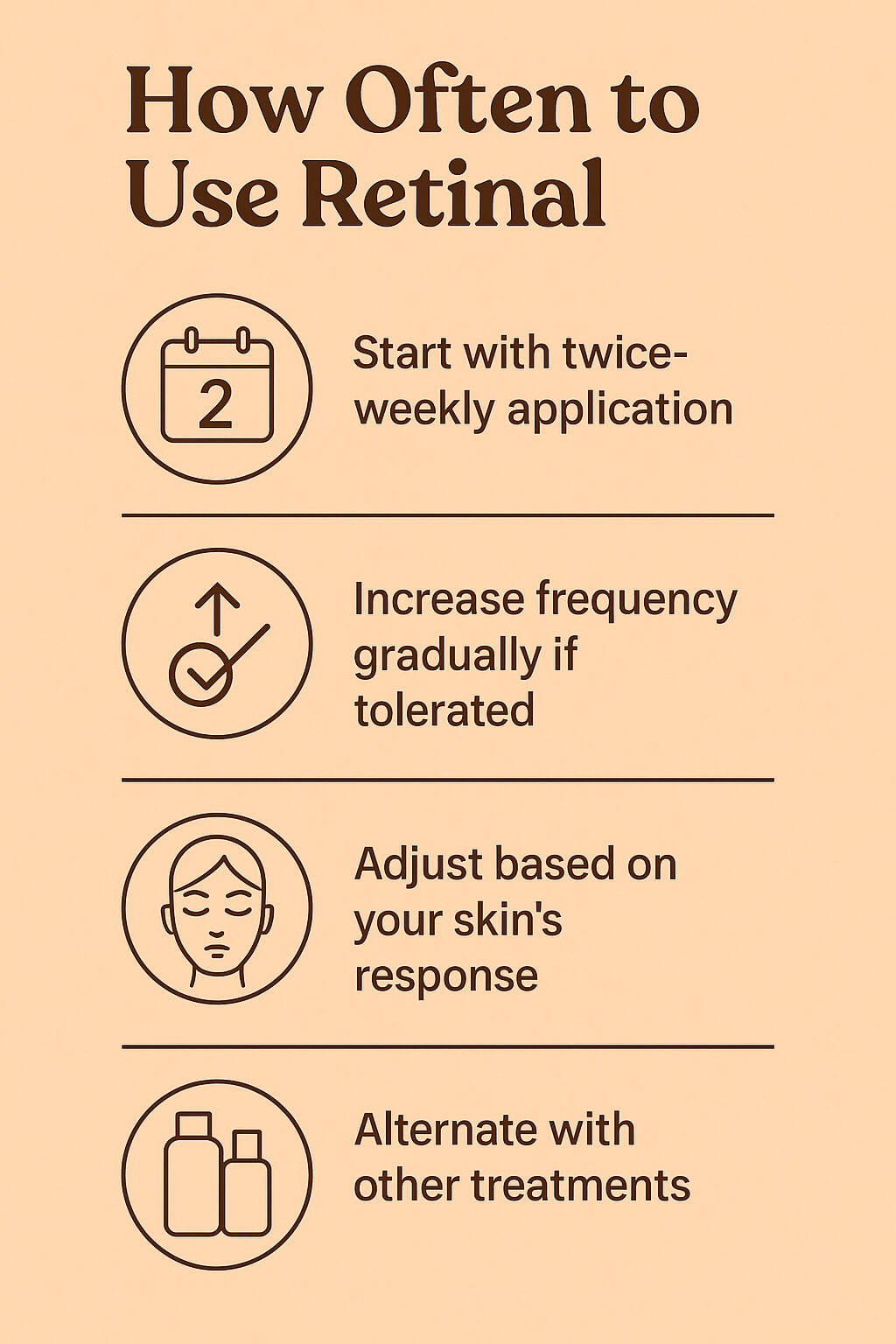
Your skin’s response provides the best guidance for optimal frequency. If you wake up with tight, uncomfortable skin or notice visible residue regularly, you’re using retinal too frequently. Scale back and give your skin more recovery time between applications. The goal is consistent progress without irritation rather than aggressive use that causes problems.
Consider alternating retinal with other treatment products rather than using it every single night. Many people rotate retinal with products like azelaic acid, niacinamide, or simple hydrating serums. This rotation provides skin variation while maintaining treatment consistency. The breaks between retinal applications allow better clearance of each application, reducing the accumulation that leads to residue.
Seasonal adjustments may be necessary as environmental conditions change. Winter’s dry air may reduce your skin’s tolerance for frequent retinal use, while summer humidity might allow better tolerance. Pay attention to how your skin behaves across seasons and adjust frequency accordingly rather than rigidly maintaining the same schedule year-round.
What role does skin type play in retinal residue formation?
Oily skin typically tolerates retinal better than dry skin and experiences fewer residue issues. The natural oil production helps dissolve and distribute retinal products, preventing the concentrated buildup that creates stubborn residue. However, oily skin users might experience pilling if they apply too much product or if the formulation interacts poorly with their skin’s sebum.
Dry skin struggles more with retinal applications because the limited natural oil production means less help with product distribution and absorption. The already compromised barrier function of dry skin also reduces absorption capacity, leaving more product on the surface. These users absolutely must apply moisturizer after retinal to prevent the tight, uncomfortable feeling and residue formation you experienced.
Combination skin requires a nuanced approach, potentially using different amounts in different areas. Apply minimal retinal to dry areas like cheeks while being more generous on oily areas like the T-zone. This customization prevents both excessive dryness in some areas and ineffective treatment in others.
Sensitive skin needs the most careful approach with retinal, starting with the lowest concentrations and infrequent application. Sensitive skin users experience irritation more readily and take longer to build tolerance. For these individuals, the sandwich method with moisturizer before and after retinal often works better than direct application to bare skin.
Dehydrated skin, regardless of underlying type, will have particular difficulty with retinal absorption and residue prevention. Dehydration impairs the skin barrier’s ability to absorb products effectively while making skin more vulnerable to irritation. Address dehydration through increased humectant use and proper moisturization before expecting optimal results from retinal.
Can you use retinal every other night safely?
Every-other-night application represents a reasonable middle ground for many people once they’ve built tolerance to retinal. This frequency provides regular treatment benefits while allowing skin recovery time that prevents accumulation of irritation or residue. Most dermatologists consider this an appropriate maintenance frequency for established retinal users.
The off nights serve important purposes beyond just resting from actives. Your skin completes repair processes, rebuilds the barrier function, and clears any residual product from the previous application. Using these nights for gentle, nourishing routines supports your skin’s recovery while maintaining a consistent overall skincare approach.
Listen to your skin’s signals rather than following a rigid schedule. If every-other-night use leaves you with persistent irritation, tightness, or residue, reduce frequency further. Conversely, if your skin handles this schedule easily with no negative signs, you might eventually try more frequent application. Individual tolerance varies dramatically, making personalized adjustment essential.
Consistency at a sustainable frequency produces better results than aggressive use that causes problems. Using retinal three nights weekly consistently for six months will produce superior results to attempting nightly use that causes irritation forcing you to stop entirely for weeks at a time.
What should you do if the residue problem keeps happening?
Persistent residue despite proper technique suggests the formulation may not work well with your skin chemistry. Some retinal products simply don’t play nicely with certain skin types or climates. Rather than fighting with a problematic product, consider trying a different retinal formulation with a different delivery system.
Alternatively, switching to retinol might provide better tolerance with fewer application issues. While retinol is less potent than retinal and requires additional conversion steps, it often comes in more cosmetically elegant formulations that absorb better and cause fewer residue problems. The slight reduction in potency may be offset by improved consistency and tolerability.
Consulting a dermatologist helps identify whether the residue indicates a deeper problem with your skincare routine or if it’s simply a formulation mismatch. A professional can assess your skin condition, review your full routine, and recommend specific products or adjustments that address your individual situation.
Consider whether environmental factors contribute to the problem. Low humidity environments impair product absorption and worsen retinal’s drying effects. Using a humidifier in your bedroom might improve both comfort and absorption, reducing morning residue. Similarly, ensure your room isn’t excessively warm, as heat can alter how products behave on skin.
Take a break from retinal to allow complete resolution of any accumulated irritation or damage before starting again with modified technique. Sometimes skin needs a reset period to fully recover before reintroducing strong actives. Use this break to strengthen your skin barrier with gentle, repairing products, then reintroduce retinal more carefully.