Many people find themselves gravitating toward softer, liquid-based foods like porridge rather than traditional solid meals. If you’ve noticed that chewing feels like a chore and you prefer the ease of consuming porridge, you’re not alone in this preference. Understanding both the potential risks and benefits of this eating pattern can help you make informed decisions about your nutrition and overall health.
Why Some People Prefer Liquid Foods
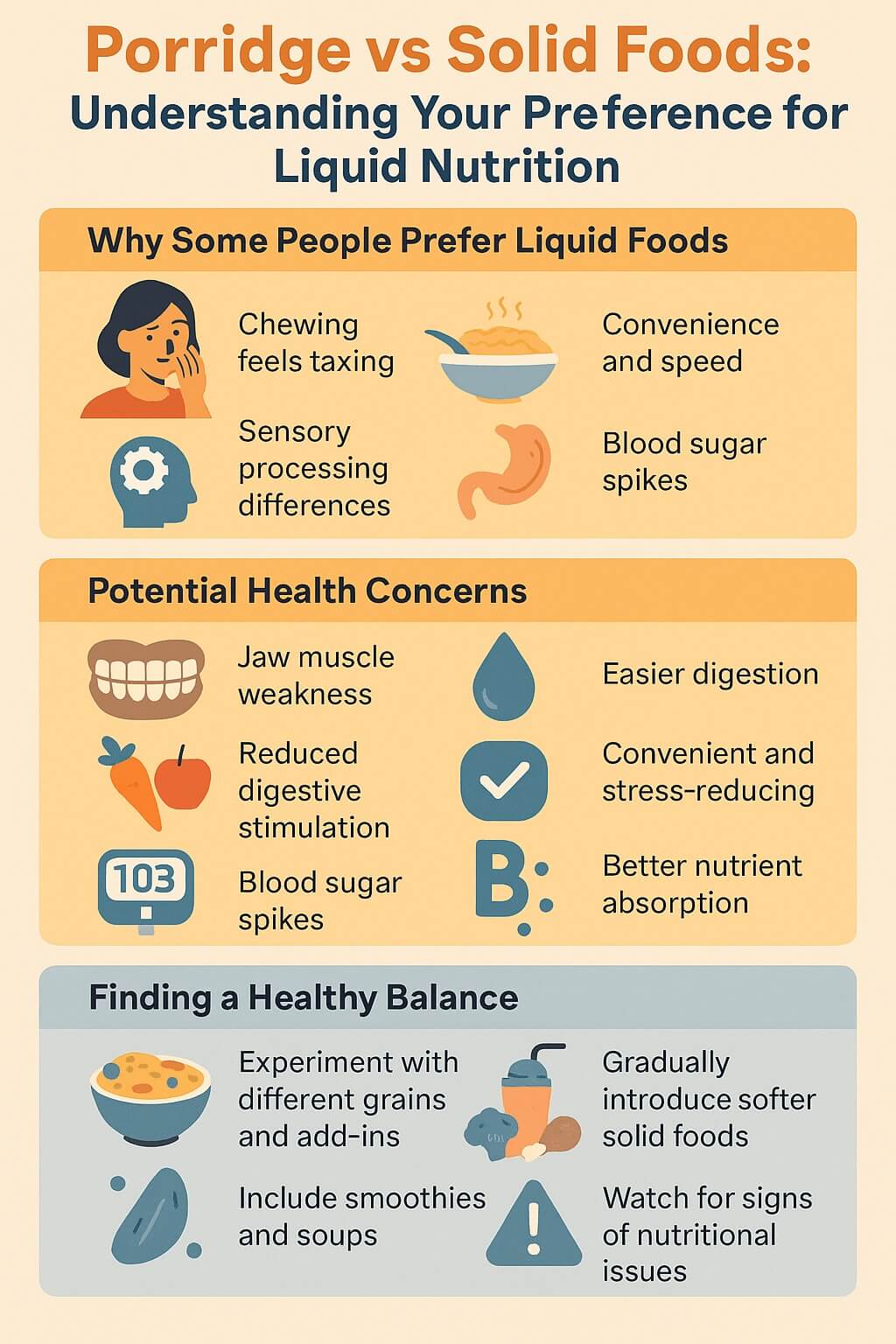
Your preference for porridge over solid foods may stem from several factors. Some individuals find the act of chewing mentally or physically taxing, especially during stressful periods or when dealing with dental issues. Others simply enjoy the convenience and speed of consuming liquid or semi-liquid meals. The smooth texture of porridge can feel more satisfying and less demanding than working through tougher, more complex textures.
This preference might also indicate underlying factors such as sensory processing differences, where certain textures feel uncomfortable or overwhelming. Additionally, if you’re often busy or stressed, the quick consumption of porridge might appeal to your desire for efficiency in meal times.
Potential Health Concerns
While preferring porridge isn’t inherently dangerous, there are several areas where relying too heavily on liquid foods might impact your health. The most immediate concern involves your jaw muscles and dental health. Regular chewing serves an important function in maintaining the strength of your jaw muscles. When you consistently avoid foods that require significant chewing, these muscles can gradually weaken over time, similar to how any unused muscle group might atrophy.
Your digestive system also benefits from the chewing process in ways you might not realize. Chewing stimulates saliva production, which contains important enzymes that begin breaking down food before it reaches your stomach. This preliminary digestion helps your body process nutrients more effectively. When you skip this step by consuming primarily liquid foods, your digestive system must work harder to extract nutrients from your meals.
Nutritionally, porridge-heavy diets can sometimes lack variety, which may lead to deficiencies in certain vitamins, minerals, or other essential nutrients. While porridge can be nutritious, especially when made with whole grains and topped with fruits or nuts, it typically doesn’t provide the same range of nutrients you’d get from a varied diet that includes vegetables, proteins, and different types of grains and legumes.
Another consideration is blood sugar regulation. Many porridge preparations, particularly those made with refined grains or added sugars, can cause rapid spikes in blood glucose levels. Without the fiber and protein complexity found in whole solid foods, your body might process these carbohydrates too quickly, leading to energy crashes and increased hunger shortly after eating.
Surprising Benefits of Your Preference
Despite the potential concerns, your porridge preference does offer some genuine advantages. Liquid and semi-liquid foods are generally easier for your body to digest, which means your digestive system expends less energy processing meals. This can be particularly beneficial if you have digestive issues or are recovering from illness.
Porridge and similar foods also tend to be hydrating, contributing to your daily fluid intake in a way that dry, solid foods cannot. This added hydration supports various bodily functions and can help maintain healthy skin, kidney function, and overall cellular health.
The convenience factor shouldn’t be underestimated either. Quick, easy meals can reduce stress around food preparation and consumption, which might improve your overall relationship with eating. If traditional meal preparation feels overwhelming or time-consuming, having go-to options like porridge can ensure you maintain regular eating patterns rather than skipping meals entirely.
From a nutritional absorption standpoint, some nutrients in liquid form may be more readily available to your body. When foods are already broken down into smaller particles, your digestive system can sometimes extract certain vitamins and minerals more efficiently.
Finding a Healthy Balance
The key to maintaining good health while honoring your preference lies in creating variety within your comfort zone. You can expand your porridge repertoire by experimenting with different grains like quinoa, steel-cut oats, or amaranth. Adding protein sources such as Greek yogurt, protein powder, or nut butters can improve the nutritional profile and help stabilize blood sugar levels.
Consider incorporating smoothies that include vegetables, fruits, and protein sources. This allows you to consume a wider range of nutrients while maintaining the liquid consistency you prefer. Soups can also bridge the gap between liquid and solid foods, offering more complex flavors and textures while remaining easy to consume.
Gradually introducing softer solid foods might help you maintain your jaw muscle strength without forcing yourself into uncomfortable eating situations. Foods like cooked vegetables, soft fruits, or tender proteins require minimal chewing while still engaging your jaw muscles more than purely liquid foods.
Finding a Healthy Balance – Food Options
| Category | Options | Benefits | How to Incorporate |
|---|---|---|---|
| Porridge Variations | Quinoa, steel-cut oats, amaranth, buckwheat, millet | Different nutrient profiles, varied textures, sustained energy | Rotate different grains weekly, cook with milk or plant-based alternatives |
| Protein Additions | Greek yogurt, protein powder, nut butters, ground flaxseed, hemp hearts | Improved nutritional profile, blood sugar stability, satiety | Mix into porridge while cooking or stir in after cooking |
| Liquid-Based Meals | Smoothies with vegetables/fruits/protein, protein shakes with greens | Wide nutrient range while maintaining preferred consistency | Replace 1-2 meals daily, include leafy greens and berries |
| Bridge Foods (Soups) | Pureed vegetable soups, bone broth with soft ingredients, lentil soups | Complex flavors, nutrients from vegetables, easy to consume | Have as lunch or dinner, blend to preferred consistency |
| Soft Solid Transitions | Cooked vegetables, soft fruits (bananas, berries), tender proteins (fish, eggs) | Maintains jaw muscle engagement, gradual texture introduction | Start with 1 soft solid per day, choose familiar flavors |
| Hydrating Options | Coconut water, herbal teas with nutrients, vegetable juices | Additional hydration, vitamins and minerals | Drink between meals, choose low-sugar options |
When to Seek Professional Guidance
While food preferences are normal, certain signs might indicate the need for professional support. If your aversion to solid foods is accompanied by significant weight loss, digestive issues, or anxiety around eating, consulting with a healthcare provider or registered dietitian would be wise. They can help ensure you’re meeting all your nutritional needs and address any underlying factors contributing to your preferences.
If you notice changes in your jaw function, dental health, or persistent digestive issues, these concerns warrant medical attention. Sometimes what appears to be a simple food preference might be your body’s way of responding to an underlying health condition.
Your preference for porridge over solid foods reflects a valid personal choice that can be managed healthily with some attention to nutrition and variety. By understanding both the benefits and potential risks, you can make informed decisions that support your overall well-being while respecting your individual preferences and lifestyle needs.
Citations and References
- “The Role of Mastication in Digestion and Nutrition” – Journal of Nutritional Science
- “Salivary Enzymes and Food Digestion” – American Journal of Clinical Nutrition
- “Texture Preferences and Sensory Processing in Adults” – Appetite Journal
- “Muscle Atrophy and Disuse: Effects on Jaw Function” – Journal of Oral Rehabilitation
- “Glycemic Response to Liquid vs Solid Foods” – Diabetes Care Journal
- “Hydration and Health: The Role of Food-Based Fluid Intake” – Nutrients Journal
- “Digestibility and Nutrient Absorption from Processed Foods” – Food Chemistry
- “Eating Behavior and Food Texture Preferences” – Food Quality and Preference