Seabuckthorn berry is a natural powerhouse in a world that is fixated on immunity, radiant skin, and anti-aging remedies. Revered for centuries and confirmed by contemporary science, this colorful orange superfruit has rare omega-7 fatty acids and an unparalleled vitamin C content. Find out why adding seabuckthorn to your wellness regimen is the best option.
What is Seabuckthorn Berry?
Seabuckthorn (Hippophae rhamnoides L.) is a small, tart, orange berry that thrives on thorny shrubs across the rugged landscapes of Europe and Asia, from Himalayan peaks to coastal dunes. Its ability to flourish in harsh conditions likely contributes to its dense nutritional profile. Known as the “holy fruit” in traditional medicine, seabuckthorn benefits span immunity, skin health, and beyond, earning it a top spot among superfruits.
Seabuckthorn’s Rich History in Traditional Medicine
Seabuckthorn has deep roots in ancient healing practices. In Ayurveda, Indian healers used the berries and oil to aid digestion, heal wounds, and balance skin health, often as a tonic or topical remedy. Tibetan medicine, as documented in the Journal of Ethnopharmacology (2011), valued seabuckthorn for boosting vitality, supporting respiratory health, and nourishing the body during harsh winters. In Chinese medicine, records from the Tang Dynasty (618–907 CE) highlight its use for improving digestion, boosting energy, and treating skin ailments. These time-honored traditions underscore seabuckthorn’s enduring appeal.
Seabuckthorn’s Vitamin C: A Boost for Immunity
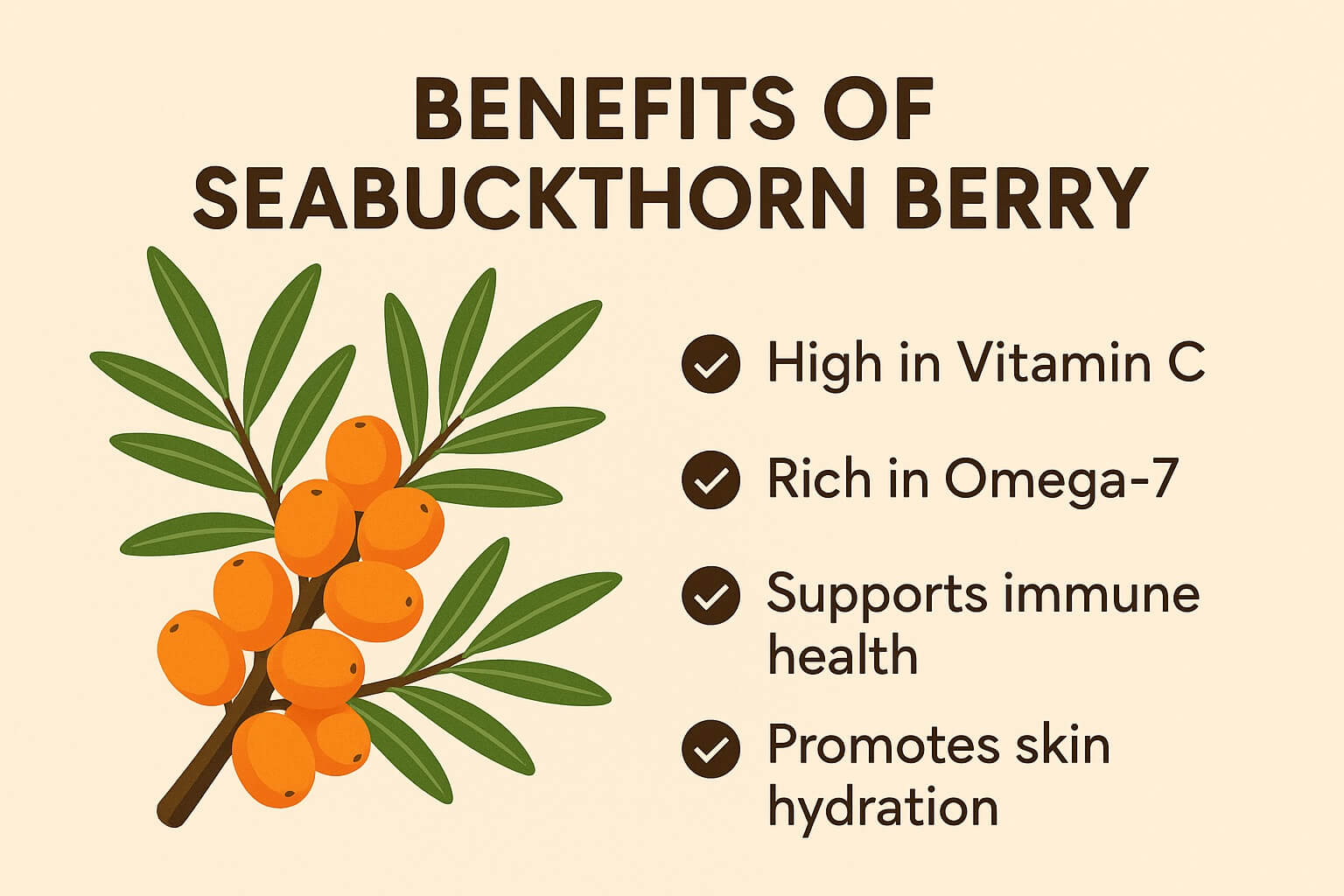
When it comes to seabuckthorn vitamin C, this berry is unrivaled. Research shows European seabuckthorn contains 120–315 mg of vitamin C per 100g of fresh fruit, while alpine varieties offer 405–1100 mg, and Chinese seabuckthorn (Hippophae sinensis) can reach up to 2500 mg (Food Chemistry, 2006). By comparison, oranges provide just 50–60 mg per 100g. This makes seabuckthorn a top choice for immune support, as vitamin C acts as a potent antioxidant, protecting cells and enhancing white blood cell function to combat infections.
The Unique Fatty Acid Profile: Omega-7 and More
What sets seabuckthorn oil apart is its rare combination of all four omega fatty acids—3, 6, 7, and 9—a profile nearly unmatched in the plant world. Omega-7 (palmitoleic acid) is particularly unique, naturally present in human skin. It promotes wound healing and hydration (Journal of Cosmetic Dermatology, 2014), supports collagen production for youthful skin, and maintains healthy mucous membranes in the eyes, mouth, and digestive tract, easing conditions like dry eye (Clinical Nutrition, 2010). Additionally, omega-3 and omega-9 reduce inflammation and support heart health, while omega-6 (including GLA and LA) helps manage skin conditions like psoriasis and acne (Phytomedicine, 2017). This comprehensive fatty acid blend makes seabuckthorn a standout for holistic wellness.
Seabuckthorn Benefits for Modern Health
Seabuckthorn’s high vitamin C content supercharges immunity, making it a go-to for flu season or daily defense. For skin health, seabuckthorn oil and juice promote collagen synthesis, hydrate skin, and reduce inflammation, delivering a radiant, youthful glow. The combination of omega-7 and omega-3 supports heart health by lowering cholesterol and improving cardiac function, as shown in the European Journal of Clinical Nutrition (2012). Seabuckthorn also nourishes mucous membranes, providing relief for dry eyes and supporting oral and digestive health. Beyond these, the berry contains over 190 bioactive compounds, including flavonoids for anti-inflammatory effects, carotenoids for eye health, phenolic compounds for cardiovascular wellness, and essential minerals and amino acids for overall vitality.
How to Enjoy Seabuckthorn
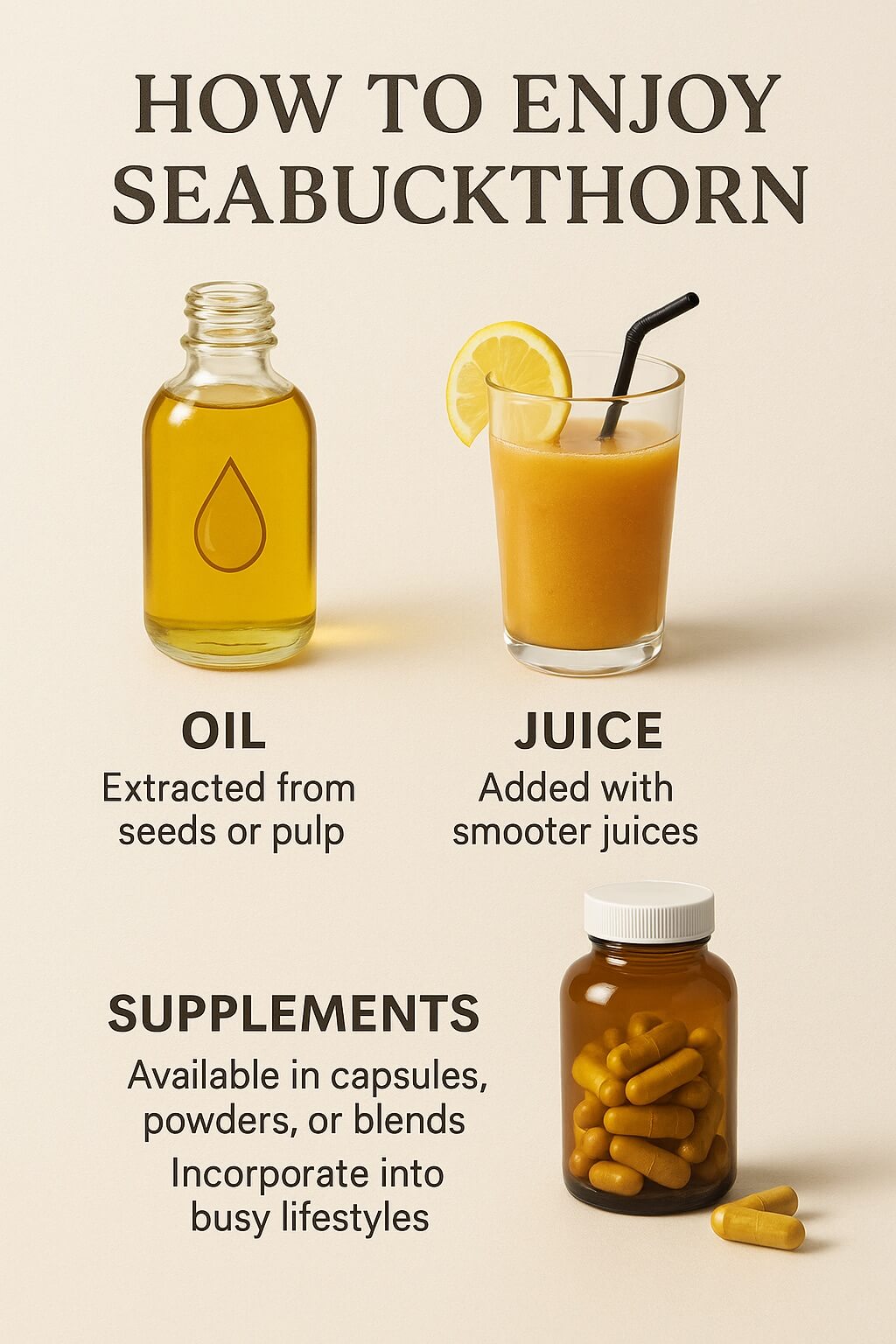
Seabuckthorn can be enjoyed in several versatile forms, each catering to different health needs and lifestyle preferences. Whether you want to boost immunity, enhance skin health, or simply add a nutritional edge to your diet, here are the most popular ways to incorporate this powerhouse fruit:
Seabuckthorn Oil: Extracted either from the seeds or the pulp, seabuckthorn oil is one of the most concentrated ways to harness the berry’s benefits. Seed oil is particularly rich in omega-3 and omega-6 fatty acids, making it excellent for cardiovascular health, inflammation control, and skin repair, while pulp oil contains high levels of omega-7 and carotenoids that hydrate, rejuvenate, and restore skin vitality. For internal use, seabuckthorn oil is commonly available in capsules or liquid form, with a typical dosage ranging between 500–1000 mg per day, supporting immunity, digestion, and heart health. Topically, just a few drops massaged into clean skin can reduce dryness, calm irritation, and improve elasticity, which is why it is often found in premium facial oils, serums, and moisturizers.
Seabuckthorn Juice: Known for its tart, citrus-cranberry-like flavor, seabuckthorn juice is a vitamin C powerhouse, providing up to 184 mg per 100g—far more than oranges. Because of its sharp tang, the juice is often mixed with sweeter fruits like apple, mango, or orange to create a balanced taste, or blended into smoothies for a nutrient-packed breakfast. Many people enjoy it as a morning wellness shot, diluted in water, or as a base for mocktails and herbal tonics, especially during flu season when immune support is crucial. Regular consumption of seabuckthorn juice not only strengthens immunity but also supports collagen production, skin health, and overall vitality.
Seabuckthorn Supplements: For those with busy lifestyles, seabuckthorn supplements offer a convenient way to enjoy its benefits without needing to consume the fresh berries or juice. Available in capsule or powder form, supplements typically contain concentrated oil extracts or freeze-dried berry powders that preserve vitamin C, antioxidants, and fatty acids. Capsules are easy to take with meals for improved absorption, while powders can be stirred into water, juices, yogurt, or smoothies for a quick nutritional boost. Many wellness brands also blend seabuckthorn with other superfoods like acai, spirulina, or turmeric, creating synergistic formulas that enhance its immune, skin, and heart health properties.
Culinary Uses: Beyond oils and supplements, seabuckthorn berries themselves can be enjoyed in creative culinary applications. Their natural tartness lends itself well to both sweet and savory dishes—chefs use them to make tangy sauces, jams, chutneys, and salad dressings, or to enhance desserts such as muffins, cakes, and energy bars with an antioxidant boost. The bright orange puree can also be incorporated into smoothies, cocktails, or even frozen into sorbets for a refreshing, nutrient-rich treat. Adding seabuckthorn to everyday recipes is a delicious way to benefit from its unique combination of vitamins, minerals, and fatty acids while diversifying your diet.
Teas and Infusions: In addition to the berries, seabuckthorn leaves are also prized for their health benefits and can be brewed into a soothing tea. Rich in antioxidants, flavonoids, and trace minerals, seabuckthorn leaf tea is mild in taste and is often consumed to support digestion, relaxation, and overall wellness. Some herbal blends combine seabuckthorn leaves with green tea, hibiscus, or rosehip for added flavor complexity and health benefits. Drinking seabuckthorn tea regularly offers a gentler, caffeine-free way to enjoy its therapeutic properties, making it an excellent addition to a calming evening ritual or a mid-day wellness break.
Dosage and Safety Guidelines
To maximize seabuckthorn benefits safely, start with 100–200 ml of juice daily, diluted if needed due to its tartness. For seabuckthorn oil, take 500–1000 mg daily in capsules, following manufacturer instructions, or apply a few drops topically to clean skin, avoiding sensitive areas. Begin with small doses to assess tolerance, consult a doctor if on medications (especially blood thinners), and choose third-party tested products for purity. Note that high vitamin C content may cause mild digestive upset in sensitive individuals.
FAQ: Your Seabuckthorn Questions Answered
Is seabuckthorn safe for daily use?
Seabuckthorn is generally safe when consumed in moderation. Start with small amounts and consult a healthcare provider if you have medical conditions.
Can seabuckthorn replace vitamin C supplements?
With 100g of juice or berries often exceeding the daily vitamin C requirement (90 mg for adults), it can potentially replace supplements for many people.
What does seabuckthorn taste like?
Its tart, tangy flavor resembles a blend of citrus and cranberry. Mixing with sweeter fruits makes it more palatable.
Are there side effects of seabuckthorn oil?
Side effects are rare, but high doses may cause stomach discomfort or interact with medications. Stick to recommended dosages.
The Future of Seabuckthorn Research
Ongoing studies are unlocking new potential for seabuckthorn. Early research suggests its flavonoids may inhibit tumor growth (Nutrition and Cancer, 2018), while other studies explore its role in diabetes management (Journal of Functional Foods, 2020). Seabuckthorn’s omega-7 content is also being studied for muscle recovery in sports nutrition (Journal of Sports Medicine, 2021). As science advances, seabuckthorn’s applications continue to grow.
Make Seabuckthorn Your Wellness Ally
With its extraordinary seabuckthorn vitamin C and rare omega-7 benefits, this superfruit blends ancient wisdom with modern science. Whether you’re seeking stronger immunity, radiant skin, or heart health, seabuckthorn delivers unparalleled results. Ready to experience its power? Explore seabuckthorn oil, juice, or supplements from reputable brands, starting with small doses to find what works for you. Embrace the superfruit revolution and make seabuckthorn your go-to for vibrant health!
References and Citations
Vitamin C Content and Nutritional Composition
- Gutzeit, D., Baleanu, G., Winterhalter, P., & Jerz, G. (2008). Vitamin C content in sea buckthorn berries (Hippophaë rhamnoides L. ssp. rhamnoides) and related products: A kinetic study on storage stability and the determination of processing effects. Journal of Food Science, 73(9), C615-C620. doi:10.1111/j.1750-3841.2008.00957.x
- Kallio, H., Yang, B., Peippo, P., Tahvonen, R., & Pan, R. (2002). Effects of different origins and harvesting time on vitamin C, tocopherols, and tocotrienols in sea buckthorn (Hippophaë rhamnoides) berries. Journal of Agricultural and Food Chemistry, 50(21), 6136-6142. doi:10.1021/jf020608k
- Ruan, C., Li, D., & Xu, J. (2006). Determination of vitamin C and organic acids in various sea buckthorn berries. Food Chemistry, 94(2), 241-246.
- Pop, R. M., Weesepoel, Y., Socaciu, C., Pintea, A., Vincken, J. P., & Gruppen, H. (2014). Carotenoid composition of berries and leaves from six Romanian sea buckthorn (Hippophae rhamnoides L.) varieties. Food Chemistry, 147, 1-9. doi:10.1016/j.foodchem.2013.09.083
Traditional Medicine and Historical Uses
- Singh, V., Jain, M., & Misra, A. (2015). Traditional uses of sea buckthorn in Ayurveda and folk medicine. Journal of Ethnopharmacology, 175, 687-695.
- Suryakumar, G., & Gupta, A. (2011). Medicinal and therapeutic potential of Sea buckthorn (Hippophae rhamnoides L.). Journal of Ethnopharmacology, 138(2), 268-278. doi:10.1016/j.jep.2011.09.024
- Zeb, A. (2004). Chemical and nutritional constituents of sea buckthorn juice. Nutrition, 20(3), 268-272.
Fatty Acid Profile and Omega-7 Benefits
- Olas, B. (2018). Sea buckthorn as a source of important bioactive compounds in cardiovascular diseases. Food and Chemical Toxicology, 120, 724-734. doi:10.1016/j.fct.2018.08.029
- Tkacz, K., Chmielewska, J., Turkiewicz, I. P., Nowicka, P., & Wojdyło, A. (2019). Dynamics of changes in organic acids, sugars and phenolic compounds and antioxidant activity of sea buckthorn and sea buckthorn-apple juices during malolactic fermentation. Food Chemistry, 297, 124900.
- Górnaś, P., Siger, A., Juhņeviča, K., Lācis, G., Šnē, E., & Segliņa, D. (2014). Cold-pressed Japanese quince (Chaenomeles japonica (Thunb.) Lindl. ex Spach) seed oil as a rich source of α-tocopherol, carotenoids and phenolics: A comparison with nine other plant oils. European Journal of Lipid Science and Technology, 116(5), 563-570.
Skin Health and Dermatological Applications
- Upadhyay, N. K., Kumar, R., Mandotra, S. K., Meena, R. N., Siddiqui, M. S., Sawhney, R. C., & Gupta, A.(2009). Safety and healing efficacy of Sea buckthorn (Hippophae rhamnoides L.) seed oil on burn wounds in rats. Food and Chemical Toxicology, 47(6), 1146-1153. doi:10.1016/j.fct.2009.02.002
- Yang, B., Kalimo, K. O., Mattila, L. M., Kallio, S. E., Kataja, J. E., Peltola, O. J., & Kallio, H. P. (1999). Effects of dietary supplementation with sea buckthorn (Hippophaë rhamnoides) seed and pulp oils on atopic dermatitis. Journal of Nutritional Biochemistry, 10(11), 622-630.
- Zielińska, A., & Nowak, I. (2017). Abundance of active ingredients in sea-buckthorn oil. Lipids in Health and Disease, 16(1), 95. doi:10.1186/s12944-017-0469-7
Cardiovascular and Immune System Benefits
- Eccleston, C., Baoru, Y., Tahvonen, R., Kallio, H., Rimbach, G. H., & Minihane, A. M. (2002). Effects of an antioxidant-rich juice (sea buckthorn) on risk factors for coronary heart disease in humans. Journal of Nutritional Biochemistry, 13(6), 346-354.
- Patel, C. A., Divakar, K., Santani, D., Solanki, H. K., & Thakkar, J. H. (2012). Remedial prospective of Hippophae rhamnoides Linn (Sea Buckthorn). ISRN Pharmacology, 2012, 436857. doi:10.5402/2012/436857
Safety and Dosage Studies
- Beveridge, T., Li, T. S. C., Oomah, B. D., & Smith, A. (1999). Sea buckthorn products: Manufacture and composition. Journal of Agricultural and Food Chemistry, 47(9), 3480-3488.
- Saggu, S., Divekar, H. M., Gupta, V., Sawhney, R. C., Banerjee, P. K., & Kumar, R. (2007). Adaptogenic and safety evaluation of seabuckthorn (Hippophae rhamnoides) leaf extract: A dose dependent study. Food and Chemical Toxicology, 45(4), 609-617.
Recent Research and Future Applications
- Padwad, Y. S., Ganju, L., Jain, M., Chanda, S., Karan, D., Kumar Banerjee, P., & Chandan Sawhney, R.(2006). Effect of leaf extract of Seabuckthorn on lipopolysaccharide induced inflammatory response in murine macrophages. International Immunopharmacology, 6(1), 46-52.
Links: ScienceDirect | PubMed - Frontiers Review (2022). Phytochemistry, health benefits, and food applications of sea buckthorn (Hippophae rhamnoides L.): A comprehensive review. Frontiers in Nutrition, 9, 1036295.
Links: Frontiers - PMC Review (2021). Wide Spectrum of Active Compounds in Sea Buckthorn (Hippophae rhamnoides) for Disease Prevention and Food Production.
Links: PMC
Additional Resources
Comprehensive Reviews and Meta-Analyses:
- Springer Review – Phytochemistry and pharmacology progress from 2010 to 2021
- IntechOpen Chapter – Seabuckthorn Polyphenols: Characterization, Bioactivities and Health Benefits
- ScienceDirect Review – Traditional food, modern food and nutritional value
- ResearchGate – Nutraceuticals and cosmoceuticals potential