
“Breakfast is the most important meal of the day”—we’ve all heard this saying countless times, but there’s genuine science behind this age-old wisdom. What many people don’t realize is that the type of breakfast you choose can dramatically influence your energy levels, appetite control, and overall health throughout the entire day. While traditional breakfast options often lean heavily on carbohydrates and sugars, mounting research suggests that starting your morning with a high-protein breakfast can be a game-changer for your health and wellness goals.
A protein-rich breakfast does more than just fuel your body—it sets the tone for balanced blood sugar levels, sustained energy, and improved satiety that can last well into the afternoon. Whether you’re looking to manage your weight, build muscle, stabilize your energy levels, or simply feel more satisfied after your morning meal, incorporating adequate protein into your breakfast routine offers numerous benefits that extend far beyond the breakfast table.
In today’s fast-paced world, many people skip breakfast altogether or grab something quick and convenient, often missing out on the opportunity to start their day with optimal nutrition. This comprehensive guide will explore why protein matters so much in the morning, provide practical high-protein breakfast ideas for every lifestyle, and share delicious recipes that prove healthy eating doesn’t have to be complicated or time-consuming.
The Science Behind High-Protein Breakfasts: Why Your Body Craves Morning Protein
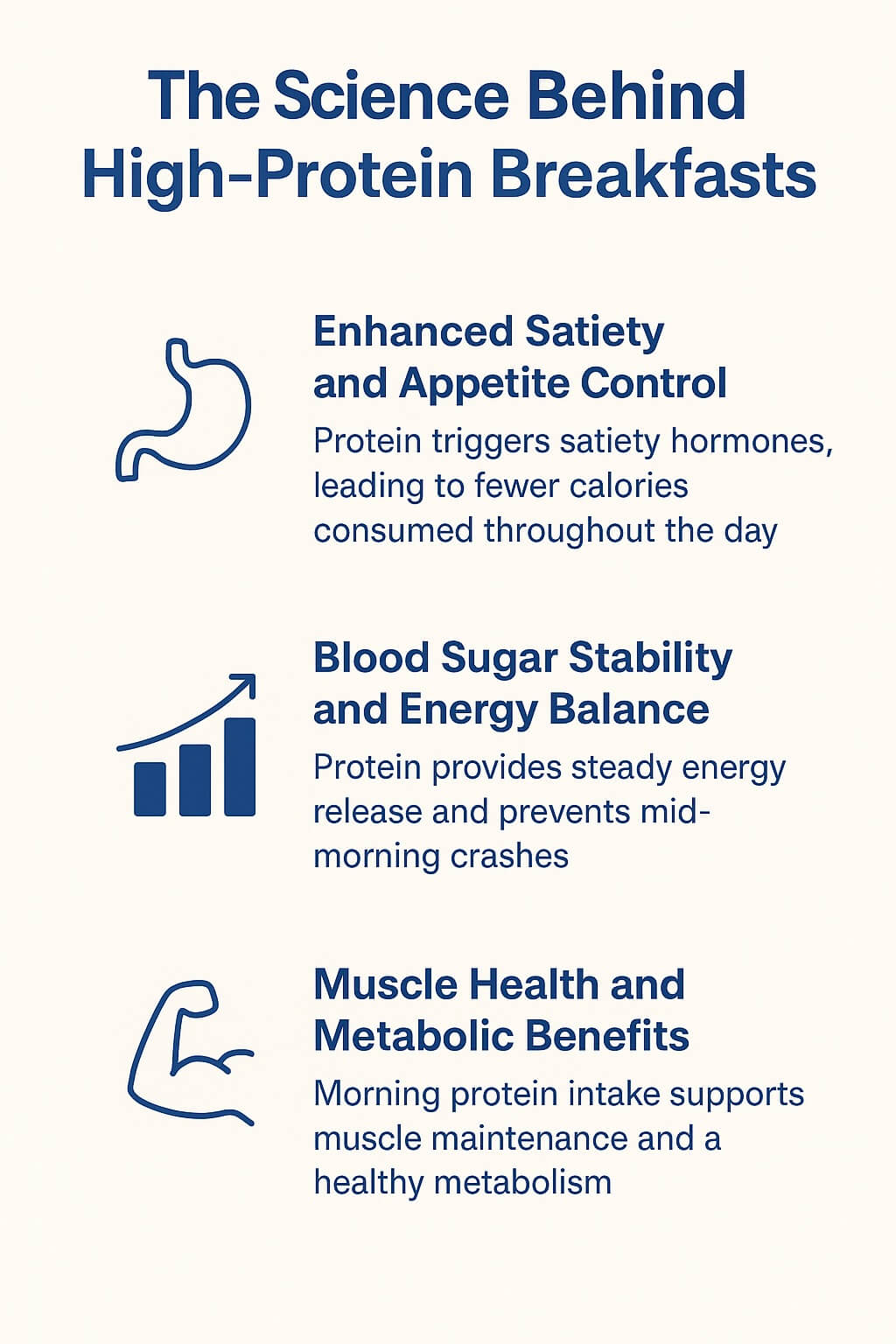
Enhanced Satiety and Appetite Control
One of the most significant benefits of a high-protein breakfast is its ability to keep you feeling full and satisfied for hours. Protein has a higher thermic effect than carbohydrates or fats, meaning your body burns more calories digesting it. Additionally, protein triggers the release of satiety hormones like GLP-1 and peptide YY, which send signals to your brain that you’re satisfied and don’t need more food.
Research consistently shows that people who eat protein-rich breakfasts consume fewer calories throughout the day compared to those who start with high-carbohydrate meals. This natural appetite regulation can be particularly beneficial for weight management goals, as it reduces the likelihood of mid-morning snacking and overeating at lunch.
Blood Sugar Stability and Energy Balance
Unlike simple carbohydrates that cause rapid spikes and crashes in blood glucose levels, protein provides a steady release of energy that helps maintain stable blood sugar throughout the morning. This stability prevents the energy rollercoaster that often accompanies high-sugar breakfast choices, leading to more consistent energy levels and improved cognitive function.
When protein is combined with complex carbohydrates and healthy fats, it creates an optimal macronutrient balance that supports sustained energy release. This combination helps prevent the mid-morning energy crash that sends many people reaching for caffeine or sugary snacks to maintain their alertness and productivity.
Muscle Health and Metabolic Benefits
Morning protein intake supports muscle protein synthesis, the process by which your body builds and repairs muscle tissue. This is particularly important as we age, since muscle mass naturally declines over time. Starting the day with adequate protein helps ensure your body has the building blocks it needs to maintain and develop lean muscle mass.
High-protein breakfasts also support healthy metabolism by maintaining muscle tissue, which burns more calories at rest than fat tissue. This metabolic advantage can contribute to long-term weight management and overall health outcomes.
High-Protein vs. Traditional Carb-Heavy Breakfasts: A Nutritional Comparison
Traditional breakfast foods like pastries, cereals, bagels, and pancakes are often loaded with refined carbohydrates and added sugars while being relatively low in protein. While these foods might provide quick energy, they typically lead to rapid blood sugar spikes followed by crashes that leave you feeling hungry and tired within a few hours.
A typical high-carb breakfast might contain 30-60 grams of carbohydrates but only 5-10 grams of protein. In contrast, a well-planned high-protein breakfast provides 20-30 grams of protein while maintaining balanced carbohydrate and fat content. This macronutrient distribution supports more stable energy levels and better appetite control throughout the morning.
The timing of protein consumption also matters. Research suggests that consuming protein early in the day helps optimize circadian rhythms and supports better sleep quality at night. This creates a positive cycle where better sleep leads to improved hormone regulation, which in turn supports healthy eating choices and energy levels the following day.
10 Practical High-Protein Breakfast Ideas for Every Lifestyle
Quick and Easy Options (5-10 minutes)
1. Greek Yogurt Power Bowl Combine 1 cup of Greek yogurt (20g protein) with mixed berries, chopped nuts, and a drizzle of honey. Add chia seeds or hemp hearts for extra protein and omega-3 fatty acids.
2. Protein Smoothie Blend protein powder with frozen fruits, spinach, almond butter, and your choice of milk. This portable option provides 25-30g of protein and can be customized with various flavors and ingredients.
3. Egg and Avocado Toast Top whole grain bread with mashed avocado and a poached or scrambled egg. This combination provides complete protein along with healthy fats and fiber.
4. Cottage Cheese Bowl Mix cottage cheese with diced tomatoes, cucumber, and everything bagel seasoning for a savory option, or combine with fruits and nuts for a sweet variation.
5. Protein Overnight Oats Prepare the night before by combining oats, protein powder, chia seeds, and milk. Top with fruits and nuts in the morning for a grab-and-go meal.
More Elaborate Options (15-20 minutes)
6. Vegetable Omelet Whisk 2-3 eggs with your favorite vegetables like spinach, bell peppers, mushrooms, and cheese. This customizable option provides 15-20g of protein plus essential vitamins and minerals.
7. Quinoa Breakfast Bowl Cook quinoa in milk instead of water, then top with Greek yogurt, nuts, seeds, and fresh fruits. Quinoa is one of the few plant-based complete proteins.
8. Smoked Salmon Bagel Choose a whole grain or protein-enriched bagel topped with cream cheese, smoked salmon, capers, and red onion for a restaurant-quality breakfast at home.
Plant-Based High-Protein Options
9. Tofu Scramble Crumble firm tofu and sauté with nutritional yeast, turmeric, vegetables, and plant-based milk for a vegan alternative to scrambled eggs that provides 15-20g of protein.
10. Protein-Packed Chia Pudding Combine chia seeds, plant-based protein powder, and almond milk. Let sit overnight and top with fruits, nuts, and hemp hearts for a complete vegan protein source.
Three Detailed High-Protein Breakfast Recipes
Recipe 1: Ultimate Protein Pancakes
Ingredients:
- 1 cup old-fashioned oats
- 1 scoop vanilla protein powder (about 25g protein)
- 2 large eggs
- 1 ripe banana
- 1/2 cup Greek yogurt
- 1/4 cup milk of choice
- 1 tsp baking powder
- 1/2 tsp cinnamon
- Pinch of salt
- Fresh berries for topping
Preparation Steps:
- Blend oats in a food processor until they form a fine flour-like consistency.
- Add protein powder, baking powder, cinnamon, and salt to the oat flour and mix well.
- In a separate bowl, mash the banana and whisk in eggs, Greek yogurt, and milk.
- Combine wet and dry ingredients until just mixed—don’t overmix.
- Heat a non-stick pan over medium heat and pour 1/4 cup of batter per pancake.
- Cook for 2-3 minutes until bubbles form, flip, and cook another 1-2 minutes.
- Serve topped with fresh berries and a drizzle of pure maple syrup.
Nutritional Highlights: This recipe provides approximately 35-40g of protein per serving, along with complex carbohydrates, fiber, and essential amino acids. The combination of whey protein and casein from the Greek yogurt provides both fast and slow-digesting proteins for sustained amino acid release.
Recipe 2: Mediterranean Breakfast Quinoa Bowl
Ingredients:
- 1 cup cooked quinoa (prepared in advance)
- 2 large eggs
- 1/4 cup crumbled feta cheese
- 1/4 cup diced cucumber
- 1/4 cup cherry tomatoes, halved
- 2 tbsp kalamata olives, sliced
- 1 tbsp olive oil
- 1 tsp lemon juice
- Fresh herbs (parsley, dill, or mint)
- Salt and pepper to taste
Preparation Steps:
- Heat cooked quinoa in a bowl (can be prepared in batches and stored in refrigerator).
- Heat olive oil in a pan and fry eggs to your preferred doneness.
- While eggs cook, mix cucumber, tomatoes, olives, lemon juice, and herbs in a small bowl.
- Place warm quinoa in a serving bowl and top with the vegetable mixture.
- Add crumbled feta cheese and place the cooked eggs on top.
- Season with salt and pepper, and garnish with additional fresh herbs.
Nutritional Highlights: This Mediterranean-inspired bowl delivers 25-30g of complete protein from the combination of quinoa, eggs, and feta cheese. The vegetables provide antioxidants and fiber, while the olive oil contributes healthy monounsaturated fats for heart health.
Recipe 3: Chocolate Peanut Butter Protein Smoothie Bowl
Ingredients:
- 1 frozen banana
- 1 scoop chocolate protein powder
- 2 tbsp natural peanut butter
- 1/2 cup Greek yogurt
- 1/4 cup milk of choice
- 1 tbsp chia seeds
- 1 tbsp unsweetened cocoa powder
- Ice cubes as needed
Toppings:
- Sliced banana
- Crushed nuts or granola
- Dark chocolate chips (85% cacao)
- Additional chia seeds
- Coconut flakes
Preparation Steps:
- Add frozen banana, protein powder, peanut butter, Greek yogurt, milk, chia seeds, and cocoa powder to a high-speed blender.
- Blend until thick and creamy, adding ice or more milk as needed to achieve desired consistency.
- Pour into a bowl—the mixture should be thick enough to eat with a spoon.
- Arrange toppings in sections for an Instagram-worthy presentation.
- Serve immediately while cold and creamy.
Nutritional Highlights: This indulgent-tasting smoothie bowl contains 30-35g of protein while satisfying chocolate cravings in a healthy way. The combination of protein powder, Greek yogurt, and peanut butter provides all essential amino acids, while chia seeds add omega-3 fatty acids and additional fiber.
Recommended Daily Protein Intake for Breakfast
According to current dietary guidelines, adults should aim for 0.8-1.2 grams of protein per kilogram of body weight daily, with active individuals and older adults requiring higher amounts. For breakfast specifically, nutrition experts recommend consuming 20-30 grams of protein to optimize satiety, muscle protein synthesis, and metabolic benefits.
This target represents roughly 25-30% of the daily protein requirement for most adults, which aligns with research showing that distributing protein intake evenly throughout the day is more beneficial than concentrating it in one or two meals. For individuals with specific fitness goals, higher protein intake may be appropriate—athletes and those building muscle might benefit from 30-40g of protein at breakfast.
The quality of protein also matters significantly. Complete proteins that contain all essential amino acids—found in eggs, dairy products, meat, fish, and certain plant combinations—are particularly beneficial for morning consumption as they provide the building blocks your body needs after the overnight fasting period.
Plant-Based Protein: Meeting Your Morning Needs Without Animal Products
Vegetarians and vegans can absolutely meet their high-protein breakfast goals with careful planning and creative combinations. Plant-based proteins often require combining different sources to ensure complete amino acid profiles, but this can lead to more diverse and interesting meal options.
Excellent plant-based protein sources for breakfast include tofu and tempeh, quinoa, chia seeds, hemp hearts, nuts and nut butters, legumes like chickpeas and black beans, and plant-based protein powders. Many plant-based milk alternatives are now fortified with additional protein, making them valuable additions to smoothies and cereals.
Nutritional yeast deserves special mention as a vegan protein source that adds a cheese-like flavor to scrambles and bowls while providing B-vitamins and complete protein. Similarly, hemp hearts can be sprinkled on virtually any breakfast dish to boost protein content along with omega-3 fatty acids.
Meal Prep Strategies for High-Protein Breakfasts
Consistency is key to reaping the benefits of high-protein breakfasts, but busy schedules can make daily preparation challenging. Strategic meal prep can ensure you always have protein-rich options ready, regardless of how hectic your morning becomes.
Batch cooking proteins like hard-boiled eggs, cooked quinoa, and baked tofu can provide ready-to-use components for multiple breakfast combinations throughout the week. Overnight oats and chia puddings can be prepared in individual portions and stored in the refrigerator for grab-and-go convenience.
Freezer-friendly options like protein-packed muffins, breakfast burritos, and smoothie packs (pre-portioned frozen fruits and vegetables) can extend your prep time even further. Having these options available removes the decision fatigue and time constraints that often lead to less nutritious breakfast choices.
Common Mistakes to Avoid with High-Protein Breakfasts
While the benefits of protein-rich breakfasts are clear, there are several common pitfalls that can undermine your efforts. One frequent mistake is focusing solely on protein while neglecting other important nutrients. A truly healthy breakfast includes protein, complex carbohydrates, healthy fats, and fiber for optimal nutrition and satisfaction.
Another common error is relying too heavily on processed protein sources like protein bars or shakes without incorporating whole food options. While these products can be convenient, whole foods provide additional nutrients, fiber, and satisfaction that processed options often lack.
Portion control remains important even with healthy foods. While protein is beneficial, extremely large portions can lead to excessive calorie intake. Focus on meeting your protein targets while maintaining reasonable portion sizes and including variety in your breakfast choices.
Frequently Asked Questions About High-Protein Breakfasts
How many grams of protein should be in a healthy breakfast?
Most adults should aim for 20-30 grams of protein at breakfast, which represents about 25-30% of daily protein needs. Active individuals, older adults, and those with muscle-building goals may benefit from 30-40 grams of morning protein.
Can plant-based foods provide enough protein for breakfast?
Absolutely! Plant-based proteins like tofu, quinoa, chia seeds, hemp hearts, nuts, and legumes can easily meet breakfast protein targets. The key is combining different sources to ensure complete amino acid profiles and adequate total protein intake.
Is it better to have protein powder or whole food protein sources?
Both have their place in a healthy diet. Whole food protein sources provide additional nutrients, fiber, and satisfaction, making them ideal for most situations. Protein powders offer convenience and can be helpful for meeting higher protein targets or post-workout nutrition needs.
Will a high-protein breakfast help with weight loss?
High-protein breakfasts can support weight management by increasing satiety, reducing overall calorie intake throughout the day, and supporting muscle mass maintenance during weight loss. However, overall calorie balance and lifestyle factors remain the primary determinants of weight loss success.
Can I eat the same high-protein breakfast every day?
While consistency can be helpful for meal planning and habit formation, variety ensures you get a wider range of nutrients and prevents food boredom. Try to rotate between different protein sources and preparation methods throughout the week.
What’s the best time to eat breakfast for optimal protein benefits?
Most research suggests eating breakfast within 2-3 hours of waking for optimal metabolic benefits. The exact timing matters less than consistency and including adequate protein in your morning meal.
Are high-protein breakfasts safe for everyone?
High-protein breakfasts are generally safe and beneficial for healthy adults. However, individuals with kidney disease, certain metabolic conditions, or specific dietary restrictions should consult with healthcare providers before significantly increasing protein intake.
How do I make high-protein breakfasts more budget-friendly?
Eggs, dried legumes, oats, and seasonal fruits are typically the most economical high-protein breakfast options. Buying protein sources in bulk, meal prepping, and incorporating affordable staples like Greek yogurt and cottage cheese can help keep costs manageable.
Building Sustainable High-Protein Breakfast Habits
Creating lasting change in your breakfast routine requires more than just good intentions—it demands practical strategies that fit your lifestyle and preferences. Start by identifying your biggest breakfast challenges, whether that’s time constraints, cooking skills, or simple habit patterns.
Begin with simple swaps rather than complete overhauls. If you typically eat cereal, try adding Greek yogurt or protein powder. If you’re a toast person, experiment with egg or nut butter toppings. These gradual changes are more likely to stick than dramatic dietary shifts.
Preparation strategies can make the difference between success and failure. Spend a few minutes each evening preparing components for the next day’s breakfast, or dedicate an hour on weekends to batch-prep several days’ worth of options. Having protein-rich choices ready removes barriers to healthy eating when morning schedules get hectic.
Consider your personal taste preferences and lifestyle factors when selecting protein sources. If you don’t like eggs, focus on dairy, plant-based, or meat options. If you’re always rushed in the morning, prioritize quick assembly meals or grab-and-go options that don’t require cooking.
The Long-Term Impact of Protein-Rich Morning Nutrition
Consistent high-protein breakfast consumption can lead to measurable improvements in various health markers over time. Many people report better energy stability, improved workout performance, easier weight management, and reduced cravings for processed foods throughout the day.
The compound effects of starting each day with balanced nutrition extend beyond physical health to include improved cognitive function, better mood stability, and enhanced productivity. When your body has the nutrients it needs from the beginning of the day, every subsequent hour tends to go more smoothly.
Research also suggests that people who eat high-protein breakfasts are more likely to make healthier food choices throughout the day, creating a positive cascade of nutritional decisions that support overall wellness goals.
Key Takeaways: Maximizing Your Morning with Protein
High-protein breakfasts represent one of the simplest yet most impactful changes you can make to support your health and wellness goals. By providing sustained energy, enhanced satiety, and stable blood sugar levels, protein-rich morning meals set the foundation for successful days and long-term health outcomes.
The key to success lies in finding protein sources and preparation methods that align with your taste preferences, schedule, and lifestyle. Whether you prefer quick smoothies, elaborate egg dishes, or plant-based options, there are countless ways to incorporate adequate protein into your morning routine without sacrificing convenience or flavor.
Remember that the best breakfast is one you’ll actually eat consistently. Start with small changes, experiment with different options, and focus on building sustainable habits rather than pursuing perfection. Your body—and your energy levels—will thank you for prioritizing protein-packed mornings that fuel both your immediate needs and long-term health goals.
The investment in high-protein breakfasts pays dividends throughout the day in the form of sustained energy, better appetite control, and improved overall nutrition. Make the commitment to start your mornings with intention, and discover how the right breakfast can transform not just your mornings, but your entire approach to daily nutrition and wellness.
References
- Beaulieu, Kristine, et al. “A Dairy-Based, Protein-Rich Breakfast Enhances Satiety and Cognitive Concentration Before Lunch in Overweight to Obese Young Females: A Randomized Controlled Crossover Study.” Journal of Dairy Science, vol. 107, no. 3, 21 Dec. 2023.
- Harvard Health Publishing. “Build a Better Breakfast.” Harvard Health, 1 March 2022.
- Harvard Health Publishing. “Extra Protein at Breakfast Helps Control Hunger.” Harvard Health, 1 Dec. 2018.
- Kerksick, Chad M., et al. “International Society of Sports Nutrition Position Stand: Protein and Exercise.” Journal of the International Society of Sports Nutrition, 20 June 2017.
- Leidy, Heather J., et al. “Beneficial Effects of a Higher-Protein Breakfast on the Appetitive, Hormonal, and Neural Signals Controlling Energy Intake Regulation in Overweight/Obese, Breakfast-Skipping, Late-Adolescent Girls.” The American Journal of Clinical Nutrition, vol. 97, no. 4, 2013, pp. 677-688.
- Mayo Clinic Health System. “Are You Getting Too Much Protein?” Mayo Clinic Health System, 27 Nov. 2024.
- Mayo Clinic News Network. “Are You Getting Too Much Protein?” Mayo Clinic News Network, 18 Aug. 2023.
- Moore, Daniel R., et al. “Dietary Protein Distribution Positively Influences 24-h Muscle Protein Synthesis in Healthy Adults.” The Journal of Nutrition, vol. 144, no. 6, 2014, pp. 876-880.
- Nakamura, Yuki, et al. “Supplementation of Protein at Breakfast Rather Than at Dinner and Lunch Is Effective on Skeletal Muscle Mass in Older Adults.” Frontiers in Nutrition, 21 Dec. 2021.
- Nutrition Society for Nutrition. “Protein, It’s What’s for Breakfast.” American Society for Nutrition, 17 Dec. 2018.
- Science Daily. “Protein-Rich Breakfast Boosts Satiety and Concentration.” Science Daily, 15 Feb. 2024.
- Verreijen, Amely M., et al. “Greater Protein Intake at Breakfast or as Snacks and Less at Dinner Is Associated with Cardiometabolic Health in Adults.” Clinical Nutrition, vol. 40, no. 4, 22 Jan. 2021, pp. 2389-2398.






Pingback: Nutrition Basics: Breakfast - Health Effects You