What Is an Allergy?
An allergy is a condition in which the body’s immune system reacts abnormally to a typically harmless substance. These substances, known as allergens, can be found in food, pollen, animal dander, insect stings, medications, and even materials like latex. When someone with an allergy is exposed to an allergen, their immune system treats it as a threat and overreacts.
This overreaction results in the release of chemicals such as histamine, which causes inflammation and common allergy symptoms like sneezing, itching, or swelling. While many allergic reactions are mild, some can be severe and life-threatening. Understanding what causes these reactions and how to manage them can help reduce discomfort and prevent complications.
What Causes Allergies?
Allergies develop when your immune system becomes sensitized to a foreign substance. When the body first encounters an allergen, it may produce antibodies (specifically immunoglobulin E or IgE) that “remember” the allergen. The next time the body is exposed to the same substance, these antibodies signal the immune system to release chemicals like histamine, which cause symptoms.
Common causes include:
-
Pollen from grasses, trees, or weeds
-
Dust mites or mold spores
-
Pet dander, especially from cats or dogs
-
Insect stings, such as bees or wasps
-
Certain foods, such as peanuts, shellfish, milk, or eggs
-
Medications, like antibiotics or aspirin
-
Latex, found in gloves or balloons
Allergies often run in families, so if your parents have allergies, you’re more likely to have them too. However, environmental factors, pollution, and even reduced exposure to germs early in life may also contribute to allergy development.
The 4 Main Types of Allergies
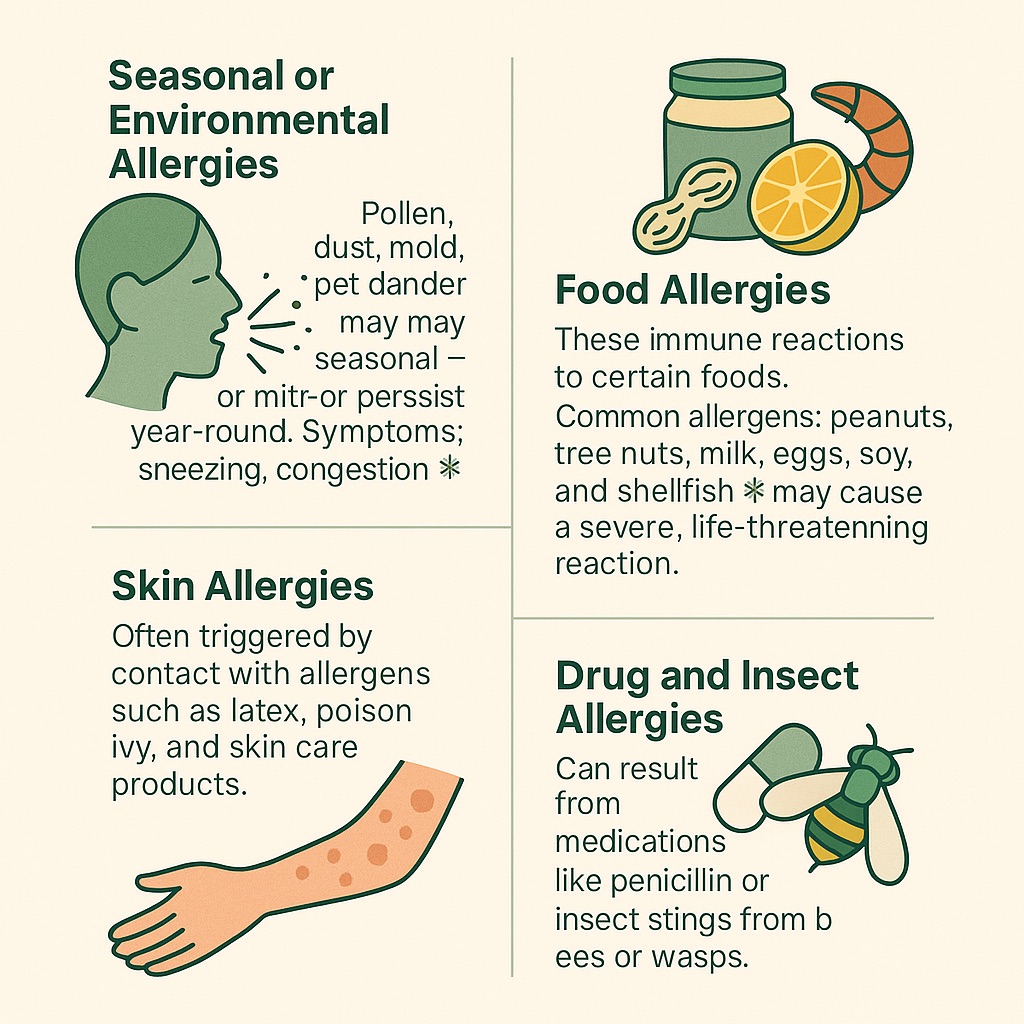
There are many different allergens, but most allergic reactions fall into four main categories:
-
Seasonal or Environmental Allergies (Allergic Rhinitis)
Seasonal or environmental allergies, also known as allergic rhinitis or hay fever, are triggered by airborne substances. Common environmental allergens include pollen from grasses or trees, indoor dust mites, mold spores, and pet dander. These allergies may be seasonal—flaring during specific times of the year—or persistent throughout the year if the triggers are indoors. Environmental allergies are among the most widespread, affecting people of all ages and often overlapping with asthma or sinus issues. Management often involves minimizing exposure to triggers, taking antihistamines, or undergoing immunotherapy in severe cases. -
Food Allergies
Food allergies are caused by an overreaction of the immune system to specific proteins in foods. They are most common in children but can persist into adulthood or even develop later in life. A small group of foods are responsible for the majority of reactions, including peanuts, tree nuts, milk, eggs, soy, wheat, fish, shellfish, and sesame. While food allergies vary in severity, they can have serious health consequences and often require strict avoidance of the offending food and readiness to respond quickly with medication like epinephrine. -
Skin Allergies
Skin allergies occur when the immune system reacts to certain substances that come into direct contact with the skin or are ingested or inhaled. These reactions can be triggered by irritants such as nickel, latex, certain chemicals in cosmetics, or even natural elements like poison ivy. In some individuals, skin allergies may result from internal factors such as food or medication sensitivities. Skin allergies often require a combination of trigger avoidance and the use of topical treatments or antihistamines to manage inflammation and irritation. -
Drug and Insect Allergies
Drug and insect allergies represent another major category, often associated with more severe immune responses. Drug allergies can result from both prescription and over-the-counter medications, including antibiotics, anti-inflammatories, and vaccines. Insect allergies, on the other hand, occur after stings or bites from bees, wasps, hornets, or fire ants. These reactions can be highly unpredictable and potentially life-threatening, especially for individuals with a history of severe sensitivity. For this reason, many people with known insect or drug allergies carry emergency medications like epinephrine and are advised to take precautions to avoid exposure.
Each of these allergy types involves the immune system treating harmless substances as threats, which leads to the release of inflammatory chemicals. While the triggers and manifestations differ, all allergies require proper identification and a tailored approach to management—often including avoidance strategies, medication, and in some cases, allergy testing or immunotherapy. Understanding the nature of these four main types helps individuals and clinicians take preventive actions and respond effectively when allergic reactions occur.
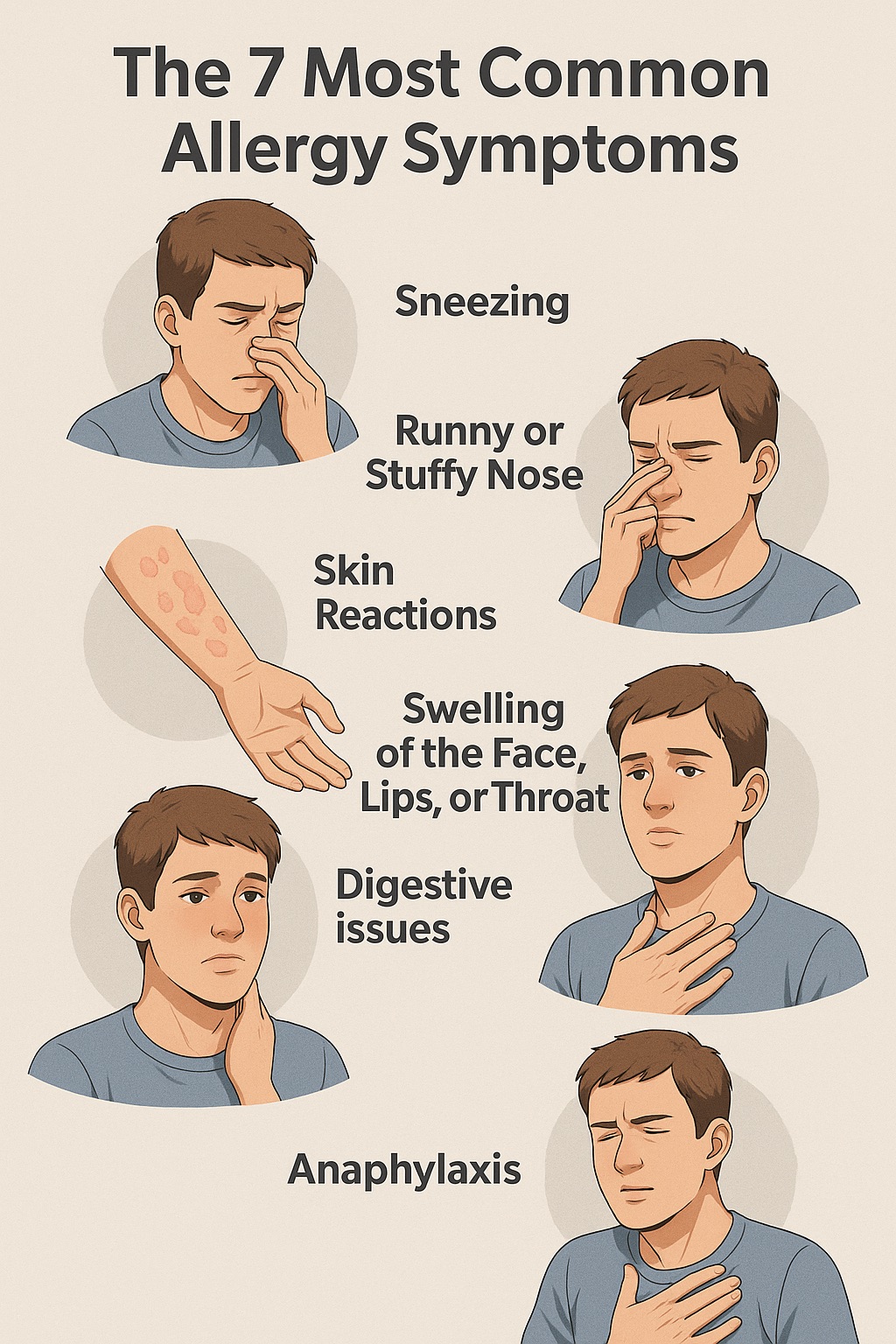
The 7 Most Common Allergy Symptoms
Symptoms vary depending on the type of allergy and how your body reacts. However, common signs include:
-
Sneezing
Especially common with airborne allergies such as pollen or dust. -
Runny or Stuffy Nose
Nasal congestion is often due to inflammation in the nasal passages. -
Itchy or Watery Eyes
Often seen in seasonal allergies and can cause blurred vision or redness. -
Skin Reactions
These include hives, redness, dry patches, or swelling. -
Swelling of the Face, Lips, or Throat
Known as angioedema, this can be dangerous if it affects breathing. -
Digestive Issues
Food allergies can cause nausea, cramps, vomiting, or diarrhea. -
Anaphylaxis
This is a severe allergic reaction that comes on suddenly and may include breathing difficulty, rapid pulse, dizziness, and loss of consciousness. Immediate medical attention is required.
How to Reduce Allergies
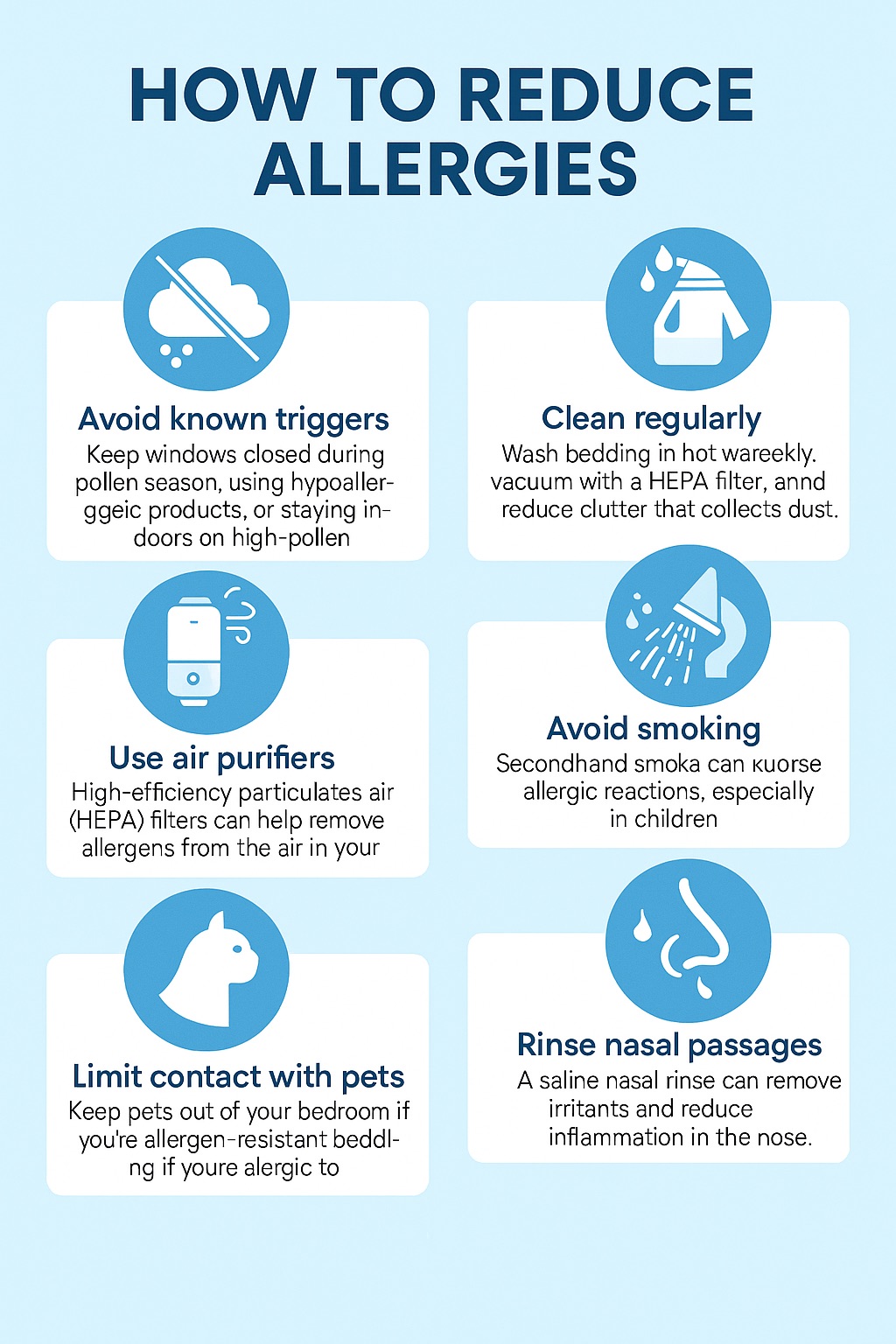
While some allergens are hard to avoid, these strategies can help reduce the frequency and intensity of allergic reactions:
-
Avoid known triggers. This might mean keeping windows closed during pollen season, using hypoallergenic products, or staying indoors on high-pollen days.
-
Clean regularly. Wash bedding in hot water weekly, vacuum with a HEPA filter, and reduce clutter that collects dust.
-
Use air purifiers. High-efficiency particulate air (HEPA) filters can help remove allergens from the air in your home.
-
Change clothes and shower after being outdoors. This helps remove pollen or other allergens that may cling to hair and skin.
-
Limit contact with pets. If you’re allergic to animals, keeping them out of your bedroom and using allergen-resistant bedding can help.
-
Avoid smoking. Secondhand smoke can worsen allergic reactions, especially in children.
-
Rinse nasal passages. A saline nasal rinse can remove irritants and reduce inflammation in the nose.
Allergy Treatment Options
There is no cure for allergies, but several treatment options can manage and reduce symptoms:
-
Antihistamines
These block the effects of histamine and relieve symptoms like itching, sneezing, and runny nose. They’re available over-the-counter or by prescription. -
Decongestants
These relieve nasal congestion but should not be used for more than a few days at a time, as overuse can lead to rebound symptoms. -
Corticosteroid Nasal Sprays
These reduce inflammation in the nasal passages and are often recommended for long-term management of allergic rhinitis. -
Allergy Shots (Immunotherapy)
This involves regular injections of small amounts of allergens, helping the immune system become less sensitive over time. It’s especially useful for pollen, dust mites, or pet allergies. -
Sublingual Immunotherapy
Instead of shots, tablets containing allergens are placed under the tongue. They’re available for certain pollen allergies and must be taken regularly. -
Epinephrine Auto-Injectors
People with severe allergies should carry epinephrine at all times. It is the first-line treatment for anaphylaxis and should be used immediately in emergencies. -
Topical Creams
Steroid or antihistamine creams can help relieve skin-related allergic symptoms.
Allergy Tests: How It’s Diagnosed
If you suspect you have allergies, your healthcare provider may recommend one or more of the following tests:
-
Skin Prick Test
Tiny amounts of allergens are introduced into your skin using a small needle. If a red bump appears, it means you’re allergic. -
Blood Tests (IgE Testing)
Measures levels of allergen-specific IgE antibodies in your blood. This is useful if skin testing isn’t possible due to medications or skin conditions. -
Patch Testing
This checks for delayed allergic reactions by applying patches containing allergens to your skin for 48 hours. Often used for contact dermatitis. -
Elimination Diet
Used for food allergies, this involves removing suspect foods from your diet and gradually reintroducing them to identify triggers.
Frequently Asked Questions (FAQ)
Q: Can allergies develop later in life?
Yes. People can develop allergies at any age, even if they’ve never had them before.
Q: Are allergies inherited?
Yes. A family history of allergies increases the risk, although the specific allergy may vary.
Q: Are food allergies the same as food intolerances?
No. Food allergies involve the immune system and can be life-threatening. Food intolerances usually cause digestive symptoms and do not trigger the immune response.
Q: Can allergies be cured?
There’s no cure, but with treatment and prevention, symptoms can be effectively managed.
Q: What’s the difference between a cold and allergies?
Colds are caused by viruses and usually come with a fever and body aches. Allergies do not cause fever and can persist for weeks or months, depending on exposure.
Q: Can allergies go away on their own?
In some cases, children may outgrow food or milk allergies. However, most environmental allergies last into adulthood.
Q: How dangerous is anaphylaxis?
Anaphylaxis is a life-threatening emergency. Immediate treatment with epinephrine and emergency care is critical.
Allergies are common and affect millions of people worldwide. They can range from mild symptoms like a runny nose or rash to serious conditions such as anaphylaxis. While there’s no cure, effective treatments and lifestyle adjustments can significantly improve your quality of life. Understanding your triggers, getting tested, and following a treatment plan can help you take control of your allergies and stay healthy.
Let your doctor guide you in finding the best strategy for prevention and relief—especially if your symptoms interfere with daily life or you suspect a serious allergy.