Quick Take: 10 Natural Foods That Mimic Ozempic
Want the benefits of Ozempic—like appetite control and blood sugar balance—without a prescription?
These 10 science-backed foods can help:
-
Increase satiety with fiber and healthy fats
-
Naturally boost GLP-1 levels
-
Stabilize blood sugar and reduce cravings
-
Support sustainable weight loss—no injections needed
Simple, natural, and effective—starting with your next meal.
Drugs like Ozempic (semaglutide) have drawn attention recently due to their ability to control blood sugar and aid in weight loss. The glucagon-like peptide-1 (GLP-1) hormone, which is essential for insulin secretion and appetite regulation, is mimicked by these medications. Nevertheless, you can achieve comparable results without taking medicine by including specific foods in your diet that naturally increase GLP-1 release.
How to Mimic Ozempic Naturally?
Focus on eating a diet high in protein, fiber, and healthy fats to naturally replicate Ozempic’s effects. These nutrients cause the release of glucagon-like peptide-1 (GLP-1), a hormone that controls blood sugar and appetite. Include foods like avocados, high-fiber grains, eggs, nuts, and olive oil in your meals. GLP-1 secretion can also be further increased by eating vegetables like carrots, broccoli, and Brussels sprouts. These dietary options provide a natural weight-management strategy by reducing cravings, promoting satiety, and assisting in blood sugar balance.
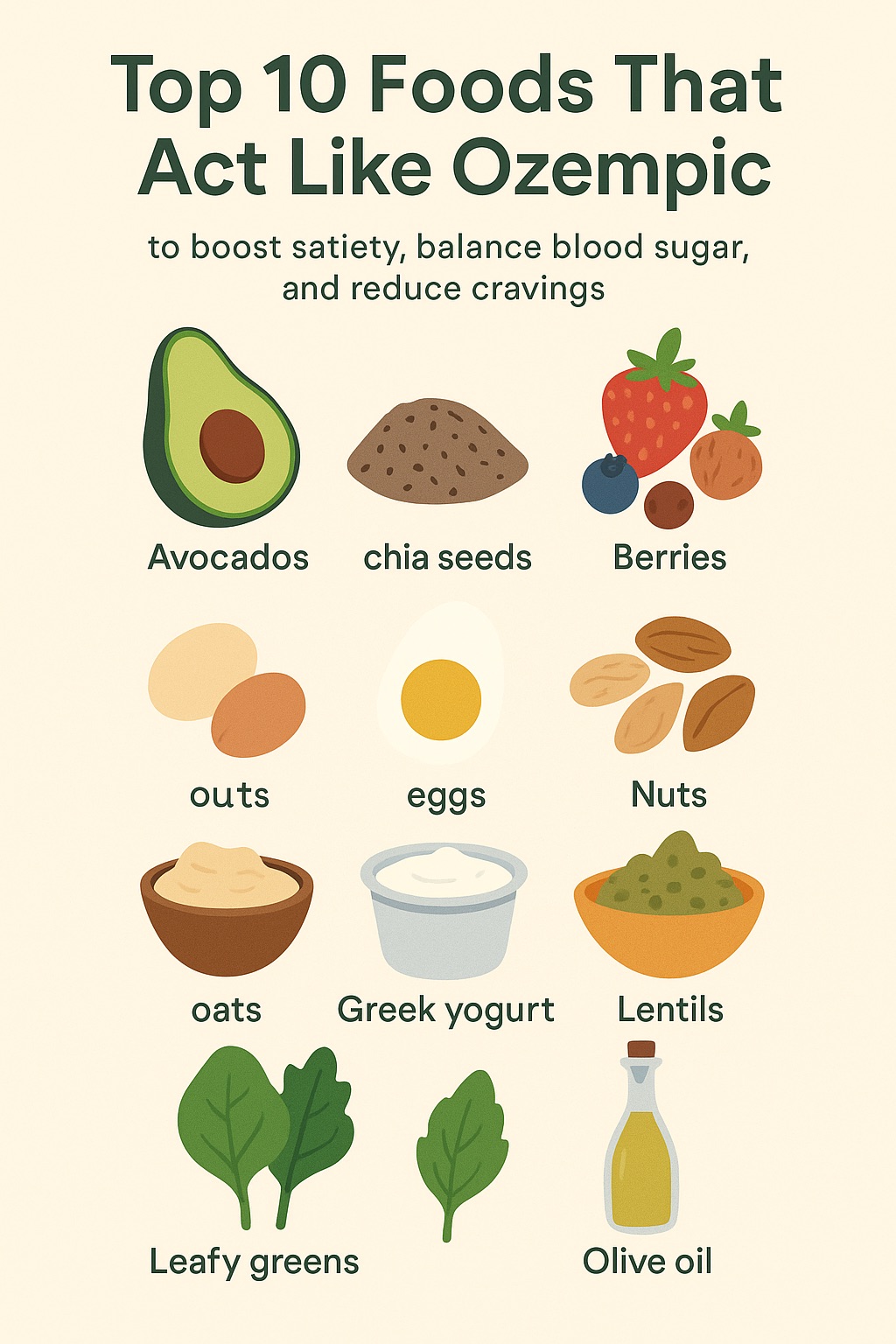
Top 10 Foods That Act Like Ozempic
Want to control blood sugar, reduce cravings, and prolong feelings of fullness without taking medication?
GLP-1, the hormone Ozempic targets, is naturally stimulated by some foods, which helps you regulate your appetite and aid in weight loss. In addition to encouraging fullness, these nutrient-dense foods provide your body with fiber, protein, and good fats. These ten potent foods—all from your kitchen, not a prescription—work with your biology to control hunger and maintain a steady level of energy.
Here are 10 foods that can help boost satiety, balance blood sugar, and reduce cravings:
1. Avocados
Rich in monounsaturated fats and fiber, avocados promote a feeling of fullness and help regulate blood sugar levels. The healthy fats in avocados can enhance GLP-1 secretion, aiding in appetite control.
2. Berries
Berries such as strawberries, blueberries, and raspberries are high in antioxidants and fiber. Their low glycemic index means they have a minimal impact on blood sugar levels, making them excellent for reducing cravings and promoting satiety.
3. Chia Seeds
Packed with fiber and omega-3 fatty acids, chia seeds expand in the stomach, creating a sense of fullness. Incorporating chia seeds into your diet can help control appetite and support weight loss efforts.
4. Eggs
Eggs are an excellent source of high-quality protein and healthy fats. Consuming eggs can increase GLP-1 levels, leading to improved satiety and reduced calorie intake throughout the day.
5. Nuts
Almonds, pistachios, and peanuts provide a combination of protein, fiber, and healthy fats. These nutrients work together to enhance feelings of fullness and stabilize blood sugar levels, making nuts a smart snack choice for weight management.
6. Oats
Oats are rich in beta-glucan, a type of soluble fiber that slows digestion and promotes the release of GLP-1. Starting your day with a bowl of oatmeal can help control appetite and maintain steady energy levels.
7. Greek Yogurt
High in protein and low in sugar, Greek yogurt supports gut health and prolongs satiety. Its protein content can stimulate GLP-1 secretion, aiding in appetite regulation.
8. Lentils
Lentils are a great source of plant-based protein and fiber. Their nutrient profile helps slow digestion, stabilize blood sugar, and increase GLP-1 levels, making them beneficial for weight management.
9. Leafy Greens
Vegetables like spinach, kale, and lettuce contain thylakoids, compounds that have been shown to stimulate GLP-1 release. Incorporating these greens into your meals can enhance satiety and reduce cravings.
10. Olive Oil
Rich in monounsaturated fats, olive oil has been associated with increased GLP-1 secretion. Using olive oil as a dressing or cooking oil can support appetite control and provide heart-healthy benefits.
These foods can naturally raise GLP-1 levels when included in a balanced diet, which can help with blood sugar regulation and weight loss. Even though these food choices can help you achieve your health objectives, it’s crucial to keep up a healthy lifestyle that includes mindful eating and regular exercise.
Let Food Work with Your Body
You can begin enjoying the advantages of better energy, stable blood sugar, and appetite control without a prescription. You can replicate some of Ozempic’s natural effects in a sustainable, approachable manner by including these ten GLP-1-supporting foods in your meals, such as avocados, oats, and Greek yogurt.
Food is a powerful tool that works with your body, but it cannot replace medical advice or treatment on its own. You can start down the path to long-term health and weight management without experiencing any negative side effects by combining these foods with mindful eating, frequent exercise, and adequate hydration.
Are you prepared to support your body as it needs it? Start by taking care of your plate.
Frequently Asked Questions
Q: What foods naturally boost GLP-1?
A: Foods like avocados, chia seeds, oats, and Greek yogurt can naturally stimulate GLP-1, the hormone that helps regulate appetite and blood sugar.
Q: Can diet mimic the effects of Ozempic?
A: While food cannot fully replace medication like Ozempic, certain high-fiber, high-protein, and healthy-fat foods can support similar satiety and blood sugar benefits.
Q: How do fiber and protein help with weight loss?
A: Fiber slows digestion and increases fullness, while protein supports muscle maintenance and enhances GLP-1 production—both key to reducing overeating.
Q: Are there side effects to GLP-1-boosting foods?
A: Generally, no. However, increasing fiber too quickly may cause bloating or gas. It’s best to add these foods gradually and drink enough water.
Q: How long does it take to see results from these foods?
A: Effects like reduced cravings and more stable energy can be felt within a few days to a couple of weeks with consistent dietary changes.






Pingback: Should You Skip Breakfast? The Truth About Intermittent Fasting, Weight Loss, and Health - Wellness Readers Digest
Pingback: Prediabetes Despite a Healthy Lifestyle: Causes, Solutions, and Next Steps - Wellness Readers Digest
Pingback: High-Protein Breakfast: Benefits, Ideas, and Recipes for a Healthy Start - Wellness Readers Digest